F1[X1Regulation (EU) No 575/2013 of the European Parliament and of the Council
of 26 June 2013
on prudential requirements for credit institutions and investment firms and amending Regulation (EU) No 648/2012
(Text with EEA relevance)X1] cross-notes
[X1THE EUROPEAN PARLIAMENT AND THE COUNCIL OF THE EUROPEAN UNION,
Having regard to the Treaty on the Functioning of the European Union, and in particular Article 114 thereof,
Having regard to the proposal from the European Commission,
After transmission of the draft legislative act to the national parliaments,
Having regard to the opinion of the European Central Bank(1),
Having regard to the opinion of the European Economic and Social Committee(2),
Acting in accordance with the ordinary legislative procedure,
Whereas:
(1) The G-20 Declaration of 2 April 2009 on Strengthening of the Financial System called for internationally consistent efforts that are aimed at strengthening transparency, accountability and regulation by improving the quantity and quality of capital in the banking system once the economic recovery is assured. That declaration also called for introduction of a supplementary non-risk based measure to contain the build-up of leverage in the banking system, and the development of a framework for stronger liquidity buffers. In response to the mandate given by the G-20, in September 2009 the Group of Central Bank Governors and Heads of Supervision (GHOS) agreed on a number of measures to strengthen the regulation of the banking sector. Those measures were endorsed by the G-20 leaders at their Pittsburgh Summit of 24-25 September 2009 and were set out in detail in December 2009. In July and September 2010, GHOS issued two further announcements on design and calibration of those new measures, and in December 2010, the Basel Committee on Banking Supervision (BCBS) published the final measures, that are referred to as the Basel III framework.
(2) The High Level Group on Financial Supervision in the EU chaired by Jacques de Larosière (the ‘de Larosière group’) invited the Union to develop a more harmonised set of financial regulations. In the context of the future European supervisory architecture, the European Council of 18 and 19 June 2009 also stressed the need to establish a European single rule book applicable to all credit institutions and investment firms in the internal market.
(3) As stated in the de Larosière group's report of 25 February 2009 (the ‘de Larosière report’), ‘a Member State should be able to adopt more stringent national regulatory measures considered to be domestically appropriate for safeguarding financial stability as long as the principles of the internal market and agreed minimum core standards are respected’.
(4) Directive 2006/48/EC of the European Parliament and of the Council of 14 June 2006 relating to the taking up and pursuit of the business of credit institutions(3) and Directive 2006/49/EC of the European Parliament and of the Council of 14 June 2006 on the capital adequacy of investment firms and credit institutions(4) have been significantly amended on several occasions. Many provisions of Directives 2006/48/EC and 2006/49/EC are applicable to both credit institutions and investment firms. For the sake of clarity and in order to ensure a coherent application of those provisions, they should be merged into new legislative acts that are applicable to both credit institutions and investment firms, namely this Regulation and Directive 2013/36/EU of the European Parliament and of the Council of 26 June 2013(5). For greater accessibility, the provisions of the Annexes to Directives 2006/48/EC and 2006/49/EC should be integrated into the enacting terms of Directive 2013/36/EU and this Regulation.
(5) Together, this Regulation and Directive 2013/36/EU should form the legal framework governing the access to the activity, the supervisory framework and the prudential rules for credit institutions and investment firms (referred to collectively as ‘institutions’). This Regulation should therefore be read together with that Directive
(6) Directive 2013/36/EU, based on Article 53(1) of the Treaty on the Functioning of the European Union (TFEU), should, inter alia, contain the provisions concerning the access to the activity of institutions, the modalities for their governance, and their supervisory framework, such as provisions governing the authorisation of the business, the acquisition of qualifying holdings, the exercise of the freedom of establishment and of the freedom to provide services, the powers of the competent authorities of the home and the host Member States in this regard and the provisions governing the initial capital and the supervisory review of institutions.
(7) This Regulation should, inter alia, contain the prudential requirements for institutions that relate strictly to the functioning of banking and financial services markets and are meant to ensure the financial stability of the operators on those markets as well as a high level of protection of investors and depositors. This Regulation aims at contributing in a determined manner to the smooth functioning of the internal market and should, consequently, be based on the provisions of Article 114 TFEU, as interpreted in accordance with the consistent case-law of the Court of Justice of the European Union.
(8) Directives 2006/48/EC and 2006/49/EC, although having harmonised the rules of Member States in the area of prudential supervision to a certain degree, include a significant number of options and possibilities for Member States to impose stricter rules than those laid down by those Directives. This results in divergences between national rules, which might hamper the cross-border provision of services and the freedom of establishment and so create obstacles to the smooth functioning of the internal market.
(9) For reasons of legal certainty and because of the need for a level playing field within the Union, a single set of regulations for all market participants is a key element for the functioning of the internal market. In order to avoid market distortions and regulatory arbitrage, minimum prudential requirements should therefore ensure maximum harmonisation. As a consequence, the transitional periods provided for in this Regulation are essential for the smooth implementation of this Regulation and to avoid uncertainty for the markets.
(10) Having regard to the work of the BCBS Standards Implementation Group in monitoring and reviewing member countries' implementation of the Basel III framework, the Commission should provide update reports on an ongoing basis, and at least following the publication of each Progress Report by BCBS, on the implementation and domestic adoption of the Basel III framework in other major jurisdictions, including an assessment of the consistency of other countries' legislation or regulations with the international minimum standards, in order to identify differences that could raise level playing field concerns.
(11) In order to remove obstacles to trade and distortions of competition resulting from divergences between national laws and to prevent further likely obstacles to trade and significant distortions of competition from arising, it is therefore necessary to adopt a regulation establishing uniform rules applicable in all Member States.
(12) Shaping prudential requirements in the form of a regulation would ensure that those requirements will be directly applicable. This would ensure uniform conditions by preventing diverging national requirements as a result of the transposition of a directive. This Regulation would entail that all institutions follow the same rules in all the Union, which would also boost confidence in the stability of institutions, especially in times of stress. A regulation would also reduce regulatory complexity and firms' compliance costs, especially for institutions operating on a cross-border basis, and contribute to eliminating competitive distortions. With regard to the peculiarity of immovable property markets, which are characterised by economic developments and jurisdictional differences that are specific to Member States, regions or local areas, competent authorities should be allowed to set higher risks weights or to apply stricter criteria based on default experience and expected market developments to exposures secured by mortgages on immovable property in specific areas.
(13) In areas not covered by this Regulation, such as dynamic provisioning, provisions on national covered bonds schemes not related to the treatment of covered bonds under the rules established by this Regulation, acquisition and holding of participations in both the financial and non-financial sector for purposes not related to prudential requirements specified in this Regulation, competent authorities or Member States should be able to impose national rules, provided that they are not inconsistent with this Regulation.
(14) The most important recommendations advocated in the de Larosière report and later implemented in the Union were the establishment of a single rulebook and a European framework for macroprudential supervision where both elements in combination were aimed at ensuring financial stability. The single rulebook ensures a robust and uniform regulatory framework facilitating the functioning of the internal market and prevents regulatory arbitrage opportunities. Within the internal market for financial services, macroprudential risks may however differ in a number of ways with a range of national specificities resulting in variances being observed for example with regard to the structure and size of the banking sector compared to the wider economy and the credit cycle.
(15) A number of tools to prevent and mitigate macroprudential and systemic risks have been built into this Regulation and Directive 2013/36/EU ensuring flexibility while at the same time ensuring that the use of those tools are subject to appropriate control in order not to harm the functioning of the internal market while also ensuring that the use of such tools is transparent and consistent.
(16) Beyond the systemic risk buffer tool included in Directive 2013/36/EU, where macroprudential or systemic risks concern a Member State, the competent or designated authorities of the relevant Member State should have the possibility to address those risks by certain specific national macroprudential measures, when this is considered more effective to tackle those risks. The European Systemic Risk Board (‘ESRB’) established by Regulation (EU) No 1092/2010 of the European Parliament and of the Council of 24 November 2010(6) and the European Supervisory Authority (European Banking Authority) (‘EBA’) established by Regulation (EU) No 1093/2010 of the European Parliament and of the Council of 24 November 2010(7) should have the opportunity to provide their opinions on whether the conditions for such national macroprudential measures are met and there should be a Union mechanism to prevent national measures from proceeding, where there is very strong evidence that the relevant conditions are not satisfied. Whilst this Regulation establishes uniform microprudential rules for institutions, Member States retain a leading role in macroprudential oversight because of their expertise and their existing responsibilities in relation to financial stability. In that specific case, since the decision to adopt any national macroprudential measures includes certain assessments in relation to risks which may ultimately affect the macroeconomic, fiscal and budgetary situation of the relevant Member State, it is necessary that the power to reject the proposed national macroprudential measures is conferred on the Council in accordance with Article 291 TFEU, acting on a proposal by the Commission.
(17) Where the Commission has submitted to the Council a proposal to reject national macroprudential measures, the Council should examine that proposal without delay and decide whether or not to reject the national measures. A vote could be taken in accordance with the Rules of Procedure of the Council(8) at the request of a Member State or of the Commission. In accordance with Article 296 TFEU, the Council should state the reasons for its decision with respect to the conditions laid down in this Regulation for its intervention. Considering the importance of the macroprudential and systemic risk for the financial market of the Member State concerned and, therefore, the need for rapid reaction, it is important that the time limit for such a Council decision is set to one month. If the Council, after having examined the proposal by the Commission to reject the proposed national measures in depth, comes to the conclusion that the conditions laid down in this Regulation for the rejection of the national measures were not fulfilled, it should always provide its reasons in a clear and unambiguous manner.
(18) Until the harmonisation of liquidity requirements in 2015 and the harmonisation of a leverage ratio in 2018, Member States should be able to apply such measures as they consider appropriate, including measures to mitigate macroprudential or systemic risk in a specific Member State.
(19) It should be possible to apply systemic risk buffers or individual measures taken by Member States to address systemic risks concerning those Member States, to the banking sector in general or to one or more subsets of the sector, meaning subsets of institutions that exhibit similar risk profiles in their business activities, or to the exposures to one or several domestic economic or geographic sectors across the banking sector.
(20) If two or more Member States' designated authorities identify the same changes in the intensity of systemic or macroprudential risk posing a risk to financial stability at the national level in each Member State which the designated authorities consider would better be addressed by means of national measures, the Member States may submit a joint notification to the Council, the Commission, the ESRB and EBA. When notifying the Council, the Commission, the ESRB and EBA, Member States should submit relevant evidence, including a justification of the joint notification.
(21) The Commission should furthermore be empowered to adopt a delegated act temporarily increasing the level of own funds requirements, requirements for large exposures and public disclosure requirements. Such provisions should be applicable for a period of one year, unless the European Parliament or the Council has objected to the delegated act within a period of three months. The Commission should state the reasons for the use of such a procedure. The Commission should only be empowered to impose stricter prudential requirements for exposures which arise from market developments in the Union or outside the Union affecting all Member States.
(22) A review of the macroprudential rules is justified in order for the Commission to assess, among other things, whether the macroprudential tools in this Regulation or Directive 2013/36/EU are effective, efficient and transparent, whether new instruments should be proposed, whether the coverage and the possible degrees of overlap of the macroprudential tools for targeting similar risks in this Regulation or Directive 2013/36/EU are appropriate and how internationally agreed standards for systemically important institutions interacts with this Regulation or Directive 2013/36/EU.
(23) Where Member States adopt guidelines of general scope, in particular in areas where the adoption by the Commission of draft technical standards is pending, those guidelines shall neither contradict Union law nor undermine its application.
(24) This Regulation does not prevent Member States from imposing, where appropriate, equivalent requirements on undertakings that do not fall within its scope.
(25) The general prudential requirements set out in this Regulation are supplemented by individual arrangements that are decided by the competent authorities as a result of their ongoing supervisory review of individual institutions. The range of such supervisory arrangements should, inter alia, be set out in Directive 2013/36/EU since the competent authorities should be able to exert their judgment as to which arrangements should be imposed.
(26) This Regulation should not affect the ability of competent authorities to impose specific requirements under the supervisory review and evaluation process set out in Directive 2013/36/EU that should be tailored to the specific risk profile of institutions.
(27) Regulation (EU) No 1093/2010 aims at upgrading the quality and consistency of national supervision and strengthening oversight of cross-border groups.
(28) Given the increase in the number of tasks conferred on EBA by this Regulation and by Directive 2013/36/EU, the European Parliament, the Council and the Commission should ensure that adequate human and financial resources are made available without delay.
(29) Regulation (EU) No 1093/2010 requires EBA to act within the scope of Directives 2006/48/EC and 2006/49/EC. EBA is also required to act in the field of activities of institutions in relation to issues not directly covered in those Directives, provided that such actions are necessary to ensure the effective and consistent application of those Directives. This Regulation should take into account the role and function of EBA and facilitate the exercise of EBA's powers set out in Regulation (EU) No 1093/2010.
(30) After the observation period and the full implementation of a liquidity coverage requirement in accordance with this Regulation, the Commission should assess whether granting EBA a power of initiative to intervene with binding mediation in relation to the reaching of joint decisions by the competent authorities under Articles 20 and 21 of this Regulation would facilitate the practical formation and operation of single liquidity sub-groups as well as the determination of whether criteria for a specific intragroup treatment for cross-border institutions are met. Therefore, at that time, as part of one of the regular reports on the operation of EBA under Article 81 of Regulation (EU) No 1093/2010, the Commission should specifically examine the need to grant EBA such powers and include the results of this examination in its report, which should be accompanied by appropriate legislative proposals, where appropriate.
(31) The de Larosière report stated that microprudential supervision cannot effectively safeguard financial stability without adequately taking account of developments at macro level, while macroprudential oversight is not meaningful unless it can somehow impact on supervision at the micro level. Close cooperation between EBA and the ESRB is essential to give full effectiveness to the functioning of the ESRB and follow up to its warnings and recommendations. In particular, EBA should be able to transmit to the ESRB all relevant information gathered by competent authorities in accordance with the reporting obligations set out in this Regulation.
(32) Considering the devastating effects of the latest financial crisis the overall objectives of this Regulation are to encourage economically useful banking activities that serve the general interest and to discourage unsustainable financial speculation without real added value. This implies a comprehensive reform of the ways savings are channelled into productive investments. In order to safeguard a sustainable and diverse banking environment in the Union, competent authorities should be empowered to impose higher capital requirements for systemically important institutions that are able, due to their business activities, to pose a threat to the global economy.
(33) Equivalent financial requirements for institutions holding money or securities belonging to their clients are necessary to ensure similar safeguards for savers and fair conditions of competition between comparable groups of institutions.
(34) Since institutions in the internal market are engaged in direct competition, monitoring requirements should be equivalent throughout the Union taking into account the different risk profiles of the institutions.
(35) Whenever in the course of supervision it is necessary to determine the amount of the consolidated own funds of a group of institutions, the calculation should be effected in accordance with this Regulation.
(36) According to this Regulation own funds requirements apply on an individual and consolidated basis, unless competent authorities do not apply supervision on an individual basis where they deem this appropriate. Individual, consolidated and cross-border consolidated supervision are useful tools in overseeing institutions.
(37) In order to ensure adequate solvency of institutions within a group it is essential that the capital requirements apply on the basis of the consolidated situation of those institutions within the group. In order to ensure that own funds are appropriately distributed within the group and available to protect savings where needed, the capital requirements should apply to individual institutions within a group, unless this objective can be effectively achieved otherwise.
(38) The minority interests arising from intermediate financial holding companies that are subject to the requirements of this Regulation on a sub-consolidated basis may also be eligible, within the relevant limits, as Common Equity Tier 1 capital of the group on a consolidated basis, as the Common Equity Tier 1 capital of an intermediate financial holding company attributable to minority interests and the part of that same capital attributable to the parent company support both pari passu the losses of their subsidiaries when they occur.
(39) The precise accounting technique to be used for the calculation of own funds, their adequacy for the risk to which an institution is exposed, and for the assessment of the concentration of exposures should take account of the provisions of Council Directive 86/635/EEC of 8 December 1986 on the annual accounts and consolidated accounts of banks and other financial institutions(9), which incorporates certain adaptations of the provisions of Seventh Council Directive 83/349/EEC of 13 June 1983 on consolidated accounts(10), or of Regulation (EC) No 1606/2002 of the European Parliament and of the Council of 19 July 2002 on the application of international accounting standards(11), whichever governs the accounting of the institutions under national law.
(40) For the purposes of ensuring adequate solvency it is important to lay down capital requirements which weight assets and off-balance sheet items according to the degree of risk.
(41) On 26 June 2004, the BCBS adopted a framework agreement on the international convergence of capital measurement and capital requirements (‘Basel II framework’). The provisions in Directives 2006/48/EC and 2006/49/EC that this Regulation has taken over are equivalent to the provisions of the Basel II framework. Consequently, by incorporating the supplementary elements of the Basel III framework this Regulation is equivalent to the provisions of the Basel II and III frameworks.
(42) It is essential to take account of the diversity of institutions in the Union by providing alternative approaches to the calculation of capital requirements for credit risk incorporating different levels of risk-sensitivity and requiring different degrees of sophistication. Use of external ratings and institutions' own estimates of individual credit risk parameters represents a significant enhancement in the risk-sensitivity and prudential soundness of the credit risk rules. Institutions should be encouraged to move towards the more risk-sensitive approaches. In producing the estimates needed to apply the approaches to credit risk of this Regulation, institutions should enhance their credit risk measurement and management processes to make available methods for determining regulatory own funds requirements that reflect the nature, scale, and complexity of individual institutions' processes. In this regard, the processing of data in connection with the incurring and management of exposures to customers should be considered to include the development and validation of credit risk management and measurement systems. That serves not only to fulfil the legitimate interests of institutions but also the purpose of this Regulation, to use better methods for risk measurement and management and also use them for regulatory own funds purposes. Notwithstanding this, the more risk-sensitive approaches require considerable expertise and resources as well as data of high quality and sufficient volume. Institutions should therefore comply with high standards before applying those approaches for regulatory own funds purposes. Given the ongoing work on ensuring appropriate backstops to internal models, the Commission should prepare a report on the possibility of extending the Basel I floor together with a legislative proposal, if appropriate.
(43) The capital requirements should be proportionate to the risks addressed. In particular the reduction in risk levels deriving from having a large number of relatively small exposures should be reflected in the requirements.
(44) Small and medium-sized enterprises (SMEs) are one of the pillars of the Union economy given their fundamental role in creating economic growth and providing employment. The recovery and future growth of the Union economy depends largely on the availability of capital and funding to SMEs established in the Union to carry out the necessary investments to adopt new technologies and equipment to increase their competitiveness. The limited amount of alternative sources of funding has made SMEs established in the Union even more sensitive to the impact of the banking crisis. It is therefore important to fill the existing funding gap for SMEs and ensure an appropriate flow of bank credit to SMEs in the current context. Capital charges for exposures to SMEs should be reduced through the application of a supporting factor equal to 0,7619 to allow credit institutions to increase lending to SMEs. To achieve this objective, credit institutions should effectively use the capital relief produced through the application of the supporting factor for the exclusive purpose of providing an adequate flow of credit to SMEs established in the Union. Competent authorities should monitor periodically the total amount of exposures to SMEs of credit institutions and the total amount of capital deduction.
(45) In line with the decision of the BCBS, as endorsed by the GHOS on 10 January 2011, all additional Tier 1 and Tier 2 instruments of an institution should be capable of being fully and permanently written down or converted fully into Common Equity Tier 1 capital at the point of non-viability of the institution. Necessary legislation to ensure that own funds instruments are subject to the additional loss absorption mechanism should be incorporated into Union law as part of the requirements in relation to the recovery and resolution of institutions. If by 31 December 2015, Union law governing the requirement that capital instruments should be capable of being fully and permanently written down to zero or converted into Common Equity Tier 1 instruments in the event that an institution is no longer considered viable has not been adopted, the Commission should review and report on whether such a provision should be included in this Regulation and, in light of that review, submit appropriate legislative proposals.
(46) The provisions of this Regulation respect the principle of proportionality, having regard in particular to the diversity in size and scale of operations and to the range of activities of institutions. Respect for the principle of proportionality also means that the simplest possible rating procedures, even in the Internal Ratings Based Approach (‘IRB Approach’), are recognised for retail exposures. Member States should ensure that the requirements laid down in this Regulation apply in a manner proportionate to the nature, scale and complexity of the risks associated with an institution's business model and activities. The Commission should ensure that delegated and implementing acts, regulatory technical standards and implementing technical standards are consistent with the principle of proportionality, so as to guarantee that this Regulation is applied in a proportionate manner. EBA should therefore ensure that all regulatory and implementing technical standards are drafted in such a way that they are consistent with and uphold the principle of proportionality.
(47) Competent authorities should pay appropriate attention to cases where they suspect that information is regarded as proprietary or confidential in order to avoid disclosure of such information. Although an institution may opt not to disclose information as the information is regarded as proprietary or confidential, the fact that information is being regarded as proprietary or confidential should not discharge liability arising from non-disclosure of that information when such non-disclosure is found to have material effect.
(48) The ‘evolutionary’ nature of this Regulation enables institutions to choose amongst three approaches to credit risk of varying complexity. In order to allow especially small institutions to opt for the more risk-sensitive IRB Approach, the relevant provisions should be read so that exposure classes include all exposures that are, directly or indirectly, put on a par with them throughout this Regulation. As a general rule, the competent authorities should not discriminate between the three approaches with regard to the supervisory review process, i.e. institutions operating according to the provisions of the Standardised Approach should not, for that reason alone, be supervised on a stricter basis.
(49) Increased recognition should be given to techniques of credit risk mitigation within a framework of rules designed to ensure that solvency is not undermined by undue recognition. The relevant Member States' current customary banking collateral for mitigating credit risks should wherever possible be recognised in the Standardised Approach, but also in the other approaches.
(50) In order to ensure that the risks and risk reductions arising from institutions' securitisation activities and investments are appropriately reflected in the capital requirements of institutions it is necessary to include rules providing for a risk-sensitive and prudentially sound treatment of such activities and investments. To this end, a clear and encompassing definition of securitisation is needed that captures any transaction or scheme whereby the credit risk associated with an exposure or pool of exposures is tranched. An exposure that creates a direct payment obligation for a transaction or scheme used to finance or operate physical assets should not be considered an exposure to a securitisation, even if the transaction or scheme has payment obligations of different seniority.
(51) Alongside surveillance aimed at ensuring financial stability, there is a need for mechanisms designed to enhance and develop an effective surveillance and prevention of potential bubbles in order to ensure optimum allocation of capital in the light of the macroeconomic challenges and objectives, in particular with respect to long term investment in the real economy.
(52) Operational risk is a significant risk faced by institutions requiring coverage by own funds. It is essential to take account of the diversity of institutions in the Union by providing alternative approaches to the calculation of operational risk requirements incorporating different levels of risk-sensitivity and requiring different degrees of sophistication. There should be appropriate incentives for institutions to move towards the more risk-sensitive approaches. In view of the emerging state of the art for the measurement and management of operational risk the rules should be kept under review and updated as appropriate including in relation to the charges for different business lines and the recognition of risk mitigation techniques. Particular attention should be paid in this regard to taking insurance into account in the simple approaches to calculating capital requirements for operational risk.
(53) The monitoring and control of an institution's exposures should be an integral part of its supervision. Therefore, excessive concentration of exposures to a single client or group of connected clients may result in an unacceptable risk of loss. Such a situation can be considered prejudicial to the solvency of an institution.
(54) In determining the existence of a group of connected clients and thus exposures constituting a single risk, it is also important to take into account risks arising from a common source of significant funding provided by the institution itself, its financial group or its connected parties.
(55) While it is desirable to base the calculation of the exposure value on that provided for the purposes of own funds requirements, it is appropriate to adopt rules for the monitoring of large exposures without applying risk weightings or degrees of risk. Moreover, the credit risk mitigation techniques applied in the solvency regime were designed with the assumption of a well-diversified credit risk. In the case of large exposures dealing with single name concentration risk, credit risk is not well diversified. The effects of those techniques should therefore be subject to prudential safeguards. In this context, it is necessary to provide for an effective recovery of credit protection for the purposes of large exposures.
(56) Since a loss arising from an exposure to an institution can be as severe as a loss from any other exposure, such exposures should be treated and reported in the same manner as any other exposures. An alternative quantitative limit has been introduced to alleviate the disproportionate impact of such an approach on smaller institutions. In addition, very short-term exposures related to money transmission including the execution of payment services, clearing, settlement and custody services to clients are exempt to facilitate the smooth functioning of financial markets and of the related infrastructure. Those services cover, for example, the execution of cash clearing and settlement and similar activities to facilitate settlement. The related exposures include exposures which might not be foreseeable and are therefore not under the full control of a credit institution, inter alia, balances on inter-bank accounts resulting from client payments, including credited or debited fees and interest, and other payments for client services, as well as collateral given or received.
(57) It is important that the interests of undertakings that ‘re-package’ loans into tradable securities and other financial instruments (originators or sponsors) and undertakings that invest in these securities or instruments (investors) are aligned. To achieve this, the originator or sponsor should retain a significant interest in the underlying assets. It is therefore important for the originators or the sponsors to retain exposure to the risk of the loans in question. More generally, securitisation transactions should not be structured in such a way as to avoid the application of the retention requirement, in particular through any fee or premium structure or both. Such retention should be applicable in all situations where the economic substance of a securitisation is applicable, whatever legal structures or instruments are used to obtain this economic substance. In particular where credit risk is transferred by securitisation, investors should make their decisions only after conducting thorough due diligence, for which they need adequate information about the securitisations.
(58) This Regulation also provides that there be no multiple applications of the retention requirement. For any given securitisation it suffices that only the originator, the sponsor or the original lender is subject to the requirement. Similarly, where securitisation transactions contain other securitisations as an underlying, the retention requirement should be applied only to the securitisation which is subject to the investment. Purchased receivables should not be subject to the retention requirement if they arise from corporate activity where they are transferred or sold at a discount to finance such activity. Competent authorities should apply the risk weight in relation to non-compliance with due diligence and risk management obligations in relation to securitisation for non-trivial breaches of policies and procedures which are relevant to the analysis of the underlying risks. The Commission should also review whether avoidance of multiple applications of the retention requirement could be conducive to practices circumventing the retention requirement and whether the rules on securitisations are enforced effectively by the competent authorities.
(59) Due diligence should be used in order to properly assess the risks arising from securitisation exposures for both the trading book and the non-trading book. In addition, due diligence obligations need to be proportionate. Due diligence procedures should contribute to building greater confidence between originators, sponsors and investors. It is therefore desirable that relevant information concerning the due diligence procedures is properly disclosed.
(60) When an institution incurs an exposure to its own parent undertaking or to other subsidiaries of its parent undertaking, particular prudence is necessary. The management of such exposures incurred by institutions should be carried out in a fully autonomous manner, in accordance with the principles of sound management, without regard to any other considerations. This is especially important in the case of large exposures and in cases not simply related to intragroup administration or usual intragroup transactions. Competent authorities should pay particular attention to such intragroup exposures. Such standards need not, however be applied where the parent undertaking is a financial holding company or a credit institution or where the other subsidiaries are either credit or financial institutions or undertakings offering ancillary services, provided that all such undertakings are covered by the supervision of the credit institution on a consolidated basis.
(61) In view of the risk-sensitivity of the rules relating to capital requirements, it is desirable to keep under review whether these have significant effects on the economic cycle. The Commission, taking into account the contribution of the European Central Bank (ECB), should report on these aspects to the European Parliament and to the Council.
(62) The capital requirements for commodity dealers, including those dealers currently exempt from the requirements of Directive 2004/39/EC of the European Parliament and of the Council of 21 April 2004 on markets in financial instruments(12), should be reviewed.
(63) The goal of liberalisation of gas and electricity markets is both economically and politically important for the Union. With this in mind, the capital requirements and other prudential rules to be applied to firms active in those markets should be proportionate and should not unduly interfere with achievement of the goal of liberalisation. This goal should, in particular, be kept in mind when reviews of this Regulation are carried out.
(64) Institutions investing in re-securitisations should exercise due diligence also with regard to the underlying securitisations and the non-securitisation exposures ultimately underlying the former. Institutions should assess whether exposures in the context of asset-backed commercial paper programmes constitute re-securitisation exposures, including those in the context of programmes which acquire senior tranches of separate pools of whole loans where none of those loans is a securitisation or re-securitisation exposure, and where the first-loss protection for each investment is provided by the seller of the loans. In the latter situation, a pool- specific liquidity facility should generally not be considered a re-securitisation exposure because it represents a tranche of a single asset pool (that is, the applicable pool of whole loans) which contains no securitisation exposures. By contrast, a programme-wide credit enhancement covering only some of the losses above the seller-provided protection across the various pools generally would constitute a tranching of the risk of a pool of multiple assets containing at least one securitisation exposure, and would therefore be a re-securitisation exposure. Nevertheless, if such a programme funds itself entirely with a single class of commercial paper, and if either the programme-wide credit enhancement is not a re-securitisation or the commercial paper is fully supported by the sponsoring institution, leaving the commercial paper investor effectively exposed to the default risk of the sponsor instead of the underlying pools or assets, then that commercial paper generally should not be considered a re-securitisation exposure.
(65) The provisions on prudent valuation for the trading book should apply to all instruments measured at fair value, whether in the trading book or non- trading book of institutions. It should be clarified that, where the application of prudent valuation would lead to a lower carrying value than actually recognised in the accounting, the absolute value of the difference should be deducted from own funds.
(66) Institutions should have a choice whether to apply a capital requirement to or deduct from Common Equity Tier 1 items those securitisation positions that receive a 1 250 % risk weight under this Regulation, irrespective of whether the positions are in the trading or the non-trading book.
(67) Originator or sponsor institutions should not be able to circumvent the prohibition of implicit support by using their trading books in order to provide such support.
(68) Without prejudice to the disclosures explicitly required by this Regulation, the aim of the disclosure requirements should be to provide market participants with accurate and comprehensive information regarding the risk profile of individual institutions. Institutions should therefore be required to disclose additional information not explicitly listed in this Regulation where such disclosure is necessary to meet that aim. At the same time, competent authorities should pay appropriate attention to cases where they suspect that information is regarded as proprietary or confidential by an institution in order to avoid disclosure of such information.
(69) Where an external credit assessment for a securitisation position incorporates the effect of credit protection provided by the investing institution itself, the institution should not be able to benefit from the lower risk weight resulting from that protection. The securitisation position should not be deducted from capital if there are other ways to determine a risk weight in line with the actual risk of the position which does not take that credit protection into account.
(70) Given their recent weak performance, the standards for internal models to calculate market risk capital requirements should be strengthened. In particular, their capture of risks should be completed regarding credit risks in the trading book. Furthermore, capital charges should include a component adequate to stress conditions to strengthen capital requirements in view of deteriorating market conditions and in order to reduce the potential for pro-cyclicality. Institutions should also carry out reverse stress tests to examine what scenarios could challenge the viability of the institution unless they can prove that such a test is dispensable. Given the recent particular difficulties of treating securitisation positions using approaches based on internal models, the recognition of institutions' modelling of securitisation risks to calculate capital requirements in the trading book should be limited and a standardised capital charge for securitisation positions in the trading book should be required by default.
(71) This Regulation lays down limited exceptions for certain correlation trading activities, in accordance with which an institution may be permitted by its supervisor to calculate a comprehensive risk capital charge subject to strict requirements. In such cases the institution should be required to subject those activities to a capital charge equal to the higher of the capital charge in accordance with that internally developed approach and 8 % of the capital charge for specific risk in accordance with the standardised measurement method. It should not be required to subject those exposures to the incremental risk charge but they should be incorporated into both the value-at-risk measures and the stressed value-at-risk measures.
(72) In light of the nature and magnitude of unexpected losses experienced by institutions during the financial and economic crisis, it is necessary to improve further the quality and harmonisation of own funds that institutions are required to hold. This should include the introduction of a new definition of the core elements of capital available to absorb unexpected losses as they arise, enhancements to the definition of hybrid capital and uniform prudential adjustments to own funds. It is also necessary to raise significantly the level of own funds, including new capital ratios focusing on the core elements of own funds available to absorb losses as they arise. It is expected that institutions whose shares are admitted to trading on a regulated market should meet their capital requirements regarding the core elements of capital with such shares that meet a strict set of criteria for the core capital instruments and the disclosed reserves of the institution only. In order to adequately take into account the diversity of legal forms under which institutions within the Union are operating, the strict set of criteria for the core capital instruments should ensure that core capital instruments for institutions whose shares are not admitted to trading on a regulated market are of the highest quality. This should not prevent institutions from paying, on shares that have differentiated or no voting rights, distributions that are a multiple of those paid on shares which have relatively higher levels of voting rights, provided that, irrespective of the level of voting rights, the strict criteria for Common Equity Tier 1 instruments are met, including those relating to the flexibility of payments, and provided that where a distribution is paid it is to be paid on all shares issued by the institution concerned.
(73) Trade finance exposures are diverse in nature but share characteristics such as being small in value and short in duration and having an identifiable source of repayment. They are underpinned by movements of goods and services that support the real economy and in most cases help small companies in their day-to-day needs, thereby creating economic growth and job opportunities. Inflows and outflows are usually matched and liquidity risk is therefore limited.
(74) It is appropriate that EBA keeps an up-to-date list of all of the forms of capital instruments in each Member State that qualify as Common Equity Tier 1 instruments. EBA should remove from that list non-State aid instruments issued after the date of entry into force of this Regulation not meeting the criteria specified in this Regulation and should publicly announce such removal. Where instruments removed by EBA from the list continue to be recognised after EBA's announcement, EBA should fully exercise its powers, in particular those conferred by Article 17 of Regulation (EU) No 1093/2010 concerning breaches of Union law. It is recalled that a three-step mechanism applies for a proportionate response to instances of incorrect or insufficient application of Union law, whereby, as a first step, EBA is empowered to investigate alleged incorrect or insufficient application of Union law obligations by national authorities in their supervisory practice, concluded by a recommendation. Second, where the competent national authority does not follow the recommendation, the Commission is empowered to issue a formal opinion taking into account the EBA's recommendation, requiring the competent authority to take the actions necessary to ensure compliance with Union law. Third, to overcome exceptional situations of persistent inaction by the competent authority concerned, EBA is empowered, as a last resort, to adopt decisions addressed to individual financial institutions. Moreover, it is recalled that, under Article 258 TFEU, where the Commission considers that a Member State has failed to fulfil an obligation under the Treaties, it has the power to bring the matter before the Court of Justice of the European Union.
(75) This Regulation should not affect the ability of competent authorities to maintain pre-approval processes regarding the contracts governing Additional Tier 1 and Tier 2 capital instruments. In those cases such capital instruments should only be computed towards the institution's Additional Tier 1 capital or Tier 2 capital once they have successfully completed these approval processes.
(76) For the purposes of strengthening market discipline and enhancing financial stability it is necessary to introduce more detailed requirements for disclosure of the form and nature of regulatory capital and prudential adjustments made in order to ensure that investors and depositors are sufficiently well informed about the solvency of institutions.
(77) It is further necessary for competent authorities to have knowledge of the level, at least in aggregate terms, of repurchase agreements, securities lending and all forms of encumbrance of assets. Such information should be reported to the competent authorities. For the purposes of strengthening market discipline, there should be more detailed requirements for disclosure of repurchase agreements and secured funding.
(78) The new definition of capital and regulatory capital requirements should be introduced in a manner that takes account of the fact that there are different national starting points and circumstances, with initial variance around the new standards being reduced over the transitional period. In order to ensure the appropriate continuity in the level of own funds, instruments issued within the context of a recapitalisation measure pursuant to State aid rules and issued prior to the date of application of this Regulation will be grandfathered for the extent of the transitional period. Reliance on State aid should be reduced as much as possible in the future. However, to the extent that State aid proves necessary in certain situations, this Regulation should provide for a framework to deal with such situations. In particular, this Regulation should specify what should be the treatment for own funds instruments issued within the context of a recapitalisation measure pursuant to State aid rules. The possibility for institutions to benefit from such treatment should be subject to strict conditions. Furthermore, to the extent that such treatment allows for deviations from the new criteria on the quality of own funds instruments those deviations should be limited to the largest extent possible. The treatment for existing capital instruments issued within the context of a recapitalisation measure pursuant to State aid- rules, should clearly distinguish between those capital instruments that comply with the requirements of this Regulation and those that do not. Appropriate transitional provisions for the latter case should therefore be laid down in this Regulation.
(79) Directive 2006/48/EC required credit institutions to provide own funds that are at least equal to specified minimum amounts until 31 December 2011. In the light of the continuing effects of the financial crisis in the banking sector and the extension of the transitional arrangements for capital requirements adopted by the BCBS, it is appropriate to reintroduce a lower limit for a limited period of time until sufficient amounts of own funds have been established in accordance with the transitional arrangements for own funds provided for in this Regulation that will be progressively phased in from the date of application of this Regulation to 2019.
(80) For groups which include significant banking or investment business and insurance business, Directive 2002/87/EC of the European Parliament and of the Council of 16 December 2002 on the supplementary supervision of credit institutions, insurance undertakings and investment firms in a financial conglomerate(13), provides specific rules to address such ‘double counting’ of capital. Directive 2002/87/EC is based on internationally agreed principles for dealing with risk across sectors. This Regulation strengthens the way those financial conglomerates rules shall apply to bank and investment firm groups, ensuring their robust and consistent application. Any further changes that are necessary will be addressed in the review of Directive 2002/87/EC, which is expected in 2015.
(81) The financial crisis highlighted that institutions greatly underestimated the level of counterparty credit risk associated with over-the-counter (OTC) derivatives. This prompted the G-20, in September 2009, to call for more OTC derivatives to be cleared through a central counterparty (CCP). Furthermore, they asked for those OTC derivatives that could not be cleared centrally to be subject to higher own funds requirements in order to properly reflect the higher risks associated with them.
(82) Following the G-20 call, the BCBS, as part of the Basel III framework, materially changed the counterparty credit risk regime. The Basel III framework is expected to significantly increase the own funds requirements associated with institutions' OTC derivatives and securities financing transactions and to create important incentives for institutions to use CCPs. The Basel III framework is also expected to provide further incentives to strengthen the risk management of counterparty credit exposures and to revise the current regime for the treatment of counterparty credit risk exposures to CCPs.
(83) Institutions should hold additional own funds due to credit valuation adjustment risk arising from OTC derivatives. Institutions should also apply a higher asset value correlation in the calculation of the own funds requirements for counterparty credit risk exposures arising from OTC derivatives and securities-financing transactions to certain financial institutions. Institutions should also be required to considerably improve measurement and management of counterparty credit risk by better addressing wrong-way risk, highly leveraged counterparties and collateral, accompanied by the corresponding enhancements in the areas of back-testing and stress testing.
(84) Trade exposures to CCPs usually benefit from the multilateral netting and loss-sharing mechanism provided by CCPs. As a consequence, they involve a very low counterparty credit risk and should therefore be subject to a very low own funds requirement. At the same time, this requirement should be positive in order to ensure that institutions track and monitor their exposures to CCPs as part of good risk management and to reflect that even trade exposures to CCPs are not risk-free.
(85) A CCP's default fund is a mechanism that allows the sharing (mutualisation) of losses among the CCP's clearing members. It is used where the losses incurred by the CCP following the default of a clearing member are greater than the margins and default fund contributions provided by that clearing member and any other defence the CCP may use before recurring to the default fund contributions of the remaining clearing members. In view of this, the risk of loss associated with exposures from default fund contributions is higher than that associated with trade exposures. Therefore, this type of exposures should be subject to a higher own funds requirement.
(86) The ‘hypothetical capital’ of a CCP should be a variable needed to determine the own funds requirement for a clearing member's exposures from its contributions to a CCP's default fund. It should not be understood as anything else. In particular, it should not be understood as the amount of capital that a CCP is required to hold by its competent authority.
(87) The review of the treatment of counterparty credit risk, and in particular putting in place higher own funds requirements for bilateral derivative contracts in order to reflect the higher risk that such contracts pose to the financial system, forms an integral part of the Commission's efforts to ensure efficient, safe and sound derivatives markets. Consequently, this Regulation complements Regulation (EU) No 648/2012 of the European Parliament and of the Council of 4 July 2012 on OTC derivatives, central counterparties and trade repositories(14).
(88) The Commission should review the relevant exemptions for large exposures by 31 December 2015. Pending the outcome of that review, Member States should continue being allowed to decide on the exemption of certain large exposures from those rules for a sufficiently long transitional period. Building on the work done in the context of the preparation and negotiation of Directive 2009/111/EC of the European Parliament and of the Council of 16 September 2009 amending Directives 2006/48/EC, 2006/49/EC and 2007/64/EC as regards banks affiliated to central institutions, certain own funds items, large exposures, supervisory arrangements, and crisis management(15) and taking into account international and Union developments on those issues, the Commission should review whether those exemptions should continue to be applied in a discretionary or in a more general way and on whether the risks related to those exposures are addressed by other effective means laid down in this Regulation.
(89) In order to ensure that exemptions of exposures by competent authorities do not jeopardise the coherence of the uniform rules established by this Regulation on a permanent basis, after a transitional period, and in the absence of any outcome of that review, the competent authorities should consult EBA on whether or not it is appropriate to continue making use of the possibility to exempt certain exposures.
(90) The years preceding the financial crisis were characterised by an excessive build up in institutions' exposures in relation to their own funds (leverage). During the financial crisis, losses and the shortage of funding forced institutions to reduce significantly their leverage over a short period of time. This amplified downward pressures on asset prices, causing further losses for institutions which in turn led to further declines in their own funds. The ultimate results of this negative spiral were a reduction in the availability of credit to the real economy and a deeper and longer crisis.
(91) Risk-based own funds requirements are essential to ensure sufficient own funds to cover unexpected losses. However, the crisis has shown that those requirements alone are not sufficient to prevent institutions from taking on excessive and unsustainable leverage risk.
(92) In September 2009, the G-20 leaders committed to developing internationally-agreed rules to discourage an excessive leverage. To that end, they supported the introduction of a leverage ratio as a supplementary measure to the Basel II framework.
(93) In December 2010, the BCBS published guidelines defining the methodology for calculating the leverage ratio. Those rules provide for an observation period that will run from 1 January 2013 until 1 January 2017 during which the leverage ratio, its components and its behaviour relative to the risk-based requirement will be monitored. Based on the results of the observation period the BCBS intends to make any final adjustments to the definition and calibration of the leverage ratio in the first half of 2017, with a view to migrating to a binding requirement on 1 January 2018 based on appropriate review and calibration. The BCBS guidelines also provide for disclosure of the leverage ratio and its components starting from 1 January 2015.
(94) A leverage ratio is a new regulatory and supervisory tool for the Union. In line with international agreements, it should be introduced first as an additional feature that can be applied on individual institutions at the discretion of supervisory authorities. Reporting obligations for institutions would allow appropriate review and calibration, with a view to migrating to a binding measure in 2018.
(95) When reviewing the impact of the leverage ratio on different business models, particular attention should be paid to business models which are considered to entail low risk, such as mortgage lending and specialised lending to regional governments, local authorities or public sector entities. EBA, on the basis of data received and the findings of the supervisory review during an observation period, should in cooperation with competent authorities develop a classification of business models and risks. Based on appropriate analysis, and also taking into account historical data or stress scenarios, there should be an assessment of the appropriate levels of the leverage ratio that safeguard the resilience of the respective business models and whether the levels of the leverage ratio should be set as thresholds or ranges. After the observation period and the calibration of the respective levels of the leverage ratio, and on the basis of the assessment, EBA can publish an appropriate statistical review, including averages and standard deviations, of the leverage ratio. After adoption of the leverage ratio requirements, EBA should publish an appropriate statistical review, including averages and standard deviations, of the leverage ratio in relation to the identified categories of institutions.
(96) Institutions should monitor the level and changes in the leverage ratio as well as leverage risk as part of the internal capital adequacy assessment process (ICAAP). Such monitoring should be included in the supervisory review process. In particular, after the entry into force of the leverage ratio requirements, competent authorities should monitor the developments in the business model and corresponding risk profile in order to ensure up to date and proper classification of institutions.
(97) Good governance structures, transparency and disclosure are essential for sound remuneration policies. In order to ensure adequate transparency to the market of their remuneration structures and the associated risk, institutions should disclose detailed information on their remuneration policies, practices and, for reasons of confidentiality, aggregated amounts for those members of staff whose professional activities have a material impact on the risk profile of the institution. That information should be made available to all stakeholders. Those particular requirements should be without prejudice to more general disclosure requirements concerning remuneration policies applicable horizontally across sectors. Moreover, Member States should be allowed to require institutions to make available more detailed information on remuneration.
(98) The recognition of a credit rating agency as an external credit assessment institution (ECAI) should not increase the foreclosure of a market already dominated by three main undertakings. EBA and ESCB central banks, without making the process easier or less demanding, should provide for the recognition of more credit rating agencies as ECAIs as a way to open the market to other undertakings.
(99) Directive 95/46/EC of the European Parliament and of the Council of 24 October 1995 on the protection of individuals with regard to the processing of personal data and on the free movement of such data(16) and Regulation (EC) No 45/2001 of the European Parliament and of the Council of 18 December 2000 on the protection of individuals with regard to the processing of personal data by the Community institutions and bodies and on the free movement of such data(17), should be fully applicable to the processing of personal data for the purposes of this Regulation.
(100) Institutions should hold a diversified buffer of liquid assets that they can use to cover liquidity needs in a short term liquidity stress. As it is not possible to know ex ante with certainty which specific assets within each asset class might be subject to shocks ex post, it is appropriate to promote a diversified and high-quality liquidity buffer consisting of different asset categories. A concentration of assets and overreliance on market liquidity creates systemic risk to the financial sector and should be avoided. A broad set of quality assets should therefore be taken into consideration during an initial observation period which will be used for the development of a definition of a liquidity coverage requirement. When making a uniform definition of liquid assets at least government bonds, and covered bonds traded on transparent markets with an ongoing turnover would be expected to be considered assets of extremely high liquidity and credit quality. It would also be appropriate that assets corresponding to Article 416(1)(a) to (c) should be included in the buffer without limitations. When institutions use the liquidity stock, they should put in place a plan to restore their holdings of liquid assets and competent authorities should ensure the adequacy of the plan and its implementation.
(101) The stock of liquid assets should be available at any time to meet the liquidity outflows. The level of liquidity needs in a short-term liquidity stress should be determined in a standardised manner so as to ensure a uniform soundness standard and a level playing field. It should be ensured that such a standardised determination has no unintended consequences for financial markets, credit extension and economic growth, also taking into account different business and investment models and funding environments of institutions across the Union. To this end, the liquidity coverage requirement should be subject to an observation period. Based on the observations and supported by reports from EBA, the Commission should be empowered to adopt a delegated act to introduce in a timely manner a detailed and harmonised liquidity coverage requirement for the Union. In order to ensure global harmonisation in the area of regulation of liquidity any delegated act to introduce the liquidity coverage requirement should be comparable to the liquidity coverage ratio set out in the final international framework for liquidity risk measurement, standards and monitoring of the BCBS taking into account Union and national specificities.
(102) To that end, during the observation period, EBA should review and assess, inter alia the appropriateness of a threshold of 60 % on level 1 liquid assets, a cap of 75 % of inflows to outflows and the phase-in of the liquidity coverage requirement from 60 % from 1 January 2015 increasing on a graduated basis to 100 %. When assessing and reporting on the uniform definitions of the stock of liquid assets, EBA should have regard to the BCBS definition of high-quality liquid assets (HQLA) for the basis of its analysis, taking Union and national specificities into account. While EBA should identify those currencies where the needs of institutions established in the Union for liquid assets exceeds the availability of those liquid assets in that currency, EBA should also annually examine whether derogations, including those identified in this Regulation, should be applied. In addition, EBA should assess annually whether in relation to any such derogation as well as derogations already identified in this Regulation, any additional conditions should be attached to their use by institutions established in the Union or whether existing conditions should be revised. EBA should submit the results of its analysis in an annual report to the Commission.
(103) With a view to increasing efficiency and reducing the administrative burden, EBA should set up a coherent reporting framework on the basis of a harmonised set of standards for liquidity requirements that should be applied across the Union. To this end, EBA should develop uniform reporting formats and IT solutions that take into account the provisions of this Regulation and Directive 2013/36/EU. Until the date of application of the full liquidity requirements, institutions should continue to meet their national reporting requirements.
(104) EBA, in cooperation with the ESRB, should issue guidance on the principles for use of liquid stock in a stress situation.
(105) It should not be taken for granted that institutions will receive liquidity support from other institutions belonging to the same group when they experience difficulties in meeting their payment obligations. However, subject to stringent conditions and the individual agreement of all competent authorities involved, competent authorities should be able to waive the application of the liquidity requirement for individual institutions and subject those institutions to a consolidated requirement, in order to allow them to manage their liquidity centrally at group or sub-group level.
(106) In the same vein, where no waiver is granted, liquidity flows between two institutions belonging to the same group and which are subject to consolidated supervision, should, when the liquidity requirement becomes a binding measure, receive preferential inflow and outflow rates only in those cases where all the necessary safeguards are in place. Such specific preferential treatments should be narrowly defined and linked to the fulfilment of a number of stringent and objective conditions. The specific treatment applicable to a given intragroup flow should be obtained through a methodology using objective criteria and parameters in order to determine specific levels of inflows and outflows between the institution and the counterparty. Based on the observations and supported by the EBA report, the Commission should, as appropriate and as part of the delegated act which it adopts pursuant to this Regulation to specify the liquidity coverage requirement, be empowered to adopt delegated acts to lay down those specific intragroup treatments, the methodology and the objective criteria to which they are linked as well as joint decision modalities for the assessment of those criteria.
(107) Bonds issued by the National Asset Management Agency (NAMA) in Ireland are of particular importance to the Irish banking recovery and their issue has been granted prior approval by the Member States, and approved as a State aid by the Commission as a support measure introduced to remove impaired assets from the balance sheets of certain credit institutions. The issuance of such bonds, a transitional measure supported by the Commission and the ECB, is an integral part in the restructuring of the Irish banking system. Such bonds are guaranteed by the Irish government and are eligible collateral with monetary authorities. The Commission should address specific grandfathering mechanisms of transferable assets issued or guaranteed by entities with Union State aid approval, as part of the delegated act which it adopts pursuant to this Regulation to specify the liquidity coverage requirement. In that regard the Commission should take into account the fact that institutions calculating the liquidity coverage requirements in accordance with this Regulation should be permitted to include NAMA senior bonds as assets of extremely high liquidity and credit quality until December 2019.
(108) Similarly, the bonds issued by the Spanish Asset Management Company are of particular importance to the Spanish banking recovery and are a transitional measure supported by the Commission and the ECB, as an integral part in the restructuring of the Spanish banking system. Since their issuance is provided for in the Memorandum of Understanding on Financial Sector Policy Conditionality signed by the Commission and the Spanish Authorities on 23 July 2012, and the transfer of assets requires approval by the Commission as a State aid measure introduced to remove impaired assets from the balance sheets of certain credit institutions, and to the extent they are guaranteed by the Spanish government and are eligible collateral with monetary authorities. The Commission should address specific grandfathering mechanisms of transferable assets issued or guaranteed by entities with Union State aid approval as part of the delegated act which it adopts pursuant to this Regulation to specify the liquidity coverage requirement. In that regard the Commission should take into account the fact that institutions calculating the liquidity coverage requirements in accordance with this Regulation should be permitted to include Spanish Asset Management Company senior bonds as assets of extremely high liquidity and credit quality until at least December 2023.
(109) On the basis of the reports which EBA is required to submit and when preparing the proposal for a delegated act on liquidity requirements, the Commission should also consider if senior bonds issued by legal entities similar to NAMA in Ireland or the Spanish Asset Management Company, established for the same purpose and of particular importance for bank recovery in any other Member State, should be granted such treatment, to the extent they are guaranteed by the central government of the relevant Member State and are eligible collateral with monetary authorities.
(110) In developing draft regulatory technical standards to determine methods for the measurement of additional outflow, EBA should consider a historical look back standardised approach as a method of such measurement.
(111) Pending the introduction of the net stable funding ratio (NSFR) as a binding minimum standard, institutions should observe a general funding obligation. The general funding obligation should not be a ratio requirement. If, pending the introduction of the NSFR, a stable funding ratio is introduced as a minimum standard by way of a national provision, institutions should comply with this minimum standard accordingly.
(112) Apart from short-term liquidity needs, institutions should also adopt funding structures that are stable over a longer term horizon. In December 2010, the BCBS agreed that the NSFR will move to a minimum standard by 1 January 2018 and that the BCBS will put in place rigorous reporting processes to monitor the ratio during a transitional period and will continue to review the implications of these standards for financial markets, credit extension and economic growth, addressing unintended consequences as necessary. The BCBS thus agreed that the NSFR will be subject to an observation period and will include a review clause. In that context, EBA should, based on reporting required by this Regulation, evaluate how a stable funding requirement should be designed. Based on this evaluation, the Commission should report to the European Parliament and the Council together with any appropriate proposals in order to introduce such a requirement by 2018.
(113) Weaknesses in corporate governance in a number of institutions have contributed to excessive and imprudent risk-taking in the banking sector which led to the failure of individual institutions and systemic problems.
(114) In order to facilitate the monitoring of institutions' corporate governance practices and improve market discipline, institutions should publicly disclose their corporate governance arrangements. Their management bodies should approve and publicly disclose a statement providing assurance to the public that these arrangements are adequate and efficient.
(115) In order to take account of the diversity of business models of institutions in the internal market certain long-term structural requirements such as the NSFR and the leverage ratio should be examined closely with a view of promoting a variety of sound banking structures which have been and should continue to of service to the Union's economy.
(116) For the continuous provision of financial services to households and firms a stable funding structure is necessary. Long-term funding flows in bank-based financial systems in many Member States may generally possess different characteristics than those found in other international markets. In addition, specific funding structures may have developed in Member States to provide stable financing for long-term investment, including decentralised banking structures to channel liquidity or specialised mortgage securities which trade on highly liquid markets or are a welcome investment for long-term investors. Those structural factors should be carefully considered. It is essential to that purpose that, once international standards are finalised, EBA and the ESRB, based on reporting required by this Regulation, evaluate how a stable funding requirement should be designed fully taking into account the diversity of funding structures in the banking market in the Union.
(117) In order to ensure progressive convergence between the level of own funds and the prudential adjustments applied to the definition of own funds across the Union and to the definition of own funds laid down in this Regulation during a transitional period, the phasing in of the own funds requirements of this Regulation should occur gradually. It is vital to ensure that this phasing in is consistent with the recent enhancements made by Member States to the required levels of own funds and to the definition of own funds in place in the Member States. To that end, during the transitional period the competent authorities should determine within defined lower and upper limits how rapidly to introduce the required level of own funds and prudential adjustments laid down in this Regulation.
(118) In order to facilitate a smooth transition from divergent prudential adjustments currently applied in Member States to the set of prudential adjustments laid down in this Regulation, competent authorities should be able during a transitional period to continue to require institutions, to a limited extent, to make prudential adjustments to own funds that derogate from this Regulation.
(119) In order to ensure that institutions have sufficient time to meet the new required levels and definition of own funds, certain capital instruments that do not comply with the definition of own funds laid down in this Regulation should be phased out between 1 January 2013 and 31 December 2021. In addition, certain state-injected instruments should be recognised fully in own funds for a limited period. Furthermore, share premium accounts related to items that qualified as own funds under national transposition measures for Directive 2006/48/EC should under certain circumstances qualify as Common Equity Tier 1.
(120) In order to ensure progressive convergence towards uniform rules on disclosure by institutions to provide market participants with accurate and comprehensive information regarding the risk profile of individual institutions, disclosure requirements should be phased in gradually.
(121) In order to take account of market developments and experience in the application of this Regulation, the Commission should be required to submit reports to the European Parliament and to the Council, together with legislative proposals, where appropriate, on the possible effect of capital requirements on the economic cycle of minimum own funds requirements for exposures in the form of covered bonds, large exposures, liquidity requirements, leverage, exposures to transferred credit risk, counterparty credit risk and the original exposure method, retail exposures, on the definition of eligible capital, and the level of application of this Regulation.
(122) The primary purpose of the legal framework for credit institutions should be to ensure the operation of vital services to the real economy while limiting the risk of moral hazard. The structural separation of retail and investment banking activities within a banking group could be one of the key tools to support this objective. No provision in the current regulatory framework should therefore prevent the introduction of measures to effect such a separation. The Commission should be required to analyse the issue of structural separation in the Union and submit a report, together with legislative proposals, if appropriate, to the European Parliament and the Council.
(123) Similarly, with a view to protecting depositors and preserving financial stability, Member States should also be permitted to adopt structural measures that require credit institutions authorised in that Member State to reduce their exposures to different legal entities depending on their activities, irrespective of where those activities are located. However, because such measures could have a negative impact by fragmenting the internal market, they should only be approved subject to strict conditions pending the entry into force of a future legal act explicitly harmonising such measures.
(124) In order to specify the requirements set out in this Regulation, the power to adopt acts in accordance with Article 290 TFEU should be delegated to the Commission in respect of technical adjustments to this Regulation to clarify definitions to ensure uniform application of this Regulation or to take account of developments on financial markets, to align terminology on, and frame definitions in accordance with, subsequent relevant acts, to adjust the provisions of this Regulation on own funds to reflect developments in accounting standards or Union law, or with regard to the convergence of supervisory practices, to expand the lists of exposure classes for the purposes of the Standardised Approach or the IRB Approach to take account of developments on financial markets, to adjust certain amounts relevant to those exposure classes to take into account the effects of inflation; to adjust the list and classification of off- balance sheet items and to adjust specific provisions and technical criteria on the treatment of counterparty credit risk, the Standardised Approach and the IRB Approach, credit risk mitigation, securitisation, operational risk, market risk, liquidity, leverage and disclosure in order to take account of developments on financial markets or in accounting standards or Union law, or with regard to the convergence of supervisory practices and risk measurement and to take account of the outcome of the review of various matters relating to the scope of Directive 2004/39/EC.
(125) The power to adopt acts in accordance with Article 290 TFEU should also be delegated to the Commission in respect of prescribing a temporary reduction in the level of own funds or risk weights specified under this Regulation in order to take account of specific circumstances, to clarify the exemption of certain exposures from the application of provisions of this Regulation on large exposures, to specify amounts relevant to the calculation of capital requirements for the trading book to take account of developments in the economic and monetary field, to adjust the categories of investment firms eligible for certain derogations from required levels of own funds to take account of developments on financial markets, to clarify the requirement that investment firms hold own funds equivalent to one quarter of their fixed overheads of the preceding year to ensure uniform application of this Regulation, to determine the elements of own funds from which deductions of an institution's holdings of the instruments of relevant entities should be made, to introduce additional transitional provisions relating to the treatment of actuarial gains and losses in measuring defined benefit pension liabilities of institutions. It is of particular importance that the Commission carry out appropriate consultations during its preparatory work, including at expert level. The Commission, when preparing and drawing up delegated acts, should ensure a simultaneous, timely and appropriate transmission of relevant documents to the European Parliament and to the Council.
(126) In accordance with Declaration No 39 on Article 290 TFEU, the Commission should continue to consult experts appointed by the Member States in the preparation of draft delegated acts in the financial services area, in accordance with its established practice.
(127) Technical standards in financial services should ensure harmonisation, uniform conditions and adequate protection of depositors, investors and consumers across the Union. As a body with highly specialised expertise, it would be efficient and appropriate to entrust EBA with the elaboration of draft regulatory and implementing technical standards which do not involve policy choices, for submission to the Commission. EBA should ensure efficient administrative and reporting processes when drafting technical standards. The reporting formats should be proportionate to the nature, scale and complexity of the activities of the institutions.
(128) The Commission should adopt draft regulatory technical standards developed by EBA in the areas of mutuals, cooperative societies, savings institutions or similar institutions, certain own funds instruments, prudential adjustments, deductions from own funds, additional own funds instruments, minority interests, services ancillary to banking, the treatment of credit risk adjustment, probability of default, loss given default, approaches to risk-weighting of assets, convergence of supervisory practices, liquidity, and transitional arrangements for own funds, by means of delegated acts pursuant to Article 290 TFEU and in accordance with Articles 10 to 14 of Regulation (EU) No 1093/2010. It is of particular importance that the Commission carry out appropriate consultations during its preparatory work, including at expert level. The Commission and EBA should ensure that those standards and requirements can be applied by all institutions concerned in a manner that is proportionate to the nature, scale and complexity of those institutions and their activities.
(129) The implementation of some delegated acts provided for in this Regulation, such as the delegated act concerning the liquidity coverage requirement, may potentially have a substantial impact on supervised institutions and the real economy. The Commission should ensure that the European Parliament and the Council are always well informed about relevant developments at international level and current thinking within the Commission well before the publication of delegated acts.
(130) The Commission should also be empowered to adopt implementing technical standards developed by EBA with regard to consolidation, joint decisions, reporting, disclosure, exposures secured by mortgages, risk assessment, approaches to risk-weighting of assets, risk-weights and specification of certain exposures, the treatment of options and warrants, positions in equity instruments and foreign exchange, the use of internal models, leverage, and off-balance sheet items by means of implementing acts pursuant to Article 291 TFEU and in accordance with Article 15 of Regulation (EU) No 1093/2010.
(131) Given the detail and number of regulatory technical standards that are to be adopted pursuant to this Regulation, where the Commission adopts a regulatory technical standard which is the same as the draft regulatory technical standard submitted by EBA, the period within which the European Parliament or the Council may object to a regulatory technical standard, should, where appropriate, be further extended by one month. Moreover, the Commission should aim to adopt the regulatory technical standards in good time to permit the European Parliament and the Council to exercise full scrutiny, taking account of the volume and complexity of regulatory technical standards and the details of the European Parliament's and the Council's rules of procedure, calendar of work and composition.
(132) In order to ensure a high degree of transparency, EBA should launch consultations relating to the draft technical standards referred to in this Regulation. EBA and the Commission should start preparing their reports on liquidity requirements and leverage, as provided for in this Regulation, as soon as possible.
(133) In order to ensure uniform conditions for the implementation of this Regulation, implementing powers should be conferred on the Commission. Those powers should be exercised in accordance with Regulation (EU) No 182/2011 of the European Parliament and of the Council of 16 February 2011 laying down the rules and general principles concerning mechanisms for control by the Member States of the Commission's exercise of implementing powers(18).
(134) In accordance with Article 345 TFEU, which provides that the Treaties are in no way to prejudice the rules in Member States governing the system of property ownership, this Regulation neither favours nor discriminates against types of ownership which are within its scope.
(135) The European Data Protection Supervisor has been consulted in accordance with Article 28(2) of Regulation (EC) No 45/2001 and has adopted an opinion(19).
(136) Regulation (EU) No 648/2012 should be amended accordingly,
HAVE ADOPTED THIS REGULATION:
PART ONE GENERAL PROVISIONS
TITLE I SUBJECT MATTER, SCOPE AND DEFINITIONS
[F2 Article 1 Scope
This Regulation lays down uniform rules concerning general prudential requirements that [F3 CRR firms, financial holding companies set up in the United Kingdom, and mixed financial holding companies set up in the United KingdomF3] shall comply with in relation to the following items:
own funds requirements relating to entirely quantifiable, uniform and standardised elements of credit risk, market risk, [F4 operational risk and settlement riskF4] ;
F5 ...
F5 ...
F5 ...
F5 ...
This Regulation lays down uniform rules concerning the own funds and eligible liabilities requirements that resolution entities that are global systemically important institutions (G-SIIs) or part of G-SIIs and material subsidiaries of [F6 non-UKF6] G-SIIs shall comply with.
F7. . . . . . . . . . . . . . . . . . . . . . . . . . . . . . . .
Article 2 Supervisory powers
1 . For the purpose of ensuring compliance with this Regulation, competent authorities shall have the powers and shall follow the procedures set out in [F8 Directive 2013/36/EU UK lawF8] and in this Regulation.
2 . For the purpose of ensuring compliance with this Regulation, [F9 the resolution authorityF9] shall have the powers and shall follow the procedures set out in [F10 the United Kingdom legislation that implemented Directive 2014/59/EU, as amended from time to time,F10] and in this Regulation.
3 . For the purpose of ensuring compliance with the requirements concerning own funds and eligible liabilities, competent authorities and [F9 the resolution authorityF9] shall cooperate.
F11 4 .. . . . . . . . . . . . . . . . . . . . . . . . . . . . . . . .F2]
Article 3 Application of stricter requirements by institutions
This Regulation shall not prevent institutions from holding own funds and their components in excess of, or applying measures that are stricter than those required by this Regulation.
Article 4 Definitions
1.For the purposes of this Regulation, the following definitions shall apply:
‘credit institution’ means an undertaking the business of which is to take deposits or other repayable funds from the public and to grant credits for its own account;
‘investment firm’ means a person as defined in [F12 paragraph 1A of Article 2 of Regulation 600/2014/EU , as that Article has effect subject to the requirements imposed by the United Kingdom legislation that implemented Directive 2014/65/EU , as amended from time to time F12] , [F13 other than a credit institution F13] ;
[F14 ‘CRR firm’ means a person that satisfies the following conditions—
it is an authorised person within the meaning of section 31(1)(a) of FSMA that—
is a credit institution which has permission under Part 4A of FSMA to carry on the regulated activity of accepting deposits; or
is [F15 a designated investment firmF15] ;
its registered office, or if it has no registered office, its head office, is in the United Kingdom; and
it is not a credit union within the meaning of the Credit Unions Act 1979 or the Credit Unions (Northern Ireland) Order 1985, or a friendly society within the meaning of section 417(1) of FSMA;
and for the purposes of this definition, ‘regulated activity’ has the meaning in section 22 of FSMA, and ‘accepting deposits’ has the meaning in Regulation 5 of the Regulated Activities Order;
[F16 ‘ designated investment firm ’ means an investment firm that is for the time being designated by the PRA under article 3 of the Financial Services and Markets Act 2000 (PRA-regulated Activities) Order 2013 (S.I. 2013/556) , but is not—
a commodity and emission allowance dealer,
a collective investment undertaking, or
an insurance undertaking;
‘ FCA investment firm ’ means an investment firm that—
is an authorised person within the meaning of section 31(1)(a) of FSMA, and
is not a designated investment firm;F16]
‘Solvency II excluded operations’ has the meaning given in the PRA rulebook; F14]
‘institution’ means a credit institution or [F17 a designated investment firm F17] ;
F18 ...
‘insurance undertaking’ means insurance undertaking as defined in [F19 section 417 of FSMA F19] ;
‘reinsurance undertaking’ means reinsurance undertaking as defined in [F20 section 417 of FSMA F20] ;
[F21 ‘pure reinsurer’ has the meaning given in the PRA rulebook; F21]
‘ [F2 collective investment undertaking’ or ‘CIU’ means a UCITS as defined in [F22 section 236A of FSMA , or a UK AIF, an EEA AIF, a Gibraltar AIF, or a third country AIF within the meaning of regulation 2(1) of the Alternative Investment Fund Managers Regulations 2013 F22] ; F2]
‘public sector entity’ means a non-commercial administrative body responsible to central governments, regional governments or local authorities, or to authorities that exercise the same responsibilities as regional governments and local authorities, or a non-commercial undertaking that is owned by or set up and sponsored by central governments, regional governments or local authorities, and that has explicit guarantee arrangements, and may include self-administered bodies governed by law that are under public supervision;
[F23 ‘management body’ means an institution's body, which is appointed in accordance with national law, which is empowered to set the institution's strategy, objectives and overall direction, and which oversees and monitors management decision-making, and includes the persons who effectively direct the business of the institution; F23]
[F24 ‘management body in its supervisory function’ means the management body acting in its role of overseeing and monitoring management decision-making; F24]
[F25 ‘senior management’ means those natural persons who exercise executive functions within an institution and who are responsible, and accountable to the management body, for the day-to-day management of the institution; F25]
[F26 ‘systemic risk’ means a risk of disruption in the financial system of the United Kingdom with the potential to have serious negative consequences for the financial system and the real economy of the United Kingdom; F26]
[F27 ‘model risk’ means the potential loss an institution may incur as a consequence of decisions that could be principally based on the output of internal models due to errors in the development, implementation or use of such models; F27]
‘originator’ means an originator as defined in [F28 regulation 3(1) of the Securitisation Regulations 2024 F28] ;
‘sponsor’ means a sponsor as defined in [F29 regulation 3(1) of the Securitisation Regulations 2024 F29] ;
[F30 ‘original lender’ means an original lender as defined in [F31 regulation 3(1) of the Securitisation Regulations 2024 F31] ; F30]
[F32 ‘parent undertaking’ means—
a parent undertaking within the meaning of section 1162 of the Companies Act 2006; or
for the purposes of Directive 2013/36/EU UK law which implemented Section II of Chapters 3 and 4 of Title 7 and Title 8, and for the purposes of Part 5 of this Regulation—
a parent undertaking within the meaning of section 1162 of the Companies Act 2006, apart from the meaning given in subsection (4), or
an undertaking which effectively exercises a dominant influence over another undertaking;
where section 1162(5) of the Companies Act 2006 applies to parent undertakings falling within point (b)(ii) as it applies to parent undertakings falling within section 1162;F32]
[F33 subsidiary’ means—
a subsidiary undertaking within the meaning of section 1162 of the Companies Act 2006; or
for the purposes of Directive 2013/36/EU UK law which implemented Section II of Chapters 3 and 4 of Title 7 and Title 8, and for the purposes of Part 5 of this Regulation—
a subsidiary undertaking within the meaning of section 1162 of the Companies Act 2006, apart from the meaning given in subsection (4), or
an undertaking over which another undertaking effectively exercises a dominant influence;
where section 1162(5) of the Companies Act 2006 applies to subsidiaries falling within point (b)(ii) as it applies to subsidiaries falling within section 1162;F33]
‘branch’ means a place of business which forms a legally dependent part of an institution and which carries out directly all or some of the transactions inherent in the business of institutions;
‘ancillary services undertaking’ means an undertaking the principal activity of which consists of owning or managing property, managing data-processing services, or a similar activity which is ancillary to the principal activity of one or more institutions;
[F34 ‘asset management company’ means—
a person who has permission under Part 4A of FSMA to carry on the regulated activity of managing a UK UCITS (as specified in article 51ZA of the Regulated Activities Order), or would require that permission if its registered office were located in the United Kingdom;
a person who has permission under Part 4A of FSMA to carry on the regulated activity of managing an AIF (as specified in article 51ZC of the Regulated Activities Order), or would require that permission if its registered office were located in the United Kingdom; or
a person who is registered as a small AIFM within the meaning of regulation 9 of the Alternative Investment Fund Managers Regulations 2013 under Part 3 of those Regulations, or would require that permission if its registered office were located in the United Kingdom; including, unless otherwise provided, a third-country entity that carries out similar activities and that is subject to the laws of a third country which applies supervisory and regulatory requirements at least equivalent to those applied in the United Kingdom;F34]
[F2 ‘financial holding company’ means a financial institution, the subsidiaries of which are exclusively or mainly institutions or financial institutions, and which is not a mixed financial holding company; the subsidiaries of a financial institution are mainly institutions or financial institutions where at least one of them is an institution and where more than 50 % of the financial institution's equity, consolidated assets, revenues, personnel or other indicator considered relevant by the competent authority are associated with subsidiaries that are institutions or financial institutions; F2]
[F35 “ mixed financial holding company ” has the meaning given in regulation 1(2) of the Financial Conglomerates and Other Financial Groups Regulations 2004 ; F35]
‘mixed activity holding company’ means a parent undertaking, other than a financial holding company or an institution or a mixed financial holding company, the subsidiaries of which include at least one institution;
[F36 ‘investment holding company’ means a financial institution which is not a financial holding company and whose subsidiaries—
are exclusively or mainly investment firms or financial institutions, and
include at least one investment firm;F36]
‘third-country insurance undertaking’ means third-country insurance undertaking as defined in [F37 the Solvency 2 Regulations 2015 F37] ;
‘third-country reinsurance undertaking’ means third-country reinsurance undertaking as defined in [F38 the Solvency 2 Regulations 2015 F38] ;
‘ F39 ... third-country investment firm’ means a firm meeting all of the following conditions:
if it were established within the [F40 United KingdomF40] , it would be covered by the definition of an investment firm;
it is authorised in a third country;
it is subject to and complies with prudential rules considered by the competent authorities at least as stringent as those laid down in this Regulation or in [F41 Directive 2013/36/EU UK lawF41] ;
[F42 ‘third country’ means a country or territory outside the United Kingdom F42] ;
‘ [F2 financial institution’ means an undertaking other than an institution and other than a pure industrial holding company, the principal activity of which is to acquire holdings or to pursue one or more of the [F43 Annex 1 F43] activities listed in points 2 to 12 and point 15 F44 ..., including [F45 an investment firm, F45] a financial holding company, a mixed financial holding company, [F46 an investment holding company, F46] [F47 an authorised payment institution within the meaning of regulation 2(1) of the Payment Services Regulations 2017 F47] , and an asset management company, but excluding insurance holding companies and mixed-activity insurance holding companies as defined [F48 in the PRA rulebook F48] ; F2]
[F49 ‘Annex 1 activities’ means the list of activities set out in Annex 1 to Directive 2013/36/EU as it had effect immediately before IP completion day, with the following amendments—
omit the heading;
in point 4 for the words “Article 4(3) of Directive 2007/64/EC ” substitute “ regulation 2 of the Payment Services Regulations 2017 ” ;
after point 15—
for “Sections A and B of Annex I to Directive 2004/39/EC ” substitute “ Parts 3 and 3A of Schedule 2 to the Regulated Activities Order ” ;
for “Section C of Annex I of that Directive” substitute “ Part 1 of Schedule 2 to the Regulated Activities Order ” ;
omit the words from “, are subject to” to the end; F49]
‘financial sector entity’ means any of the following:
an institution;
a financial institution;
an ancillary services undertaking included in the consolidated financial situation of an institution;
an insurance undertaking;
a third-country insurance undertaking;
a reinsurance undertaking;
a third-country reinsurance undertaking;
an insurance holding company as defined in [F50 the Solvency 2 Regulations 2015F50] ;
[F51 a non-directive firm as defined in the PRA Rulebook unless that non-directive firm is only a non-directive firm because either—
the firm's Part 4A permission includes a requirement that it may only carry on Solvency II excluded operations; or
the firm is a pure reinsurer which ceased to conduct new reinsurance contracts before 10 December 2007;F51]
a third-country undertaking with a main business comparable to any of the entities referred to in points (a) to (k);
[F52 ‘UK parent institution’ means an institution in the United Kingdom which has an institution, a financial institution or an ancillary services undertaking as a subsidiary or which holds a participation in an institution, financial institution or ancillary services undertaking, and which is not itself a subsidiary of another institution authorised in the United Kingdom, or of a financial holding company or mixed financial holding company set up in the United Kingdom; F52]
F53 ...
[F54 ‘ UK parent investment firm ’ means a parent undertaking in the United Kingdom that is an investment firm; F54]
F55 ...
[F56 ‘UK parent credit institution’ means a UK parent institution that is a credit institution within the meaning of point (1) of this paragraph; F56]
F57 ...
‘ [F58 UK parent financial holding company F58] ’ means a financial holding company which is not itself a subsidiary of an institution authorised in the [F59 United Kingdom F59] , or of a financial holding company or mixed financial holding company set up in the [F59 United Kingdom F59] ;
F60 ...
‘ [F61 UK parent mixed financial holding company F61] ’ means a mixed financial holding company which is not itself a subsidiary of an institution authorised in [F62 the United Kingdom F62] , or of a financial holding company or mixed financial holding company set up in [F63 the United Kingdom F63] ;
F64 ...
‘central counterparty’ or ‘CCP’ means a CCP as defined in point (1) of Article 2 of Regulation (EU) No 648/2012 ;
[F65 ‘participation’ means rights in the capital of other undertakings, whether or not represented by certificates, which, by creating a durable link with those undertakings, are intended to contribute to the activities of the undertaking which holds those rights, or the ownership, direct or indirect, of 20% or more of the voting rights or capital of an undertaking; F65]
‘qualifying holding’ means a direct or indirect holding in an undertaking which represents 10 % or more of the capital or of the voting rights or which makes it possible to exercise a significant influence over the management of that undertaking;
‘control’ means the relationship between a parent undertaking and a subsidiary, as defined in Article 1 of Directive 83/349/EEC , or [F66 the accounting standards to which an institution is subject under section 403(1) of the Companies Act 2006 F66] , or a similar relationship between any natural or legal person and an undertaking;
‘close links’ means a situation in which two or more natural or legal persons are linked in any of the following ways:
participation in the form of ownership, direct or by way of control, of 20 % or more of the voting rights or capital of an undertaking;
control;
a permanent link of both or all of them to the same third person by a control relationship;
[F67 ‘common management relationship’ means a relationship between an undertaking (“U1”) and one or more other undertakings (“U2”) which satisfies the following conditions—
U1 and U2 are not connected in the manner described in section 1162 of the Companies Act 2006; and
either—
U1 and U2 are managed on a unified basis pursuant to a contract with U1, or provisions in U2's memorandum or articles of association; or
the administrative, management or supervisory bodies of U2 consist, for the major part, of the same persons in office as U1, during the financial year of U1 for which it is being decided whether such a relationship exists;F67]
‘group of connected clients’ means any of the following:
two or more natural or legal persons who, unless it is shown otherwise, constitute a single risk because one of them, directly or indirectly, has control over the other or others;
two or more natural or legal persons between whom there is no relationship of control as described in point (a) but who are to be regarded as constituting a single risk because they are so interconnected that, if one of them were to experience financial problems, in particular funding or repayment difficulties, the other or all of the others would also be likely to encounter funding or repayment difficulties.
Notwithstanding points (a) and (b), where a central government has direct control over or is directly interconnected with more than one natural or legal person, the set consisting of the central government and all of the natural or legal persons directly or indirectly controlled by it in accordance with point (a), or interconnected with it in accordance with point (b), may be considered as not constituting a group of connected clients. Instead the existence of a group of connected clients formed by the central government and other natural or legal persons may be assessed separately for each of the persons directly controlled by it in accordance with point (a), or directly interconnected with it in accordance with point (b), and all of the natural and legal persons which are controlled by that person according to point (a) or interconnected with that person in accordance with point (b), including the central government. The same applies in cases of regional governments or local authorities to which Article 115(2) applies[F2 .F2]
[F68 Two or more natural or legal persons who fulfil the conditions set out in point (a) or (b) because of their direct exposure to the same CCP for clearing activities purposes are not considered as constituting a group of connected clients;F68]
‘competent authority’ means a public authority or body officially recognised by national law, which is empowered by national law to supervise institutions as part of the supervisory system in operation in the [F69 United Kingdom (or, where the context requires, a third country) F69] ;
[F70 ‘consolidating supervisor’ means the competent authority responsible for the exercise of supervision on a consolidated basis of—
a UK parent institution, or
an institution controlled by a UK parent financial holding company or UK parent mixed financial holding company; determined in accordance with Article 4B;F70]
‘authorisation’ means an instrument issued in any form by the authorities by which the right to carry out the business is granted;
F71 ...
F72 ...
F73 ...
[F74 ‘central banks’ means the Bank, the European Central Bank and the central banks of third countries; F74]
‘consolidated situation’ means the situation that results from applying the requirements of this Regulation in accordance with Part One, Title II, Chapter 2 to an institution as if that institution formed, together with one or more other entities, a single institution;
‘consolidated basis’ means on the basis of the consolidated situation;
‘sub-consolidated basis’ means on the basis of the consolidated situation of a parent institution, financial holding company or mixed financial holding company, excluding a sub-group of entities, or on the basis of the consolidated situation of a parent institution, financial holding company or mixed financial holding company that is not the ultimate parent institution, financial holding company or mixed financial holding company;
‘financial instrument’ means any of the following:
a contract that gives rise to both a financial asset of one party and a financial liability or equity instrument of another party;
an instrument specified in [F75 Part 1 of Schedule 2 to the Regulated Activities OrderF75] ;
a derivative financial instrument;
a primary financial instrument;
a cash instrument.
The instruments referred to in points (a), (b) and (c) are only financial instruments if their value is derived from the price of an underlying financial instrument or another underlying item, a rate, or an index;
[F76 ‘ initial capital ’, in relation to an institution, means the amount and types of own funds specified in rule 12.1 of the Definition of Capital Part of the PRA rulebook; F76]
‘operational risk’ means the risk of loss resulting from inadequate or failed internal processes, people and systems or from external events, and includes legal risk;
‘dilution risk’ means the risk that an amount receivable is reduced through cash or non-cash credits to the obligor;
‘probability of default’ or ‘PD’ means the probability of default of a counterparty over a one-year period;
‘loss given default’ or ‘LGD’ means the ratio of the loss on an exposure due to the default of a counterparty to the amount outstanding at default;
‘conversion factor’ means the ratio of the currently undrawn amount of a commitment that could be drawn and that would therefore be outstanding at default to the currently undrawn amount of the commitment, the extent of the commitment being determined by the advised limit, unless the unadvised limit is higher;
‘credit risk mitigation’ means a technique used by an institution to reduce the credit risk associated with an exposure or exposures which that institution continues to hold;
‘funded credit protection’ means a technique of credit risk mitigation where the reduction of the credit risk on the exposure of an institution derives from the right of that institution, in the event of the default of the counterparty or on the occurrence of other specified credit events relating to the counterparty, to liquidate, or to obtain transfer or appropriation of, or to retain certain assets or amounts, or to reduce the amount of the exposure to, or to replace it with, the amount of the difference between the amount of the exposure and the amount of a claim on the institution;
‘unfunded credit protection’ means a technique of credit risk mitigation where the reduction of the credit risk on the exposure of an institution derives from the obligation of a third party to pay an amount in the event of the default of the borrower or the occurrence of other specified credit events;
‘cash assimilated instrument’ means a certificate of deposit, a bond, including a covered bond, or any other non-subordinated instrument, which has been issued by an institution [F77 or investment firm F77] , for which the institution [F77 or investment firm F77] has already received full payment and which shall be unconditionally reimbursed by the institution [F77 or investment firm F77] at its nominal value;
[F78 ‘securitisation’ means a securitisation as defined in [F79 regulation 3(1) of the Securitisation Regulations 2024 F79] ;
‘securitisation position’ means a securitisation position as defined in [F80 regulation 3(1) of the Securitisation Regulations 2024 F80] ;
‘resecuritisation’ [F81 has the same meaning as in rules made by the PRA under section 137G of FSMA in relation to securitisation F81] ; F78]
‘re-securitisation position’ means an exposure to a re-securitisation;
‘credit enhancement’ means a contractual arrangement whereby the credit quality of a position in a securitisation is improved in relation to what it would have been if the enhancement had not been provided, including the enhancement provided by more junior tranches in the securitisation and other types of credit protection;
[F78 ‘securitisation special purpose entity’ or ‘SSPE’ means a securitisation special purpose entity or SSPE as defined in [F82 regulation 3(1) of the Securitisation Regulations 2024 F82] ;
‘tranche’ means a tranche as defined in [F83 regulation 3(1) of the Securitisation Regulations 2024 F83] ; F78]
‘marking to market’ means the valuation of positions at readily available close out prices that are sourced independently, including exchange prices, screen prices or quotes from several independent reputable brokers;
‘marking to model’ means any valuation which has to be benchmarked, extrapolated or otherwise calculated from one or more market inputs;
‘independent price verification’ means a process by which market prices or marking to model inputs are regularly verified for accuracy and independence;
‘eligible capital’ means the following:
for the purposes of Title III of Part Two it means the sum of the following:
Tier 1 capital as referred to in Article 25, without applying the deduction in Article 36(1)(k)(i);
Tier 2 capital as referred to in Article 71 that is equal to or less than one third of Tier 1 capital as calculated pursuant to point (i) of this point;
[F2 for the purposes of Article 97 it means the sum of the following:F2]
Tier 1 capital as referred to in Article 25;
Tier 2 capital as referred to in Article 71 that is equal to or less than one third of Tier 1 capital;
[F84 “ recognised exchange ” means an exchange which is—
a UK regulated market, as defined in Article 2(1)(13A) of Regulation (EU) No 600/2014 of the European Parliament and of the Council of 15 May 2014 on markets in financial instruments and amending Regulation (EU) No 648/2012 (definitions)
a recognised overseas investment exchange, as defined in regulation 2(1) of the Investment Bank Special Administration Regulations 2011 (interpretation), or
an investment exchange (other than a recognised overseas investment exchange) that satisfies any conditions specified in the PRA Rulebook for the purpose of identifying recognised exchanges or assets traded on such exchanges;F84]
‘discretionary pension benefits’ means enhanced pension benefits granted on a discretionary basis by an institution to an employee as part of that employee's variable remuneration package, which do not include accrued benefits granted to an employee under the terms of the company pension scheme;
‘mortgage lending value’ means the value of immovable property as determined by a prudent assessment of the future marketability of the property taking into account long-term sustainable aspects of the property, the normal and local market conditions, the current use and alternative appropriate uses of the property;
‘residential property’ means a residence which is occupied by the owner or the lessee of the residence F85 ...;
‘market value’ means, for the purposes of immovable property, the estimated amount for which the property should exchange on the date of valuation between a willing buyer and a willing seller in an arm's-length transaction after proper marketing wherein the parties had each acted knowledgeably, prudently and without compulsion;
‘applicable accounting framework’ means [F86 the accounting standards to which an institution is subject under section 403(1) of the Companies Act 2006 F86] or [F87 Directive 86/635/EEC UK law F87] ;
‘one-year default rate’ means the ratio between the number of defaults occurred during a period that starts from one year prior to a date T and the number of obligors assigned to this grade or pool one year prior to that date;
‘speculative immovable property financing’ means loans for the purposes of the acquisition of or development or construction on land in relation to immovable property, or of and in relation to such property, with the intention of reselling for profit;
‘trade finance’ means financing, including guarantees, connected to the exchange of goods and services through financial products of fixed short-term maturity, generally of less than one year, without automatic rollover;
‘officially supported export credits’ means loans or credits to finance the export of goods and services for which an official export credit agency provides guarantees, insurance or direct financing;
‘repurchase agreement’ and ‘reverse repurchase agreement’ mean any agreement in which an institution or its counterparty transfers securities or commodities or guaranteed rights relating to title to securities or commodities where that guarantee is issued by a recognised exchange which holds the rights to the securities or commodities and the agreement does not allow an institution to transfer or pledge a particular security or commodity to more than one counterparty at one time, subject to a commitment to repurchase them, or substituted securities or commodities of the same description at a specified price on a future date specified, or to be specified, by the transferor, being a repurchase agreement for the institution selling the securities or commodities and a reverse repurchase agreement for the institution buying them;
‘repurchase transaction’ means any transaction governed by a repurchase agreement or a reverse repurchase agreement;
‘simple repurchase agreement’ means a repurchase transaction of a single asset, or of similar, non-complex assets, as opposed to a basket of assets;
‘positions held with trading intent’ means any of the following:
proprietary positions and positions arising from client servicing and market making;
positions intended to be resold short term;
positions intended to benefit from actual or expected short-term price differences between buying and selling prices or from other price or interest rate variations;
[F2 ‘trading book’ means all positions in financial instruments and commodities held by an institution either with trading intent or to hedge positions held with trading intent in accordance with Article 104; F2]
[F88 ‘multilateral trading facility’ has the meaning given in Article 2(1)(14) of Regulation 600/2014/EU ; F88]
‘qualifying central counterparty’ or ‘QCCP’ means a central counterparty that has been either authorised in accordance with Article 14 of Regulation (EU) No 648/2012 or recognised in accordance with Article 25 of that Regulation;
‘default fund’ means a fund established by a CCP in accordance with Article 42 of Regulation (EU) No 648/2012 and used in accordance with Article 45 of that Regulation;
‘pre-funded contribution to the default fund of a CCP’ means a contribution to the default fund of a CCP that is paid in by an institution;
[F2 ‘trade exposure’ means a current exposure, including a variation margin due to the clearing member but not yet received, and any potential future exposure of a clearing member or a client, to a CCP arising from contracts and transactions listed in points (a), (b) and (c) of Article 301(1), as well as initial margin; F2]
[F89 ‘regulated market’ has the meaning given in Article 2(1)(13A) of Regulation 600/2014/EU ; F89]
‘leverage’ means the relative size of an institution's assets, off-balance sheet obligations and contingent obligations to pay or to deliver or to provide collateral, including obligations from received funding, made commitments, derivatives or repurchase agreements, but excluding obligations which can only be enforced during the liquidation of an institution, compared to that institution's own funds;
‘risk of excessive leverage’ means the risk resulting from an institution's vulnerability due to leverage or contingent leverage that may require unintended corrective measures to its business plan, including distressed selling of assets which might result in losses or in valuation adjustments to its remaining assets;
‘credit risk adjustment’ means the amount of specific and general loan loss provision for credit risks that has been recognised in the financial statements of the institution in accordance with the applicable accounting framework;
[F2 ‘internal hedge’ means a position that materially offsets the component risk elements between a trading book position and one or more non-trading book positions or between two trading desks; F2]
‘reference obligation’ means an obligation used for the purposes of determining the cash settlement value of a credit derivative;
‘external credit assessment institution’ or ‘ECAI’ means a credit rating agency that is registered or certified in accordance with Regulation (EC) No 1060/2009 of the European Parliament and of the Council of 16 September 2009 on credit rating agencies ( 20 ) or a central bank issuing credit ratings which are exempt from the application of Regulation (EC) No 1060/2009 ;
‘nominated ECAI’ means an ECAI nominated by an institution;
‘accumulated other comprehensive income’ has the same meaning as under International Accounting Standard (IAS) 1, [F90 as applicable under UK-adopted international accounting standards F90] ;
[F91 ‘basic own funds’ has the meaning given in the PRA rulebook; F91]
[F92 ‘Tier 1 own-fund insurance items’ means basic own-fund items of insurance undertakings and reinsurance undertakings where those items are classified in Tier 1 in accordance with rule 3.1 of the Own Funds Part of the PRA rulebook; F92]
‘additional Tier 1 own-fund insurance items’ means basic own-fund items of [F93 insurance undertakings and reinsurance undertakings F93] where those items are classified in Tier 1 F94 ... in accordance with [F95 rule 3.1 of the Own Funds Part of the PRA rulebook F95] and the inclusion of those items is limited by [F96 Article 82(3) of the Commission Delegated Regulation (EU) 2015/35 of 10th October 2014 supplementing Directive 2009/138/EC of the European Parliament and of the Council on the taking-up and pursuit of the business of Insurance and Reinsurance (Solvency II) Text F96] ;
[F97 ‘Tier 2 own-fund insurance items’ means basic own-fund items of insurance undertakings and reinsurance undertakings where those items are classified in Tier 2 in accordance with rule 3.2 of the Own Funds Part of the PRA rulebook; F97]
‘Tier 3 own-fund insurance items’ means basic own-fund insurance items of [F98 insurance undertakings and reinsurance undertakings F98] where those items are classified in Tier 3 [F99 in accordance with rule 3.3 of the Own Funds Part of the PRA rulebook F99] ;
‘deferred tax assets’ has the same meaning as under the applicable accounting framework;
‘deferred tax assets that rely on future profitability’ means deferred tax assets the future value of which may be realised only in the event the institution generates taxable profit in the future;
‘deferred tax liabilities’ has the same meaning as under the applicable accounting framework;
‘defined benefit pension fund assets’ means the assets of a defined pension fund or plan, as applicable, calculated after they have been reduced by the amount of obligations under the same fund or plan;
‘distributions’ means the payment of dividends or interest in any form;
F100 ...
[F101 ‘funds for general banking risk’ means those amounts which a credit institution decides to put aside to cover the particular risks associated with banking where this is permitted under the applicable accounting framework; F101]
‘goodwill’ has the same meaning as under the applicable accounting framework;
‘indirect holding’ means any exposure to an intermediate entity that has an exposure to capital instruments issued by a financial sector entity where, in the event the capital instruments issued by the financial sector entity were permanently written off, the loss that the institution would incur as a result would not be materially different from the loss the institution would incur from a direct holding of those capital instruments issued by the financial sector entity;
‘intangible assets’ has the same meaning as under the applicable accounting framework and includes goodwill;
‘other capital instruments’ means capital instruments issued by financial sector entities that do not qualify as Common Equity Tier 1, Additional Tier 1 or Tier 2 instruments or Tier 1 own-fund insurance items, additional Tier 1 own-fund insurance items, Tier 2 own-fund insurance items or Tier 3 own-fund insurance items;
‘other reserves’ means reserves within the meaning of the applicable accounting framework that are required to be disclosed under the applicable accounting standard, excluding any amounts already included in accumulated other comprehensive income or retained earnings;
‘own funds’ means the sum of Tier 1 capital and Tier 2 capital;
‘own funds instruments’ means capital instruments issued by the institution that qualify as Common Equity Tier 1, Additional Tier 1 or Tier 2 instruments;
‘minority interest’ means the amount of Common Equity Tier 1 capital of a subsidiary of an institution that is attributable to natural or legal persons other than those included in the prudential scope of consolidation of the institution;
‘profit’ has the same meaning as under the applicable accounting framework;
‘reciprocal cross holding’ means a holding by an institution of the own funds instruments or other capital instruments issued by financial sector entities where those entities also hold own funds instruments issued by the institution;
‘retained earnings’ means profits and losses brought forward as a result of the final application of profit or loss under the applicable accounting framework;
‘share premium account’ has the same meaning as under the applicable accounting framework;
‘temporary differences’ has the same meaning as under the applicable accounting framework;
‘synthetic holding’ means an investment by an institution in a financial instrument the value of which is directly linked to the value of the capital instruments issued by a financial sector entity;
F102 ...
[F2 ‘distributable items’ means the amount of the profits at the end of the last financial year plus any profits brought forward and reserves available for that purpose, before distributions to holders of own funds instruments, less any losses brought forward, any profits which are non-distributable pursuant to F103 ... [F104 the law of the United Kingdom, or any part of it, or of a third country F104] or the institution's by-laws and any sums placed in non-distributable reserves in accordance with [F104 the law of the United Kingdom, or any part of it, or of a third country F104] or the statutes of the institution, in each case with respect to the specific category of own funds instruments to which F103 ... [F104 the law of the United Kingdom, or any part of it, or of a third country F104] , institutions' by-laws, or statutes relate; such profits, losses and reserves being determined on the basis of the individual accounts of the institution and not on the basis of the consolidated accounts; F2]
[F105 ‘CRR covered bonds’ means bonds issued by a credit institution which—
has its registered office in the UK; and
is subject by law to special public supervision designed to protect bondholders and in particular protection under which—
sums deriving from the issue of the bond must be invested in conformity with the law in assets;
during the whole period of validity of the bond, those sums are capable of covering claims attaching to the bond; and
in the event of failure of the issuer, those sums would be used on a priority basis for the reimbursement of the principal and payment of the accrued interest;
‘Directive 86/635/EEC UK law’ means the law of the United Kingdom or any part of it which immediately before IP completion day implemented Directive 86/635/EEC , and its implementing measures—
as they have effect on IP completion day, in the case of rules made by the FCA or the PRA under the Financial Services and Markets Act 2000; and
as amended from time to time, in all other cases.
‘internal approaches’ means—
the internal ratings-based approach referred to in Article 143(1);
the internal models approach referred to in Article 221;
the own estimates approach referred to in Article 225;
the advanced measurement approaches referred to in Article 312(2);
the internal model method referred to in Article 283 and 363; and
the internal assessment approach referred to in Article 259(3) of this Regulation;
‘SME’ means a micro, small and medium-sized enterprise as defined in Articles 1 to 6 of the Annex to Commission Recommendation 2003/361/EC of 6th May 2003 with the following amendments—
in article 3 (types of enterprise taken into consideration in calculating staff numbers and financial amounts) , in paragraph (5) for “by national or Community rules” substitute “ under the law of the United Kingdom (or any part of it) ” ;
in article 5 (staff headcount) , in paragraph (b) for “national law” substitute “ the law of the United Kingdom (or any part of it) ” ;
‘systemically important institution’ means a UK parent institution, a UK parent financial holding company, a UK parent mixed financial holding company or an institution the failure or malfunction of which could lead to systemic risk;
‘UK deposit guarantee scheme’ means a deposit protection scheme established by the PRA and managed by the Financial Services Compensation Scheme Limited; F105]
[F106 ‘UK-adopted international accounting standards’ has the meaning given by section 474(1) of the Companies Act 2006 ; F106]
‘ [F30 servicer’ [F107 has the same meaning as in rules made by the PRA under section 137G of FSMA in relation to securitisation F107] [F2 ; F2,F30]]
[[F68,F108 ‘resolution authority’ means the Bank; F108]
[F109 ‘resolution’ means the application of a stabilisation option referred to in section 1(3) of the Banking Act 2009 in order to achieve one or more of the objectives referred to in section 4 of that Act ; F109]
[F110 ‘resolution entity’ means either—
a legal person established in the United Kingdom which is identified by the resolution authority as an entity in respect of which the resolution plan drawn up in accordance with article 40 of the second BRRD Order provides for resolution action; or
an institution that is not part of a group that is subject to consolidated supervision under [F111 this Regulation and CRR rulesF111] , in respect of which the resolution plan drawn up in accordance with article 37 of the second BRRD Order provides for resolution action;F110]
[F112 ‘resolution group’ means a resolution entity and its subsidiaries that are not—
resolution entities themselves;
subsidiaries of other resolution entities; or
entities established in a third country that are not included in the resolution group in accordance with the resolution plan and their subsidiaries;F112]
[F113 ‘resolution action’ means—
the decision to place an institution or entity under resolution pursuant to sections 7, 81B, 81BA, 81ZBA, 81C, 81D, or 82 of the Banking Act 2009;
the application of a stabilisation option referred to in section 1(3) of the Banking Act 2009; or
the exercise of one or more powers conferred on the Bank by United Kingdom legislation which implemented Articles 63 to 72 of Directive 2014/59/EU;F113]
‘global systemically important institution’ or ‘G-SII’ means a G-SII that has been identified [F114 as such by the PRA F114] ;
‘ [F115 non-UK F115] global systemically important institution’ or ‘ [F115 non-UK F115] G-SII’ means a global systemically important banking group or a bank (G-SIBs) that is not a G-SII and that is included in the list of G-SIBs published by the Financial Stability Board, as regularly updated;
‘material subsidiary’ means a subsidiary that on an individual or consolidated basis meets any of the following conditions:
the subsidiary holds more than 5 % of the consolidated risk-weighted assets of its original parent undertaking;
the subsidiary generates more than 5 % of the total operating income of its original parent undertaking;
the total exposure measure, referred to in Article 429(4) of this Regulation, of the subsidiary is more than 5 % of the consolidated total exposure measure of its original parent undertaking;
F116 ...
‘G-SII entity’ means an entity with legal personality that is a G-SII or is part of a G-SII or of a [F117 dfnnon-UK F117] G-SII;
[F118 ‘bail-in tool’ means the mechanism for effecting the exercise by the resolution authority of the write-down and conversion powers in relation to liabilities of an institution under resolution, in accordance with section 12A of the Banking Act 2009 ; F118]
‘group’ means a group of undertakings of which at least one is an institution and which consists of a parent undertaking and its subsidiaries, or of undertakings [F119 that are related to each other pursuant to a common management relationship within the meaning of point (38A) F119] ;
‘securities financing transaction’ means a repurchase transaction, a securities or commodities lending or borrowing transaction, or a margin lending transaction;
‘initial margin’ or ‘IM’ means any collateral, other than variation margin, collected from or posted to an entity to cover the current and potential future exposure of a transaction or of a portfolio of transactions in the period needed to liquidate those transactions, or to re-hedge their market risk, following the default of the counterparty to the transaction or portfolio of transactions;
‘market risk’ means the risk of losses arising from movements in market prices, including in foreign exchange rates or commodity prices;
‘foreign exchange risk’ means the risk of losses arising from movements in foreign exchange rates;
‘commodity risk’ means the risk of losses arising from movements in commodity prices;
‘trading desk’ means a well-identified group of dealers set up by the institution to jointly manage a portfolio of trading book positions in accordance with a well-defined and consistent business strategy and operating under the same risk management structure;
‘small and non-complex institution’ means an institution that meets all the following conditions:
it is not a large institution;
the total value of its assets on an individual basis or, where applicable, on a consolidated basis in accordance with this Regulation F120... is on average equal to or less than the threshold of EUR 5 billion over the four-year period immediately preceding the current annual reporting period; F121...
it is not subject to any obligations, or is subject to simplified obligations, in relation to recovery and resolution planning in accordance with [F122 articles 7 and 8 of the second BRRD OrderF122] ;
its trading book business is classified as small within the meaning of Article 94(1);
the total value of its derivative positions held with trading intent does not exceed 2 % of its total on- and off-balance-sheet assets and the total value of its overall derivative positions does not exceed 5 %, both calculated in accordance with Article 273a(3);
more than 75 % of both the institution's consolidated total assets and liabilities, excluding in both cases the intragroup exposures, relate to activities with counterparties located in the [F123 United KingdomF123] ;
the institution does not use internal models to meet the prudential requirements in accordance with this Regulation except for subsidiaries using internal models developed at the group level, provided that the group is subject to the disclosure requirements laid down in Article 433a or 433c on a consolidated basis;
the institution has not communicated to the competent authority an objection to being classified as a small and non-complex institution;
the competent authority has not decided that the institution is not to be considered a small and non-complex institution on the basis of an analysis of its size, interconnectedness, complexity or risk profile;
‘large institution’ means an institution that meets any of the following conditions:
it is a G-SII;
it has been identified as an other systemically important institution (O-SII) in accordance with [F124 Part 3 of the Capital Buffers and Macro-prudential Measures Regulations 2025F124] ;
it is F125... one of the three largest institutions [F126 in the United KingdomF126] in terms of total value of assets;
the total value of its assets on an individual basis or, where applicable, on the basis of its consolidated situation in accordance with this Regulation F127... is equal to or greater than EUR 30 billion;
‘large subsidiary’ means a subsidiary that qualifies as a large institution;
‘non-listed institution’ means an institution that has not issued securities that are admitted to trading on a regulated market F128 ...;
F129 ...
[F130 ‘ commodity and emission allowance dealer ’ means an undertaking the main business of which consists exclusively of the provision of investment services or activities in relation to—
commodity derivatives or commodity derivative contracts referred to in paragraphs 5, 6, 7, 9 and 10 of Part 1 of Schedule 2 to the Regulated Activities Order,
derivatives of emission allowances referred to in paragraph 4 of that Part of that Schedule, or
emission allowances referred to in paragraph 11 of that Part of that Schedule.F130]
[F131 1A.In this Regulation—
“ Bank ” means the Bank of England;
[F132 “CRR rules” has the meaning given by section 144A of FSMA (CRR rules); F132]
“ FCA ” means the Financial Conduct Authority;
“ Financial Policy Committee ” means the Financial Policy Committee of the Bank;
“ FSMA ” means the Financial Services and Markets Act 2000 ;
“ Part 4A permission ” means a permission given by the FCA or PRA under Part 4A of FSMA or having effect as if so given;
“ PRA ” means the Prudential Regulation Authority;
“ Regulated Activities Order ” means the Financial Services and Markets Act 2000 (Regulated Activities) Order 2001 . F131]
[F133 “ the second BRRD Order ” means the Bank Recovery and Resolution (No. 2) Order 2014 ; F133]
F1342.. . . . . . . . . . . . . . . . . . . . . . . . . . . . . . . .
3.Trade finance as referred to in point (80) of paragraph 1 is generally uncommitted and requires satisfactory supporting transactional documentation for each drawdown request enabling refusal of the finance in the event of any doubt about creditworthiness or the supporting transactional documentation. Repayment of trade finance exposures is usually independent of the borrower, the funds instead coming from cash received from importers or resulting from proceeds of the sales of the underlying goods.
[F68 4.[F135 The [F136 PRA mayF136] makeF135] technical standards specifying in which circumstances the conditions set out in point (39) of paragraph 1 are met.
F137...F68,F68]]
[F138Article 4A Definitions: Regulators' rules
1.In [F139 this RegulationF139] —
(a)a reference to the PRA rulebook is to the rulebook published by the PRA containing rules made by that Authority under FSMA [F140 as amended from time to timeF140] ;
(b)any reference to a sourcebook is to a sourcebook in the Handbook of Rules and Guidance published by the FCA containing rules made by that Authority under FSMA [F141 as amended from time to timeF141] ;
(c) “ Directive 2013/36/EU UK law ” means the law of the United Kingdom or any part of it, which was relied on by the United Kingdom immediately before IP completion day to implement Directive 2013/36/EU and its implementing measures—
(i)as they have effect on [F142 1 January 2022F142] , in the case of rules made by the FCA or the PRA under FSMA; and
(ii)as amended from time to time, in all other cases.
2. By way of an exception to paragraph 1(c), for the purposes of Articles 4(1)(25), 11(2) and (6), 81(1)(ii), 82(a)(ii), 336(4)(c), 468(4) and 473a(7a), and the references to the Directive 2013/36/EU therein, “ Directive 2013/36/EU UK law ” shall mean the law of the United Kingdom or any part of it, which was relied on by the United Kingdom immediately before IP completion day to implement Directive 2013/36/EU and its implementing measures as amended from time to time. F138]
[F143 3. In this Regulation, “ Part 9C rules ” has the same meaning as in FSMA (see section 417 of that Act ). F143]
[F144Article 4B The consolidating supervisor
The consolidating supervisor is the PRA.F144]
Article 5 Definitions specific to capital requirements for credit risk
For the purposes of Part Three, Title II [F145 and Articles 132a to 132c of Chapter 3 of the Standardised Approach and Internal Ratings Based Approach to Credit Risk (CRR) Part of the PRA RulebookF145] , the following definitions shall apply:
‘ exposure ’ means an asset or off-balance sheet item;
‘ loss ’ means economic loss, including material discount effects, and material direct and indirect costs associated with collecting on the instrument;
‘ expected loss ’ or ‘ EL ’ means the ratio of the amount expected to be lost on an exposure from a potential default of a counterparty or dilution over a one-year period to the amount outstanding at default.
TITLE II LEVEL OF APPLICATION OF REQUIREMENTS
CHAPTER 1 Application of requirements on an individual basis
Article 6 General principles
1. Institutions shall comply with the obligations laid down in [F146 Part Two, [F147 and Part Three of this Regulation and in chapter 2 of the securitisation part of the PRA Rulebook, as that chapter has effect from time to time,F147,F146]] on an individual basis.
[F68 1a.F1. . . . . . . . . . . . . . . . . . . . . . . . . . . . . . . .
2. No institution which is either a subsidiary [F148 authorised and supervised in the United KingdomF148] , or a parent undertaking, and no institution included in the consolidation pursuant to Article 18, shall be required to comply with the obligations laid down in Articles 89, 90 and 91 on an individual basis.
F1493.. . . . . . . . . . . . . . . . . . . . . . . . . . . . . . . .
F1494.. . . . . . . . . . . . . . . . . . . . . . . . . . . . . . . .
F1495.. . . . . . . . . . . . . . . . . . . . . . . . . . . . . . . .F68]
Article 7 Derogation from the application of prudential requirements on an individual basis
1. Competent authorities may waive the application of Article 6(1) to any subsidiary of an institution, where both the subsidiary and the institution are subject to authorisation and supervision [F150 in the United KingdomF150] , and the subsidiary is included in the supervision on a consolidated basis of the institution which is the parent undertaking, and all of the following conditions are satisfied, in order to ensure that own funds are distributed adequately between the parent undertaking and the subsidiary:
(a) there is no current or foreseen material practical or legal impediment to the prompt transfer of own funds or repayment of liabilities by its parent undertaking;
(b) either the parent undertaking satisfies the competent authority regarding the prudent management of the subsidiary and has declared, with the permission of the competent authority, that it guarantees the commitments entered into by the subsidiary, or the risks in the subsidiary are of negligible interest;
(c) the risk evaluation, measurement and control procedures of the parent undertaking cover the subsidiary;
(d) the parent undertaking holds more than 50 % of the voting rights attached to shares in the capital of the subsidiary or has the right to appoint or remove a majority of the members of the management body of the subsidiary.
2. Competent authorities may exercise the option provided for in paragraph 1 [F151 where the parent undertaking of the subsidiary is a UK financial holding company or a UK mixed financial holding companyF151] , provided that it is subject to the same supervision as that exercised over institutions, and in particular to the standards laid down in Article 11(1).
3. Competent authorities may waive the application of Article 6(1) to a [F152 UK parent institution, whereF152] it is included in the supervision on a consolidated basis, and all the following conditions are satisfied, in order to ensure that own funds are distributed adequately among the parent undertaking and the subsidiaries:
(a) there is no current or foreseen material practical or legal impediment to the prompt transfer of own funds or repayment of liabilities to the [F153 UK parent institutionF153] ;
(b) the risk evaluation, measurement and control procedures relevant for consolidated supervision cover the [F154 UK parent institutionF154] .
F155...
F156 Article 8 Derogation from the application of liquidity requirements on an individual basis
. . . . . . . . . . . . . . . . . . . . . . . . . . . . . . . .
Article 9 Individual consolidation method
1 . Subject to [F157 paragraph 2F157] of this Article F158..., the competent authorities may permit on a case-by-case basis parent institutions to incorporate in the calculation of their requirement under Article 6(1), subsidiaries which meet the conditions laid down in points (c) and (d) of Article 7(1) and whose material exposures or material liabilities are to that parent institution.
2 . The treatment set out in paragraph 1 shall be permitted only where the parent institution demonstrates fully to the competent authorities the circumstances and arrangements, including legal arrangements, by virtue of which there is no current or foreseen material practical or legal impediment to the prompt transfer of own funds, or repayment of liabilities when due by the subsidiary to its parent undertaking.
F159 3 .. . . . . . . . . . . . . . . . . . . . . . . . . . . . . . . .
F160Article 10 Waiver for credit institutions permanently affiliated to a central body
. . . . . . . . . . . . . . . . . . . . . . . . . . . . . . . .
[F161Article 10A Application of prudential requirements on a consolidated basis where FCA investment firms are parent undertakings
For the purposes of the application of this Chapter, FCA investment firms are to be considered to be UK parent financial holding companies where they are parent undertakings of an institution.F161]
CHAPTER 2 Prudential consolidation
Section 1 Application of requirements on a consolidated basis
Article 11 General treatment
[F2 1.[F162 UK parent institutionsF162] shall comply, to the extent and in the manner set out in Article 18, with the obligations laid down in [F163 Parts Two and Three on the basis of their consolidated situationF163] . The parent undertakings and their subsidiaries that are subject to this Regulation shall set up a proper organisational structure and appropriate internal control mechanisms in order to ensure that the data required for consolidation are duly processed and forwarded. In particular, they shall ensure that subsidiaries not subject to this Regulation implement arrangements, processes and mechanisms to ensure proper consolidation.
2. For the purpose of ensuring that the requirements of this Regulation are applied on a consolidated basis, the terms ‘institution’, [F164 ‘UK parent institution’ F164] and ‘parent undertaking’, as the case may be, shall also refer to:
(a) a financial holding company or mixed financial holding company approved in accordance with Article 21a of Directive 2013/36/EU [F165 UK lawF165] ;
(b) a designated institution controlled by a parent financial holding company or parent mixed financial holding company where such a parent is not subject to approval in accordance with Article 21a(4) of Directive 2013/36/EU [F165 UK lawF165] ;
(c) a financial holding company, mixed financial holding company or institution designated in accordance with point (d) of Article 21a(6) of Directive 2013/36/EU [F165 UK lawF165] .
The consolidated situation of an undertaking referred to in point (b) of the first subparagraph of this paragraph shall be the consolidated situation of the parent financial holding company or the parent mixed financial holding company that is not subject to approval in accordance with Article 21a(4) of Directive 2013/36/EU [F165 UK lawF165] . The consolidated situation of an undertaking referred to in point (c) of the first subparagraph of this paragraph shall be the consolidated situation of its parent financial holding company or parent mixed financial holding company.F2]
F1663.. . . . . . . . . . . . . . . . . . . . . . . . . . . . . . . .
F13a.. . . . . . . . . . . . . . . . . . . . . . . . . . . . . . . .
F1674.. . . . . . . . . . . . . . . . . . . . . . . . . . . . . . . .
F1685.. . . . . . . . . . . . . . . . . . . . . . . . . . . . . . . .
6.[F169 In addition to the requirements of paragraphs 1 to 3, the competent authority may require an institution to comply with the obligations mentioned in the third sub-paragraph on a sub-consolidated basis when—
(a)it is justified for supervisory purposes by the specificities of the risk or the capital structure of the institution, or
(b)the institution is a ring-fenced body within the meaning of section 142A(1) of FSMA.F169]
The application of the approach set out in the first subparagraph shall be without prejudice to effective supervision on a consolidated basis. F170... [F171 The obligations mentioned in this sub-paragraph are those provided for in—
(a)Parts [F172 Two and ThreeF172] of this Regulation;
(b)Directive 2013/36/EU UK law which implemented Title 7, Chapter 4 of Directive 2013/36/EU.F171]
F166Article 12 [F166Financial holding company or mixed financial holding company with both a subsidiary credit institution and a subsidiary investment firmF166]
. . . . . . . . . . . . . . . . . . . . . . . . . . . . . . . .
F1 Article 12a Consolidated calculation for G-SIIs with multiple resolution entities
. . . . . . . . . . . . . . . . . . . . . . . . . . . . . . . .
F173 Article 13 Application of disclosure requirements on a consolidated basis
[F2 Article 14 Application of [F174due-diligence rulesF174] on a consolidated basis
1 . Parent undertakings and their subsidiaries that are subject to this Regulation shall be required to meet the obligations laid down in [F175 due-diligence rulesF175] on a consolidated or sub-consolidated basis, to ensure that their arrangements, processes and mechanisms required by those provisions are consistent and well-integrated and that any data and information relevant to the purpose of supervision can be produced. In particular, they shall ensure that subsidiaries that are not subject to this Regulation implement arrangements, processes and mechanisms to ensure compliance with those provisions.
2 . Institutions shall apply an additional risk weight in accordance with Article 270a of this Regulation when applying Article 92 of this Regulation on a consolidated or sub-consolidated basis if the requirements laid down in [F176 due-diligence rulesF176] are breached at the level of an entity established in a third country included in the consolidation in accordance with Article 18 of this Regulation if the breach is material in relation to the overall risk profile of the group.F2]
[F177 3. “ Due-diligence rules ” means rules made by the PRA under section 137G of FSMA in accordance with regulation 33 of the Securitisation Regulations 2024 (rules relating to due-diligence requirements of institutional investors). F177]
F178 Article 15 Derogation from the application of own funds requirements on a consolidated basis for groups of investment firms
F179Article 16 Derogation from the application of the leverage ratio requirements on a consolidated basis for groups of investment firms
F180 Article 17 Supervision of investment firms waived from the application of own funds requirements on a consolidated basis
Section 2 Methods for prudential consolidation
[F2 Article 18F2] Methods of prudential consolidation
[F2 1.Institutions, financial holding companies and mixed financial holding companies that are required to comply with the requirements referred to in Section 1 of this Chapter on the basis of their consolidated situation shall carry out a full consolidation of all institutions and financial institutions that are their subsidiaries. F181...F2]
F1...
[F2 2. Ancillary services undertakings shall be included in consolidation in the cases, and in accordance with the methods, laid down in this Article.
3. Where undertakings are related [F182 by a common management relationshipF182] , competent authorities shall determine how consolidation is to be carried out.
4. The consolidating supervisor shall require the proportional consolidation according to the share of capital held of participations in institutions and financial institutions managed by an undertaking included in the consolidation together with one or more undertakings not included in the consolidation, where the liability of those undertakings is limited to the share of the capital they hold.
5. In the case of participations or capital ties other than those referred to in paragraphs 1 and 4, competent authorities shall determine whether and how consolidation is to be carried out. In particular, they may permit or require the use of the equity method. That method shall not, however, constitute inclusion of the undertakings concerned in supervision on a consolidated basis.
6. Competent authorities shall determine whether and how consolidation is to be carried out in the following cases:
(a) where, in the opinion of the competent authorities, an institution exercises a significant influence over one or more institutions or financial institutions, but without holding a participation or other capital ties in those institutions; and
(b) where two or more institutions or financial institutions are placed under single management other than pursuant to a contract, clauses of their memoranda or articles of association.
In particular, competent authorities may permit or require the use of the method provided for in Article 22(7), (8) and (9) of Directive 2013/34/EU [F183 , as it had effect immediately before IP completion dayF183] . That method shall not, however, constitute inclusion of the undertakings concerned in consolidated supervision.
7.Where an institution has a subsidiary which is an undertaking other than an institution, a financial institution or an ancillary services undertaking or holds a participation in such an undertaking, it shall apply to that subsidiary or participation the equity method. That method shall not, however, constitute inclusion of the undertakings concerned in supervision on a consolidated basis.
By way of derogation from the first subparagraph, competent authorities may allow or require institutions to apply a different method to such subsidiaries or participations, including the method required by the applicable accounting framework, provided that:
(a)the institution does not already apply the equity method on 28 December 2020;
(b)it would be unduly burdensome to apply the equity method or the equity method does not adequately reflect the risks that the undertaking referred to in the first subparagraph poses to the institution; and
(c)the method applied does not result in full or proportional consolidation of that undertaking.
[F184 8.Where consolidated supervision is required under this regulation, ancillary services undertakings and asset management companies as defined in Article 4(1)(19) of this regulation must be included in consolidations in the cases, and in accordance with the methods, laid down in this Article.F184,F2]]
[F68 9 .[F185 The [F186 PRA mayF186] makeF185] technical standards to specify conditions in accordance with which consolidation shall be carried out in the cases referred to in paragraphs 3 to 6 and paragraph 8.
F187...F68]
Section 3 Scope of prudential consolidation
Article 19 Entities excluded from the scope of prudential consolidation
1 . An institution, a financial institution or an ancillary services undertaking which is a subsidiary or an undertaking in which a participation is held, need not to be included in the consolidation where the total amount of assets and off-balance sheet items of the undertaking concerned is less than the smaller of the following two amounts:
( a ) EUR 10 million;
( b ) 1 % of the total amount of assets and off-balance sheet items of the parent undertaking or the undertaking that holds the participation.
2 .[F188 The consolidating supervisorF188] may on a case-by-case basis decide in the following cases that an institution, financial institution or ancillary services undertaking which is a subsidiary or in which a participation is held need not be included in the consolidation:
( a ) where the undertaking concerned is situated in a third country where there are legal impediments to the transfer of the necessary information;
( b ) where the undertaking concerned is of negligible interest only with respect to the objectives of monitoring institutions;
[X2 (c ) where, in the opinion of [F189 the consolidating supervisorF189] , the consolidation of the financial situation of the undertaking concerned would be inappropriate or misleading as far as the objectives of the supervision of institutions are concerned.X2]
3 . Where, in the cases referred to in paragraph 1 and point (b) of paragraph 2, several undertakings meet the criteria set out therein, they shall nevertheless be included in the consolidation where collectively they are of non-negligible interest with respect to the specified objectives.
Article 20 Joint decisions on prudential requirements
F190 1 .. . . . . . . . . . . . . . . . . . . . . . . . . . . . . . . .
F190 2 .. . . . . . . . . . . . . . . . . . . . . . . . . . . . . . . .
F190 3 .. . . . . . . . . . . . . . . . . . . . . . . . . . . . . . . .
F190 4 .. . . . . . . . . . . . . . . . . . . . . . . . . . . . . . . .
F190 5 .. . . . . . . . . . . . . . . . . . . . . . . . . . . . . . . .
6 . Where [F191 a UK parent institution and its subsidiaries, the subsidiaries of a UK parent financial holding company or a UK parent mixed financial holding companyF191] use an Advanced Measurement Approach referred to in Article 312(2) or an IRB Approach referred to in Article 143 on a unified basis, the competent authorities shall allow the qualifying criteria set out in Articles 321 and 322 or in Part Three, Title II, Chapter 3, Section 6 respectively to be met by the parent and its subsidiaries considered together, in a way that is consistent with the structure of the group and its risk management systems, processes and methodologies.
F192 7 .. . . . . . . . . . . . . . . . . . . . . . . . . . . . . . . .
F192 8 .. . . . . . . . . . . . . . . . . . . . . . . . . . . . . . . .
F193 Article 21 Joint decisions on the level of application of liquidity requirements
. . . . . . . . . . . . . . . . . . . . . . . . . . . . . . . .
F194 Article 22 Sub-consolidation in cases of entities in third countries
Article 23 Undertakings in third countries
For the purposes of applying supervision on a consolidated basis in accordance with this Chapter, the terms ‘ investment firm ’ , ‘ credit institution ’ , financial institution', and ‘ institution ’ shall also apply to undertakings established in third countries, which, were they established in the [F195 United Kingdom F195] , would fulfil the definitions of those terms in Article 4.
Article 24 Valuation of assets and off-balance sheet items
1 . The valuation of assets and off-balance sheet items shall be effected in accordance with the applicable accounting framework.
2 . By way of derogation from paragraph 1, competent authorities may require that institutions effect the valuation of assets and off-balance sheet items and the determination of own funds in accordance with the [F196 UK-adopted international accounting standardsF196] .
PART TWO [F2OWN FUNDS AND ELIGIBLE LIABILITIESF2]
TITLE I ELEMENTS OF OWN FUNDS
CHAPTER 1 Tier 1 capital
F1Article 25 Tier 1 capital
. . . . . . . . . . . . . . . . . . . . . . . . . . . . . . . .
CHAPTER 2 Common Equity Tier 1 capital
Section 1 Common Equity Tier 1 items and instruments
F1Article 26 Common Equity Tier 1 items
. . . . . . . . . . . . . . . . . . . . . . . . . . . . . . . .
F1Article 27 Capital instruments of mutuals, cooperative societies, savings institutions or similar institutions in Common Equity Tier 1 items
. . . . . . . . . . . . . . . . . . . . . . . . . . . . . . . .
F1Article 28 Common Equity Tier 1 instruments
. . . . . . . . . . . . . . . . . . . . . . . . . . . . . . . .
F1Article 29 Capital instruments issued by mutuals, cooperative societies, savings institutions and similar institutions
. . . . . . . . . . . . . . . . . . . . . . . . . . . . . . . .
F1Article 30 Consequences of the conditions for Common Equity Tier 1 instruments ceasing to be met
. . . . . . . . . . . . . . . . . . . . . . . . . . . . . . . .
F1Article 31 Capital instruments subscribed by public authorities in emergency situations
. . . . . . . . . . . . . . . . . . . . . . . . . . . . . . . .
Section 2 Prudential filters
F1Article 32 Securitised assets
. . . . . . . . . . . . . . . . . . . . . . . . . . . . . . . .
F1Article 33 Cash flow hedges and changes in the value of own liabilities
. . . . . . . . . . . . . . . . . . . . . . . . . . . . . . . .
F1Article 34 Additional value adjustments
. . . . . . . . . . . . . . . . . . . . . . . . . . . . . . . .
F1Article 35 Unrealised gains and losses measured at fair value
. . . . . . . . . . . . . . . . . . . . . . . . . . . . . . . .
Section 3 Deductions from Common Equity Tier 1 items, exemptions and alternatives
Sub-Section 1 Deductions from Common Equity Tier 1 items
F197Article 36 Deductions from Common Equity Tier 1 items
. . . . . . . . . . . . . . . . . . . . . . . . . . . . . . . .
F1Article 37 Deduction of intangible assets
. . . . . . . . . . . . . . . . . . . . . . . . . . . . . . . .
F1Article 38 Deduction of deferred tax assets that rely on future profitability
. . . . . . . . . . . . . . . . . . . . . . . . . . . . . . . .
F1Article 39 Tax overpayments, tax loss carry backs and deferred tax assets that do not rely on future profitability
. . . . . . . . . . . . . . . . . . . . . . . . . . . . . . . .
F1Article 40 Deduction of negative amounts resulting from the calculation of expected loss amounts
. . . . . . . . . . . . . . . . . . . . . . . . . . . . . . . .
F1Article 41 Deduction of defined benefit pension fund assets
. . . . . . . . . . . . . . . . . . . . . . . . . . . . . . . .
F1Article 42 Deduction of holdings of own Common Equity Tier 1 instruments
. . . . . . . . . . . . . . . . . . . . . . . . . . . . . . . .
F1Article 43 Significant investment in a financial sector entity
. . . . . . . . . . . . . . . . . . . . . . . . . . . . . . . .
F1Article 44 Deduction of holdings of Common Equity Tier 1 instruments of financial sector entities and where an institution has a reciprocal cross holding designed artificially to inflate own funds
. . . . . . . . . . . . . . . . . . . . . . . . . . . . . . . .
F1Article 45 Deduction of holdings of Common Equity Tier 1 instruments of financial sector entities
. . . . . . . . . . . . . . . . . . . . . . . . . . . . . . . .
F1Article 46 Deduction of holdings of Common Equity Tier 1 instruments where an institution does not have a significant investment in a financial sector entity
. . . . . . . . . . . . . . . . . . . . . . . . . . . . . . . .
F1Article 47 Deduction of holdings of Common Equity Tier 1 instruments where an institution has a significant investment in a financial sector entity
. . . . . . . . . . . . . . . . . . . . . . . . . . . . . . . .
[F198Article 47a Non-performing exposures
F11.. . . . . . . . . . . . . . . . . . . . . . . . . . . . . . . .
F12.. . . . . . . . . . . . . . . . . . . . . . . . . . . . . . . .
3.For the purposes of point (m) of Article 36(1), the following exposures shall be classified as non-performing:
(a)an exposure in respect of which a default is considered to have occurred in accordance with Article 178;
(b)an exposure which is considered to be impaired in accordance with the applicable accounting framework;
(c)an exposure under probation pursuant to paragraph 7, where additional forbearance measures are granted or where the exposure becomes more than 30 days past due;
(d)an exposure in the form of a commitment that, were it drawn down or otherwise used, would likely not be paid back in full without realisation of collateral;
(e)an exposure in form of a financial guarantee that is likely to be called by the guaranteed party, including where the underlying guaranteed exposure meets the criteria to be considered as non-performing.
For the purposes of point (a), where an institution has on-balance-sheet exposures to an obligor that are past due by more than 90 days and that represent more than 20 % of all on-balance-sheet exposures to that obligor, all on- and off-balance-sheet exposures to that obligor shall be considered to be non-performing.
4.Exposures that have not been subject to a forbearance measure shall cease to be classified as non-performing for the purposes of point (m) of Article 36(1) where all the following conditions are met:
(a)the exposure meets the exit criteria applied by the institution for the discontinuation of the classification as impaired in accordance with the applicable accounting framework and of the classification as defaulted in accordance with Article 178;
(b)the situation of the obligor has improved to the extent that the institution is satisfied that full and timely repayment is likely to be made;
(c)the obligor does not have any amount past due by more than 90 days.
5.The classification of a non-performing exposure as non-current asset held for sale in accordance with the applicable accounting framework shall not discontinue its classification as non-performing exposure for the purposes of point (m) of Article 36(1).
6.Non-performing exposures subject to forbearance measures shall cease to be classified as non-performing for the purposes of point (m) of Article 36(1) where all the following conditions are met:
(a)the exposures have ceased to be in a situation that would lead to their classification as non-performing under paragraph 3;
(b)at least one year has passed since the date on which the forbearance measures were granted and the date on which the exposures were classified as non-performing, whichever is later;
(c)there is no past-due amount following the forbearance measures and the institution, on the basis of the analysis of the obligor's financial situation, is satisfied about the likelihood of the full and timely repayment of the exposure.
[X3 Full and timely repayment may be considered likely where the obligor has executed regular and timely payments of amounts equal to either of the following:X3]
(a)the amount that was past due before the forbearance measure was granted, where there were amounts past due;
(b)the amount that has been written-off under the forbearance measures granted, where there were no amounts past due.
7.Where a non-performing exposure has ceased to be classified as non-performing pursuant to paragraph 6, such exposure shall be under probation until all the following conditions are met:
(a)at least two years have passed since the date on which the exposure subject to forbearance measures was re-classified as performing;
(b)regular and timely payments have been made during at least half of the period that the exposure would be under probation, leading to the payment of a substantial aggregate amount of principal or interest;
(c)none of the exposures to the obligor is more than 30 days past due.
Article 47b Forbearance measures
1.Forbearance measure is a concession by an institution towards an obligor that is experiencing or is likely to experience difficulties in meeting its financial commitments. A concession may entail a loss for the lender and shall refer to either of the following actions:
(a)a modification of the terms and conditions of a debt obligation, where such modification would not have been granted had the obligor not experienced difficulties in meeting its financial commitments;
(b)a total or partial refinancing of a debt obligation, where such refinancing would not have been granted had the obligor not experienced difficulties in meeting its financial commitments.
2.At least the following situations shall be considered forbearance measures:
(a)new contract terms are more favourable to the obligor than the previous contract terms, where the obligor is experiencing or is likely to experience difficulties in meeting its financial commitments;
(b)new contract terms are more favourable to the obligor than contract terms offered by the same institution to obligors with a similar risk profile at that time, where the obligor is experiencing or is likely to experience difficulties in meeting its financial commitments;
(c)the exposure under the initial contract terms was classified as non-performing before the modification to the contract terms or would have been classified as non-performing in the absence of modification to the contract terms;
(d)the measure results in a total or partial cancellation of the debt obligation;
(e)the institution approves the exercise of clauses that enable the obligor to modify the terms of the contract and the exposure was classified as non-performing before the exercise of those clauses, or would be classified as non-performing were those clauses not exercised;
(f)at or close to the time of the granting of debt, the obligor made payments of principal or interest on another debt obligation with the same institution, which was classified as a non-performing exposure or would have been classified as non-performing in the absence of those payments;
(g)the modification to the contract terms involves repayments made by taking possession of collateral, where such modification constitutes a concession.
3.The following circumstances are indicators that forbearance measures may have been adopted:
(a)the initial contract was past due by more than 30 days at least once during the three months prior to its modification or would be more than 30 days past due without modification;
(b)at or close to the time of concluding the credit agreement, the obligor made payments of principal or interest on another debt obligation with the same institution that was past due by 30 days at least once during the three months prior to the granting of new debt;
(c)the institution approves the exercise of clauses that enable the obligor to change the terms of the contract, and the exposure is 30 days past due or would be 30 days past due were those clauses not exercised.
4.For the purposes of this Article, the difficulties experienced by an obligor in meeting its financial commitments shall be assessed at obligor level, taking into account all the legal entities in the obligor's group which are included in the accounting consolidation of the group, and natural persons who control that group.
F1Article 47c Deduction for non-performing exposures
. . . . . . . . . . . . . . . . . . . . . . . . . . . . . . . .
Sub-Section 2 Exemptions from and alternatives to deduction from Common Equity Tier 1 items
F1Article 48 Threshold exemptions from deduction from Common Equity Tier 1 items
. . . . . . . . . . . . . . . . . . . . . . . . . . . . . . . .
F1Article 49 Requirement for deduction where consolidation [F199or supplementary supervision isF199] applied
. . . . . . . . . . . . . . . . . . . . . . . . . . . . . . . .
Section 4 Common Equity Tier 1 capital
F1Article 50 Common Equity Tier 1 capital
. . . . . . . . . . . . . . . . . . . . . . . . . . . . . . . .F198]
CHAPTER 3 Additional Tier 1 capital
Section 1 Additional Tier 1 items and instruments
F1Article 51 Additional Tier 1 items
. . . . . . . . . . . . . . . . . . . . . . . . . . . . . . . .
F1Article 52 Additional Tier 1 instruments
. . . . . . . . . . . . . . . . . . . . . . . . . . . . . . . .
F1Article 53 Restrictions on the cancellation of distributions on Additional Tier 1 instruments and features that could hinder the recapitalisation of the institution
. . . . . . . . . . . . . . . . . . . . . . . . . . . . . . . .
F1Article 54 Write down or conversion of Additional Tier 1 instruments
. . . . . . . . . . . . . . . . . . . . . . . . . . . . . . . .
F1Article 55 Consequences of the conditions for Additional Tier 1 instruments ceasing to be met
. . . . . . . . . . . . . . . . . . . . . . . . . . . . . . . .
Section 2 Deductions from Additional Tier 1 items
F1Article 56 Deductions from Additional Tier 1 items
. . . . . . . . . . . . . . . . . . . . . . . . . . . . . . . .
F1Article 57 Deductions of holdings of own Additional Tier 1 instruments
. . . . . . . . . . . . . . . . . . . . . . . . . . . . . . . .
F1Article 58 Deduction of holdings of Additional Tier 1 instruments of financial sector entities and where an institution has a reciprocal cross holding designed artificially to inflate own funds
. . . . . . . . . . . . . . . . . . . . . . . . . . . . . . . .
F1Article 59 Deduction of holdings of Additional Tier 1 instruments of financial sector entities
. . . . . . . . . . . . . . . . . . . . . . . . . . . . . . . .
F1Article 60 Deduction of holdings of Additional Tier 1 instruments where an institution does not have a significant investment in a financial sector entity
. . . . . . . . . . . . . . . . . . . . . . . . . . . . . . . .
Section 3 Additional Tier 1 capital
F1Article 61 Additional Tier 1 capital
. . . . . . . . . . . . . . . . . . . . . . . . . . . . . . . .
CHAPTER 4 Tier 2 capital
Section 1 Tier 2 items and instruments
Article 62 Tier 2 items
. . . . . . . . . . . . . . . . . . . . . . . . . . . . . . . .
Items included under point (a) shall not qualify as Common Equity Tier 1 or Additional Tier 1 items.
Article 63 Tier 2 instruments
. . . . . . . . . . . . . . . . . . . . . . . . . . . . . . . .
F1Article 64 Amortisation of Tier 2 instruments
. . . . . . . . . . . . . . . . . . . . . . . . . . . . . . . .
F1Article 65 Consequences of the conditions for Tier 2 instruments ceasing to be met
. . . . . . . . . . . . . . . . . . . . . . . . . . . . . . . .
Section 2 Deductions from Tier 2 items
F1Article 66 Deductions from Tier 2 items
. . . . . . . . . . . . . . . . . . . . . . . . . . . . . . . .
F1Article 67 Deductions of holdings of own Tier 2 instruments
. . . . . . . . . . . . . . . . . . . . . . . . . . . . . . . .
F1Article 68 Deduction of holdings of Tier 2 instruments of financial sector entities and where an institution has a reciprocal cross holding designed artificially to inflate own funds
. . . . . . . . . . . . . . . . . . . . . . . . . . . . . . . .
F1Article 69 Deduction of holdings of Tier 2 instruments of financial sector entities
. . . . . . . . . . . . . . . . . . . . . . . . . . . . . . . .
F1Article 70 Deduction of Tier 2 instruments where an institution does not have a significant investment in a relevant entity
. . . . . . . . . . . . . . . . . . . . . . . . . . . . . . . .
Section 3 Tier 2 capital
F1Article 71 Tier 2 capital
. . . . . . . . . . . . . . . . . . . . . . . . . . . . . . . .
CHAPTER 5 Own funds
F1Article 72 Own funds
. . . . . . . . . . . . . . . . . . . . . . . . . . . . . . . .
[F68CHAPTER 5a Eligible liabilities
Section 1 Eligible liabilities items and instruments
F1Article 72a Eligible liabilities items
. . . . . . . . . . . . . . . . . . . . . . . . . . . . . . . .
F1Article 72b Eligible liabilities instruments
. . . . . . . . . . . . . . . . . . . . . . . . . . . . . . . .
F1Article 72c Amortisation of eligible liabilities instruments
. . . . . . . . . . . . . . . . . . . . . . . . . . . . . . . .
F1Article 72d Consequences of the eligibility conditions ceasing to be met
. . . . . . . . . . . . . . . . . . . . . . . . . . . . . . . .
Section 2 Deductions from eligible liabilities items
F1Article 72e Deductions from eligible liabilities items
. . . . . . . . . . . . . . . . . . . . . . . . . . . . . . . .
F1Article 72f Deduction of holdings of own eligible liabilities instruments
. . . . . . . . . . . . . . . . . . . . . . . . . . . . . . . .
F1Article 72g Deduction base for eligible liabilities items
. . . . . . . . . . . . . . . . . . . . . . . . . . . . . . . .
F1Article 72h Deduction of holdings of eligible liabilities of other G-SII entities
. . . . . . . . . . . . . . . . . . . . . . . . . . . . . . . .
F1Article 72i Deduction of eligible liabilities where the institution does not have a significant investment in G-SII entities
. . . . . . . . . . . . . . . . . . . . . . . . . . . . . . . .
F1Article 72j Trading book exception from deductions from eligible liabilities items
. . . . . . . . . . . . . . . . . . . . . . . . . . . . . . . .
Section 3 Own funds and eligible liabilities
F1Article 72k Eligible liabilities
. . . . . . . . . . . . . . . . . . . . . . . . . . . . . . . .
F1Article 72l Own funds and eligible liabilities
. . . . . . . . . . . . . . . . . . . . . . . . . . . . . . . .F68]
CHAPTER 6 [F2General requirements for own funds and eligible liabilitiesF2]
F1Article 73 [F2Distributions on instrumentsF2]
. . . . . . . . . . . . . . . . . . . . . . . . . . . . . . . .
F1Article 74 Holdings of capital instruments issued by regulated financial sector entities that do not qualify as regulatory capital
. . . . . . . . . . . . . . . . . . . . . . . . . . . . . . . .
F1Article 75 Deduction and maturity requirements for short positions
. . . . . . . . . . . . . . . . . . . . . . . . . . . . . . . .
F1Article 76 Index holdings of capital instruments
. . . . . . . . . . . . . . . . . . . . . . . . . . . . . . . .
F1Article 77 Conditions for reducing own funds and eligible liabilities
. . . . . . . . . . . . . . . . . . . . . . . . . . . . . . . .
F1Article 78 Supervisory permission to reduce own funds
. . . . . . . . . . . . . . . . . . . . . . . . . . . . . . . .
F1Article 78a Permission to reduce eligible liabilities instruments
. . . . . . . . . . . . . . . . . . . . . . . . . . . . . . . .
F1Article 79 [F2Temporary waiver from deduction from own funds and eligible liabilitiesF2]
. . . . . . . . . . . . . . . . . . . . . . . . . . . . . . . .
F1Article 79a Assessment of compliance with the conditions for own funds and eligible liabilities instruments
. . . . . . . . . . . . . . . . . . . . . . . . . . . . . . . .
F200Article 80 Continuing review of the quality of own funds and eligible liabilities instruments
. . . . . . . . . . . . . . . . . . . . . . . . . . . . . . . .
TITLE II MINORITY INTEREST AND ADDITIONAL TIER 1 AND TIER 2 INSTRUMENTS ISSUED BY SUBSIDIARIES
Article 81 Minority interests that qualify for inclusion in consolidated Common Equity Tier 1 capital
[F2 1. Minority interests shall comprise the sum of Common Equity Tier 1 items of a subsidiary where the following conditions are met:
(a)the subsidiary is one of the following:
F1(i). . . . . . . . . . . . . . . . . . . . . . . . . . . . . . . .
F1(ii). . . . . . . . . . . . . . . . . . . . . . . . . . . . . . . .
F1(iia). . . . . . . . . . . . . . . . . . . . . . . . . . . . . . . .
F1(iib). . . . . . . . . . . . . . . . . . . . . . . . . . . . . . . .
F1(iic). . . . . . . . . . . . . . . . . . . . . . . . . . . . . . . .
(iii)an intermediate financial holding company in a third country that is subject to prudential requirements [F201 which areF201] as stringent as those applied to credit institutions of that third country and [F202 whichF202] the [F203 Treasury haveF203] [F204 determinedF204] in accordance with Article 107(4) F205... are at least equivalent to those of this Regulation;
F1(b). . . . . . . . . . . . . . . . . . . . . . . . . . . . . . . .
F1(c). . . . . . . . . . . . . . . . . . . . . . . . . . . . . . . .
F1 2.. . . . . . . . . . . . . . . . . . . . . . . . . . . . . . . .
[F2 Article 82 Qualifying Additional Tier 1, Tier 1, Tier 2 capital and qualifying own funds
Qualifying Additional Tier 1, Tier 1, Tier 2 capital and qualifying own funds shall comprise the minority interest, Additional Tier 1 or Tier 2 instruments, as applicable, plus the related retained earnings and share premium accounts, of a subsidiary where the following conditions are met:
the subsidiary is either of the following:
F1 . . . . . . . . . . . . . . . . . . . . . . . . . . . . . . . .
F1 . . . . . . . . . . . . . . . . . . . . . . . . . . . . . . . .
F1 . . . . . . . . . . . . . . . . . . . . . . . . . . . . . . . .
F1 . . . . . . . . . . . . . . . . . . . . . . . . . . . . . . . .
F1 . . . . . . . . . . . . . . . . . . . . . . . . . . . . . . . .
an intermediate financial holding company in a third country that is subject to prudential requirements [F206 which areF206] as stringent as those applied to credit institutions of that third country and [F207 whichF207] the [F208 Treasury haveF208] [F209 determinedF209] in accordance with Article 107(4) F210... are at least equivalent to those of this Regulation;
F1 . . . . . . . . . . . . . . . . . . . . . . . . . . . . . . . .
F1 . . . . . . . . . . . . . . . . . . . . . . . . . . . . . . . .F2]
F1Article 83 Qualifying Additional Tier 1 and Tier 2 capital issued by a special purpose entity
. . . . . . . . . . . . . . . . . . . . . . . . . . . . . . . .
F1Article 84 Minority interests included in consolidated Common Equity Tier 1 capital
. . . . . . . . . . . . . . . . . . . . . . . . . . . . . . . .
F1Article 85 Qualifying Tier 1 instruments included in consolidated Tier 1 capital
. . . . . . . . . . . . . . . . . . . . . . . . . . . . . . . .
F1Article 86 Qualifying Tier 1 capital included in consolidated Additional Tier 1 capital
. . . . . . . . . . . . . . . . . . . . . . . . . . . . . . . .
F1Article 87 Qualifying own funds included in consolidated own funds
. . . . . . . . . . . . . . . . . . . . . . . . . . . . . . . .
F1Article 88 Qualifying own funds instruments included in consolidated Tier 2 capital
. . . . . . . . . . . . . . . . . . . . . . . . . . . . . . . .F2]
TITLE III QUALIFYING HOLDINGS OUTSIDE THE FINANCIAL SECTOR
F1 Article 89 Risk weighting and prohibition of qualifying holdings outside the financial sector
. . . . . . . . . . . . . . . . . . . . . . . . . . . . . . . .
F1Article 90 Alternative to 1 250 % risk weight
. . . . . . . . . . . . . . . . . . . . . . . . . . . . . . . .
F1Article 91 Exceptions
. . . . . . . . . . . . . . . . . . . . . . . . . . . . . . . .
PART THREE CAPITAL REQUIREMENTS
TITLE I GENERAL REQUIREMENTS, VALUATION AND REPORTING
CHAPTER 1 Required level of own funds
Section 1 Own funds requirements for institutions
Article 92 Own funds requirements
1.Subject to Articles 93 and 94, institutions shall at all times satisfy the following own funds requirements:
(a)a Common Equity Tier 1 capital ratio of 4,5 %;
(b)a Tier 1 capital ratio of 6 %;
(c)a total capital ratio of 8 %.
2.Institutions shall calculate their capital ratios as follows:
(a)the Common Equity Tier 1 capital ratio is the Common Equity Tier 1 capital of the institution expressed as a percentage of the total risk exposure amount;
(b)the Tier 1 capital ratio is the Tier 1 capital of the institution expressed as a percentage of the total risk exposure amount;
(c)the total capital ratio is the own funds of the institution expressed as a percentage of the total risk exposure amount.
3.Total risk exposure amount shall be calculated as the sum of points (a) to (f) of this paragraph after taking into account the provisions laid down in paragraph 4:
(a)the risk-weighted exposure amounts for credit risk and dilution risk, calculated in accordance with [F211 Title II and Article 379 of this Regulation and Articles 132a to 132c of Chapter 3 of the Standardised Approach and Internal Ratings Based Approach to Credit Risk (CRR) Part of the PRA RulebookF211] , in respect of all the business activities of an institution, excluding risk-weighted exposure amounts from the trading book business of the institution;
(b)[F212 the own funds requirements for the trading-book business of an institution for the following—
market risk as determined in accordance with Title IV of this PartF213...;
large exposures exceeding the limits specified in Articles 395 to 401, to the extent that an institution is permitted to exceed those limits, as determined in accordance with [F214 the Large Exposures (CRR) Part of the PRA RulebookF214] ;
(c)the own funds requirements for market risk as determined in accordance with Title IV of this PartF215... for all business activities that are subject to foreign exchange risk or commodity risk;
(ca)the own funds requirements for settlement risk calculated in accordance with Title V of this Part, with the exception of Article 379;F212]
(d)the own funds requirements calculated in accordance with Title VI for credit valuation adjustment risk of OTC derivative instruments other than credit derivatives recognised to reduce risk-weighted exposure amounts for credit risk;
(e)the own funds requirements determined in accordance with Title III for operational risk;
(f)the risk-weighted exposure amounts determined in accordance with Title II [F216 and Chapter 3 of the Counterparty Credit Risk (CRR) Part of the PRA RulebookF216] for counterparty risk arising from the trading book business of the institution for the following types of transactions and agreements:
contracts listed in Annex II and credit derivatives;
repurchase transactions, securities or commodities lending or borrowing transactions based on securities or commodities;
margin lending transactions based on securities or commodities;
long settlement transactions.
4.The following provisions shall apply in the calculation of the total risk exposure amount referred to in paragraph 3:
(a)the own funds requirements referred to in points (c), (d) and (e) of that paragraph shall include those arising from all the business activities of an institution;
(b)institutions shall multiply the own funds requirements set out in points (b) to (e) of that paragraph by 12,5.
F1Article 92a Requirements for own funds and eligible liabilities for G-SIIs
. . . . . . . . . . . . . . . . . . . . . . . . . . . . . . . .
F1 Article 92b Requirement for own funds and eligible liabilities for [F217non-UKF217] G-SIIs
. . . . . . . . . . . . . . . . . . . . . . . . . . . . . . . .
Article 93 Initial capital requirement on going concern
1.The own funds of an institution may not fall below the amount of initial capital required at the time of its authorisation.
2.Credit institutions that were already in existence on 1 January 1993 , the amount of own funds of which do not attain the amount of initial capital required may continue to carry out their activities. In that event, the amount of own funds of those institutions may not fall below the highest level reached with effect from 22 December 1989.
F218 3.. . . . . . . . . . . . . . . . . . . . . . . . . . . . . . . .
4.Where control of an institution falling within the category referred to in paragraph 2 F219... is taken by a natural or legal person other than the person who controlled the institution previously, the amount of own funds of that institution shall attain the amount of initial capital required.
5.Where there is a merger of two or more institutions falling within the category referred to in paragraph 2 F220..., the amount of own funds of the institution resulting from the merger shall not fall below the total own funds of the merged institutions at the time of the merger, as long as the amount of initial capital required has not been attained.
6.Where competent authorities consider it necessary to ensure the solvency of an institution that the requirement laid down in paragraph 1 is met, the provisions laid down in paragraphs [F221 2, 4 and 5F221] shall not apply.
F222 Article 94 Derogation for small trading book business
Section 2 Own funds requirements for investment firms with limited authorisation to provide investment services
F223 Article 95 Own funds requirements for investment firms with limited authorisation to provide investment services
F225 Article 96 [F224Own funds requirements for IFPRU 730K firmsF224]
F226 Article 97 Own Funds based on Fixed Overheads
F227 Article 98 Own funds for investment firms on a consolidated basis
F228CHAPTER 2 Calculation and reporting requirements
F228Article 99 Reporting on own funds requirements and financial information
. . . . . . . . . . . . . . . . . . . . . . . . . . . . . . . .
F228Article 100 Additional reporting requirements
. . . . . . . . . . . . . . . . . . . . . . . . . . . . . . . .
F228Article 101 Specific reporting obligations
. . . . . . . . . . . . . . . . . . . . . . . . . . . . . . . .
F229CHAPTER 3 Trading book
F229Article 102 Requirements for the trading book
. . . . . . . . . . . . . . . . . . . . . . . . . . . . . . . .
F229Article 103 Management of the trading book
. . . . . . . . . . . . . . . . . . . . . . . . . . . . . . . .
F229Article 104 Inclusion in the trading book
. . . . . . . . . . . . . . . . . . . . . . . . . . . . . . . .
F229Article 104b Requirements for trading desk
. . . . . . . . . . . . . . . . . . . . . . . . . . . . . . . .
F229Article 105 Requirements for prudent valuation
. . . . . . . . . . . . . . . . . . . . . . . . . . . . . . . .
F229Article 106 Internal Hedges
. . . . . . . . . . . . . . . . . . . . . . . . . . . . . . . .
TITLE II CAPITAL REQUIREMENTS FOR CREDIT RISK
CHAPTER 1 General principles
Article 107 Approaches to credit risk
1 . Institutions shall apply either the Standardised Approach provided for in Chapter 2 or, if permitted by the competent authorities in accordance with Article 143, the Internal Ratings Based Approach provided for in Chapter 3 to calculate their risk-weighted exposure amounts for the purposes of points (a) and (f) of Article 92(3).
2 . For trade exposures and for default fund contributions to a central counterparty, institutions shall apply the treatment set out in Chapter 6, Section 9 to calculate their risk-weighted exposure amounts for the purposes of points (a) and (f) of Article 92(3). For all other types of exposures to a central counterparty, institutions shall treat those exposures as follows:
( a ) as exposures to an institution for other types of exposures to a qualifying CCP;
( b ) as exposures to a corporate for other types of exposures to a non-qualifying CCP.
3 . For the purposes of this Regulation, exposures to [F230 a third-country investment firm, a third-country credit institution and a third-country exchangeF230] shall be treated as exposures to an institution only if the third country applies prudential and supervisory requirements to that entity that are at least equivalent to those applied in the [F231 United KingdomF231] .
4 . For the purposes of paragraph 3, [F232 the Treasury may by regulations determine whetherF232] a third country applies prudential supervisory and regulatory requirements at least equivalent to those applied in the [F233 United KingdomF233] . F234...
Article 108 Use of credit risk mitigation technique under the Standardised Approach and the IRB Approach
1. For an exposure to which an institution applies the Standardised Approach under Chapter 2 or applies the IRB Approach under Chapter 3 but without using its own estimates of loss given default (LGD) and conversion factors under Article 151, the institution may use credit risk mitigation in accordance with Chapter 4 in the calculation of risk-weighted exposure amounts for the purposes of points (a) and (f) of Article 92(3) or, as relevant, expected loss amounts for the purposes of the calculation referred to in point (d) of Article 36(1) and point (c) of Article 62.
2. For an exposure to which an institution applies the IRB Approach by using their own estimates of LGD and conversion factors under Article 151, the institution may use credit risk mitigation in accordance with Chapter 3.
[F78Article 109 Treatment of securitisation positions
Institutions shall calculate the risk-weighted exposure amount for a position they hold in a securitisation in accordance with Chapter 5.F78]
Article 110 Treatment of credit risk adjustment
1. Institutions applying the Standardised Approach shall treat general credit risk adjustments in accordance with Article 62(c).
2. Institutions applying the IRB Approach shall treat general credit risk adjustments in accordance with Article 159, Article 62(d) and Article 36(1)(d).
For the purposes of this Article and Chapters 2 and 3, general and specific credit risk adjustments shall exclude funds for general banking risk.
3. Institutions using the IRB Approach that apply the Standardised Approach for a part of their exposures on consolidated or individual basis, in accordance with Articles 148 and 150 shall determine the part of general credit risk adjustment that shall be assigned to the treatment of general credit risk adjustment under the Standardised Approach and to the treatment of general credit risk adjustment under the IRB Approach as follows:
(a) where applicable, when an institution included in the consolidation exclusively applies the IRB Approach, general credit risk adjustments of this institution shall be assigned to the treatment set out in paragraph 2;
(b) where applicable, when an institution included in the consolidation exclusively applies the Standardised Approach, general credit risk adjustment of this institution shall be assigned to the treatment set out in paragraph 1;
(c) the remainder of credit risk adjustment shall be assigned on a pro rata basis according to the proportion of risk weighted exposure amounts subject to the Standardised Approach and subject to the IRB Approach.
4.[F235 The [F236 PRA mayF236] make technical standardsF235] to specify the calculation of specific credit risk adjustments and general credit risk adjustments under the applicable accounting framework for the following:
(a) exposure value under the Standardised Approach referred to in Article 111;
(b) exposure value under the IRB Approach referred to in Articles 166 to 168;
(c) treatment of expected loss amounts referred to in Article 159;
(d) exposure value for the calculation of the risk-weighted exposure amounts for securitisation position referred to in Articles 246 and 266;
(e) the determination of default under Article 178.
F237...
CHAPTER 2 Standardised approach
Section 1 General principles
Article 111 Exposure value
[F238 1.The exposure value of an asset item shall be its accounting value remaining after specific credit risk adjustments in accordance with Article 110, additional value adjustments in accordance with Articles 34 and 105, amounts deducted in accordance with point (m) Article 36(1) and other own funds reductions related to the asset item have been applied. The exposure value of an off-balance sheet item listed in Annex I shall be the following percentage of its nominal value after reduction of specific credit risk adjustments and amounts deducted in accordance with point (m) Article 36(1):F238]
(a)100 % if it is a full-risk item;
(b)50 % if it is a medium-risk item;
(c)20 % if it is a medium/low-risk item;
(d)0 % if it is a low-risk item.
The off-balance sheet items referred to in the second sentence of the first subparagraph shall be assigned to risk categories as indicated in Annex I.
When an institution is using the Financial Collateral Comprehensive Method under Article 223, the exposure value of securities or commodities sold, posted or lent under a repurchase transaction or under a securities or commodities lending or borrowing transaction, and margin lending transactions shall be increased by the volatility adjustment appropriate to such securities or commodities as prescribed in Articles 223 to 225.
2.The exposure value of a derivative instrument listed in Annex II shall be determined in accordance with Chapter 6 [F239 of this Regulation and Sections 3 to 5 of Chapter 3 of the Counterparty Credit Risk (CRR) Part of the PRA RulebookF239] with the effects of contracts of novation and other netting agreements taken into account for the purposes of those methods in accordance with Chapter 6 [F239 of this Regulation and Sections 3 to 5 of Chapter 3 of the Counterparty Credit Risk (CRR) Part of the PRA RulebookF239] . The exposure value of repurchase transaction, securities or commodities lending or borrowing transactions, long settlement transactions and margin lending transactions may be determined either in accordance with Chapter 6 [F239 of this Regulation and Sections 3 to 5 of Chapter 3 of the Counterparty Credit Risk (CRR) Part of the PRA RulebookF239] or Chapter 4.
3.Where an exposure is subject to funded credit protection, the exposure value applicable to that item may be amended in accordance with Chapter 4.
Article 112 Exposure classes
Each exposure shall be assigned to one of the following exposure classes:
exposures to central governments or central banks;
exposures to regional governments or local authorities;
exposures to public sector entities;
exposures to multilateral development banks;
exposures to international organisations;
exposures to institutions;
exposures to corporates;
retail exposures;
exposures secured by mortgages on immovable property;
exposures in default;
exposures associated with particularly high risk;
exposures in the form of covered bonds;
items representing securitisation positions;
exposures to institutions and corporates with a short-term credit assessment;
exposures in the form of units or shares in collective investment undertakings ( ‘ CIUs ’ );
equity exposures;
other items.
Article 113 Calculation of risk-weighted exposure amounts
1 . To calculate risk-weighted exposure amounts, risk weights shall be applied to all exposures, unless deducted from own funds, in accordance with the provisions of Section 2. The application of risk weights shall be based on the exposure class to which the exposure is assigned and, to the extent specified in Section 2, its credit quality. Credit quality may be determined by reference to the credit assessments of ECAIs or the credit assessments of export credit agencies in accordance with Section 3.
2 . For the purposes of applying a risk weight, as referred to in paragraph 1, the exposure value shall be multiplied by the risk weight specified or determined in accordance with Section 2.
3 . Where an exposure is subject to credit protection the risk weight applicable to that item may be amended in accordance with Chapter 4.
4 . Risk-weighted exposure amounts for securitised exposures shall be calculated in accordance with Chapter 5.
5 . Exposures for which no calculation is provided in Section 2 shall be assigned a risk-weight of 100 %.
6 . With the exception of exposures giving rise to Common Equity Tier 1, Additional Tier 1 or Tier 2 items, an institution may, subject to the prior approval of the competent authorities, decide not to apply the requirements of paragraph 1 of this Article to the exposures of that institution to a counterparty which is its parent undertaking, its subsidiary, a subsidiary of its parent undertaking or an undertaking linked by a [F240 common management relationshipF240] . Competent authorities are empowered to grant approval if the following conditions are fulfilled:
( a ) the counterparty is an institution, a financial institution or an ancillary services undertaking subject to appropriate prudential requirements;
( b ) the counterparty is included in the same consolidation as the institution on a full basis;
( c ) the counterparty is subject to the same risk evaluation, measurement and control procedures as the institution;
( d ) the counterparty is established in the [F241 United KingdomF241] ;
( e ) there is no current or foreseen material practical or legal impediment to the prompt transfer of own funds or repayment of liabilities from the counterparty to the institution.
Where the institution, in accordance with this paragraph, is authorised not to apply the requirements of paragraph 1, it may assign a risk weight of 0 %.
F242 7 .. . . . . . . . . . . . . . . . . . . . . . . . . . . . . . . .
Section 2 Risk weights
Article 114 Exposures to central governments or central banks
1 . Exposures to central governments and central banks shall be assigned a 100 % risk weight, unless the treatments set out in paragraphs 2 to 7 apply.
2 . Exposures to central governments and central banks for which a credit assessment by a nominated ECAI is available shall be assigned a risk weight in accordance with Table 1 which corresponds to the credit assessment of the ECAI in accordance with Article 136.
Table 1
| Credit quality step | 1 | 2 | 3 | 4 | 5 | 6 |
|---|---|---|---|---|---|---|
| Risk weight | 0 % | 20 % | 50 % | 100 % | 100 % | 150 % |
3 . Exposures to the ECB shall be assigned a 0 % risk weight.
4 . Exposures to [F243 the central government of the United Kingdom and the Bank denominated and funded in sterlingF243] shall be assigned a risk weight of 0 %.
F244 6.. . . . . . . . . . . . . . . . . . . . . . . . . . . . . . . .
7 . When the competent authorities of a third country which apply supervisory and regulatory arrangements at least equivalent to those applied in the [F245 United KingdomF245] assign a risk weight which is lower than that indicated in paragraphs 1 and 2 to exposures to their central government and central bank denominated and funded in the domestic currency, institutions may risk weight such exposures in the same manner.
For the purposes of this paragraph, [F246 the Treasury may by regulations determine whetherF246] a third country applies supervisory and regulatory arrangements at least equivalent to those applied in the [F247 United KingdomF247] . F248... .
Article 115 Exposures to regional governments or local authorities
1 . Exposures to regional governments or local authorities shall be risk-weighted as exposures to institutions unless they are treated as exposures to central governments under paragraphs 2 or 4 or receive a risk weight as specified in paragraph 5. The preferential treatment for short-term exposures specified in Article 119(2) and Article 120(2) shall not be applied.
2 . Exposures to regional governments or local authorities shall be treated as exposures to the central government in whose jurisdiction they are established where there is no difference in risk between such exposures because of the specific revenue-raising powers of the former, and the existence of specific institutional arrangements the effect of which is to reduce their risk of default.
[F249 The PRA F250... must maintain a publicly available database of all regional governments and local authorities within the United Kingdom which the competent authority treats as exposures to the central government of the United Kingdom.F249]
3 . Exposures to churches or religious communities constituted in the form of a legal person under public law shall, in so far as they raise taxes in accordance with legislation conferring on them the right to do so, be treated as exposures to regional governments and local authorities. In this case, paragraph 2 shall not apply and, for the purposes of Article 150(1)(a), permission to apply the Standardised Approach shall not be excluded.
4 . When competent authorities of a third country jurisdiction which applies supervisory and regulatory arrangements at least equivalent to those applied in the [F251 United KingdomF251] treat exposures to regional governments or local authorities as exposures to their central government and there is no difference in risk between such exposures because of the specific revenue-raising powers of regional government or local authorities and to specific institutional arrangements to reduce the risk of default, institutions may risk weight exposures to such regional governments and local authorities in the same manner.
For the purposes of this paragraph, [F252 the Treasury may by regulations determine whetherF252] a third country applies supervisory and regulatory arrangements at least equivalent to those applied in the [F253 United KingdomF253] . F254... .
5 . Exposures to regional governments or local authorities of the [F255 United KingdomF255] that are not referred to in paragraphs 2 to 4 and are denominated and funded in [F256 pounds sterlingF256] shall be assigned a risk weight of 20 %.
Article 116 Exposures to public sector entities
1 . Exposures to public sector entities for which a credit assessment by a nominated ECAI is not available shall be assigned a risk weight in accordance with the credit quality step to which exposures to the central government of the jurisdiction in which the public sector entity is incorporated are assigned in accordance with the following Table 2:
Table 2
| Credit quality step to which central government is assigned | 1 | 2 | 3 | 4 | 5 | 6 |
|---|---|---|---|---|---|---|
| Risk weight | 20 % | 50 % | 100 % | 100 % | 100 % | 150 % |
For exposures to public sector entities incorporated in countries where the central government is unrated, the risk weight shall be 100 %.
2 . Exposures to public sector entities for which a credit assessment by a nominated ECAI is available shall be treated in accordance with Article 120. The preferential treatment for short-term exposures specified in Articles 119(2) and 120(2), shall not be applied to those entities.
3 . For exposures to public sector entities with an original maturity of three months or less, the risk weight shall be 20 %.
4 . In exceptional circumstances, exposures to public-sector entities may be treated as exposures to the central government, regional government or local authority [F257 of the United KingdomF257] where in the opinion of the competent authorities [F258 of the United KingdomF258] there is no difference in risk between such exposures because of the existence of an appropriate guarantee by the central government, regional government or local authority.
5 . When competent authorities of a third country jurisdiction, which apply supervisory and regulatory arrangements at least equivalent to those applied in the [F259 United KingdomF259] , treat exposures to public sector entities in accordance with paragraph 1 or 2, institutions may risk weight exposures to such public sector entities in the same manner. Otherwise the institutions shall apply a risk weight of 100 %.
For the purposes of this paragraph, [F260 the Treasury may by regulations determine whetherF260] a third country applies supervisory and regulatory arrangements at least equivalent to those applied in the [F261 United KingdomF261] . F262...
Article 117 Exposures to multilateral development banks
1 . Exposures to multilateral development banks that are not referred to in paragraph 2 shall be treated in the same manner as exposures to institutions. The preferential treatment for short-term exposures as specified in Articles 119(2), 120(2) and 121(3) shall not be applied.
The Inter-American Investment Corporation, the Black Sea Trade and Development Bank, the Central American Bank for Economic Integration and the CAF-Development Bank of Latin America shall be considered multilateral development banks.
2 . Exposures to the following multilateral development banks shall be assigned a 0 % risk weight:
( a ) the International Bank for Reconstruction and Development;
( b ) the International Finance Corporation;
( c ) the Inter-American Development Bank;
( d ) the Asian Development Bank;
( e ) the African Development Bank;
( f ) the Council of Europe Development Bank;
( g ) the Nordic Investment Bank;
( h ) the Caribbean Development Bank;
( i ) the European Bank for Reconstruction and Development;
( j ) the European Investment Bank;
( k ) the European Investment Fund;
( l ) the Multilateral Investment Guarantee Agency;
( m ) the International Finance Facility for Immunisation;
( n ) the Islamic Development Bank [F2 ;F2]
[F68 (o ) the International Development Association;
( p ) the Asian Infrastructure Investment Bank.F68]
[F263 The Treasury may by regulations, in accordance with international standards, amend the list of multilateral development banks referred to in the first subparagraph.F263]
F264 3 .. . . . . . . . . . . . . . . . . . . . . . . . . . . . . . . .
Article 118 Exposures to international organisations
Exposures to the following international organisations shall be assigned a 0 % risk weight:
[F2 the European Union F265...;F2]
the International Monetary Fund;
the Bank for International Settlements;
the European Financial Stability Facility;
the European Stability Mechanism;
F266 ...
Article 119 Exposures to institutions
1.Exposures to institutions for which a credit assessment by a nominated ECAI is available shall be risk-weighted in accordance with Article 120. Exposures to institutions for which a credit assessment by a nominated ECAI is not available shall be risk-weighted in accordance with Article 121.
2.Exposures to institutions of a residual maturity of three months or less denominated and funded in the national currency of the borrower shall be assigned a risk weight that is one category less favourable than the preferential risk weight, as described in Article 114(4) to (7), assigned to exposures to the central government in which the institution is incorporated.
3.No exposures with a residual maturity of three months or less denominated and funded in the national currency of the borrower shall be assigned a risk weight less than 20 %.
4.Exposure to an institution in the form of minimum reserves required by [F267 the BankF267] to be held by an institution may be risk-weighted as exposures to [F268 the BankF268] provided:
[F269 (a)the reserves are held in accordance with national requirements which are, in all material respects, equivalent to those in Regulation (EC) No 1745/2003 of the European Central Bank of 12 September 2003;F269]
(b)in the event of the bankruptcy or insolvency of the institution where the reserves are held, the reserves are fully repaid to the institution in a timely manner and are not made available to meet other liabilities of the institution.
5.Exposures to financial institutions authorised and supervised by the competent authorities and subject to prudential requirements comparable to those applied to institutions in terms of robustness shall be treated as exposures to institutions.
[F270 6.For the purposes of paragraph 5, the requirements laid down in Part 9C rules are to be treated as being comparable to those applied to institutions in terms of robustness.F270]
Article 120 Exposures to rated institutions
1. Exposures to institutions with a residual maturity of more than three months for which a credit assessment by a nominated ECAI is available shall be assigned a risk weight in accordance with Table 3 which corresponds to the credit assessment of the ECAI in accordance with Article 136.
Table 3
| Credit quality step | 1 | 2 | 3 | 4 | 5 | 6 |
|---|---|---|---|---|---|---|
| Risk weight | 20 % | 50 % | 50 % | 100 % | 100 % | 150 % |
2. Exposures to an institution of up to three months residual maturity for which a credit assessment by a nominated ECAI is available shall be assigned a risk-weight in accordance with Table 4 which corresponds to the credit assessment of the ECAI in accordance with Article 136:
Table 4
| Credit quality step | 1 | 2 | 3 | 4 | 5 | 6 |
|---|---|---|---|---|---|---|
| Risk weight | 20 % | 20 % | 20 % | 50 % | 50 % | 150 % |
3. The interaction between the treatment of short term credit assessment under Article 131 and the general preferential treatment for short term exposures set out in paragraph 2 shall be as follows:
(a) If there is no short-term exposure assessment, the general preferential treatment for short-term exposures as specified in paragraph 2 shall apply to all exposures to institutions of up to three months residual maturity;
(b) If there is a short-term assessment and such an assessment determines the application of a more favourable or identical risk weight than the use of the general preferential treatment for short-term exposures, as specified in paragraph 2, then the short-term assessment shall be used for that specific exposure only. Other short-term exposures shall follow the general preferential treatment for short-term exposures, as specified in paragraph 2;
(c) If there is a short-term assessment and such an assessment determines a less favourable risk weight than the use of the general preferential treatment for short-term exposures, as specified in paragraph 2, then the general preferential treatment for short-term exposures shall not be used and all unrated short-term claims shall be assigned the same risk weight as that applied by the specific short-term assessment.
Article 121 Exposures to unrated institutions
1. Exposures to institutions for which a credit assessment by a nominated ECAI is not available shall be assigned a risk weight in accordance with the credit quality step to which exposures to the central government of the jurisdiction in which the institution is incorporated are assigned in accordance with Table 5.
Table 5
| Credit quality step to which central government is assigned | 1 | 2 | 3 | 4 | 5 | 6 |
|---|---|---|---|---|---|---|
| Risk weight of exposure | 20 % | 50 % | 100 % | 100 % | 100 % | 150 % |
2. For exposures to unrated institutions incorporated in countries where the central government is unrated, the risk weight shall be 100 %.
3. For exposures to unrated institutions with an original effective maturity of three months or less, the risk weight shall be 20 %.
4. Notwithstanding paragraphs 2 and 3, for trade finance exposures referred to in point (b) of the second subparagraph of Article 162(3) to unrated institutions, the risk weight shall be 50 % and where the residual maturity of these trade finance exposures to unrated institutions is three months or less, the risk weight shall be 20 %.
Article 122 Exposures to corporates
1. Exposures for which a credit assessment by a nominated ECAI is available shall be assigned a risk weight in accordance with Table 6 which corresponds to the credit assessment of the ECAI in accordance with Article 136.
Table 6
| Credit quality step | 1 | 2 | 3 | 4 | 5 | 6 |
|---|---|---|---|---|---|---|
| Risk weight | 20 % | 50 % | 100 % | 100 % | 150 % | 150 % |
2. Exposures for which such a credit assessment is not available shall be assigned a 100 % risk weight or the risk weight of exposures to the central government of the jurisdiction in which the corporate is incorporated, whichever is the higher.
Article 123 Retail exposures
Exposures that comply with the following criteria shall be assigned a risk weight of 75 %:
the exposure shall be either to a natural person or persons, or to a [F271 SMEF271] ;
the exposure shall be one of a significant number of exposures with similar characteristics such that the risks associated with such lending are substantially reduced;
the total amount owed to the institution and parent undertakings and its subsidiaries, including any exposure in default, by the obligor client or group of connected clients, but excluding exposures fully and completely secured on residential property collateral that have been assigned to the exposure class laid down in point (i) of Article 112, shall not, to the knowledge of the institution, exceed EUR 1 million. The institution shall take reasonable steps to acquire this knowledge.
Securities shall not be eligible for the retail exposure class.
Exposures that do not comply with the criteria referred to in points (a) to (c) of the first subparagraph shall not be eligible for the retail exposures class.
The present value of retail minimum lease payments is eligible for the retail exposure class.
[F68 Exposures due to loans granted by a credit institution to pensioners or employees with a permanent contract against the unconditional transfer of part of the borrower's pension or salary to that credit institution shall be assigned a risk weight of 35 %, provided that all the following conditions are met:
in order to repay the loan, the borrower unconditionally authorises the pension fund or employer to make direct payments to the credit institution by deducting the monthly payments on the loan from the borrower's monthly pension or salary;
the risks of death, inability to work, unemployment or reduction of the net monthly pension or salary of the borrower are properly covered through an insurance policy underwritten by the borrower to the benefit of the credit institution;
the monthly payments to be made by the borrower on all loans that meet the conditions set out in points (a) and (b) do not in aggregate exceed 20 % of the borrower's net monthly pension or salary;
the maximum original maturity of the loan is equal to or less than ten years.F68]
[F2 Article 124 Exposures secured by mortgages on immovable property
1.An exposure or any part of an exposure fully secured by mortgage on immovable property shall be assigned a risk weight of 100 %, where the conditions set out in Article 125 or 126 are not met, except for any part of the exposure which is assigned to another exposure class. The part of the exposure that exceeds the mortgage value of the immovable property shall be assigned the risk weight applicable to the unsecured exposures of the counterparty involved.
The part of an exposure that is treated as fully secured by immovable property shall not be greater than the pledged amount of the market value or [F272 , if rigorous criteria are in force at the time in the United Kingdom for the assessment of the mortgage lending valueF272] , the mortgage lending value of the immovable property in question.
1a.F273...
[F274 The PRA shall ensure that the Financial Policy Committee is duly informed of the PRA’s intention to make use of this Article, and is appropriately involved in the assessment of financial stability concerns in the United Kingdom in accordance with paragraph 2.F274]
F275...
2.Based on the data collected under Article 430a [F276 of Chapter 4 of the Reporting (CRR) Part of the PRA RulebookF276] and on any other relevant indicators, the [F277 PRAF277] shall periodically, and at least annually, assess whether the risk weight of 35 % for exposures to one or more property segments secured by mortgages on residential property referred to in Article 125 located in [F278 the United KingdomF278] and the risk weight of 50 % for exposures secured by mortgages on commercial immovable property referred to in Article 126 located in [F278 the United KingdomF278] are appropriately based on:
(a)the loss experience of exposures secured by immovable property;
(b)forward-looking immovable property markets developments.
Where, on the basis of the assessment referred to in the first subparagraph of this paragraph, the [F277 PRAF277] concludes that the risk weights set out in Article 125(2) or 126(2) do not adequately reflect the actual risks related to exposures to one or more property segments fully secured by mortgages on residential property or on commercial immovable property located in [F278 the United KingdomF278] , and if it considers that the inadequacy of the risk weights could adversely affect current or future financial stability in [F279 the United KingdomF279] , it may increase the risk weights applicable to those exposures within the ranges determined in the fourth subparagraph of this paragraph or impose stricter criteria than those set out in Article 125(2) or 126(2).
F280...
For the purposes of the second subparagraph of this paragraph, the [F281 PRAF281] may set the risk weights within the following ranges:
(a)35 % to 150 % for exposures secured by mortgages on residential property;
(b)50 % to 150 % for exposures secured by mortgages on commercial immovable property.
3.Where the [F282 PRAF282] sets higher risk weights or stricter criteria pursuant to the second subparagraph of paragraph 2, institutions shall have a six-month transitional period to apply them.F2]
[F2 4.[F283 The [F284 PRA mayF284] makeF283] technical standards to specify the rigorous criteria for the assessment of the mortgage lending value referred to in paragraph 1 and the types of factors to be considered for the assessment of the appropriateness of the risk weights referred in the first subparagraph of paragraph 2.
F285...F2]
F2865.. . . . . . . . . . . . . . . . . . . . . . . . . . . . . . . .
F2876.. . . . . . . . . . . . . . . . . . . . . . . . . . . . . . . .
Article 125 Exposures fully and completely secured by mortgages on residential property
1 . Unless otherwise decided by the competent authorities in accordance with Article 124(2), exposures fully and completely secured by mortgages on residential property shall be treated as follows:
( a ) exposures or any part of an exposure fully and completely secured by mortgages on residential property which is or shall be occupied or let by the owner, or the beneficial owner in the case of personal investment companies, shall be assigned a risk weight of 35 %;
( b ) exposures to a tenant under a property leasing transaction concerning residential property under which the institution is the lessor and the tenant has an option to purchase, shall be assigned a risk weight of 35 % provided that the exposure of the institution is fully and completely secured by its ownership of the property.
2 . Institutions shall consider an exposure or any part of an exposure as fully and completely secured for the purposes of paragraph 1 only if the following conditions are met:
( a ) the value of the property shall not materially depend upon the credit quality of the borrower. Institutions may exclude situations where purely macro-economic factors affect both the value of the property and the performance of the borrower from their determination of the materiality of such dependence;
( b ) the risk of the borrower shall not materially depend upon the performance of the underlying property or project, but on the underlying capacity of the borrower to repay the debt from other sources, and as a consequence, the repayment of the facility shall not materially depend on any cash flow generated by the underlying property serving as collateral. For those other sources, institutions shall determine maximum loan-to-income ratios as part of their lending policy and obtain suitable evidence of the relevant income when granting the loan;
( c ) the requirements set out in Article 208 and the valuation rules set out in Article 229(1) are met;
( d ) unless otherwise determined under Article 124(2), the part of the loan to which the 35 % risk weight is assigned does not exceed 80 % of the market value of the property in question or 80 % of the mortgage lending value of the property in question [F288 if rigorous criteria are in force at the time in the United Kingdom for the assessment of the mortgage lending valueF288] .
3 . Institutions may derogate from point (b) of paragraph 2 for exposures fully and completely secured by mortgages on residential property which is situated within the territory of [F289 the United KingdomF289] , where the competent authority [F290 has determined that loss ratesF290] do not exceed the following limits:
( a ) losses stemming from lending collateralised by residential property up to 80 % of the market value or 80 % of the mortgage lending value, unless otherwise decided under Article 124(2), do not exceed 0,3 % of the outstanding loans collateralised by residential property in any given year;
( b ) overall losses stemming from lending collateralised by residential property do not exceed 0,5 % of the outstanding loans collateralised by residential property in any given year.
4 . Where either of the limits referred to in paragraph 3 is not satisfied in a given year, the eligibility to use paragraph 3 shall cease and the condition contained in point (b) of paragraph 2 shall apply until the conditions in paragraph 3 are satisfied in a subsequent year.
Article 126 Exposures fully and completely secured by mortgages on commercial immovable property
1 . Unless otherwise decided by the competent authorities in accordance with Article 124(2), exposures fully and completely secured by mortgages on commercial immovable property shall be treated as follows:
( a ) exposures or any part of an exposure fully and completely secured by mortgages on offices or other commercial premises may be assigned a risk weight of 50 %;
( b ) exposures related to property leasing transactions concerning offices or other commercial premises under which the institution is the lessor and the tenant has an option to purchase may be assigned a risk weight of 50 % provided that the exposure of the institution is fully and completely secured by its ownership of the property.
2 . Institutions shall consider an exposure or any part of an exposure as fully and completely secured for the purposes of paragraph 1 only if the following conditions are met:
( a ) the value of the property shall not materially depend upon the credit quality of the borrower. Institutions may exclude situations where purely macro-economic factors affect both the value of the property and the performance of the borrower from their determination of the materiality of such dependence;
( b ) the risk of the borrower shall not materially depend upon the performance of the underlying property or project, but on the underlying capacity of the borrower to repay the debt from other sources, and as a consequence, the repayment of the facility shall not materially depend on any cash flow generated by the underlying property serving as collateral;
( c ) the requirements set out in Article 208 and the valuation rules set out in Article 229(1) are met;
( d ) the 50 % risk weight unless otherwise provided under Article 124(2) shall be assigned to the part of the loan that does not exceed 50 % of the market value of the property or 60 % of the mortgage lending value unless otherwise provided under Article 124(2) of the property in question [F291 if rigorous criteria are in force at the time in the United Kingdom for the assessment of the mortgage lending valueF291] .
3 . Institutions may derogate from point (b) of paragraph 2 for exposures fully and completely secured by mortgages on commercial immovable property which is situated within the territory of [F292 the United KingdomF292] , where the competent authority [F293 has determined that loss ratesF293] do not exceed the following limits:
( a ) losses stemming from lending collateralised by commercial immovable property up to 50 % of the market value or 60 % of the mortgage lending value, unless otherwise determined under Article 124(2), do not exceed 0,3 % of the outstanding loans collateralised by commercial immovable property;
( b ) overall losses stemming from lending collateralised by commercial immovable property do not exceed 0,5 % of the outstanding loans collateralised by commercial immovable property.
4 . Where either of the limits referred to in paragraph 3 is not satisfied in a given year, the eligibility to use paragraph 3 shall cease and the condition contained in point (b) of paragraph 2 shall apply until the conditions in paragraph 3 are satisfied in a subsequent year.
Article 127 Exposures in default
[F238 1. The unsecured part of any item where the obligor has defaulted in accordance with Article 178, or in the case of retail exposures, the unsecured part of any credit facility which has defaulted in accordance with Article 178 shall be assigned a risk weight of:
(a) 150 %, where the sum of specific credit risk adjustments and of the amounts deducted in accordance with point (m) Article 36(1) is less than 20 % of the unsecured part of the exposure value if those specific credit risk adjustments and deductions were not applied;
(b) 100 %, where the sum of the specific credit risk adjustments and of the amounts deducted in accordance with point (m) Article 36(1) is no less than 20 % of the unsecured part of the exposure value if those specific credit risk adjustments and deductions were not applied.F238]
2. For the purpose of determining the secured part of the past due item, eligible collateral and guarantees shall be those eligible for credit risk mitigation purposes under Chapter 4.
3. The exposure value remaining after specific credit risk adjustments of exposures fully and completely secured by mortgages on residential property in accordance with Article 125 shall be assigned a risk weight of 100 % if a default has occurred in accordance with Article 178.
4. The exposure value remaining after specific credit risk adjustments of exposures fully and completely secured by mortgages on commercial immovable property in accordance with Article 126 shall be assigned a risk weight of 100 % if a default has occurred in accordance with Article 178.
F294 Article 128 Items associated with particular high risk
Article 129 Exposures in the form of covered bonds
1 . To be eligible for the preferential treatment set out in paragraphs 4 and 5, [F295 CRR covered bondsF295] shall meet the requirements set out in paragraph 7 and shall be collateralised by any of the following eligible assets:
[F296 ( a )exposures to or guaranteed by—
(i)the central government of the United Kingdom;
(ii)the Bank;
(iii)a regional government of the United Kingdom; or
(iv)a public sector entity or local authority in the United Kingdom;F296]
( b ) exposures to or guaranteed by third country central governments, third-country central banks, multilateral development banks, international organisations that qualify for the credit quality step 1 as set out in this Chapter, and exposures to or guaranteed by third-country public sector entities, third-country regional governments or third-country local authorities that are risk weighted as exposures to institutions or central governments and central banks in accordance with Article 115(1) or (2), or Article 116(1), (2) or (4) respectively and that qualify for the credit quality step 1 as set out in this Chapter, and exposures within the meaning of this point that qualify as a minimum for the credit quality step 2 as set out in this Chapter, provided that they do not exceed 20 % of the nominal amount of outstanding covered bonds of the issuing institutions;
( c ) exposures to institutions that qualify for the credit quality step 1 as set out in this Chapter. The total exposure of this kind shall not exceed 15 % of the nominal amount of outstanding covered bonds of the issuing institution. Exposures to institutions in the [F297 United KingdomF297] with a maturity not exceeding 100 days shall not be comprised by the step 1 requirement but those institutions shall as a minimum qualify for credit quality step 2 as set out in this Chapter;
( d ) loans secured by:
residential property up to the lesser of the principal amount of the liens that are combined with any prior liens and 80 % of the value of the pledged properties; F298...
F298 . . . . . . . . . . . . . . . . . . . . . . . . . . . . . . . .
F299( e ). . . . . . . . . . . . . . . . . . . . . . . . . . . . . . . .
( f ) loans secured by:
commercial immovable property up to the lesser of the principal amount of the liens that are combined with any prior liens and 60 % of the value of the pledged properties; F300...
F300 . . . . . . . . . . . . . . . . . . . . . . . . . . . . . . . .
Loans secured by commercial immovable property are eligible where the loan to value ratio of 60 % is exceeded up to a maximum level of 70 % if the value of the total assets pledged as collateral for the covered bonds exceed the nominal amount outstanding on the covered bond by at least 10 %, and the bondholders' claim meets the legal certainty requirements set out in Chapter 4. The bondholders' claim shall take priority over all other claims on the collateral;
( g ) loans secured by maritime liens on ships up to the difference between 60 % of the value of the pledged ship and the value of any prior maritime liens.
For the purposes of [F301 point (c)F301] of the first subparagraph, exposures caused by transmission and management of payments of the obligors of, or liquidation proceeds in respect of, loans secured by pledged properties of the senior units or debt securities shall not be comprised in calculating the limits referred to in those points.
The competent authorities may F302... partly waive the application of point (c) of the first subparagraph and allow credit quality step 2 for up to 10 % of the total exposure of the nominal amount of outstanding covered bonds of the issuing institution, provided that significant potential concentration problems in the [F303 United KingdomF303] can be documented due to the application of the credit quality step 1 requirement referred to in that point.
2 . The situations referred to in points (a) to (f) of paragraph 1 shall also include collateral that is exclusively restricted by legislation to the protection of the bond-holders against losses.
3 . Institutions shall for immovable property collateralising [F304 CRR covered bondsF304] meet the requirements set out in Article 208 and the valuation rules set out in Article 229(1).
4 .[F304 CRR covered bondsF304] for which a credit assessment by a nominated ECAI is available shall be assigned a risk weight in accordance with Table 6a which corresponds to the credit assessment of the ECAI in accordance with Article 136.
Table 6a
| Credit quality step | 1 | 2 | 3 | 4 | 5 | 6 |
|---|---|---|---|---|---|---|
| Risk weight | 10 % | 20 % | 20 % | 50 % | 50 % | 100 % |
5 .[F304 CRR covered bondsF304] for which a credit assessment by a nominated ECAI is not available shall be assigned a risk weight on the basis of the risk weight assigned to senior unsecured exposures to the institution which issues them. The following correspondence between risk weights shall apply:
( a ) if the exposures to the institution are assigned a risk weight of 20 %, the [F305 CRR covered bondsF305] shall be assigned a risk weight of 10 %;
( b ) if the exposures to the institution are assigned a risk weight of 50 %, the [F305 CRR covered bondsF305] shall be assigned a risk weight of 20 %;
( c ) if the exposures to the institution are assigned a risk weight of 100 %, the [F305 CRR covered bondsF305] shall be assigned a risk weight of 50 %;
( d ) if the exposures to the institution are assigned a risk weight of 150 %, the [F305 CRR covered bondsF305] shall be assigned a risk weight of 100 %.
6 .[F304 CRR covered bondsF304] issued before 31 December 2007 are not subject to the requirements of paragraphs 1 and 3. They are eligible for the preferential treatment under paragraphs 4 and 5 until their maturity.
7 . Exposures in the form of [F304 CRR covered bondsF304] are eligible for preferential treatment, provided that the institution investing in the [F304 CRR covered bondsF304] can demonstrate to the competent authorities that:
( a ) it receives portfolio information at least on:
the value of the cover pool and outstanding [F304 CRR covered bondsF304] ;
the geographical distribution and type of cover assets, loan size, interest rate and currency risks;
the maturity structure of cover assets and [F304 CRR covered bondsF304] ; and
the percentage of loans more than 90 days past due;
( b ) the issuer makes the information referred to in point (a) available to the institution at least semi-annually.
Article 130 Items representing securitisation positions
Risk-weighted exposure amounts for securitisation positions shall be determined in accordance with Chapter 5.
Article 131 Exposures to institutions and corporates with a short-term credit assessment
Exposures to institutions and exposures to corporates for which a short-term credit assessment by a nominated ECAI is available shall be assigned a risk weight in accordance with Table 7 which corresponds to the credit assessment of the ECAI in accordance with Article 136.
Table 7
| Credit Quality Step | 1 | 2 | 3 | 4 | 5 | 6 |
|---|---|---|---|---|---|---|
| Risk weight | 20 % | 50 % | 100 % | 150 % | 150 % | 150 % |
F306 Article 132 Exposures in the form of units or shares in CIUs
F307 Article 132a Approaches for calculating risk-weighted exposure amounts of CIUs
Article 133 Equity exposures
1. The following exposures shall be considered equity exposures:
(a) non-debt exposures conveying a subordinated, residual claim on the assets or income of the issuer;
(b) debt exposures and other securities, partnerships, derivatives, or other vehicles, the economic substance of which is similar to the exposures specified in point (a).
2. Equity exposures shall be assigned a risk weight of 100 %, unless they are required to be deducted in accordance with Part Two, assigned a 250 % risk weight in accordance with Article 48(4), assigned a 1 250 % risk weight in accordance with Article 89(3) or treated as high risk items in accordance with Article 128.
3. Investments in equity or regulatory capital instruments issued by institutions shall be classified as equity claims, unless deducted from own funds or attracting a 250 % risk weight under Article 48(4) or treated as high risk items in accordance with Article 128.
Article 134 Other items
1 . Tangible assets within the meaning of item 10 under the heading 'Assets' in Article 4 of Directive 86/635/EEC shall be assigned a risk weight of 100 %.
2 . Prepayments and accrued income for which an institution is unable to determine the counterparty in accordance with [F308 Directive 86/635/EEC UK lawF308] , shall be assigned a risk weight of 100 %.
3 . Cash items in the process of collection shall be assigned a 20 % risk weight. Cash in hand and equivalent cash items shall be assigned a 0 % risk weight.
4 . Gold bullion held in own vaults or on an allocated basis to the extent backed by bullion liabilities shall be assigned a 0 % risk weight.
5 . In the case of asset sale and repurchase agreements and outright forward purchases, the risk weight shall be that assigned to the assets in question and not to the counterparties to the transactions.
[F78 6 . Where an institution provides credit protection for a number of exposures subject to the condition that the nth default among the exposures shall trigger payment and that this credit event shall terminate the contract, the risk weights of the exposures included in the basket will be aggregated, excluding n-1 exposures, up to a maximum of 1 250 % and multiplied by the nominal amount of the protection provided by the credit derivative to obtain the risk-weighted exposure amount. The n-1 exposures to be excluded from the aggregation shall be determined on the basis that they shall include those exposures each of which produces a lower risk-weighted exposure amount than the risk-weighted exposure amount of any of the exposures included in the aggregation.F78]
7 . The exposure value for leases shall be the discounted minimum lease payments. Minimum lease payments are the payments over the lease term that the lessee is or can be required to make and any bargain option the exercise of which is reasonably certain. A party other than the lessee may be required to make a payment related to the residual value of a leased property and that payment obligation fulfils the set of conditions in Article 201 regarding the eligibility of protection providers as well as the requirements for recognising other types of guarantees provided in Articles 213 to 215, that payment obligation may be taken into account as unfunded credit protection under Chapter 4. These exposures shall be assigned to the relevant exposure class in accordance with Article 112. When the exposure is a residual value of leased assets, the risk-weighted exposure amounts shall be calculated as follows: 1/t * 100 % * residual value, where t is the greater of 1 and the nearest number of whole years of the lease remaining.
Section 3 Recognition and mapping of credit risk assessment
Sub-Section 1 Recognition of ECAIs
Article 135 Use of credit assessments by ECAIs
1 . An external credit assessment may be used to determine the risk weight of an exposure under this Chapter only if it has been issued by an ECAI or has been endorsed by an ECAI in accordance with Regulation (EC) No 1060/2009.
2 .[F309 The competent authorities must each publish a listF309] of ECAIs F310... on its website.
Sub-Section 2 Mapping of ECAI's credit assessments
Article 136 Mapping of ECAI's credit assessments
1. [[F311,F312 The PRA may F312] make technical standards F311] to specify for all ECAIs, with which of the credit quality steps set out in Section 2 the relevant credit assessments of the ECAI correspond ( ‘ mapping ’ ). Those determinations shall be objective and consistent.
F313...
2.When determining the mapping of credit assessments, [F314 the PRAF314] shall comply with the following requirements:
(a)in order to differentiate between the relative degrees of risk expressed by each credit assessment, [F314 the PRAF314] shall consider quantitative factors such as the long-term default rate associated with all items assigned the same credit assessment. For recently established ECAIs and for those that have compiled only a short record of default data, [F314 the PRAF314] shall ask the ECAI what it believes to be the long-term default rate associated with all items assigned the same credit assessment;
(b)in order to differentiate between the relative degrees of risk expressed by each credit assessment, [F314 the PRAF314] shall consider qualitative factors such as the pool of issuers that the ECAI covers, the range of credit assessments that the ECAI assigns, each credit assessment meaning and the ECAI's definition of default;
(c)[F314 the PRAF314] shall compare default rates experienced for each credit assessment of a particular ECAI and compare them with a benchmark built on the basis of default rates experienced by other ECAIs on a population of issuers that present an equivalent level of credit risk;
(d)where the default rates experienced for the credit assessment of a particular ECAI are materially and systematically higher then the benchmark, [F314 the PRAF314] shall assign a higher credit quality step in the credit quality assessment scale to the ECAI credit assessment;
(e)where [F314 the PRAF314] [F315 hasF315] increased the associated risk weight for a specific credit assessment of a particular ECAI, and where default rates experienced for that ECAI's credit assessment are no longer materially and systematically higher than the benchmark, [F314 the PRAF314] may restore the original credit quality step in the credit quality assessment scale for the ECAI credit assessment.
3.[[F316,F317 The PRA mayF317] make technical standardsF316] to specify the quantitative factors referred to in point (a), the qualitative factors referred to in point (b) and the benchmark referred to in point (c) of paragraph 2.
F318...
Sub-Section 3 Use of credit assessments by Export Credit Agencies
Article 137 Use of credit assessments by export credit agencies
1. For the purpose of Article 114, institutions may use credit assessments of an Export Credit Agency that the institution has nominated, if either of the following conditions is met:
(a) it is a consensus risk score from export credit agencies participating in the OECD ‘ Arrangement on Guidelines for Officially Supported Export Credits ’ ;
(b) the Export Credit Agency publishes its credit assessments, and the Export Credit Agency subscribes to the OECD agreed methodology, and the credit assessment is associated with one of the eight minimum export insurance premiums that the OECD agreed methodology establishes. An institution may revoke its nomination of an Export Credit Agency. An institution shall substantiate the revocation if there are concrete indications that the intention underlying the revocation is to reduce the capital adequacy requirements.
2. Exposures for which a credit assessment by an Export Credit Agency is recognised for risk weighting purposes shall be assigned a risk weight in accordance with Table 9.
Table 9
| MEIP | 0 | 1 | 2 | 3 | 4 | 5 | 6 | 7 |
|---|---|---|---|---|---|---|---|---|
| Risk weight | 0 % | 0 % | 20 % | 50 % | 100 % | 100 % | 100 % | 150 % |
Section 4 Use of the ECAI credit assessments for the determination of risk weights
Article 138 General requirements
An institution may nominate one or more ECAIs to be used for the determination of risk weights to be assigned to assets and off-balance sheet items. An institution may revoke its nomination of an ECAI. An institution shall substantiate the revocation if there are concrete indications that the intention underlying the revocation is to reduce the capital adequacy requirements. Credit assessments shall not be used selectively. An institution shall use solicited credit assessments. However it may use unsolicited credit assessments [F319 if the competent authority hasF319] confirmed that unsolicited credit assessments of an ECAI do not differ in quality from solicited credit assessments of this ECAI. [F320 The competent authority mustF320] refuse or revoke this confirmation in particular if the ECAI has used an unsolicited credit assessment to put pressure on the rated entity to place an order for a credit assessment or other services. In using credit assessment, institutions shall comply with the following requirements:
an institution which decides to use the credit assessments produced by an ECAI for a certain class of items shall use those credit assessments consistently for all exposures belonging to that class;
an institution which decides to use the credit assessments produced by an ECAI shall use them in a continuous and consistent way over time;
an institution shall only use ECAIs credit assessments that take into account all amounts both in principal and in interest owed to it;
where only one credit assessment is available from a nominated ECAI for a rated item, that credit assessment shall be used to determine the risk weight for that item;
where two credit assessments are available from nominated ECAIs and the two correspond to different risk weights for a rated item, the higher risk weight shall be assigned;
where more than two credit assessments are available from nominated ECAIs for a rated item, the two assessments generating the two lowest risk weights shall be referred to. If the two lowest risk weights are different, the higher risk weight shall be assigned. If the two lowest risk weights are the same, that risk weight shall be assigned.
Article 139 Issuer and issue credit assessment
1. Where a credit assessment exists for a specific issuing programme or facility to which the item constituting the exposure belongs, this credit assessment shall be used to determine the risk weight to be assigned to that item.
2. Where no directly applicable credit assessment exists for a certain item, but a credit assessment exists for a specific issuing programme or facility to which the item constituting the exposure does not belong or a general credit assessment exists for the issuer, then that credit assessment shall be used in either of the following cases:
(a) it produces a higher risk weight than would otherwise be the case and the exposure in question ranks pari passu or junior in all respects to the specific issuing program or facility or to senior unsecured exposures of that issuer, as relevant;
(b) it produces a lower risk weight and the exposure in question ranks pari passu or senior in all respects to the specific issuing programme or facility or to senior unsecured exposures of that issuer, as relevant.
In all other cases, the exposure shall be treated as unrated.
3. Paragraphs 1 and 2 are not to prevent the application of Article 129.
4. Credit assessments for issuers within a corporate group cannot be used as credit assessment of another issuer within the same corporate group.
Article 140 Long-term and short-term credit assessments
1. Short-term credit assessments may only be used for short-term asset and off-balance sheet items constituting exposures to institutions and corporates.
2. Any short-term credit assessment shall only apply to the item the short-term credit assessment refers to, and it shall not be used to derive risk weights for any other item, except in the following cases:
(a) if a short-term rated facility is assigned a 150 % risk weight, then all unrated unsecured exposures on that obligor whether short-term or long-term shall also be assigned a 150 % risk weight;
(b) if a short-term rated facility is assigned a 50 % risk-weight, no unrated short-term exposure shall be assigned a risk weight lower than 100 %.
Article 141 Domestic and foreign currency items
A credit assessment that refers to an item denominated in the obligor's domestic currency cannot be used to derive a risk weight for another exposure on that same obligor that is denominated in a foreign currency.
When an exposure arises through an institution's participation in a loan that has been extended by a multilateral development bank whose preferred creditor status is recognised in the market, the credit assessment on the obligors' domestic currency item may be used for risk weighting purposes.
CHAPTER 3 Internal Ratings Based Approach
Section 1 Permission by competent authorities to use the IRB approach
Article 142 Definitions
1 . For the purposes of this Chapter, the following definitions shall apply:
‘ rating system ’ means all of the methods, processes, controls, data collection and IT systems that support the assessment of credit risk, the assignment of exposures to rating grades or pools, and the quantification of default and loss estimates that have been developed for a certain type of exposures;
‘ type of exposures ’ means a group of homogeneously managed exposures which are formed by a certain type of facilities and which may be limited to a single entity or a single sub-set of entities within a group provided that the same type of exposures is managed differently in other entities of the group;
‘ business unit ’ means any separate organisational or legal entities, business lines, geographical locations;
‘ large financial sector entity ’ means any financial sector entity which meets the following conditions:
its total assets, calculated on an individual or consolidated basis, are greater than or equal to a EUR 70 billion threshold, using the most recent audited financial statement or consolidated financial statement in order to determine asset size; and
it is, or one of its subsidiaries is, subject to prudential regulation in the [F321 United KingdomF321] or to the laws of a third country which applies prudential supervisory and regulatory requirements at least equivalent to those applied in the [F321 United KingdomF321] ;
‘ unregulated financial sector entity ’ means an entity that is not a regulated financial sector entity but that performs, as its main business, one or more [F322 Annex 1 activities F322] or [F323 the activities in Parts 1, 3 and 3A of Schedule 2 to the Regulated Activities Order F323] ;
‘ obligor grade ’ means a risk category within the obligor rating scale of a rating system, to which obligors are assigned on the basis of a specified and distinct set of rating criteria, from which estimates of probability of default (PD) are derived;
‘facility grade’ means a risk category within a rating system's facility scale, to which exposures are assigned on the basis of a specified and distinct set of rating criteria, from which own estimates of LGD are derived [F78 . F78]
F324 ...
2 . For the purposes of point (4)(b) of paragraph 1 of this Article, [F325 the Treasury may by regulations determine whetherF325] a third country applies supervisory and regulatory arrangements at least equivalent to those applied in the [F326 United KingdomF326] . F327...
Article 143 Permission to use the IRB Approach
1. Where the conditions set out in this Chapter are met, the competent authority shall permit institutions to calculate their risk-weighted exposure amounts using the Internal Ratings Based Approach (hereinafter referred to as ‘ IRB Approach ’ ).
2.Prior permission to use the IRB Approach, including own estimates of LGD and conversion factors, shall be required for each exposure class and for each rating system and internal models approaches to equity exposures and for each approach to estimating LGDs and conversion factors used.
3.Institutions shall obtain the prior permission of the competent authorities for the following:
(a)material changes to the range of application of a rating system or an internal models approach to equity exposures that the institution has received permission to use;
(b)material changes to a rating system or an internal models approach to equity exposures that the institution has received permission to use.
The range of application of a rating system shall comprise all exposures of the relevant type of exposure for which that rating system was developed.
4.Institutions shall notify the competent authorities of all changes to rating systems and internal models approaches to equity exposures.
5.[F328 The [F329 PRA mayF329] make technical standardsF328] to specify the conditions for assessing the materiality of the use of an existing rating system for other additional exposures not already covered by that rating system and changes to rating systems or internal models approaches to equity exposures under the IRB Approach.
F330...
Article 144 Competent authorities' assessment of an application to use an IRB Approach
1.The competent authority shall grant permission pursuant to Article 143 for an institution to use the IRB Approach, including to use own estimates of LGD and conversion factors, only if the competent authority is satisfied that requirements laid down in this Chapter are met, in particular those laid down in Section 6, and that the systems of the institution for the management and rating of credit risk exposures are sound and implemented with integrity and, in particular, that the institution has demonstrated to the satisfaction of the competent authority that the following standards are met:
(a)the institution's rating systems provide for a meaningful assessment of obligor and transaction characteristics, a meaningful differentiation of risk and accurate and consistent quantitative estimates of risk;
(b)internal ratings and default and loss estimates used in the calculation of own funds requirements and associated systems and processes play an essential role in the risk management and decision-making process, and in the credit approval, internal capital allocation and corporate governance functions of the institution;
(c)the institution has a credit risk control unit responsible for its rating systems that is appropriately independent and free from undue influence;
(d)the institution collects and stores all relevant data to provide effective support to its credit risk measurement and management process;
(e)the institution documents its rating systems and the rationale for their design and validates its rating systems;
(f)the institution has validated each rating system and each internal models approach for equity exposures during an appropriate time period prior to the permission to use this rating system or internal models approach to equity exposures, has assessed during this time period whether the rating system or internal models approaches for equity exposures are suited to the range of application of the rating system or internal models approach for equity exposures, and has made necessary changes to these rating systems or internal models approaches for equity exposures following from its assessment;
(g)the institution has calculated under the IRB Approach the own funds requirements resulting from its risk parameters estimates and is able to submit the reporting as required by [F331 Article 430F331] [F332 of Chapter 4 of the Reporting (CRR) Part of the PRA RulebookF332] ;
(h)the institution has assigned and continues with assigning each exposure in the range of application of a rating system to a rating grade or pool of this rating system; the institution has assigned and continues with assigning each exposure in the range of application of an approach for equity exposures to this internal models approach.
The requirements to use an IRB Approach, including own estimates of LGD and conversion factors, apply also where an institution has implemented a rating system, or model used within a rating system, that it has purchased from a third-party vendor.
2.[F333 The [F334 PRA mayF334] make technical standardsF333] to specify the assessment methodology competent authorities shall follow in assessing the compliance of an institution with the requirements to use the IRB Approach.
F335...
Article 145 Prior experience of using IRB approaches
1. An institution applying to use the IRB Approach shall have been using for the IRB exposure classes in question rating systems that were broadly in line with the requirements set out in Section 6 for internal risk measurement and management purposes for at least three years prior to its qualification to use the IRB Approach.
2. An institution applying for the use of own estimates of LGDs and conversion factors shall demonstrate to the satisfaction of the competent authorities that it has been estimating and employing own estimates of LGDs and conversion factors in a manner that is broadly consistent with the requirements for use of own estimates of those parameters set out in Section 6 for at least three years prior to qualification to use own estimates of LGDs and conversion factors.
3. Where the institution extends the use of the IRB Approach subsequent to its initial permission, the experience of the institution shall be sufficient to satisfy the requirements of paragraphs 1 and 2 in respect of the additional exposures covered. If the use of rating systems is extended to exposures that are significantly different from the scope of the existing coverage, such that the existing experience cannot be reasonably assumed to be sufficient to meet the requirements of these provisions in respect of the additional exposures, then the requirements of paragraphs 1 and 2 shall apply separately for the additional exposures.
Article 146 Measures to be taken where the requirements of this Chapter cease to be met
Where an institution ceases to comply with the requirements laid down in this Chapter, it shall notify the competent authority and do one of the following:
present to the satisfaction of the competent authority a plan for a timely return to compliance and realise this plan within a period agreed with the competent authority;
demonstrate to the satisfaction of the competent authorities that the effect of non-compliance is immaterial.
Article 147 Methodology to assign exposures to exposure classes
1. The methodology used by the institution for assigning exposures to different exposure classes shall be appropriate and consistent over time.
2. Each exposure shall be assigned to one of the following exposure classes:
(a) exposures to central governments and central banks;
(b) exposures to institutions;
(c) exposures to corporates;
(d) retail exposures;
(e) equity exposures;
(f) items representing securitisation positions;
(g) other non credit-obligation assets.
3. The following exposures shall be assigned to the class laid down in point (a) of paragraph 2:
(a) exposures to regional governments, local authorities or public sector entities which are treated as exposures to central governments under Articles 115 and 116;
(b) exposures to multilateral development banks referred to in Article 117(2);
(c) exposures to International Organisations which attract a risk weight of 0 % under Article 118.
4. The following exposures shall be assigned to the class laid down in point (b) of paragraph 2:
(a) exposures to regional governments and local authorities which are not treated as exposures to central governments in accordance with Article 115(2) and (4);
(b) exposures to public sector entities which are not treated as exposures to central governments in accordance with Article 116(4);
(c) exposures to multilateral development banks which are not assigned a 0 % risk weight under Article 117; and
(d) exposures to financial institutions which are treated as exposures to institutions in accordance with Article 119(5).
5. To be eligible for the retail exposure class laid down in point (d) of paragraph 2, exposures shall meet the following criteria:
(a) they shall be one of the following:
exposures to one or more natural persons;
exposures to an SME, provided in that case that the total amount owed to the institution and parent undertakings and its subsidiaries, including any past due exposure, by the obligor client or group of connected clients, but excluding exposures secured on residential property collateral, shall not, to the knowledge of the institution, which shall have taken reasonable steps to confirm the situation, exceed EUR 1 million;
(b) they are treated by the institution in its risk management consistently over time and in a similar manner;
(c) they are not managed just as individually as exposures in the corporate exposure class;
(d) they each represent one of a significant number of similarly managed exposures.
In addition to the exposures listed in the first subparagraph, the present value of retail minimum lease payments shall be included in the retail exposure class.
6. The following exposures shall be assigned to the equity exposure class laid down in point (e) of paragraph 2:
(a) non-debt exposures conveying a subordinated, residual claim on the assets or income of the issuer;
(b) debt exposures and other securities, partnerships, derivatives, or other vehicles, the economic substance of which is similar to the exposures specified in point (a).
7. Any credit obligation not assigned to the exposure classes laid down in points (a), (b), (d), (e) and (f) of paragraph 2 shall be assigned to the corporate exposure class referred to in point (c) of that paragraph.
8. Within the corporate exposure class laid down in point (c) of paragraph 2, institutions shall separately identify as specialised lending exposures, exposures which possess the following characteristics:
(a) the exposure is to an entity which was created specifically to finance or operate physical assets or is an economically comparable exposure;
(b) the contractual arrangements give the lender a substantial degree of control over the assets and the income that they generate;
(c) the primary source of repayment of the obligation is the income generated by the assets being financed, rather than the independent capacity of a broader commercial enterprise.
9. The residual value of leased properties shall be assigned to the exposure class laid down in point (g) of paragraph 2, except to the extent that residual value is already included in the lease exposure laid down in Article 166(4).
10. The exposure from providing protection under an nth-to-default basket credit derivative shall be assigned to the same class laid down in paragraph 2 to which the exposures in the basket would be assigned, except if the individual exposures in the basket would be assigned to various exposure classes in which case the exposure shall be assigned to the corporates exposure class laid down in point (c) of paragraph 2.
Article 148 Conditions for implementing the IRB Approach across different classes of exposure and business units
1.Institutions and any parent undertaking and its subsidiaries shall implement the IRB Approach for all exposures, unless they have received the permission of the competent authorities to permanently use the Standardised Approach in accordance with Article 150.
Subject to the prior permission of the competent authorities, implementation may be carried out sequentially across the different exposure classes referred to in Article 147 within the same business unit, across different business units in the same group or for the use of own estimates of LGDs or conversion factors for the calculation of risk weights for exposures to corporates, institutions, and central governments and central banks.
In the case of the retail exposure class referred to in Article 147(5), implementation may be carried out sequentially across the categories of exposures to which the different correlations in Article 154 correspond.
2.Competent authorities shall determine the time period over which an institution and any parent undertaking and its subsidiaries shall be required to implement the IRB Approach for all exposures. This time period shall be one that competent authorities consider to be appropriate on the basis of the nature and scale of the activities of the institutions, or any parent undertaking and its subsidiaries, and the number and nature of rating systems to be implemented.
3.Institutions shall carry out implementation of the IRB Approach in accordance with conditions determined by the competent authorities. The competent authority shall design those conditions such that they ensure that the flexibility under paragraph 1 is not used selectively for the purposes of achieving reduced own funds requirements in respect of those exposure classes or business units that are yet to be included in the IRB Approach or in the use of own estimates of LGDs and conversion factors.
4.Institutions that have begun to use the IRB Approach only after 1 January 2013 or that have until that date been required by the competent authorities to be able to calculate their capital requirements using the Standardised Approach shall retain their ability to calculate capital requirements using the Standardised Approach for all their exposures during the implementation period until the competent authorities notify them that they are satisfied that the implementation of the IRB Approach will be completed with reasonable certainty.
5.An institution that is permitted to use the IRB Approach for any exposure class shall use the IRB Approach for the equity exposure class laid down in point (e) of Article 147(2), except where that institution is permitted to apply the Standardised Approach for equity exposures pursuant to Article 150 and for the other non credit-obligation assets exposure class laid down in point (g) of Article 147(2).
6.[F336 The [F337 PRA mayF337] make technical standardsF336] to specify the conditions according to which [F338 itF338] shall determine the appropriate nature and timing of the sequential roll out of the IRB Approach across exposure classes referred to in paragraph 3.
F339...
Article 149 Conditions to revert to the use of less sophisticated approaches
1. An institution that uses the IRB Approach for a particular exposure class or type of exposure shall not stop using that approach and use instead the Standardised Approach for the calculation of risk-weighted exposure amounts unless the following conditions are met:
(a) the institution has demonstrated to the satisfaction of the competent authority that the use of the Standardised Approach is not proposed in order to reduce the own funds requirement of the institution, is necessary on the basis of nature and complexity of the institution's total exposures of this type and would not have a material adverse impact on the solvency of the institution or its ability to manage risk effectively;
(b) the institution has received the prior permission of the competent authority.
2. Institutions which have obtained permission under Article 151(9) to use own estimates of LGDs and conversion factors, shall not revert to the use of LGD values and conversion factors referred to in Article 151(8) unless the following conditions are met:
(a) the institution has demonstrated to the satisfaction of the competent authority that the use of LGDs and conversion factors laid down in Article 151(8) for a certain exposure class or type of exposure is not proposed in order to reduce the own funds requirement of the institution, is necessary on the basis of nature and complexity of the institution's total exposures of this type and would not have a material adverse impact on the solvency of the institution or its ability to manage risk effectively;
(b) the institution has received the prior permission of the competent authority.
3. The application of paragraphs 1 and 2 is subject to the conditions for rolling out the IRB Approach determined by the competent authorities in accordance with Article 148 and the permission for permanent partial use referred to in Article 150.
Article 150 Conditions for permanent partial use
1.Where institutions have received the prior permission of the competent authorities, institutions permitted to use the IRB Approach in the calculation of risk-weighted exposure amounts and expected loss amounts for one or more exposure classes may apply the Standardised Approach for the following exposures:
(a)the exposure class laid down in Article 147(2)(a), where the number of material counterparties is limited and it would be unduly burdensome for the institution to implement a rating system for these counterparties;
(b)the exposure class laid down in Article 147(2)(b), where the number of material counterparties is limited and it would be unduly burdensome for the institution to implement a rating system for these counterparties;
(c)exposures in non-significant business units as well as exposure classes or types of exposures that are immaterial in terms of size and perceived risk profile;
(d)[F340 exposures to the central government of the United Kingdom, the Bank, a regional government of the United Kingdom, or a public sector entity or local authority in the United Kingdom, provided—F340]
there is no difference in risk between the exposures to [F341 the central government and BankF341] and those other exposures because of specific public arrangements; and
[F342 exposures to central governments and central banks are assigned a 0 % risk weight under Article 114(2) or (4);F342]
(e)exposures of an institution to a counterparty which is its parent undertaking, its subsidiary or a subsidiary of its parent undertaking provided that the counterparty is an institution or a financial holding company, mixed financial holding company, financial institution, asset management company or ancillary services undertaking subject to appropriate prudential requirements or an undertaking linked by a [F343 common management relationshipF343] ;
(f)exposures between institutions which meet the requirements set out in Article 113(7);
(g)equity exposures to entities whose credit obligations are assigned a 0 % risk weight under Chapter 2 including those publicly sponsored entities where a 0 % risk weight can be applied;
(h)equity exposures incurred under legislative programmes to promote specified sectors of the economy that provide significant subsidies for the investment to the institution and involve some form of government oversight and restrictions on the equity investments where such exposures may in aggregate be excluded from the IRB Approach only up to a limit of 10 % of own funds;
(i)the exposures identified in Article 119(4) meeting the conditions specified therein;
(j)State and State-reinsured guarantees referred to in Article 215(2).
F344...
2.For the purposes of paragraph 1, the equity exposure class of an institution shall be material if their aggregate value, excluding equity exposures incurred under legislative programmes as referred to in point (h) of paragraph 1, exceeds on average over the preceding year 10 % of the own funds of the institution. Where the number of those equity exposures is less than 10 individual holdings, that threshold shall be 5 % of the own funds of the institution.
3.[F345 The [F346 PRA mayF346] make technical standardsF345] to determine the conditions of application of points (a), (b) and (c) of paragraph 1.
F347...
F348 4.. . . . . . . . . . . . . . . . . . . . . . . . . . . . . . . .
Section 2 Calculation of risk-weighted exposure amounts
Sub-Section 1 Treatment by type of exposure class
Article 151 Treatment by exposure class
1. The risk-weighted exposure amounts for credit risk for exposures belonging to one of the exposure classes referred to in points (a) to (e) and (g) of 147(2) shall, unless deducted from own funds, be calculated in accordance with Sub-section 2 except where those exposures are deducted from Common Equity Tier 1 items, Additional Tier 1 items or Tier 2 items.
2. The risk-weighted exposure amounts for dilution risk for purchased receivables shall be calculated in accordance with Article 157. Where an institution has full recourse to the seller of purchased receivables for default risk and for dilution risk, the provisions of this Article and Article 152 and Article 158(1) to (4) in relation to purchased receivables shall not apply and the exposure shall be treated as a collateralised exposure.
3. The calculation of risk-weighted exposure amounts for credit risk and dilution risk shall be based on the relevant parameters associated with the exposure in question. These shall include PD, LGD, maturity (hereinafter referred to as ‘ M ’ ) and exposure value of the exposure. PD and LGD may be considered separately or jointly, in accordance with Section 4.
4. Institutions shall calculate risk-weighted exposure amounts for credit risk for all exposures belonging to the exposure class ‘ equity ’ referred to in point (e) of Article 147(2) in accordance with Article 155. Institutions may use the approaches set out in Article 155(3) and (4) where they have received the prior permission of the competent authorities. Competent authorities shall grant permission for an institution to use the internal models approach set out in Article 155(4) provided that the institution meets the requirements set out in Sub-section 4 of Section 6.
5. The calculation of risk weighted exposure amounts for credit risk for specialised lending exposures may be calculated in accordance with Article 153(5).
6. For exposures belonging to the exposure classes referred to in points (a) to (d) of Article 147(2), institutions shall provide their own estimates of PDs in accordance with Article 143 and Section 6.
7. For exposures belonging to the exposure class referred to in point (d) of Article 147(2), institutions shall provide own estimates of LGDs and conversion factors in accordance with Article 143 and Section 6.
8. For exposures belonging to the exposure classes referred to in points (a) to (c) of Article 147(2), institutions shall apply the LGD values set out in Article 161(1), and the conversion factors set out in Article 166(8)(a) to (d), unless it has been permitted to use its own estimates of LGDs and conversion factors for those exposure classes in accordance with paragraph 9.
9. For all exposures belonging to the exposure classes referred to in points (a) to (c) of Article 147(2), the competent authority shall permit institutions to use own estimates of LGDs and conversion factors in accordance with Article 143 and Section 6.
10. The risk-weighted exposure amounts for securitised exposures and for exposures belonging to the exposure class referred to in point (f) of Article 147(2) shall be calculated in accordance with Chapter 5.
F349 Article 152 Treatment of exposures in the form of units or shares in CIUs
Sub-Section 2 Calculation of risk-weighted exposure amounts for credit risk
Article 153 Risk-weighted exposure amounts for exposures to corporates, institutions and central governments and central banks
1.Subject to the application of the specific treatments laid down in paragraphs 2, 3 and 4, the risk-weighted exposure amounts for exposures to corporates, institutions and central governments and central banks shall be calculated according to the following formulae:
Risk – weighted exposure amount = RW · exposure value
where the risk weight RW is defined as
if PD = 0, RW shall be 0;
if PD = 1, i.e., for defaulted exposures:
where institutions apply the LGD values set out in Article 161(1), RW shall be 0;

where the expected loss best estimate (hereinafter referred to as ‘EL BE ’) shall be the institution's best estimate of expected loss for the defaulted exposure in accordance with Article 181(1)(h);
if 0 < PD < 1

where:
=
the cumulative distribution function for a standard normal random variable (i.e. the probability that a normal random variable with mean zero and variance of one is less than or equal to x);
=
denotes the inverse cumulative distribution function for a standard normal random variable (i.e. the value x such that N(x) = z)


2.For all exposures to large financial sector entities, the co-efficient of correlation of paragraph 1(iii) is multiplied by 1,25. For all exposures to unregulated financial sector entities, the coefficients of correlation set out in paragraph 1(iii) and paragraph 4, as relevant, are multiplied by 1,25.
3.The risk-weighted exposure amount for each exposure which meets the requirements set out in Articles 202 and 217 may be adjusted in accordance with the following formula:
Risk – weighted exposure amount = RW · exposure value · (0.15 + 160 · PD pp )
where:
=
PD of the protection provider.
RW shall be calculated using the relevant risk weight formula set out in point 1 for the exposure, the PD of the obligor and the LGD of a comparable direct exposure to the protection provider. The maturity factor (b) shall be calculated using the lower of the PD of the protection provider and the PD of the obligor.
4.For exposures to companies where the total annual sales for the consolidated group of which the firm is a part is less than EUR 50 million, institutions may use the following correlation formula in paragraph 1 (iii) for the calculation of risk weights for corporate exposures. In this formula S is expressed as total annual sales in millions of euro with EUR 5 million ≤ S ≤ EUR 50 million. Reported sales of less than EUR 5 million shall be treated as if they were equivalent to EUR 5 million. For purchased receivables the total annual sales shall be the weighted average by individual exposures of the pool.

Institutions shall substitute total assets of the consolidated group for total annual sales when total annual sales are not a meaningful indicator of firm size and total assets are a more meaningful indicator than total annual sales.
5.For specialised lending exposures in respect of which an institution is not able to estimate PDs or the institutions' PD estimates do not meet the requirements set out in Section 6, the institution shall assign risk weights to these exposures in accordance with Table 1, as follows:
Table 1
| Remaining Maturity | Category 1 | Category 2 | Category 3 | Category 4 | Category 5 |
|---|---|---|---|---|---|
| Less than 2,5 years | 50 % | 70 % | 115 % | 250 % | 0 % |
| Equal or more than 2,5 years | 70 % | 90 % | 115 % | 250 % | 0 % |
In assigning risk weights to specialised lending exposures institutions shall take into account the following factors: financial strength, political and legal environment, transaction and/or asset characteristics, strength of the sponsor and developer, including any public private partnership income stream, and security package.
6.For their purchased corporate receivables institutions shall comply with the requirements set out in Article 184. For purchased corporate receivables that comply in addition with the conditions set out in Article 154(5), and where it would be unduly burdensome for an institution to use the risk quantification standards for corporate exposures as set out in Section 6 for these receivables, the risk quantification standards for retail exposures as set out in Section 6 may be used.
[F78 7.For purchased corporate receivables, refundable purchase price discounts, collaterals or partial guarantees that provide first loss protection for default losses, dilution losses, or both, may be treated as a first loss protection by the purchaser of the receivables or by the beneficiary of the collateral or of the partial guarantee in accordance with Subsections 2 and 3 of Section 3 of Chapter 5. The seller providing the refundable purchase price discount and the provider of a collateral or a partial guarantee shall treat those as an exposure to a first loss position in accordance with Subsections 2 and 3 of Section 3 of Chapter 5.
8.Where an institution provides credit protection for a number of exposures subject to the condition that the nth default among the exposures shall trigger payment and that this credit event shall terminate the contract, the risk weights of the exposures included in the basket will be aggregated, excluding n-1 exposures, where the sum of the expected loss amount multiplied by 12,5 and the risk-weighted exposure amount shall not exceed the nominal amount of the protection provided by the credit derivative multiplied by 12,5. The n-1 exposures to be excluded from the aggregation shall be determined on the basis that they shall include those exposures each of which produces a lower risk-weighted exposure amount than the risk-weighted exposure amount of any of the exposures included in the aggregation. A 1 250 % risk weight shall apply to positions in a basket for which an institution cannot determine the risk-weight under the IRB Approach.F78]
9.[F350 The [F351 PRA mayF351] make technical standardsF350] to specify how institutions shall take into account the factors referred to in the second subparagraph of paragraph 5 when assigning risk weights to specialised lending exposures.
F352...
Article 154 Risk-weighted exposure amounts for retail exposures
1 . The risk-weighted exposure amounts for retail exposures shall be calculated in accordance with the following formulae:
Risk – weighted exposure amount = RW · exposure value
where the risk weight RW is defined as follows:
if PD = 1, i.e., for defaulted exposures, RW shall be

where dfnEL BE shall be the institution's best estimate of expected loss for the defaulted exposure in accordance with Article 181(1)(h);
if 0 < PD < 1, i.e., for any possible value for PD other than under (i)

where:
=
the cumulative distribution function for a standard normal random variable (i.e. the probability that a normal random variable with mean zero and variance of one is less than or equal to x);
=
the inverse cumulative distribution function for a standard normal random variable (i.e. the value x such that N(x) = z);

2 . The risk-weighted exposure amount for each exposure to an SME as referred to in Article 147(5) which meets the requirements set out in Articles 202 and 217 may be calculated in accordance with Article 153(3).
3 . For retail exposures secured by immovable property collateral a coefficient of correlation R of 0,15 shall replace the figure produced by the correlation formula in paragraph 1.
4 . For qualifying revolving retail exposures in accordance with points (a) to (e), a coefficient of correlation R of 0,04 shall replace the figure produced by the correlation formula in paragraph 1.
Exposures shall qualify as qualifying revolving retail exposures if they meet the following conditions:
( a ) the exposures are to individuals;
( b ) the exposures are revolving, unsecured, and to the extent they are not drawn immediately and unconditionally, cancellable by the institution. In this context revolving exposures are defined as those where customers' outstanding balances are permitted to fluctuate based on their decisions to borrow and repay, up to a limit established by the institution. Undrawn commitments may be considered as unconditionally cancellable if the terms permit the institution to cancel them to the full extent allowable under consumer protection and related legislation;
( c ) the maximum exposure to a single individual in the sub-portfolio is EUR 100 000 or less;
( d ) the use of the correlation of this paragraph is limited to portfolios that have exhibited low volatility of loss rates, relative to their average level of loss rates, especially within the low PD bands;
( e ) the treatment as a qualifying revolving retail exposure shall be consistent with the underlying risk characteristics of the sub-portfolio.
By way of derogation from point (b), the requirement to be unsecured does not apply in respect of collateralised credit facilities linked to a wage account. In this case amounts recovered from the collateral shall not be taken into account in the LGD estimate.
Competent authorities shall review the relative volatility of loss rates across the qualifying revolving retail sub-portfolios, as well the aggregate qualifying revolving retail portfolio F353... .
5 . To be eligible for the retail treatment, purchased receivables shall comply with the requirements set out in Article 184 and the following conditions:
( a ) the institution has purchased the receivables from unrelated third party sellers, and its exposure to the obligor of the receivable does not include any exposures that are directly or indirectly originated by the institution itself;
( b ) the purchased receivables shall be generated on an arm's-length basis between the seller and the obligor. As such, inter-company accounts receivables and receivables subject to contra-accounts between firms that buy and sell to each other are ineligible;
( c ) the purchasing institution has a claim on all proceeds from the purchased receivables or a pro-rata interest in the proceeds; and
( d ) the portfolio of purchased receivables is sufficiently diversified.
[F78 6 . For purchased retail receivables, refundable purchase price discounts, collaterals or partial guarantees that provide first loss protection for default losses, dilution losses, or both, may be treated as a first loss protection by the purchaser of the receivables or by the beneficiary of the collateral or of the partial guarantee in accordance with Subsections 2 and 3 of Section 3 of Chapter 5. The seller providing the refundable purchase price discount and the provider of a collateral or a partial guarantee shall treat those as an exposure to a first loss position in accordance with Subsections 2 and 3 of Section 3 of Chapter 5.F78]
7 . For hybrid pools of purchased retail receivables where purchasing institutions cannot separate exposures secured by immovable property collateral and qualifying revolving retail exposures from other retail exposures, the retail risk weight function producing the highest capital requirements for those exposures shall apply.
Article 155 Risk-weighted exposure amounts for equity exposures
1. Institutions shall determine their risk-weighted exposure amounts for equity exposures, excluding those deducted in accordance with Part Two or subject to a 250 % risk weight in accordance with Article 48, in accordance with the approaches set out in paragraphs 2, 3 and 4 of this Article. An institution may apply different approaches to different equity portfolios where the institution itself uses different approaches for internal risk management purposes. Where an institution uses different approaches, the choice of the PD/LGD approach or the internal models approach shall be made consistently, including over time and with the approach used for the internal risk management of the relevant equity exposure, and shall not be determined by regulatory arbitrage considerations.
Institutions may treat equity exposures to ancillary services undertakings in accordance with the treatment of other non credit- obligation assets.
2. Under the simple risk weight approach, the risk-weighted exposure amount shall be calculated in accordance with the formula:
Risk – weighted exposure amount = RW * exposure value ,
where:
=
190 % for private equity exposures in sufficiently diversified portfolios.
=
290 % for exchange traded equity exposures.
=
370 % for all other equity exposures.
Short cash positions and derivative instruments held in the non-trading book are permitted to offset long positions in the same individual stocks provided that these instruments have been explicitly designated as hedges of specific equity exposures and that they provide a hedge for at least another year. Other short positions are to be treated as if they are long positions with the relevant risk weight assigned to the absolute value of each position. In the context of maturity mismatched positions, the method is that for corporate exposures as set out in Article 162(5).
Institutions may recognise unfunded credit protection obtained on an equity exposure in accordance with the methods set out in Chapter 4.
3. Under the PD/LGD approach, risk-weighted exposure amounts shall be calculated according to the formulas in Article 153(1). If institutions do not have sufficient information to use the definition of default set out in Article 178, a scaling factor of 1,5 shall be assigned to the risk weights.
At the individual exposure level the sum of the expected loss amount multiplied by 12,5 and the risk-weighted exposure amount shall not exceed the exposure value multiplied by 12,5.
Institutions may recognise unfunded credit protection obtained on an equity exposure in accordance with the methods set out in Chapter 4. This shall be subject to an LGD of 90 % on the exposure to the provider of the hedge. For private equity exposures in sufficiently diversified portfolios an LGD of 65 % may be used. For these purposes M shall be five years.
4. Under the internal models approach, the risk-weighted exposure amount shall be the potential loss on the institution's equity exposures as derived using internal value-at-risk models subject to the 99th percentile, one-tailed confidence interval of the difference between quarterly returns and an appropriate risk-free rate computed over a long-term sample period, multiplied by 12,5. The risk-weighted exposure amounts at the equity portfolio level shall not be less than the total of the sums of the following:
(a) the risk-weighted exposure amounts required under the PD/LGD Approach; and
(b) the corresponding expected loss amounts multiplied by 12,5.
The amounts referred to in point (a) and (b) shall be calculated on the basis of the PD values set out in Article 165(1) and the corresponding LGD values set out in Article 165(2).
Institutions may recognise unfunded credit protection obtained on an equity position.
Article 156 Risk-weighted exposure amounts for other non credit-obligation assets
The risk-weighted exposure amounts for other non credit-obligation assets shall be calculated in accordance with the following formula:
Risk – weighted exposure amount = 100 % · exposure value ,
except for:
cash in hand and equivalent cash items as well as gold bullion held in own vault or on an allocated basis to the extent backed by bullion liabilities, in which case a 0 % risk-weight shall be assigned;

Sub-Section 3 Calculation of risk-weighted exposure amounts for dilution risk of purchased receivables
Article 157 Risk-weighted exposure amounts for dilution risk of purchased receivables
1. Institutions shall calculate the risk-weighted exposure amounts for dilution risk of purchased corporate and retail receivables in accordance with the formula set out in Article 153(1).
2. Institutions shall determine the input parameters PD and LGD in accordance with Section 4.
3. Institutions shall determine the exposure value in accordance with Section 5.
4. For the purposes of this Article, the value of M is 1 year.
5. The competent authorities shall exempt an institution from calculating and recognising risk-weighted exposure amounts for dilution risk of a type of exposures caused by purchased corporate or retail receivables where the institution has demonstrated to the satisfaction of the competent authority that dilution risk for that institution is immaterial for this type of exposures.
Section 3 Expected loss amounts
F354 Article 158 Treatment by exposure type
[F238Article 159 Treatment of expected loss amounts
Institutions shall subtract the expected loss amounts calculated in accordance with Article 158(5), (6) and (10) from the general and specific credit risk adjustments in accordance with Article 110, additional value adjustments in accordance with Articles 34 and 105 and other own funds reductions related to those exposures except for the deductions made in accordance with point (m) Article 36(1). Discounts on balance sheet exposures purchased when in default in accordance with Article 166(1) shall be treated in the same manner as specific credit risk adjustments. Specific credit risk adjustments on exposures in default shall not be used to cover expected loss amounts on other exposures. Expected loss amounts for securitised exposures and general and specific credit risk adjustments related to those exposures shall not be included in that calculation.F238]
Section 4 PD, LGD and maturity
Sub-Section 1 Exposures to corporates, institutions and central governments and central banks
Article 160 Probability of default (PD)
1 . The PD of an exposure to a corporate or an institution shall be at least 0,03 %.
2 . For purchased corporate receivables in respect of which an institution is not able to estimate PDs or an institution's PD estimates do not meet the requirements set out in Section 6, the PDs for these exposures shall be determined in accordance with the following methods:
( a ) for senior claims on purchased corporate receivables PD shall be the institutions estimate of EL divided by LGD for these receivables;
( b ) for subordinated claims on purchased corporate receivables PD shall be the institution's estimate of EL;
( c ) an institution that has received the permission of the competent authority to use own LGD estimates for corporate exposures pursuant to Article 143 and that can decompose its EL estimates for purchased corporate receivables into PDs and LGDs in a manner that the competent authority considers to be reliable, may use the PD estimate that results from this decomposition.
3 . The PD of obligors in default shall be 100 %.
4 . Institutions may take into account unfunded credit protection in the PD in accordance with the provisions of Chapter 4. For dilution risk, in addition to the protection providers referred to in Article 201(1)(g) the seller of the purchased receivables is eligible if the following conditions are met:
( a ) the corporate entity has a credit assessment by an ECAI which has been determined by [F355 the competent authorityF355] to be associated with credit quality step 3 or above under the rules for the risk weighting of exposures to corporates under Chapter 2;
( b ) the corporate entity, in the case of institutions calculating risk-weighted exposure amounts and expected loss amounts under the IRB Approach, does not have a credit assessment by a recognised ECAI and is internally rated as having a PD equivalent to that associated with the credit assessments of ECAIs determined by [F355 the competent authorityF355] to be associated with credit quality step 3 or above under the rules for the risk weighting of exposures to corporates under Chapter 2.
5 . Institutions using own LGD estimates may recognise unfunded credit protection by adjusting PDs subject to Article 161(3).
6 . For dilution risk of purchased corporate receivables, PD shall be set equal to the EL estimate of the institution for dilution risk. An institution that has received permission from the competent authority pursuant to Article 143 to use own LGD estimates for corporate exposures that can decompose its EL estimates for dilution risk of purchased corporate receivables into PDs and LGDs in a manner that the competent authority considers to be reliable, may use the PD estimate that results from this decomposition. Institutions may recognise unfunded credit protection in the PD in accordance with the provisions of Chapter 4. For dilution risk, in addition to the protection providers referred to in Article 201(1)(g), the seller of the purchased receivables is eligible provided that the conditions set out in paragraph 4 are met.
7 . By way of derogation from Article 201(1)(g), the corporate entities that meet the conditions set out in paragraph 4 are eligible.
An institution that has received the permission of the competent authority pursuant to Article 143 to use own LGD estimates for dilution risk of purchased corporate receivables, may recognise unfunded credit protection by adjusting PDs subject to Article 161(3).
Article 161 Loss Given Default (LGD)
1. Institutions shall use the following LGD values:
(a) senior exposures without eligible collateral: 45 %;
(b) subordinated exposures without eligible collateral: 75 %;
(c) institutions may recognise funded and unfunded credit protection in the LGD in accordance with Chapter 4;
(d) covered bonds eligible for the treatment set out in Article 129(4) or (5) may be assigned an LGD value of 11,25 %;
(e) for senior purchased corporate receivables exposures where an institution is not able to estimate PDs or the institution's PD estimates do not meet the requirements set out in Section 6: 45 %;
(f) for subordinated purchased corporate receivables exposures where an institution is not able to estimate PDs or the institution's PD estimates do not meet the requirements set out in Section 6: 100 %;
(g) for dilution risk of purchased corporate receivables: 75 %.
2. For dilution and default risk if an institution has received permission from the competent authority to use own LGD estimates for corporate exposures pursuant to Article 143 and it can decompose its EL estimates for purchased corporate receivables into PDs and LGDs in a manner the competent authority considers to be reliable, the LGD estimate for purchased corporate receivables may be used.
3. If an institution has received the permission of the competent authority to use own LGD estimates for exposures to corporates, institutions, central governments and central banks pursuant to Article 143, unfunded credit protection may be recognised by adjusting PD or LGD subject to requirements as specified in Section 6 and permission of the competent authorities. An institution shall not assign guaranteed exposures an adjusted PD or LGD such that the adjusted risk weight would be lower than that of a comparable, direct exposure to the guarantor.
4. For the purposes of the undertakings referred to in Article 153(3), the LGD of a comparable direct exposure to the protection provider shall either be the LGD associated with an unhedged facility to the guarantor or the unhedged facility of the obligor, depending upon whether in the event both the guarantor and obligor default during the life of the hedged transaction, available evidence and the structure of the guarantee indicate that the amount recovered would depend on the financial condition of the guarantor or obligor, respectively.
Article 162 Maturity
1.Institutions that have not received permission to use own LGDs and own conversion factors for exposures to corporates, institutions or central governments and central banks shall assign to exposures arising from repurchase transactions or securities or commodities lending or borrowing transactions a maturity value (M) of 0,5 years and to all other exposures M of 2,5 years.
Alternatively, as part of the permission referred to in Article 143, the competent authorities shall decide on whether the institution shall use maturity (M) for each exposure as set out under paragraph 2.
2.Institutions that have received the permission of the competent authority to use own LGDs and own conversion factors for exposures to corporates, institutions or central governments and central banks pursuant to Article 143 shall calculate M for each of these exposures as set out in points (a) to (e) of this paragraph and subject to paragraphs 3 to 5 of this Article. M shall be no greater than five years except in the cases specified in Article 384(1) where M as specified there shall be used:
(a)for an instrument subject to a cash flow schedule, M shall be calculated in accordance with the following formula:

where CF t denotes the cash flows (principal, interest payments and fees) contractually payable by the obligor in period t;
(b)for derivatives subject to a master netting agreement, M shall be the weighted average remaining maturity of the exposure, where M shall be at least 1 year, and the notional amount of each exposure shall be used for weighting the maturity;
(c)for exposures arising from fully or nearly-fully collateralised derivative instruments listed in Annex II and fully or nearly-fully collateralised margin lending transactions which are subject to a master netting agreement, M shall be the weighted average remaining maturity of the transactions where M shall be at least 10 days;
(d)for repurchase transactions or securities or commodities lending or borrowing transactions which are subject to a master netting agreement, M shall be the weighted average remaining maturity of the transactions where M shall be at least five days. The notional amount of each transaction shall be used for weighting the maturity;
(e)an institution that has received the permission of the competent authority pursuant to Article 143 to use own PD estimates for purchased corporate receivables, for drawn amounts M shall equal the purchased receivables exposure weighted average maturity, where M shall be at least 90 days. This same value of M shall also be used for undrawn amounts under a committed purchase facility provided that the facility contains effective covenants, early amortisation triggers, or other features that protect the purchasing institution against a significant deterioration in the quality of the future receivables it is required to purchase over the facility's term. Absent such effective protections, M for undrawn amounts shall be calculated as the sum of the longest-dated potential receivable under the purchase agreement and the remaining maturity of the purchase facility, where M shall be at least 90 days;
(f)for any instrument other than those referred to in this paragraph or when an institution is not in a position to calculate M as set out in point (a), M shall be the maximum remaining time (in years) that the obligor is permitted to take to fully discharge its contractual obligations, where M shall be at least one year;
(g)for institutions using the Internal Model Method set out in Section 6 of Chapter 6 to calculate the exposure values, M shall be calculated for exposures to which they apply this method and for which the maturity of the longest-dated contract contained in the netting set is greater than one year in accordance with the following formula:

where:

=
a dummy variable whose value at future period t k is equal to 0 if t k > 1 year and to 1 if t k ≤ 1;


(h)an institution that uses an internal model to calculate a one-sided credit valuation adjustment (CVA) may use, subject to the permission of the competent authorities, the effective credit duration estimated by the internal model as M.
Subject to paragraph 2, for netting sets in which all contracts have an original maturity of less than one year the formula in point (a) shall apply;
(i)for institutions using the Internal Model Method set out in Section 6 of Chapter 6, to calculate the exposure values and having an internal model permission for specific risk associated with traded debt positions in accordance with Part Three, Title IV, Chapter 5, M shall be set to 1 in the formula laid out in Article 153(1), provided that an institution can demonstrate to the competent authorities that its internal model for Specific risk associated with traded debt positions applied in Article 383 contains effects of rating migrations;
(j)for the purposes of Article 153(3), M shall be the effective maturity of the credit protection but at least 1 year.
3.Where the documentation requires daily re-margining and daily revaluation and includes provisions that allow for the prompt liquidation or set off of collateral in the event of default or failure to remargin, M shall be at least one-day for:
(a)fully or nearly-fully collateralised derivative instruments listed in Annex II;
(b)fully or nearly-fully collateralised margin lending transactions;
(c)repurchase transactions, securities or commodities lending or borrowing transactions.
In addition, for qualifying short-term exposures which are not part of the institution's ongoing financing of the obligor, M shall be at least one-day. Qualifying short term exposures shall include the following:
(a)exposures to institutions [F356 or investment firmsF356] arising from settlement of foreign exchange obligations;
(b)self-liquidating short-term trade finance transactions connected to the exchange of goods or services with a residual maturity of up to one year as referred to in point (80) of Article 4(1);
(c)exposures arising from settlement of securities purchases and sales within the usual delivery period or two business days;
(d)exposures arising from cash settlements by wire transfer and settlements of electronic payment transactions and prepaid cost, including overdrafts arising from failed transactions that do not exceed a short, fixed agreed number of business days.
4.For exposures to corporates situated in the [F357 United KingdomF357] and having consolidated sales and consolidated assets of less than EUR 500 million, institutions may choose to consistently set M as set out in paragraph 1 instead of applying paragraph 2. Institutions may replace EUR 500 million total assets with EUR 1 000 million total assets for corporates which primarily own and let non-speculative residential property.
5.Maturity mismatches shall be treated as specified in Chapter 4.
Sub-Section 2 Retail exposures
Article 163 Probability of default (PD)
1. The PD of an exposure shall be at least 0,03 %.
2. The PD of obligors or, where an obligation approach is used, of exposures in default shall be 100 %.
3. For dilution risk of purchased receivables PD shall be set equal to EL estimates for dilution risk. If an institution can decompose its EL estimates for dilution risk of purchased receivables into PDs and LGDs in a manner the competent authorities consider to be reliable, the PD estimate may be used.
4. Unfunded credit protection may be taken into account by adjusting PDs subject to Article 164(2). For dilution risk, in addition to the protection providers referred to in Article 201(1)(g), the seller of the purchased receivables is eligible if the conditions set out in Article 160(4) are met.
[F2 Article 164 Loss Given Default (LGD)
1.Institutions shall provide own estimates of LGDs subject to the requirements specified in Section 6 of this Chapter and permission of the competent authorities granted in accordance with Article 143. For dilution risk of purchased receivables, an LGD value of 75 % shall be used. If an institution can decompose its EL estimates for dilution risk of purchased receivables into PDs and LGDs in a reliable manner, the institution may use its own LGD estimate.
2.Unfunded credit protection may be recognised as eligible by adjusting PD or LGD estimates subject to requirements as specified in Article 183(1), (2) and (3) and the permission of the competent authorities either in support of an individual exposure or a pool of exposures. An institution shall not assign guaranteed exposures an adjusted PD or LGD such that the adjusted risk weight would be lower than that of a comparable, direct exposure to the guarantor.
3.For the purposes of Article 154(2), the LGD of a comparable direct exposure to the protection provider referred to in Article 153(3) shall either be the LGD associated with an unhedged facility to the guarantor or the unhedged facility of the obligor, depending upon whether, in the event both the guarantor and obligor default during the life of the hedged transaction, available evidence and the structure of the guarantee indicate that the amount recovered would depend on the financial condition of the guarantor or obligor, respectively.
4.The exposure-weighted average LGD for all retail exposures secured by residential property and not benefiting from guarantees from central governments shall not be lower than 10 %.
The exposure-weighted average LGD for all retail exposures secured by commercial immovable property and not benefiting from guarantees from central governments shall not be lower than 15 %.
5.F358...
[F359 The PRA shall ensure that the Financial Policy Committee is duly informed of the PRA’s intention to make use of this Article, and is appropriately involved in the assessment of financial stability concerns in the United Kingdom in accordance with paragraph 6.F359]
F360...
6.Based on the data collected under Article 430a [F361 of Chapter 4 of the Reporting (CRR) Part of the PRA RulebookF361] and on any other relevant indicators, and taking into account forward-looking immovable property market developments the [F362 PRAF362] shall periodically, and at least annually, assess whether the minimum LGD values referred to in paragraph 4 of this Article, are appropriate for exposures secured by mortgages on residential property or commercial immovable property located in [F363 the United KingdomF363] .
Where, on the basis of the assessment referred to in the first subparagraph of this paragraph, the [F364 PRAF364] concludes that the minimum LGD values referred to in paragraph 4 are not adequate, and if it considers that the inadequacy of LGD values could adversely affect current or future financial stability in [F365 the United KingdomF365] , it may set higher minimum LGD values for those exposures located in [F366 the United KingdomF366] . Those higher minimum values may also be applied at the level of one or more property segments of such exposures.
F367...
7.Where the [F368 PRAF368] sets higher minimum LGD values pursuant to paragraph 6, institutions shall have a six-month transitional period to apply them.
8.[F369 The [F370 PRA mayF370] makeF369] technical standards to specify the conditions that the [F371 PRAF371] shall take into account when assessing the appropriateness of LGD values as part of the assessment referred to in paragraph 6.
F372...
F3739.. . . . . . . . . . . . . . . . . . . . . . . . . . . . . . . .
F37410.. . . . . . . . . . . . . . . . . . . . . . . . . . . . . . . .F2]
Sub-Section 3 Equity exposures subject to PD/LGD method
Article 165 Equity exposures subject to the PD/LGD method
1. PDs shall be determined in accordance with the methods for corporate exposures.
The following minimum PDs shall apply:
(a) 0,09 % for exchange traded equity exposures where the investment is part of a long-term customer relationship;
(b) 0,09 % for non-exchange traded equity exposures where the returns on the investment are based on regular and periodic cash flows not derived from capital gains;
(c) 0,40 % for exchange traded equity exposures including other short positions as set out in Article 155(2);
(d) 1,25 % for all other equity exposures including other short positions as set out in Article 155(2).
2. Private equity exposures in sufficiently diversified portfolios may be assigned an LGD of 65 %. All other such exposures shall be assigned an LGD of 90 %.
3. M assigned to all exposures shall be five years.
Section 5 Exposure value
Article 166 Exposures to corporates, institutions, central governments and central banks and retail exposures
1.Unless noted otherwise, the exposure value of on-balance sheet exposures shall be the accounting value measured without taking into account any credit risk adjustments made.
This rule also applies to assets purchased at a price different than the amount owed.
For purchased assets, the difference between the amount owed and the accounting value remaining after specific credit risk adjustments have been applied that has been recorded on the balance-sheet of the institutions when purchasing the asset is denoted discount if the amount owed is larger, and premium if it is smaller.
2.Where institutions use master netting agreements in relation to repurchase transactions or securities or commodities lending or borrowing transactions, the exposure value shall be calculated in accordance with Chapter 4 or 6.
3.In order to calculate the exposure value for on-balance sheet netting of loans and deposits, institutions shall apply the methods set out in Chapter 4.
4.The exposure value for leases shall be the discounted minimum lease payments. Minimum lease payments shall comprise the payments over the lease term that the lessee is or can be required to make and any bargain option (i.e. option the exercise of which is reasonably certain). If a party other than the lessee may be required to make a payment related to the residual value of a leased asset and this payment obligation fulfils the set of conditions in Article 201 regarding the eligibility of protection providers as well as the requirements for recognising other types of guarantees provided in Article 213, the payment obligation may be taken into account as unfunded credit protection in accordance with Chapter 4.
5.In the case of any contract listed in Annex II, the exposure value shall be determined by the methods set out in Chapter 6 [F375 of this Regulation and Sections 3 to 5 of Chapter 3 of the Counterparty Credit Risk (CRR) Part of the PRA RulebookF375] and shall not take into account any credit risk adjustment made.
6.The exposure value for the calculation of risk-weighted exposure amounts of purchased receivables shall be the value determined in accordance with paragraph 1 minus the own funds requirements for dilution risk prior to credit risk mitigation.
7.Where an exposure takes the form of securities or commodities sold, posted or lent under repurchase transactions or securities or commodities lending or borrowing transactions, long settlement transactions and margin lending transactions, the exposure value shall be the value of the securities or commodities determined in accordance with Article 24. Where the Financial Collateral Comprehensive Method as set out under Article 223 is used, the exposure value shall be increased by the volatility adjustment appropriate to such securities or commodities, as set out therein. The exposure value of repurchase transactions, securities or commodities lending or borrowing transactions, long settlement transactions and margin lending transactions may be determined either in accordance with Chapter 6 [F376 of this Regulation and Sections 3 to 5 of Chapter 3 of the Counterparty Credit Risk (CRR) Part of the PRA RulebookF376] or Article 220(2).
8.The exposure value for the following items shall be calculated as the committed but undrawn amount multiplied by a conversion factor. Institutions shall use the following conversion factors in accordance with Article 151(8) for exposures to corporates, institutions, central governments and central banks:
(a)for credit lines that are unconditionally cancellable at any time by the institution without prior notice, or that effectively provide for automatic cancellation due to deterioration in a borrower's creditworthiness, a conversion factor of 0 % shall apply. To apply a conversion factor of 0 %, institutions shall actively monitor the financial condition of the obligor, and their internal control systems shall enable them to immediately detect deterioration in the credit quality of the obligor. Undrawn credit lines may be considered as unconditionally cancellable if the terms permit the institution to cancel them to the full extent allowable under consumer protection and related legislation;
(b)for short-term letters of credit arising from the movement of goods, a conversion factor of 20 % shall apply for both the issuing and confirming institutions;
(c)for undrawn purchase commitments for revolving purchased receivables that are able to be unconditionally cancelled or that effectively provide for automatic cancellation at any time by the institution without prior notice, a conversion factor of 0 % shall apply. To apply a conversion factor of 0 %, institutions shall actively monitor the financial condition of the obligor, and their internal control systems shall enable them to immediately detect a deterioration in the credit quality of the obligor;
(d)for other credit lines, note issuance facilities (NIFs), and revolving underwriting facilities (RUFs), a conversion factor of 75 % shall apply.
Institutions which meet the requirements for the use of own estimates of conversion factors as specified in Section 6 may use their own estimates of conversion factors across different product types as mentioned in points (a) to (d), subject to permission of the competent authorities.
9.Where a commitment refers to the extension of another commitment, the lower of the two conversion factors associated with the individual commitment shall be used.
10.For all off-balance sheet items other than those mentioned in paragraphs 1 to 8, the exposure value shall be the following percentage of its value:
(a)100 % if it is a full risk item;
(b)50 % if it is a medium-risk item;
(c)20 % if it is a medium/low-risk item;
(d)0 % if it is a low-risk item.
For the purposes of this paragraph the off-balance sheet items shall be assigned to risk categories as indicated in Annex I.
Article 167 Equity exposures
1. The exposure value of equity exposures shall be the accounting value remaining after specific credit risk adjustment have been applied.
2. The exposure value of off-balance sheet equity exposures shall be its nominal value after reducing its nominal value by specific credit risk adjustments for this exposure.
Article 168 Other non credit-obligation assets
The exposure value of other non credit-obligation assets shall be the accounting value remaining after specific credit risk adjustment have been applied
Section 6 Requirements for the IRB approach
Sub-Section 1 Rating systems
Article 169 General principles
1. Where an institution uses multiple rating systems, the rationale for assigning an obligor or a transaction to a rating system shall be documented and applied in a manner that appropriately reflects the level of risk.
2. Assignment criteria and processes shall be periodically reviewed to determine whether they remain appropriate for the current portfolio and external conditions.
3. Where an institution uses direct estimates of risk parameters for individual obligors or exposures these may be seen as estimates assigned to grades on a continuous rating scale.
Article 170 Structure of rating systems
1. The structure of rating systems for exposures to corporates, institutions and central governments and central banks shall comply with the following requirements:
(a) a rating system shall take into account obligor and transaction risk characteristics;
(b) a rating system shall have an obligor rating scale which reflects exclusively quantification of the risk of obligor default. The obligor rating scale shall have a minimum of 7 grades for non-defaulted obligors and one for defaulted obligors;
(c) an institution shall document the relationship between obligor grades in terms of the level of default risk each grade implies and the criteria used to distinguish that level of default risk;
(d) institutions with portfolios concentrated in a particular market segment and range of default risk shall have enough obligor grades within that range to avoid undue concentrations of obligors in a particular grade. Significant concentrations within a single grade shall be supported by convincing empirical evidence that the obligor grade covers a reasonably narrow PD band and that the default risk posed by all obligors in the grade falls within that band;
(e) to be permitted by the competent authority to use own estimates of LGDs for own funds requirement calculation, a rating system shall incorporate a distinct facility rating scale which exclusively reflects LGD related transaction characteristics. The facility grade definition shall include both a description of how exposures are assigned to the grade and of the criteria used to distinguish the level of risk across grades;
(f) significant concentrations within a single facility grade shall be supported by convincing empirical evidence that the facility grade covers a reasonably narrow LGD band, respectively, and that the risk posed by all exposures in the grade falls within that band.
2. Institutions using the methods set out in Article 153(5) for assigning risk weights for specialised lending exposures are exempt from the requirement to have an obligor rating scale which reflects exclusively quantification of the risk of obligor default for these exposures. These institutions shall have for these exposures at least four grades for non-defaulted obligors and at least one grade for defaulted obligors.
3. The structure of rating systems for retail exposures shall comply with the following requirements:
(a) rating systems shall reflect both obligor and transaction risk, and shall capture all relevant obligor and transaction characteristics;
(b) the level of risk differentiation shall ensure that the number of exposures in a given grade or pool is sufficient to allow for meaningful quantification and validation of the loss characteristics at the grade or pool level. The distribution of exposures and obligors across grades or pools shall be such as to avoid excessive concentrations;
(c) the process of assigning exposures to grades or pools shall provide for a meaningful differentiation of risk, for a grouping of sufficiently homogenous exposures, and shall allow for accurate and consistent estimation of loss characteristics at grade or pool level. For purchased receivables the grouping shall reflect the seller's underwriting practices and the heterogeneity of its customers.
4. Institutions shall consider the following risk drivers when assigning exposures to grades or pools:
(a) obligor risk characteristics;
(b) transaction risk characteristics, including product or collateral types or both. Institutions shall explicitly address cases where several exposures benefit from the same collateral;
(c) delinquency, except where an institution demonstrates to the satisfaction of its competent authority that delinquency is not a material driver of risk for the exposure.
Article 171 Assignment to grades or pools
1. An institution shall have specific definitions, processes and criteria for assigning exposures to grades or pools within a rating system that comply with the following requirements:
(a) the grade or pool definitions and criteria shall be sufficiently detailed to allow those charged with assigning ratings to consistently assign obligors or facilities posing similar risk to the same grade or pool. This consistency shall exist across lines of business, departments and geographic locations;
(b) the documentation of the rating process shall allow third parties to understand the assignments of exposures to grades or pools, to replicate grade and pool assignments and to evaluate the appropriateness of the assignments to a grade or a pool;
(c) the criteria shall also be consistent with the institution's internal lending standards and its policies for handling troubled obligors and facilities.
2. An institution shall take all relevant information into account in assigning obligors and facilities to grades or pools. Information shall be current and shall enable the institution to forecast the future performance of the exposure. The less information an institution has, the more conservative shall be its assignments of exposures to obligor and facility grades or pools. If an institution uses an external rating as a primary factor determining an internal rating assignment, the institution shall ensure that it considers other relevant information.
Article 172 Assignment of exposures
1. For exposures to corporates, institutions and central governments and central banks, and for equity exposures where an institution uses the PD/LGD approach set out in Article 155(3), assignment of exposures shall be carried out in accordance with the following criteria:
(a) each obligor shall be assigned to an obligor grade as part of the credit approval process;
(b) for those exposures for which an institution has received the permission of the competent authority to use own estimates of LGDs and conversion factors pursuant to Article 143, each exposure shall also be assigned to a facility grade as part of the credit approval process;
(c) institutions using the methods set out in Article 153(5) for assigning risk weights for specialised lending exposures shall assign each of these exposures to a grade in accordance with Article 170(2);
(d) each separate legal entity to which the institution is exposed shall be separately rated. An institution shall have appropriate policies regarding the treatment of individual obligor clients and groups of connected clients;
(e) separate exposures to the same obligor shall be assigned to the same obligor grade, irrespective of any differences in the nature of each specific transaction. However, where separate exposures are allowed to result in multiple grades for the same obligor, the following shall apply:
country transfer risk, this being dependent on whether the exposures are denominated in local or foreign currency;
the treatment of associated guarantees to an exposure may be reflected in an adjusted assignment to an obligor grade;
consumer protection, bank secrecy or other legislation prohibit the exchange of client data.
2. For retail exposures, each exposure shall be assigned to a grade or a pool as part of the credit approval process.
3. For grade and pool assignments institutions shall document the situations in which human judgement may override the inputs or outputs of the assignment process and the personnel responsible for approving these overrides. Institutions shall document these overrides and note down the personnel responsible. Institutions shall analyse the performance of the exposures whose assignments have been overridden. This analysis shall include an assessment of the performance of exposures whose rating has been overridden by a particular person, accounting for all the responsible personnel.
Article 173 Integrity of assignment process
1.For exposures to corporates, institutions and central governments and central banks, and for equity exposures where an institution uses the PD/LGD approach set out in Article 155(3), the assignment process shall meet the following requirements of integrity:
(a)Assignments and periodic reviews of assignments shall be completed or approved by an independent party that does not directly benefit from decisions to extend the credit;
(b)Institutions shall review assignments at least annually and adjust the assignment where the result of the review does not justify carrying forward the current assignment. High risk obligors and problem exposures shall be subject to more frequent review. Institutions shall undertake a new assignment if material information on the obligor or exposure becomes available;
(c)An institution shall have an effective process to obtain and update relevant information on obligor characteristics that affect PDs, and on transaction characteristics that affect LGDs or conversion factors.
2.For retail exposures, an institution shall at least annually review obligor and facility assignments and adjust the assignment where the result of the review does not justify carrying forward the current assignment, or review the loss characteristics and delinquency status of each identified risk pool, whichever applicable. An institution shall also at least annually review in a representative sample the status of individual exposures within each pool as a means of ensuring that exposures continue to be assigned to the correct pool, and adjust the assignment where the result of the review does not justify carrying forward the current assignment.
3.[F377 The [F378 PRA mayF378] make technical standardsF377] for the methodologies [F379 it may useF379] to assess the integrity of the assignment process and the regular and independent assessment of risks.
F380...
Article 174 Use of models
If an institution uses statistical models and other mechanical methods to assign exposures to obligors or facilities grades or pools, the following requirements shall be met:
the model shall have good predictive power and capital requirements shall not be distorted as a result of its use. The input variables shall form a reasonable and effective basis for the resulting predictions. The model shall not have material biases;
the institution shall have in place a process for vetting data inputs into the model, which includes an assessment of the accuracy, completeness and appropriateness of the data;
the data used to build the model shall be representative of the population of the institution's actual obligors or exposures;
the institution shall have a regular cycle of model validation that includes monitoring of model performance and stability; review of model specification; and testing of model outputs against outcomes;
the institution shall complement the statistical model by human judgement and human oversight to review model-based assignments and to ensure that the models are used appropriately. Review procedures shall aim at finding and limiting errors associated with model weaknesses. Human judgements shall take into account all relevant information not considered by the model. The institution shall document how human judgement and model results are to be combined.
Article 175 Documentation of rating systems
1. The institutions shall document the design and operational details of its rating systems. The documentation shall provide evidence of compliance with the requirements in this Section, and address topics including portfolio differentiation, rating criteria, responsibilities of parties that rate obligors and exposures, frequency of assignment reviews, and management oversight of the rating process.
2. The institution shall document the rationale for and analysis supporting its choice of rating criteria. An institution shall document all major changes in the risk rating process, and such documentation shall support identification of changes made to the risk rating process subsequent to the last review by the competent authorities. The organisation of rating assignment including the rating assignment process and the internal control structure shall also be documented.
3. The institutions shall document the specific definitions of default and loss used internally and ensure consistency with the definitions set out in this Regulation.
4. Where the institution employs statistical models in the rating process, the institution shall document their methodologies. This material shall:
(a) provide a detailed outline of the theory, assumptions and mathematical and empirical basis of the assignment of estimates to grades, individual obligors, exposures, or pools, and the data source(s) used to estimate the model;
(b) establish a rigorous statistical process including out-of-time and out-of-sample performance tests for validating the model;
(c) indicate any circumstances under which the model does not work effectively.
5. An institution shall demonstrate to the satisfaction of the competent authority that the requirements of this Article are met, where an institution has obtained a rating system, or model used within a rating system, from a third-party vendor and that vendor refuses or restricts the access of the institution to information pertaining to the methodology of that rating system or model, or underlying data used to develop that methodology or model, on the basis that such information is proprietary.
Article 176 Data maintenance
1.Institutions shall collect and store data on aspects of their internal ratings as required under [F381 the Disclosure (CRR) Part of the PRA RulebookF381] .
2.For exposures to corporates, institutions and central governments and central banks, and for equity exposures where an institution uses the PD/LGD approach set out in Article 155(3), institutions shall collect and store:
(a)complete rating histories on obligors and recognised guarantors;
(b)the dates the ratings were assigned;
(c)the key data and methodology used to derive the rating;
(d)the person responsible for the rating assignment;
(e)the identity of obligors and exposures that defaulted;
(f)the date and circumstances of such defaults;
(g)data on the PDs and realised default rates associated with rating grades and ratings migration.
3.Institutions not using own estimates of LGDs and conversion factors shall collect and store data on comparisons of realised LGDs to the values as set out in Article 161(1) and realised conversion factors to the values as set out in Article 166(8).
4.Institutions using own estimates of LGDs and conversion factors shall collect and store:
(a)complete histories of data on the facility ratings and LGD and conversion factor estimates associated with each rating scale;
(b)the dates on which the ratings were assigned and the estimates were made;
(c)the key data and methodology used to derive the facility ratings and LGD and conversion factor estimates;
(d)the person who assigned the facility rating and the person who provided LGD and conversion factor estimates;
(e)data on the estimated and realised LGDs and conversion factors associated with each defaulted exposure;
(f)data on the LGD of the exposure before and after evaluation of the effects of a guarantee/or credit derivative, for those institutions that reflect the credit risk mitigating effects of guarantees or credit derivatives through LGD;
(g)data on the components of loss for each defaulted exposure.
5.For retail exposures, institutions shall collect and store:
(a)data used in the process of allocating exposures to grades or pools;
(b)data on the estimated PDs, LGDs and conversion factors associated with grades or pools of exposures;
(c)the identity of obligors and exposures that defaulted;
(d)for defaulted exposures, data on the grades or pools to which the exposure was assigned over the year prior to default and the realised outcomes on LGD and conversion factor;
(e)data on loss rates for qualifying revolving retail exposures.
Article 177 Stress tests used in assessment of capital adequacy
1. An institution shall have in place sound stress testing processes for use in the assessment of its capital adequacy. Stress testing shall involve identifying possible events or future changes in economic conditions that could have unfavourable effects on an institution's credit exposures and assessment of the institution's ability to withstand such changes.
2. An institution shall regularly perform a credit risk stress test to assess the effect of certain specific conditions on its total capital requirements for credit risk. The test shall be one chosen by the institution, subject to supervisory review. The test to be employed shall be meaningful and consider the effects of severe, but plausible, recession scenarios. An institution shall assess migration in its ratings under the stress test scenarios. Stressed portfolios shall contain the vast majority of an institution's total exposure.
3. Institutions using the treatment set out in Article 153(3) shall consider as part of their stress testing framework the impact of a deterioration in the credit quality of protection providers, in particular the impact of protection providers falling outside the eligibility criteria.
Sub-Section 2 Risk quantification
Article 178 Default of an obligor
1.A default shall be considered to have occurred with regard to a particular obligor when either or both of the following have taken place:
(a)the institution considers that the obligor is unlikely to pay its credit obligations to the institution, the parent undertaking or any of its subsidiaries in full, without recourse by the institution to actions such as realising security;
[F238 (b)the obligor is more than 90 days past due on any material credit obligation to the institution, the parent undertaking or any of its subsidiaries. Competent authorities may replace the 90 days with 180 days for exposures secured by residential property or SME commercial immovable property in the retail exposure class, as well as exposures to public sector entities. The 180 days shall not apply for the purposes of point (m) Article 36(1) or Article 127.F238]
In the case of retail exposures, institutions may apply the definition of default laid down in points (a) and (b) of the first subparagraph at the level of an individual credit facility rather than in relation to the total obligations of a borrower.
2.The following shall apply for the purposes of point (b) of paragraph 1:
(a)for overdrafts, days past due commence once an obligor has breached an advised limit, has been advised a limit smaller than current outstandings, or has drawn credit without authorisation and the underlying amount is material;
(b)for the purposes of point (a), an advised limit comprises any credit limit determined by the institution and about which the obligor has been informed by the institution;
(c)days past due for credit cards commence on the minimum payment due date;
(d)materiality of a credit obligation past due shall be assessed against a threshold, defined by the competent authorities. This threshold shall reflect a level of risk that the competent authority considers to be reasonable;
(e)institutions shall have documented policies in respect of the counting of days past due, in particular in respect of the re-ageing of the facilities and the granting of extensions, amendments or deferrals, renewals, and netting of existing accounts. These policies shall be applied consistently over time, and shall be in line with the internal risk management and decision processes of the institution.
3.For the purpose of point (a) of paragraph 1, elements to be taken as indications of unlikeliness to pay shall include the following:
(a)the institution puts the credit obligation on non-accrued status;
(b)the institution recognises a specific credit adjustment resulting from a significant perceived decline in credit quality subsequent to the institution taking on the exposure;
(c)the institution sells the credit obligation at a material credit-related economic loss;
(d)the institution consents to a distressed restructuring of the credit obligation where this is likely to result in a diminished financial obligation caused by the material forgiveness, or postponement, of principal, interest or, where relevant fees. This includes, in the case of equity exposures assessed under a PD/LGD Approach, distressed restructuring of the equity itself;
(e)the institution has filed for the obligor's bankruptcy or a similar order in respect of an obligor's credit obligation to the institution, the parent undertaking or any of its subsidiaries;
(f)the obligor has sought or has been placed in bankruptcy or similar protection where this would avoid or delay repayment of a credit obligation to the institution, the parent undertaking or any of its subsidiaries.
4.Institutions that use external data that is not itself consistent with the definition of default laid down in paragraph 1, shall make appropriate adjustments to achieve broad equivalence with the definition of default.
5.If the institution considers that a previously defaulted exposure is such that no trigger of default continues to apply, the institution shall rate the obligor or facility as they would for a non-defaulted exposure. Where the definition of default is subsequently triggered, another default would be deemed to have occurred.
6.[F382 The [F383 PRA mayF383] make technical standardsF382] to specify the conditions according to which a [F384 itF384] shall set the threshold referred to in paragraph 2(d).
F385...
F3867.. . . . . . . . . . . . . . . . . . . . . . . . . . . . . . . .
Article 179 Overall requirements for estimation
1. In quantifying the risk parameters to be associated with rating grades or pools, institutions shall apply the following requirements:
(a) an institution's own estimates of the risk parameters PD, LGD, conversion factor and EL shall incorporate all relevant data, information and methods. The estimates shall be derived using both historical experience and empirical evidence, and not based purely on judgemental considerations. The estimates shall be plausible and intuitive and shall be based on the material drivers of the respective risk parameters. The less data an institution has, the more conservative it shall be in its estimation;
(b) an institution shall be able to provide a breakdown of its loss experience in terms of default frequency, LGD, conversion factor, or loss where EL estimates are used, by the factors it sees as the drivers of the respective risk parameters. The institution's estimates shall be representative of long run experience;
(c) any changes in lending practice or the process for pursuing recoveries over the observation periods referred to in Article 180(1)(h) and (2)(e), Article 181(1)(j) and (2), and Article 182(2) and (3) shall be taken into account. An institution's estimates shall reflect the implications of technical advances and new data and other information, as it becomes available. Institutions shall review their estimates when new information comes to light but at least on an annual basis;
(d) the population of exposures represented in the data used for estimation, the lending standards used when the data was generated and other relevant characteristics shall be comparable with those of the institution's exposures and standards. The economic or market conditions that underlie the data shall be relevant to current and foreseeable conditions. The number of exposures in the sample and the data period used for quantification shall be sufficient to provide the institution with confidence in the accuracy and robustness of its estimates;
(e) for purchased receivables the estimates shall reflect all relevant information available to the purchasing institution regarding the quality of the underlying receivables, including data for similar pools provided by the seller, by the purchasing institution, or by external sources. The purchasing institution shall evaluate any data relied upon which is provided by the seller;
(f) an institution shall add to its estimates a margin of conservatism that is related to the expected range of estimation errors. Where methods and data are considered to be less satisfactory, the expected range of errors is larger, the margin of conservatism shall be larger.
Where institutions use different estimates for the calculation of risk weights and for internal purposes, it shall be documented and be reasonable. If institutions can demonstrate to their competent authorities that for data that have been collected prior to 1 January 2007 appropriate adjustments have been made to achieve broad equivalence with the definition of default laid down in Article 178 or with loss, competent authorities may permit the institutions some flexibility in the application of the required standards for data.
2. Where an institution uses data that is pooled across institutions it shall meet the following requirements:
(a) the rating systems and criteria of other institutions in the pool are similar to its own;
(b) the pool is representative of the portfolio for which the pooled data is used;
(c) the pooled data is used consistently over time by the institution for its estimates;
(d) the institution shall remain responsible for the integrity of its rating systems;
(e) the institution shall maintain sufficient in-house understanding of its rating systems, including the ability to effectively monitor and audit the rating process.
Article 180 Requirements specific to PD estimation
1.In quantifying the risk parameters to be associated with rating grades or pools, institutions shall apply the following requirements specific to PD estimation to exposures to corporates, institutions and central governments and central banks and for equity exposures where an institution uses the PD/LGD approach set out in Article 155(3):
(a)institutions shall estimate PDs by obligor grade from long run averages of one-year default rates. PD estimates for obligors that are highly leveraged or for obligors whose assets are predominantly traded assets shall reflect the performance of the underlying assets based on periods of stressed volatilities;
(b)for purchased corporate receivables institutions may estimate the EL by obligor grade from long run averages of one-year realised default rates;
(c)if an institution derives long run average estimates of PDs and LGDs for purchased corporate receivables from an estimate of EL, and an appropriate estimate of PD or LGD, the process for estimating total losses shall meet the overall standards for estimation of PD and LGD set out in this part, and the outcome shall be consistent with the concept of LGD as set out in Article 181(1)(a);
(d)institutions shall use PD estimation techniques only with supporting analysis. Institutions shall recognise the importance of judgmental considerations in combining results of techniques and in making adjustments for limitations of techniques and information;
(e)to the extent that an institution uses data on internal default experience for the estimation of PDs, the estimates shall be reflective of underwriting standards and of any differences in the rating system that generated the data and the current rating system. Where underwriting standards or rating systems have changed, the institution shall add a greater margin of conservatism in its estimate of PD;
(f)to the extent that an institution associates or maps its internal grades to the scale used by an ECAI or similar organisations and then attributes the default rate observed for the external organisation's grades to the institution's grades, mappings shall be based on a comparison of internal rating criteria to the criteria used by the external organisation and on a comparison of the internal and external ratings of any common obligors. Biases or inconsistencies in the mapping approach or underlying data shall be avoided. The criteria of the external organisation underlying the data used for quantification shall be oriented to default risk only and not reflect transaction characteristics. The analysis undertaken by the institution shall include a comparison of the default definitions used, subject to the requirements in Article 178. The institution shall document the basis for the mapping;
(g)to the extent that an institution uses statistical default prediction models it is allowed to estimate PDs as the simple average of default-probability estimates for individual obligors in a given grade. The institution's use of default probability models for this purpose shall meet the standards specified in Article 174;
(h)irrespective of whether an institution is using external, internal, or pooled data sources, or a combination of the three, for its PD estimation, the length of the underlying historical observation period used shall be at least five years for at least one source. If the available observation period spans a longer period for any source, and this data is relevant, this longer period shall be used. This point also applies to the PD/LGD Approach to equity. Subject to the permission of competent authorities, institutions which have not received the permission of the competent authority pursuant to Article 143 to use own estimates of LGDs or conversion factors may use, when they implement the IRB Approach, relevant data covering a period of two years. The period to be covered shall increase by one year each year until relevant data cover a period of five years.
2.For retail exposures, the following requirements shall apply:
(a)institutions shall estimate PDs by obligor grade or pool from long run averages of one-year default rates;
(b)PD estimates may also be derived from an estimate of total losses and appropriate estimates of LGDs;
(c)institutions shall regard internal data for assigning exposures to grades or pools as the primary source of information for estimating loss characteristics. Institutions may use external data (including pooled data) or statistical models for quantification provided that the following strong links both exist:
between the institution's process of assigning exposures to grades or pools and the process used by the external data source; and
between the institution's internal risk profile and the composition of the external data;
(d)if an institution derives long run average estimates of PD and LGD for retail exposures from an estimate of total losses and an appropriate estimate of PD or LGD, the process for estimating total losses shall meet the overall standards for estimation of PD and LGD set out in this part, and the outcome shall be consistent with the concept of LGD as set out in point (a) of Article 181(1);
(e)irrespective of whether an institution is using external, internal or pooled data sources or a combination of the three, for their estimation of loss characteristics, the length of the underlying historical observation period used shall be at least five years for at least one source. If the available observation spans a longer period for any source, and these data are relevant, this longer period shall be used. An institution need not give equal importance to historic data if more recent data is a better predictor of loss rates. Subject to the permission of the competent authorities, institutions may use, when they implement the IRB Approach, relevant data covering a period of two years. The period to be covered shall increase by one year each year until relevant data cover a period of five years;
(f)institutions shall identify and analyse expected changes of risk parameters over the life of credit exposures (seasoning effects).
For purchased retail receivables, institutions may use external and internal reference data. Institutions shall use all relevant data sources as points of comparison.
3.[F387 The [F388 PRA mayF388] make technical standardsF387] to specify the following:
(a)the conditions according to which [F389 itF389] may grant the permissions referred to in point (h) of paragraph 1 and point (e) of paragraph 2;
(b)the methodologies according to which [F389 itF389] shall assess the methodology of an institution for estimating PD pursuant to Article 143.
F390...
Article 181 Requirements specific to own-LGD estimates
1.In quantifying the risk parameters to be associated with rating grades or pools, institutions shall apply the following requirements specific to own-LGD estimates:
(a)institutions shall estimate LGDs by facility grade or pool on the basis of the average realised LGDs by facility grade or pool using all observed defaults within the data sources (default weighted average);
(b)institutions shall use LGD estimates that are appropriate for an economic downturn if those are more conservative than the long-run average. To the extent a rating system is expected to deliver realised LGDs at a constant level by grade or pool over time, institutions shall make adjustments to their estimates of risk parameters by grade or pool to limit the capital impact of an economic downturn;
(c)an institution shall consider the extent of any dependence between the risk of the obligor and that of the collateral or collateral provider. Cases where there is a significant degree of dependence shall be addressed in a conservative manner;
(d)currency mismatches between the underlying obligation and the collateral shall be treated conservatively in the institution's assessment of LGD;
(e)to the extent that LGD estimates take into account the existence of collateral, these estimates shall not solely be based on the collateral's estimated market value. LGD estimates shall take into account the effect of the potential inability of institutions to expeditiously gain control of their collateral and liquidate it;
(f)to the extent that LGD estimates take into account the existence of collateral, institutions shall establish internal requirements for collateral management, legal certainty and risk management that are generally consistent with those set out in Chapter 4, Section 3;
(g)to the extent that an institution recognises collateral for determining the exposure value for counterparty credit risk in accordance with [F391 Chapter 6, Section 6 of this Regulation or Section 5 of Chapter 3 of the Counterparty Credit Risk (CRR) Part of the PRA RulebookF391] , any amount expected to be recovered from the collateral shall not be taken into account in the LGD estimates;
(h)for the specific case of exposures already in default, the institution shall use the sum of its best estimate of expected loss for each exposure given current economic circumstances and exposure status and its estimate of the increase of loss rate caused by possible additional unexpected losses during the recovery period, i.e. between date of default and final liquidation of the exposure;
(i)to the extent that unpaid late fees have been capitalised in the institution's income statement, they shall be added to the institution's measure of exposure and loss;
(j)for exposures to corporates, institutions and central governments and central banks, estimates of LGD shall be based on data over a minimum of five years, increasing by one year each year after implementation until a minimum of seven years is reached, for at least one data source. If the available observation period spans a longer period for any source, and the data is relevant, this longer period shall be used.
2.For retail exposures, institutions may do the following:
(a)derive LGD estimates from realised losses and appropriate estimates of PDs;
(b)reflect future drawings either in their conversion factors or in their LGD estimates;
(c)For purchased retail receivables use external and internal reference data to estimate LGDs.
For retail exposures, estimates of LGD shall be based on data over a minimum of five years. An institution need not give equal importance to historic data if more recent data is a better predictor of loss rates. Subject to the permission of the competent authorities, institutions may use, when they implement the IRB Approach, relevant data covering a period of two years. The period to be covered shall increase by one year each year until relevant data cover a period of five years.
3.[F392 The [F393 PRA mayF393] make technical standardsF392] to specify the following:
(a)the nature, severity and duration of an economic downturn referred to in paragraph 1;
(b)the conditions according to which a [F394 itF394] may permit an institution pursuant to paragraph 2 to use relevant data covering a period of two years when the institution implements the IRB Approach.
F395...
Article 182 Requirements specific to own-conversion factor estimates
1.In quantifying the risk parameters to be associated with rating grades or pools, institutions shall apply the following requirements specific to own-conversion factor estimates:
(a)institutions shall estimate conversion factors by facility grade or pool on the basis of the average realised conversion factors by facility grade or pool using the default weighted average resulting from all observed defaults within the data sources;
(b)institutions shall use conversion factor estimates that are appropriate for an economic downturn if those are more conservative than the long-run average. To the extent a rating system is expected to deliver realised conversion factors at a constant level by grade or pool over time, institutions shall make adjustments to their estimates of risk parameters by grade or pool to limit the capital impact of an economic downturn;
(c)institutions' estimates of conversion factors shall reflect the possibility of additional drawings by the obligor up to and after the time a default event is triggered. The conversion factor estimate shall incorporate a larger margin of conservatism where a stronger positive correlation can reasonably be expected between the default frequency and the magnitude of conversion factor;
(d)in arriving at estimates of conversion factors institutions shall consider their specific policies and strategies adopted in respect of account monitoring and payment processing. Institutions shall also consider their ability and willingness to prevent further drawings in circumstances short of payment default, such as covenant violations or other technical default events;
(e)institutions shall have adequate systems and procedures in place to monitor facility amounts, current outstandings against committed lines and changes in outstandings per obligor and per grade. The institution shall be able to monitor outstanding balances on a daily basis;
(f)if institutions use different estimates of conversion factors for the calculation of risk-weighted exposure amounts and internal purposes it shall be documented and be reasonable.
2.For exposures to corporates, institutions and central governments and central banks, estimates of conversion factors shall be based on data over a minimum of five years, increasing by one year each year after implementation until a minimum of seven years is reached, for at least one data source. If the available observation period spans a longer period for any source, and the data is relevant, this longer period shall be used.
3.For retail exposures, institutions may reflect future drawings either in their conversion factors or in their LGD estimates.
For retail exposures, estimates of conversion factors shall be based on data over a minimum of five years. By way of derogation from point (a) of paragraph 1, an institution need not give equal importance to historic data if more recent data is a better predictor of draw downs. Subject to the permission of competent authorities, institutions may use, when they implement the IRB Approach, relevant data covering a period of two years. The period to be covered shall increase by one year each year until relevant data cover a period of five years.
4.[F396 The [F397 PRA mayF397] make technical standardsF396] to specify the following:
(a)the nature, severity and duration of an economic downturn referred to in paragraph 1;
(b)conditions according to which a [F398 itF398] may permit and institution to use relevant data covering a period of two years at the time an institution first implements the IRB Approach.
F399...
Article 183 Requirements for assessing the effect of guarantees and credit derivatives for exposures to corporates, institutions and central governments and central banks where own estimates of LGD are used and for retail exposures
1.The following requirements shall apply in relation to eligible guarantors and guarantees:
(a)institutions shall have clearly specified criteria for the types of guarantors they recognise for the calculation of risk-weighted exposure amounts;
(b)for recognised guarantors the same rules as for obligors as set out in Articles 171, 172 and 173 shall apply;
(c)the guarantee shall be evidenced in writing, non-cancellable on the part of the guarantor, in force until the obligation is satisfied in full (to the extent of the amount and tenor of the guarantee) and legally enforceable against the guarantor in a jurisdiction where the guarantor has assets to attach and enforce a judgement. Conditional guarantees prescribing conditions under which the guarantor may not be obliged to perform may be recognised subject to permission of the competent authorities. The assignment criteria shall adequately address any potential reduction in the risk mitigation effect.
2.An institution shall have clearly specified criteria for adjusting grades, pools or LGD estimates, and, in the case of retail and eligible purchased receivables, the process of allocating exposures to grades or pools, to reflect the impact of guarantees for the calculation of risk-weighted exposure amounts. These criteria shall comply with the requirements set out in Articles 171, 172 and 173.
The criteria shall be plausible and intuitive. They shall address the guarantor's ability and willingness to perform under the guarantee, the likely timing of any payments from the guarantor, the degree to which the guarantor's ability to perform under the guarantee is correlated with the obligor's ability to repay, and the extent to which residual risk to the obligor remains.
3.The requirements for guarantees in this Article shall apply also for single-name credit derivatives. In relation to a mismatch between the underlying obligation and the reference obligation of the credit derivative or the obligation used for determining whether a credit event has occurred, the requirements set out under Article 216(2) shall apply. For retail exposures and eligible purchased receivables, this paragraph applies to the process of allocating exposures to grades or pools.
The criteria shall address the payout structure of the credit derivative and conservatively assess the impact this has on the level and timing of recoveries. The institution shall consider the extent to which other forms of residual risk remain.
4.The requirements set out in paragraphs 1 to 3 shall not apply for guarantees provided by institutions, central governments and central banks, and corporate entities which meet the requirements laid down in Article 201(1)(g) if the institution has received permission to apply the Standardised Approach for exposures to such entities pursuant to Articles 148 and 150. In this case the requirements of Chapter 4 shall apply.
5.For retail guarantees, the requirements set out in paragraphs 1, 2 and 3 shall also apply to the assignment of exposures to grades or pools, and the estimation of PD.
6.[F400 The [F401 PRA mayF401] make technical standardsF400] to specify the conditions according to which [F402 itF402] may permit conditional guarantees to be recognised.
F403...
Article 184 Requirements for purchased receivables
1. In quantifying the risk parameters to be associated with rating grades or pools for purchased receivables, institutions shall ensure the conditions laid down in paragraphs 2 to 6 are met.
2. The structure of the facility shall ensure that under all foreseeable circumstances the institution has effective ownership and control of all cash remittances from the receivables. When the obligor makes payments directly to a seller or servicer, the institution shall verify regularly that payments are forwarded completely and within the contractually agreed terms. Institutions shall have procedures to ensure that ownership over the receivables and cash receipts is protected against bankruptcy stays or legal challenges that could materially delay the lender's ability to liquidate or assign the receivables or retain control over cash receipts.
3. The institution shall monitor both the quality of the purchased receivables and the financial condition of the seller and servicer. The following shall apply:
(a) the institution shall assess the correlation among the quality of the purchased receivables and the financial condition of both the seller and servicer, and have in place internal policies and procedures that provide adequate safeguards to protect against any contingencies, including the assignment of an internal risk rating for each seller and servicer;
(b) the institution shall have clear and effective policies and procedures for determining seller and servicer eligibility. The institution or its agent shall conduct periodic reviews of sellers and servicers in order to verify the accuracy of reports from the seller or servicer, detect fraud or operational weaknesses, and verify the quality of the seller's credit policies and servicer's collection policies and procedures. The findings of these reviews shall be documented;
(c) the institution shall assess the characteristics of the purchased receivables pools, including over-advances; history of the seller's arrears, bad debts, and bad debt allowances; payment terms, and potential contra accounts;
(d) the institution shall have effective policies and procedures for monitoring on an aggregate basis single-obligor concentrations both within and across purchased receivables pools;
(e) the institution shall ensure that it receives from the servicer timely and sufficiently detailed reports of receivables ageings and dilutions to ensure compliance with the institution's eligibility criteria and advancing policies governing purchased receivables, and provide an effective means with which to monitor and confirm the seller's terms of sale and dilution.
4. The institution shall have systems and procedures for detecting deteriorations in the seller's financial condition and purchased receivables quality at an early stage, and for addressing emerging problems pro-actively. In particular, the institution shall have clear and effective policies, procedures, and information systems to monitor covenant violations, and clear and effective policies and procedures for initiating legal actions and dealing with problem purchased receivables.
5. The institution shall have clear and effective policies and procedures governing the control of purchased receivables, credit, and cash. In particular, written internal policies shall specify all material elements of the receivables purchase programme, including the advancing rates, eligible collateral, necessary documentation, concentration limits, and the way cash receipts are to be handled. These elements shall take appropriate account of all relevant and material factors, including the seller and servicer's financial condition, risk concentrations, and trends in the quality of the purchased receivables and the seller's customer base, and internal systems shall ensure that funds are advanced only against specified supporting collateral and documentation.
6. The institution shall have an effective internal process for assessing compliance with all internal policies and procedures. The process shall include regular audits of all critical phases of the institution's receivables purchase programme, verification of the separation of duties between firstly the assessment of the seller and servicer and the assessment of the obligor and secondly between the assessment of the seller and servicer and the field audit of the seller and servicer, and evaluations of back office operations, with particular focus on qualifications, experience, staffing levels, and supporting automation systems.
Sub-Section 3 Validation of internal estimates
Article 185 Validation of internal estimates
Institutions shall validate their internal estimates subject to the following requirements:
institutions shall have robust systems in place to validate the accuracy and consistency of rating systems, processes, and the estimation of all relevant risk parameters. The internal validation process shall enable the institution to assess the performance of internal rating and risk estimation systems consistently and meaningfully;
institutions shall regularly compare realised default rates with estimated PDs for each grade and, where realised default rates are outside the expected range for that grade, institutions shall specifically analyse the reasons for the deviation. Institutions using own estimates of LGDs and conversion factors shall also perform analogous analysis for these estimates. Such comparisons shall make use of historical data that cover as long a period as possible. The institution shall document the methods and data used in such comparisons. This analysis and documentation shall be updated at least annually;
institutions shall also use other quantitative validation tools and comparisons with relevant external data sources. The analysis shall be based on data that are appropriate to the portfolio, are updated regularly, and cover a relevant observation period. Institutions' internal assessments of the performance of their rating systems shall be based on as long a period as possible;
the methods and data used for quantitative validation shall be consistent through time. Changes in estimation and validation methods and data (both data sources and periods covered) shall be documented;
institutions shall have sound internal standards for situations where deviations in realised PDs, LGDs, conversion factors and total losses, where EL is used, from expectations, become significant enough to call the validity of the estimates into question. These standards shall take account of business cycles and similar systematic variability in default experience. Where realised values continue to be higher than expected values, institutions shall revise estimates upward to reflect their default and loss experience;
Sub-Section 4 Requirements for equity exposures under the internal models approach
Article 186 Own funds requirement and risk quantification
For the purpose of calculating own funds requirements institutions shall meet the following standards:
the estimate of potential loss shall be robust to adverse market movements relevant to the long-term risk profile of the institution's specific holdings. The data used to represent return distributions shall reflect the longest sample period for which data is available and meaningful in representing the risk profile of the institution's specific equity exposures. The data used shall be sufficient to provide conservative, statistically reliable and robust loss estimates that are not based purely on subjective or judgmental considerations. The shock employed shall provide a conservative estimate of potential losses over a relevant long-term market or business cycle. The institution shall combine empirical analysis of available data with adjustments based on a variety of factors in order to attain model outputs that achieve appropriate realism and conservatism. In constructing value at risk (VaR) models estimating potential quarterly losses, institutions may use quarterly data or convert shorter horizon period data to a quarterly equivalent using an analytically appropriate method supported by empirical evidence and through a well-developed and documented thought process and analysis. Such an approach shall be applied conservatively and consistently over time. Where only limited relevant data is available the institution shall add appropriate margins of conservatism;
the models used shall capture adequately all of the material risks embodied in equity returns including both the general market risk and specific risk exposure of the institution's equity portfolio. The internal models shall adequately explain historical price variation, capture both the magnitude and changes in the composition of potential concentrations, and be robust to adverse market environments. The population of risk exposures represented in the data used for estimation shall be closely matched to or at least comparable with those of the institution's equity exposures;
the internal model shall be appropriate for the risk profile and complexity of an institution's equity portfolio. Where an institution has material holdings with values that are highly non-linear in nature the internal models shall be designed to capture appropriately the risks associated with such instruments;
mapping of individual positions to proxies, market indices, and risk factors shall be plausible, intuitive, and conceptually sound;
institutions shall demonstrate through empirical analyses the appropriateness of risk factors, including their ability to cover both general and specific risk;
the estimates of the return volatility of equity exposures shall incorporate relevant and available data, information, and methods. Independently reviewed internal data or data from external sources including pooled data shall be used;
a rigorous and comprehensive stress-testing programme shall be in place.
Article 187 Risk management process and controls
With regard to the development and use of internal models for own funds requirement purposes, institutions shall establish policies, procedures, and controls to ensure the integrity of the model and modelling process. These policies, procedures, and controls shall include the following:
full integration of the internal model into the overall management information systems of the institution and in the management of the non-trading book equity portfolio. Internal models shall be fully integrated into the institution's risk management infrastructure if they are particularly used in measuring and assessing equity portfolio performance including the risk-adjusted performance, allocating economic capital to equity exposures and evaluating overall capital adequacy and the investment management process;
established management systems, procedures, and control functions for ensuring the periodic and independent review of all elements of the internal modelling process, including approval of model revisions, vetting of model inputs, and review of model results, such as direct verification of risk computations. These reviews shall assess the accuracy, completeness, and appropriateness of model inputs and results and focus on both finding and limiting potential errors associated with known weaknesses and identifying unknown model weaknesses. Such reviews may be conducted by an internal independent unit, or by an independent external third party;
adequate systems and procedures for monitoring investment limits and the risk exposures of equity exposures;
the units responsible for the design and application of the model shall be functionally independent from the units responsible for managing individual investments;
parties responsible for any aspect of the modelling process shall be adequately qualified. Management shall allocate sufficient skilled and competent resources to the modelling function.
Article 188 Validation and documentation
Institutions shall have robust systems in place to validate the accuracy and consistency of their internal models and modelling processes. All material elements of the internal models and the modelling process and validation shall be documented.
The validation and documentation of institutions' internal models and modelling processes shall be subject to the following requirements:
institutions shall use the internal validation process to assess the performance of its internal models and processes in a consistent and meaningful way;
the methods and data used for quantitative validation shall be consistent over time. Changes in estimation and validation methods and changes to data sources and periods covered, shall be documented;
institutions shall regularly compare actual equity returns computed using realised and unrealised gains and losses with modelled estimates. Such comparisons shall make use of historical data that cover as long a period as possible. The institution shall document the methods and data used in such comparisons. This analysis and documentation shall be updated at least annually;
institutions shall make use of other quantitative validation tools and comparisons with external data sources. The analysis shall be based on data that are appropriate to the portfolio, are updated regularly, and cover a relevant observation period. Institutions' internal assessments of the performance of their models shall be based on as long a period as possible;
institutions shall have sound internal standards for addressing situations where comparison of actual equity returns with the models estimates calls the validity of the estimates or of the models as such into question. These standards shall take account of business cycles and similar systematic variability in equity returns. All adjustments made to internal models in response to model reviews shall be documented and consistent with the institution's model review standards;
the internal model and the modelling process shall be documented, including the responsibilities of parties involved in the modelling, and the model approval and model review processes.
Sub-Section 5 Internal governance and oversight
Article 189 Corporate Governance
1. All material aspects of the rating and estimation processes shall be approved by the institution's management body or a designated committee thereof and senior management. These parties shall possess a general understanding of the rating systems of the institution and detailed comprehension of its associated management reports.
2. Senior management shall be subject to the following requirements:
(a) they shall provide notice to the management body or a designated committee thereof of material changes or exceptions from established policies that will materially impact the operations of the institution's rating systems;
(b) they shall have a good understanding of the rating systems designs and operations;
(c) they shall ensure, on an ongoing basis that the rating systems are operating properly.
Senior management shall be regularly informed by the credit risk control units about the performance of the rating process, areas needing improvement, and the status of efforts to improve previously identified deficiencies.
3. Internal ratings-based analysis of the institution's credit risk profile shall be an essential part of the management reporting to these parties. Reporting shall include at least risk profile by grade, migration across grades, estimation of the relevant parameters per grade, and comparison of realised default rates, and to the extent that own estimates are used of realised LGDs and realised conversion factors against expectations and stress-test results. Reporting frequencies shall depend on the significance and type of information and the level of the recipient.
Article 190 Credit risk control
1. The credit risk control unit shall be independent from the personnel and management functions responsible for originating or renewing exposures and report directly to senior management. The unit shall be responsible for the design or selection, implementation, oversight and performance of the rating systems. It shall regularly produce and analyse reports on the output of the rating systems.
2. The areas of responsibility for the credit risk control unit or units shall include:
(a) testing and monitoring grades and pools;
(b) production and analysis of summary reports of the institution's rating systems;
(c) implementing procedures to verify that grade and pool definitions are consistently applied across departments and geographic areas;
(d) reviewing and documenting any changes to the rating process, including the reasons for the changes;
(e) reviewing the rating criteria to evaluate if they remain predictive of risk. Changes to the rating process, criteria or individual rating parameters shall be documented and retained;
(f) active participation in the design or selection, implementation and validation of models used in the rating process;
(g) oversight and supervision of models used in the rating process;
(h) ongoing review and alterations to models used in the rating process.
3. Institutions using pooled data in accordance with Article 179(2) may outsource the following tasks:
(a) production of information relevant to testing and monitoring grades and pools;
(b) production of summary reports of the institution's rating systems;
(c) production of information relevant to a review of the rating criteria to evaluate if they remain predictive of risk;
(d) documentation of changes to the rating process, criteria or individual rating parameters;
(e) production of information relevant to ongoing review and alterations to models used in the rating process.
4. Institutions making use of paragraph 3 shall ensure that the competent authorities have access to all relevant information from the third party that is necessary for examining compliance with the requirements and that the competent authorities may perform on-site examinations to the same extent as within the institution.
Article 191 Internal Audit
Internal audit or another comparable independent auditing unit shall review at least annually the institution's rating systems and its operations, including the operations of the credit function and the estimation of PDs, LGDs, ELs and conversion factors. Areas of review shall include adherence to all applicable requirements.
CHAPTER 4 Credit risk mitigation
Section 1 Definitions and general requirements
Article 192 Definitions
[F404 1.F404] For the purposes of this Chapter, the following definitions shall apply:
‘ lending institution ’ means the institution which has the exposure in question;
‘ secured lending transaction ’ means any transaction giving rise to an exposure secured by collateral which does not include a provision conferring upon the institution the right to receive margin at least daily;
‘ capital market-driven transaction ’ means any transaction giving rise to an exposure secured by collateral which includes a provision conferring upon the institution the right to receive margin at least daily;
‘ underlying CIU ’ means a CIU in the shares or units of which another CIU has invested.
[F405 2. For the purposes of this Chapter, references to “institutions” as issuers or eligible credit providers shall also include undertakings established in third countries which would fall within the definition in Article 4 of this Regulation, if they were established in the United Kingdom. F405]
Article 193 Principles for recognising the effect of credit risk mitigation techniques
1.No exposure in respect of which an institution obtains credit risk mitigation shall produce a higher risk-weighted exposure amount or expected loss amount than an otherwise identical exposure in respect of which an institution has no credit risk mitigation.
2.Where the risk-weighted exposure amount already takes account of credit protection under Chapter 2 or Chapter 3, as applicable, institutions shall not take into account that credit protection in the calculations under this Chapter.
3.Where the provisions in Sections 2 and 3 are met, institutions may amend the calculation of risk-weighted exposure amounts under the Standardised Approach and the calculation of risk-weighted exposure amounts and expected loss amounts under the IRB Approach in accordance with the provisions of Sections 4, 5 and 6.
4.Institutions shall treat cash, securities or commodities purchased, borrowed or received under a repurchase transaction or securities or commodities lending or borrowing transaction as collateral.
5.Where an institution calculating risk-weighted exposure amounts under the Standardised Approach has more than one form of credit risk mitigation covering a single exposure it shall do both of the following:
(a)subdivide the exposure into parts covered by each type of credit risk mitigation tool;
(b)calculate the risk-weighted exposure amount for each part obtained in point (a) separately in accordance with the provisions of Chapter 2 [F406 of this Regulation and Articles 132a to 132c of Chapter 3 of the Standardised Approach and Internal Ratings Based Approach to Credit Risk (CRR) Part of the PRA RulebookF406] and this Chapter.
6.When an institution calculating risk-weighted exposure amounts under the Standardised Approach covers a single exposure with credit protection provided by a single protection provider and that protection has differing maturities, it shall do both of the following:
(a)subdivide the exposure into parts covered by each credit risk mitigation tool;
(b)calculate the risk-weighted exposure amount for each part obtained in point (a) separately in accordance with the provisions of Chapter 2 [F407 of this Regulation and Articles 132a to 132c of Chapter 3 of the Standardised Approach and Internal Ratings Based Approach to Credit Risk (CRR) Part of the PRA RulebookF407] and this Chapter.
Article 194 Principles governing the eligibility of credit risk mitigation techniques
1.The technique used to provide the credit protection together with the actions and steps taken and procedures and policies implemented by the lending institution shall be such as to result in credit protection arrangements which are legally effective and enforceable in all relevant jurisdictions.
The lending institution shall provide, upon request of the competent authority, the most recent version of the independent, written and reasoned legal opinion or opinions that it used to establish whether its credit protection arrangement or arrangements meet the condition laid down in the first subparagraph.
2.The lending institution shall take all appropriate steps to ensure the effectiveness of the credit protection arrangement and to address the risks related to that arrangement.
3.Institutions may recognise funded credit protection in the calculation of the effect of credit risk mitigation only where the assets relied upon for protection meet both of the following conditions:
(a)they are included in the list of eligible assets set out in Articles 197 to 200, as applicable;
(b)they are sufficiently liquid and their value over time sufficiently stable to provide appropriate certainty as to the credit protection achieved having regard to the approach used to calculate risk-weighted exposure amounts and to the degree of recognition allowed.
4.Institutions may recognise funded credit protection in the calculation of the effect of credit risk mitigation only where the lending institution has the right to liquidate or retain, in a timely manner, the assets from which the protection derives in the event of the default, insolvency or bankruptcy — or other credit event set out in the transaction documentation — of the obligor and, where applicable, of the custodian holding the collateral. The degree of correlation between the value of the assets relied upon for protection and the credit quality of the obligor shall not be too high.
5.In the case of unfunded credit protection, a protection provider shall qualify as an eligible protection provider only where the protection provider is included in the list of eligible protection providers set out in Article 201 or 202, as applicable.
6.In the case of unfunded credit protection, a protection agreement shall qualify as an eligible protection agreement only where it meets both the following conditions:
(a)it is included in the list of eligible protection agreements set out in Articles 203 and 204(1);
(b)it is legally effective and enforceable in the relevant jurisdictions, to provide appropriate certainty as to the credit protection achieved having regard to the approach used to calculate risk-weighted exposure amounts and to the degree of recognition allowed;
(c)the protection provider meets the criteria laid down in paragraph 5.
7.Credit protection shall comply with the requirements set out in Section 3, as applicable.
8.An institution shall be able to demonstrate to competent authorities that it has adequate risk management processes to control those risks to which it may be exposed as a result of carrying out credit risk mitigation practices.
9.Notwithstanding the fact that credit risk mitigation has been taken into account for the purposes of calculating risk-weighted exposure amounts and, where applicable, expected loss amounts, institutions shall continue to undertake a full credit risk assessment of the underlying exposure and be in a position to demonstrate the fulfilment of this requirement to the competent authorities. In the case of repurchase transactions and securities lending or commodities lending or borrowing transactions the underlying exposure shall, for the purposes of this paragraph only, be deemed to be the net amount of the exposure.
10.[F408 The [F409 PRA mayF409] make technical standardsF408] to specify what constitutes sufficiently liquid assets and when asset values can be considered as sufficiently stable for the purpose of paragraph 3.
F410...
Section 2 Eligible forms of credit risk mitigation
Sub-Section 1 Funded credit protection
Article 195 On-balance sheet netting
An institution may use on-balance sheet netting of mutual claims between itself and its counterparty as an eligible form of credit risk mitigation.
Without prejudice to Article 196, eligibility is limited to reciprocal cash balances between the institution and the counterparty. Institutions may amend risk-weighted exposure amounts and, as relevant, expected loss amounts only for loans and deposits that they have received themselves and that are subject to an on-balance sheet netting agreement.
Article 196 Master netting agreements covering repurchase transactions or securities or commodities lending or borrowing transactions or other capital market-driven transactions
Institutions adopting the Financial Collateral Comprehensive Method set out in Article 223 may take into account the effects of bilateral netting contracts covering repurchase transactions, securities or commodities lending or borrowing transactions, or other capital market-driven transactions with a counterparty. Without prejudice to Article 299, the collateral taken and securities or commodities borrowed within such agreements or transactions shall comply with the eligibility requirements for collateral set out in Articles 197 and 198.
Article 197 Eligibility of collateral under all approaches and methods
1.Institutions may use the following items as eligible collateral under all approaches and methods:
(a)cash on deposit with, or cash assimilated instruments held by, the lending institution;
(b)debt securities issued by central governments or central banks, which securities have a credit assessment by an ECAI or export credit agency recognised as eligible for the purposes of Chapter 2 which has been determined by [F411 the competent authorityF411] to be associated with credit quality step 4 or above under the rules for the risk weighting of exposures to central governments and central banks under Chapter 2;
(c)debt securities issued by institutions [F412 or investment firmsF412] , which securities have a credit assessment by an ECAI which has been determined by [F411 the competent authorityF411] to be associated with credit quality step 3 or above under the rules for the risk weighting of exposures to institutions under Chapter 2;
(d)debt securities issued by other entities which securities have a credit assessment by an ECAI which has been determined by [F411 the competent authorityF411] to be associated with credit quality step 3 or above under the rules for the risk weighting of exposures to corporates under Chapter 2;
(e) debt securities with a short-term credit assessment by an ECAI which has been determined by [F411 the competent authorityF411] to be associated with credit quality step 3 or above under the rules for the risk weighting of short term exposures under Chapter 2;
(f)equities or convertible bonds that are included in a main index;
(g)gold;
[F78 (h)securitisation positions that are not resecuritisation positions and which are subject to a 100 % risk weight or lower in accordance with Article 261 to Article 264.F78]
2. For the purposes of point (b) of paragraph 1, ‘ debt securities issued by central governments or central banks ’ shall include all the following:
(a)debt securities issued by regional governments or local authorities, exposures to which are treated as exposures to the central government in whose jurisdiction they are established under Article 115(2);
(b)debt securities issued by public sector entities which are treated as exposures to central governments in accordance with Article 116(4);
(c)debt securities issued by multilateral development banks to which a 0 % risk weight is assigned under Article 117(2);
(d)debt securities issued by international organisations which are assigned a 0 % risk weight under Article 118.
3. For the purposes of point (c) of paragraph 1, ‘ debt securities issued by institutions ’ shall include all the following:
(a)debt securities issued by regional governments or local authorities other than those debt securities referred to in point (a) of paragraph 2;
(b)debt securities issued by public sector entities, exposures to which are treated in accordance with Article 116(1) and (2);
(c)debt securities issued by multilateral development banks other than those to which a 0 % risk weight is assigned under Article 117(2).
4.An institution may use debt securities that are issued by other institutions [F413 or investment firmsF413] and that do not have a credit assessment by an ECAI as eligible collateral where those debt securities fulfil all the following criteria:
(a)they are listed on a recognised exchange;
(b)they qualify as senior debt;
(c)all other rated issues by the issuing institution of the same seniority have a credit assessment by an ECAI which has been determined by [F414 the competent authorityF414] to be associated with credit quality step 3 or above under the rules for the risk weighting of exposures to institutions or short term exposures under Chapter 2;
(d)the lending institution has no information to suggest that the issue would justify a credit assessment below that indicated in point (c);
(e)the market liquidity of the instrument is sufficient for these purposes.
5.Institutions may use units or shares in CIUs as eligible collateral where all the following conditions are satisfied:
(a)the units or shares have a daily public price quote;
(b)the CIUs are limited to investing in instruments that are eligible for recognition under paragraphs 1 and 4;
(c)the CIUs meet the conditions laid down in Article 132(3).
Where a CIU invests in shares or units of another CIU, conditions laid down in points (a) to (c) of the first subparagraph shall apply equally to any such underlying CIU.
The use by a CIU of derivative instruments to hedge permitted investments shall not prevent units or shares in that undertaking from being eligible as collateral.
6. For the purposes of paragraph 5, where a CIU ( ‘ the original CIU ’ ) or any of its underlying CIUs are not limited to investing in instruments that are eligible under paragraphs 1 and 4, institutions may use units or shares in that CIU as collateral to an amount equal to the value of the eligible assets held by that CIU under the assumption that that CIU or any of its underlying CIUs have invested in non-eligible assets to the maximum extent allowed under their respective mandates.
Where any underlying CIU has underlying CIUs of its own, institutions may use units or shares in the original CIU as eligible collateral provided that they apply the methodology laid down in the first subparagraph.
Where non-eligible assets can have a negative value due to liabilities or contingent liabilities resulting from ownership, institutions shall do both of the following:
(a)calculate the total value of the non-eligible assets;
(b)where the amount obtained under point (a) is negative, subtract the absolute value of that amount from the total value of the eligible assets.
7.With regard to points (b) to (e) of paragraph 1, where a security has two credit assessments by ECAIs, institutions shall apply the less favourable assessment. Where a security has more than two credit assessments by ECAIs, institutions shall apply the two most favourable assessments. Where the two most favourable credit assessments are different, institutions shall apply the less favourable of the two.
8.[F415 The [F416 PRA mayF416] make technical standardsF415] to specify the following:
(a)the main indices referred to in point (f) of paragraph 1 of this Article, in point (a) of Article 198(1), in Article 224(1) and (4), and in point (e) of Article 299(2);
(b)the recognised exchanges referred to in point (a) of paragraph 4 of this Article, in point (a) of Article 198(1), in Article 224(1) and (4), in point (e) of Article 299(2), F417... in point (c) of Article 428(1), and in point 12 of Annex III in accordance with the conditions laid down in point (72) of Article 4(1).
F418...
Article 198 Additional eligibility of collateral under the Financial Collateral Comprehensive Method
1. In addition to the collateral established in Article 197, where an institution uses the Financial Collateral Comprehensive Method set out in Article 223, that institution may use the following items as eligible collateral:
(a) equities or convertible bonds not included in a main index but traded on a recognised exchange;
(b) units or shares in CIUs where both the following conditions are met:
the units or shares have a daily public price quote;
the CIU is limited to investing in instruments that are eligible for recognition under Article 197(1) and (4) and the items mentioned in point (a) of this subparagraph.
In the case a CIU invests in units or shares of another CIU, conditions (a) and (b) of this paragraph equally apply to any such underlying CIU.
The use by a CIU of derivative instruments to hedge permitted investments shall not prevent units or shares in that undertaking from being eligible as collateral.
2. Where the CIU or any underlying CIU are not limited to investing in instruments that are eligible for recognition under Article 197(1) and (4) and the items mentioned in point (a) of paragraph 1 of this Article, institutions may use units or shares in that CIU as collateral to an amount equal to the value of the eligible assets held by that CIU under the assumption that that CIU or any of its underlying CIUs have invested in non-eligible assets to the maximum extent allowed under their respective mandates.
Where non-eligible assets can have a negative value due to liabilities or contingent liabilities resulting from ownership, institutions shall do both of the following:
(a) calculate the total value of the non-eligible assets;
(b) where the amount obtained under point (a) is negative, subtract the absolute value of that amount from the total value of the eligible assets.
Article 199 Additional eligibility for collateral under the IRB Approach
1.In addition to the collateral referred to in Articles 197 and 198, institutions that calculate risk-weighted exposure amounts and expected loss amounts under the IRB Approach may also use the following forms of collateral:
(a)immovable property collateral in accordance with paragraphs 2, 3 and 4;
(b)receivables in accordance with paragraph 5;
(c)other physical collateral in accordance with paragraphs 6 and 8;
(d)leasing in accordance with paragraph 7.
2.Unless otherwise specified under Article 124(2), institutions may use as eligible collateral residential property which is or will be occupied or let by the owner, or the beneficial owner in the case of personal investment companies, and commercial immovable property, including offices and other commercial premises, where both the following conditions are met:
(a)the value of the property does not materially depend upon the credit quality of the obligor. Institutions may exclude situations where purely macro-economic factors affect both the value of the property and the performance of the borrower from their determination of the materiality of such dependence;
(b)the risk of the borrower does not materially depend upon the performance of the underlying property or project, but on the underlying capacity of the borrower to repay the debt from other sources, and as a consequence the repayment of the facility does not materially depend on any cash flow generated by the underlying property serving as collateral.
3.Institutions may derogate from point (b) of paragraph 2 for exposures secured by residential property situated within the territory of [F419 the United KingdomF419] , where the competent authority F420... has published evidence showing that a well-developed and long-established residential property market is present in that territory with loss rates that do not exceed any of the following limits:
[X2 (a) losses stemming from loans collateralised by residential property up to 80 % of the market value or 80 % of the mortgage lending value, unlessX2] otherwise provided under Article 124(2), do not exceed 0,3 % of the outstanding loans collateralised by residential property in any given year;
(b)overall losses stemming from loans collateralised by residential property do not exceed 0,5 % of the outstanding loans collateralised by residential property in any given year.
Where either of the conditions in points (a) and (b) of the first subparagraph is not met in a given year, institutions shall not use the treatment set out in that subparagraph until both conditions are satisfied in a subsequent year.
4.Institutions may derogate from point (b) of paragraph 2 for commercial immovable property situated within the territory of [F421 the United KingdomF421] , where the competent authority F422... has published evidence showing that a well-developed and long-established commercial immovable property market is present in that territory with loss rates that do not exceed any of the following limits:
[X2 (a) losses stemming from loans collateralised by commercial immovable property up to 50 % of the market value or 60 % of the mortgage lending value do not exceedX2] 0,3 % of the outstanding loans collateralised by commercial immovable property in any given year;
(b)overall losses stemming from loans collateralised by commercial immovable property do not exceed 0,5 % of the outstanding loans collateralised by commercial immovable property in any given year.
Where either of the conditions in points (a) and (b) of the first subparagraph is not met in a given year, institutions shall not use the treatment set out in that subparagraph until both conditions are satisfied in a subsequent year.
5.Institutions may use as eligible collateral amounts receivable linked to a commercial transaction or transactions with an original maturity of less than or equal to one year. Eligible receivables do not include those associated with securitisations, sub-participations or credit derivatives or amounts owed by affiliated parties.
6.Competent authorities shall permit an institution to use as eligible collateral physical collateral of a type other than those indicated in paragraphs 2, 3 and 4 where all the following conditions are met:
(a)there are liquid markets, evidenced by frequent transactions taking into account the asset type, for the disposal of the collateral in an expeditious and economically efficient manner. Institutions shall carry out the assessment of this condition periodically and where information indicates material changes in the market;
(b)there are well-established, publicly available market prices for the collateral. Institutions may consider market prices as well-established where they come from reliable sources of information such as public indices and reflect the price of the transactions under normal conditions. Institutions may consider market prices as publicly available, where these prices are disclosed, easily accessible, and obtainable regularly and without any undue administrative or financial burden;
(c)the institution analyses the market prices, time and costs required to realise the collateral and the realised proceeds from the collateral;
(d)the institution demonstrates that the realised proceeds from the collateral are not below 70 % of the collateral value in more than 10 % of all liquidations for a given type of collateral. Where there is material volatility in the market prices, the institution demonstrates to the satisfaction of the competent authorities that its valuation of the collateral is sufficiently conservative.
Institutions shall document the fulfilment of the conditions specified in points (a) to (d) of the first subparagraph and those specified in Article 210.
7.Subject to the provisions of Article 230(2), where the requirements set out in Article 211 are met, exposures arising from transactions whereby an institution leases property to a third party may be treated in the same manner as loans collateralised by the type of property leased.
8.[F423 The PRA F424...F423] shall disclose a list of types of physical collateral for which institutions can assume that the conditions referred to in points (a) and (b) of paragraph 6 are met.
Article 200 Other funded credit protection
Institutions may use the following other funded credit protection as eligible collateral:
cash on deposit with, or cash assimilated instruments held by, a third party institution in a non-custodial arrangement and pledged to the lending institution;
life insurance policies pledged to the lending institution;
[F425 instruments issued by a third party institution, or an investment firm, which will be repurchased by that institution, or that investment firm, on request.F425]
Sub-Section 2 Unfunded credit protection
Article 201 Eligibility of protection providers under all approaches
1.Institutions may use the following parties as eligible providers of unfunded credit protection:
(a)central governments and central banks;
(b)regional governments or local authorities;
(c)multilateral development banks;
(d)international organisations exposures to which a 0 % risk weight under Article 117 is assigned;
(e)public sector entities, claims on which are treated in accordance with Article 116;
(f)institutions, and financial institutions for which exposures to the financial institution are treated as exposures to institutions in accordance with Article 119(5);
(g)other corporate entities, including parent undertakings, subsidiaries and affiliated corporate entities of the institution, where either of the following conditions is met:
those other corporate entities have a credit assessment by an ECAI;
in the case of institutions calculating risk-weighted exposure amounts and expected loss amounts under the IRB Approach, those other corporate entities do not have a credit assessment by a recognised ECAI and are internally rated by the institution;
(h)[F426 qualifying central counterparties.F426]
2.Where institutions calculate risk-weighted exposure amounts and expected loss amounts under the IRB Approach, to be eligible as a provider of unfunded credit protection a guarantor shall be internally rated by the institution in accordance with the provisions of Section 6 of Chapter 3.
Competent authorities shall publish and maintain the list of those financial institutions that are eligible providers of unfunded credit protection under point (f) of paragraph 1, or the guiding criteria for identifying such eligible providers of unfunded credit protection, together with a description of the applicable prudential requirements F427...
Article 202 Eligibility of protection providers under the IRB Approach which qualify for the treatment set out in Article 153(3)
An institution may use institutions, [F428 investment firms,F428] insurance and reinsurance undertakings and export credit agencies as eligible providers of unfunded credit protection which qualify for the treatment set out in Article 153(3) where they meet all the following conditions:
they have sufficient expertise in providing unfunded credit protection;
they are regulated in a manner equivalent to the rules laid down in this Regulation, or had, at the time the credit protection was provided, a credit assessment by a recognised ECAI which had been determined by [F429 the competent authorityF429] to be associated with credit quality step 3 or above in accordance with the rules for the risk weighting of exposures to corporates set out in Chapter 2;
they had, at the time the credit protection was provided, or for any period of time thereafter, an internal rating with a PD equivalent to or lower than that associated with credit quality step 2 or above in accordance with the rules for the risk weighting of exposures to corporates set out in Chapter 2;
they have an internal rating with a PD equivalent to or lower than that associated with credit quality step 3 or above in accordance with the rules for the risk weighting of exposures to corporates set out in Chapter 2.
For the purpose of this Article, credit protection provided by export credit agencies shall not benefit from any explicit central government counter-guarantee.
Article 203 Eligibility of guarantees as unfunded credit protection
Institutions may use guarantees as eligible unfunded credit protection.
Sub-Section 3 Types of derivatives
Article 204 Eligible types of credit derivatives
1. Institutions may use the following types of credit derivatives, and instruments that may be composed of such credit derivatives or that are economically effectively similar, as eligible credit protection:
(a) credit default swaps;
(b) total return swaps;
(c) credit linked notes to the extent of their cash funding.
Where an institution buys credit protection through a total return swap and records the net payments received on the swap as net income, but does not record the offsetting deterioration in the value of the asset that is protected either through reductions in fair value or by an addition to reserves, that credit protection does not qualify as eligible credit protection.
2. Where an institution conducts an internal hedge using a credit derivative, in order for the credit protection to qualify as eligible credit protection for the purposes of this Chapter, the credit risk transferred to the trading book shall be transferred out to a third party or parties.
Where an internal hedge has been conducted in accordance with the first subparagraph and the requirements in this Chapter have been met, institutions shall apply the rules set out in Sections 4 to 6 for the calculation of risk-weighted exposure amounts and expected loss amounts where they acquire unfunded credit protection.
Section 3 Requirements
Sub-Section 1 Funded credit protection
Article 205 Requirements for on-balance sheet netting agreements other than master netting agreements referred to in Article 206
On-balance sheet netting agreements other than master netting agreements referred to in Article 206 shall qualify as an eligible form of credit risk mitigation where all the following conditions are met:
those agreements are legally effective and enforceable in all relevant jurisdictions, including in the event of the insolvency or bankruptcy of a counterparty;
institutions are able to determine at any time the assets and liabilities that are subject to those agreements;
institutions monitor and control the risks associated with the termination of the credit protection on an ongoing basis;
institutions monitor and control the relevant exposures on a net basis and do so on an ongoing basis.
Article 206 Requirements for master netting agreements covering repurchase transactions or securities or commodities lending or borrowing transactions or other capital market driven transactions
Master netting agreements covering repurchase transactions, securities or commodities lending or borrowing transactions or other capital market driven transactions shall qualify as an eligible form of credit risk mitigation where the collateral provided under those agreements meets all the requirements laid down in Article 207(2) to (4) and where all the following conditions are met:
they are legally effective and enforceable in all relevant jurisdictions, including in the event of the bankruptcy or insolvency of the counterparty;
they give the non-defaulting party the right to terminate and close-out in a timely manner all transactions under the agreement upon the event of default, including in the event of the bankruptcy or insolvency of the counterparty;
they provide for the netting of gains and losses on transactions closed out under an agreement so that a single net amount is owed by one party to the other.
Article 207 Requirements for financial collateral
1. Under all approaches and methods, financial collateral and gold shall qualify as eligible collateral where all the requirements laid down in paragraphs 2 to 4 are met.
2. The credit quality of the obligor and the value of the collateral shall not have a material positive correlation. Where the value of the collateral is reduced significantly, this shall not alone imply a significant deterioration of the credit quality of the obligor. Where the credit quality of the obligor becomes critical, this shall not alone imply a significant reduction in the value of the collateral.
Securities issued by the obligor, or any related group entity, shall not qualify as eligible collateral. This notwithstanding, the obligor's own issues of covered bonds falling within the terms of Article 129 qualify as eligible collateral when they are posted as collateral for a repurchase transaction, provided that they comply with the condition set out in the first subparagraph.
3. Institutions shall fulfil any contractual and statutory requirements in respect of, and take all steps necessary to ensure, the enforceability of the collateral arrangements under the law applicable to their interest in the collateral.
Institutions shall have conducted sufficient legal review confirming the enforceability of the collateral arrangements in all relevant jurisdictions. They shall re-conduct such review as necessary to ensure continuing enforceability.
4. Institutions shall fulfil all the following operational requirements:
(a) they shall properly document the collateral arrangements and have in place clear and robust procedures for the timely liquidation of collateral;
(b) they shall use robust procedures and processes to control risks arising from the use of collateral, including risks of failed or reduced credit protection, valuation risks, risks associated with the termination of the credit protection, concentration risk arising from the use of collateral and the interaction with the institution's overall risk profile;
(c) they shall have in place documented policies and practices concerning the types and amounts of collateral accepted;
(d) they shall calculate the market value of the collateral, and revalue it accordingly, at least once every six months and whenever they have reason to believe that a significant decrease in the market value of the collateral has occurred;
(e) where the collateral is held by a third party, they shall take reasonable steps to ensure that the third party segregates the collateral from its own assets;
(f) they shall ensure that they devote sufficient resources to the orderly operation of margin agreements with OTC derivatives and securities-financing counterparties, as measured by the timeliness and accuracy of their outgoing margin calls and response time to incoming margin calls;
(g) they shall have in place collateral management policies to control, monitor and report the following:
the risks to which margin agreements expose them;
the concentration risk to particular types of collateral assets;
the reuse of collateral including the potential liquidity shortfalls resulting from the reuse of collateral received from counterparties;
the surrender of rights on collateral posted to counterparties.
5. In addition to meeting all the requirements set out in paragraphs 2 to 4, for financial collateral to qualify as eligible collateral under the Financial Collateral Simple Method the residual maturity of the protection shall be at least as long as the residual maturity of the exposure.
Article 208 Requirements for immovable property collateral
1. Immovable property shall qualify as eligible collateral only where all the requirements laid down in paragraphs 2 to 5 are met.
2. The following requirements on legal certainly shall be met:
(a) a mortgage or charge is enforceable in all jurisdictions which are relevant at the time of the conclusion of the credit agreement and shall be properly filed on a timely basis;
(b) all legal requirements for establishing the pledge have been fulfilled;
(c) the protection agreement and the legal process underpinning it enable the institution to realise the value of the protection within a reasonable timeframe.
3. The following requirements on monitoring of property values and on property valuation shall be met:
(a) institutions monitor the value of the property on a frequent basis and at a minimum once every year for commercial immovable property and once every three years for residential property. Institutions carry out more frequent monitoring where the market is subject to significant changes in conditions;
(b) the property valuation is reviewed when information available to institutions indicates that the value of the property may have declined materially relative to general market prices and that review is carried out by a valuer who possesses the necessary qualifications, ability and experience to execute a valuation and who is independent from the credit decision process. For loans exceeding EUR 3 million or 5 % of the own funds of an institution, the property valuation shall be reviewed by such valuer at least every three years.
Institutions may use statistical methods to monitor the value of the immovable property and to identify immovable property that needs revaluation.
4. Institutions shall clearly document the types of residential property and commercial immovable property they accept and their lending policies in this regard.
5. Institutions shall have in place procedures to monitor that the immovable property taken as credit protection is adequately insured against the risk of damage.
Article 209 Requirements for receivables
1. Receivables shall qualify as eligible collateral where all the requirements laid down in paragraphs 2 and 3 are met.
2. The following requirements on legal certainty shall be met:
(a) the legal mechanism by which the collateral is provided to a lending institution shall be robust and effective and ensure that that institution has clear rights over the collateral including the right to the proceeds from the sale of the collateral;
(b) institutions shall take all steps necessary to fulfil local requirements in respect of the enforceability of security interest. Lending institutions shall have a first priority claim over the collateral although such claims may still be subject to the claims of preferential creditors provided for in legislative provisions;
(c) institutions shall have conducted sufficient legal review confirming the enforceability of the collateral arrangements in all relevant jurisdictions;
(d) institutions shall properly document their collateral arrangements and shall have in place clear and robust procedures for the timely collection of collateral;
(e) institutions shall have in place procedures that ensure that any legal conditions required for declaring the default of a borrower and timely collection of collateral are observed;
(f) in the event of a borrower's financial distress or default, institutions shall have legal authority to sell or assign the receivables to other parties without consent of the receivables obligors.
3. The following requirements on risk management shall be met:
(a) an institution shall have in place a sound process for determining the credit risk associated with the receivables. Such a process shall include analyses of a borrower's business and industry and the types of customers with whom that borrower does business. Where the institution relies on its borrowers to ascertain the credit risk of the customers, the institution shall review the borrowers' credit practices to ascertain their soundness and credibility;
(b) the difference between the amount of the exposure and the value of the receivables shall reflect all appropriate factors, including the cost of collection, concentration within the receivables pool pledged by an individual borrower, and potential concentration risk within the institution's total exposures beyond that controlled by the institution's general methodology. Institutions shall maintain a continuous monitoring process appropriate to the receivables. They shall also review, on a regular basis, compliance with loan covenants, environmental restrictions, and other legal requirements;
(c) receivables pledged by a borrower shall be diversified and not be unduly correlated with that borrower. Where there is material positive correlation, institutions shall take into account the attendant risks in the setting of margins for the collateral pool as a whole;
(d) institutions shall not use receivables from affiliates of a borrower, including subsidiaries and employees, as eligible credit protection;
(e) institution shall have in place a documented process for collecting receivable payments in distressed situations. Institutions shall have in place the requisite facilities for collection even when they normally rely on their borrowers for collections.
Article 210 Requirements for other physical collateral
Physical collateral other than immovable property collateral shall qualify as eligible collateral under the IRB Approach where all the following conditions are met:
the collateral arrangement under which the physical collateral is provided to an institution shall be legally effective and enforceable in all relevant jurisdictions and shall enable that institution to realise the value of the collateral within a reasonable timeframe;
with the sole exception of permissible first priority claims referred to in Article 209(2)(b), only first liens on, or charges over, collateral shall qualify as eligible collateral and an institution shall have priority over all other lenders to the realised proceeds of the collateral;
institutions shall monitor the value of the collateral on a frequent basis and at least once every year. Institutions shall carry out more frequent monitoring where the market is subject to significant changes in conditions;
the loan agreement shall include detailed descriptions of the collateral as well as detailed specifications of the manner and frequency of revaluation;
institutions shall clearly document in internal credit policies and procedures available for examination the types of physical collateral they accept and the policies and practices they have in place in respect of the appropriate amount of each type of collateral relative to the exposure amount;
institutions' credit policies with regard to the transaction structure shall address the following:
appropriate collateral requirements relative to the exposure amount;
the ability to liquidate the collateral readily;
the ability to establish objectively a price or market value;
the frequency with which the value can readily be obtained, including a professional appraisal or valuation;
the volatility or a proxy of the volatility of the value of the collateral.
when conducting valuation and revaluation, institutions shall take fully into account any deterioration or obsolescence of the collateral, paying particular attention to the effects of the passage of time on fashion- or date-sensitive collateral;
institutions shall have the right to physically inspect the collateral. They shall also have in place policies and procedures addressing their exercise of the right to physical inspection;
the collateral taken as protection shall be adequately insured against the risk of damage and institutions shall have in place procedures to monitor this.
Article 211 Requirements for treating lease exposures as collateralised
Institutions shall treat exposures arising from leasing transactions as collateralised by the type of property leased, where all the following conditions are met:
the conditions set out in Article 208 or 210, as applicable, for the type of property leased to qualify as eligible collateral are met;
the lessor has in place robust risk management with respect to the use to which the leased asset is put, its location, its age and the planned duration of its use, including appropriate monitoring of the value of the security;
the lessor has legal ownership of the asset and is able to exercise its rights as owner in a timely fashion;
where this has not already been ascertained in calculating the LGD level, the difference between the value of the unamortised amount and the market value of the security is not so large as to overstate the credit risk mitigation attributed to the leased assets.
Article 212 Requirements for other funded credit protection
1 . Cash on deposit with, or cash assimilated instruments held by, a third party institution shall be eligible for the treatment set out in Article 232(1), where all the following conditions are met:
( a ) the borrower's claim against the third party institution is openly pledged or assigned to the lending institution and such pledge or assignment is legally effective and enforceable in all relevant jurisdictions and is unconditional and irrevocable;
( b ) the third party institution is notified of the pledge or assignment;
( c ) as a result of the notification, the third party institution is able to make payments solely to the lending institution or to other parties only with the lending institution's prior consent.
2 . Life insurance policies pledged to the lending institution shall qualify as eligible collateral where all the following conditions are met:
( a ) the life insurance policy is openly pledged or assigned to the lending institution;
( b ) the company providing the life insurance is notified of the pledge or assignment and, as a result of the notification, may not pay amounts payable under the contract without the prior consent of the lending institution;
( c ) the lending institution has the right to cancel the policy and receive the surrender value in the event of the default of the borrower;
( d ) the lending institution is informed of any non-payments under the policy by the policy-holder;
( e ) the credit protection is provided for the maturity of the loan. Where this is not possible because the insurance relationship ends before the loan relationship expires, the institution shall ensure that the amount deriving from the insurance contract serves the institution as security until the end of the duration of the credit agreement;
( f ) the pledge or assignment is legally effective and enforceable in all jurisdictions which are relevant at the time of the conclusion of the credit agreement;
( g ) the surrender value is declared by the company providing the life insurance and is non-reducible;
( h ) the surrender value is to be paid by the company providing the life insurance in a timely manner upon request;
( i ) the surrender value shall not be requested without the prior consent of the institution;
( j ) the company providing the life insurance [F430 is an insurance undertaking or reinsurance undertakingF430] or is subject to supervision by a competent authority of a third country which applies supervisory and regulatory arrangements at least equivalent to those applied in the [F431 United KingdomF431] .
Sub-Section 2 Unfunded credit protection and credit linked notes
Article 213 Requirements common to guarantees and credit derivatives
1. Subject to Article 214(1), credit protection deriving from a guarantee or credit derivative shall qualify as eligible unfunded credit protection where all the following conditions are met:
(a) the credit protection is direct;
(b) the extent of the credit protection is clearly defined and incontrovertible;
(c) the credit protection contract does not contain any clause, the fulfilment of which is outside the direct control of the lender, that:
would allow the protection provider to cancel the protection unilaterally;
would increase the effective cost of protection as a result of a deterioration in the credit quality of the protected exposure;
could prevent the protection provider from being obliged to pay out in a timely manner in the event that the original obligor fails to make any payments due, or when the leasing contract has expired for the purposes of recognising guaranteed residual value under Articles 134(7) and 166(4);
could allow the maturity of the credit protection to be reduced by the protection provider;
(d) the credit protection contract is legally effective and enforceable in all jurisdictions which are relevant at the time of the conclusion of the credit agreement.
2. An institution shall demonstrate to competent authorities that it has in place systems to manage potential concentration of risk arising from its use of guarantees and credit derivatives. An institution shall be able to demonstrate to the satisfaction of the competent authorities how its strategy in respect of its use of credit derivatives and guarantees interacts with its management of its overall risk profile.
3. An institution shall fulfil any contractual and statutory requirements in respect of, and take all steps necessary to ensure, the enforceability of its unfunded credit protection under the law applicable to its interest in the credit protection.
An institution shall have conducted sufficient legal review confirming the enforceability of the unfunded credit protection in all relevant jurisdictions. It shall repeat such review as necessary to ensure continuing enforceability.
Article 214 Sovereign and other public sector counter-guarantees
1. Institutions may treat the exposures referred to in paragraph 2 as protected by a guarantee provided by the entities listed in that paragraph, provided that all the following conditions are satisfied:
(a) the counter-guarantee covers all credit risk elements of the claim;
(b) both the original guarantee and the counter-guarantee meet the requirements for guarantees set out in Articles 213 and 215(1), except that the counter-guarantee need not be direct;
(c) the cover is robust and nothing in the historical evidence suggests that the coverage of the counter-guarantee is less than effectively equivalent to that of a direct guarantee by the entity in question.
2. The treatment set out in paragraph 1 shall apply to exposures protected by a guarantee which is counter-guaranteed by any of the following entities:
(a) a central government or a central bank;
(b) a regional government or a local authority;
(c) a public sector entity, claims on which are treated as claims on the central government in accordance with Article 116(4);
(d) a multilateral development bank or an international organisation, to which a 0 % risk weight is assigned under or by virtue of Articles 117(2) and 118 respectively;
(e) a public sector entity, claims on which are treated in accordance with Article 116(1) and (2).
3. Institutions shall apply the treatment set out in paragraph 1 also to an exposure which is not counter-guaranteed by any entity listed in paragraph 2 where that exposure's counter-guarantee is in turn directly guaranteed by one of those entities and the conditions listed in paragraph 1 are satisfied.
Article 215 Additional requirements for guarantees
1. Guarantees shall qualify as eligible unfunded credit protection where all the conditions in Article 213 and all the following conditions are met:
(a) on the qualifying default of or non-payment by the counterparty, the lending institution has the right to pursue, in a timely manner, the guarantor for any monies due under the claim in respect of which the protection is provided and the payment by the guarantor shall not be subject to the lending institution first having to pursue the obligor;
In the case of unfunded credit protection covering residential mortgage loans, the requirements in Article 213(1)(c)(iii) and in the first subparagraph of this point have only to be satisfied within 24 months;
(b) the guarantee is an explicitly documented obligation assumed by the guarantor;
(c) either of the following conditions is met:
the guarantee covers all types of payments the obligor is expected to make in respect of the claim;
where certain types of payment are excluded from the guarantee, the lending institution has adjusted the value of the guarantee to reflect the limited coverage.
2. In the case of guarantees provided in the context of mutual guarantee schemes or provided by or counter-guaranteed by entities listed in Article 214(2), the requirements in point (a) of paragraph 1 of this Article shall be considered to be satisfied where either of the following conditions is met:
(a) the lending institution has the right to obtain in a timely manner a provisional payment by the guarantor that meets both the following conditions:
it represents a robust estimate of the amount of the loss, including losses resulting from the non-payment of interest and other types of payment which the borrower is obliged to make, that the lending institution is likely to incur;
it is proportional to the coverage of the guarantee;
(b) the lending institution can demonstrate to the satisfaction of the competent authorities that the effects of the guarantee, which shall also cover losses resulting from the non-payment of interest and other types of payments which the borrower is obliged to make, justify such treatment.
Article 216 Additional requirements for credit derivatives
1. Credit derivatives shall qualify as eligible unfunded credit protection where all the conditions in Article 213 and all the following conditions are met:
(a) the credit events specified in the credit derivative contract include:
the failure to pay the amounts due under the terms of the underlying obligation that are in effect at the time of such failure, with a grace period that is equal to or shorter than the grace period in the underlying obligation;
the bankruptcy, insolvency or inability of the obligor to pay its debts, or its failure or admission in writing of its inability generally to pay its debts as they become due, and analogous events;
the restructuring of the underlying obligation involving forgiveness or postponement of principal, interest or fees that results in a credit loss event;
(b) where credit derivatives allow for cash settlement:
institutions have in place a robust valuation process in order to estimate loss reliably;
there is a clearly specified period for obtaining post-credit-event valuations of the underlying obligation;
(c) where the protection purchaser's right and ability to transfer the underlying obligation to the protection provider is required for settlement, the terms of the underlying obligation provide that any required consent to such transfer shall not be unreasonably withheld;
(d) the identity of the parties responsible for determining whether a credit event has occurred is clearly defined;
(e) the determination of the credit event is not the sole responsibility of the protection provider;
(f) the protection buyer has the right or ability to inform the protection provider of the occurrence of a credit event.
Where the credit events do not include restructuring of the underlying obligation as described in point (a)(iii), the credit protection may nonetheless be eligible subject to a reduction in the value as specified in Article 233(2);
2. A mismatch between the underlying obligation and the reference obligation under the credit derivative or between the underlying obligation and the obligation used for purposes of determining whether a credit event has occurred is permissible only where both the following conditions are met:
(a) the reference obligation or the obligation used for the purpose of determining whether a credit event has occurred, as the case may be, ranks pari passu with or is junior to the underlying obligation;
(b) the underlying obligation and the reference obligation or the obligation used for the purpose of determining whether a credit event has occurred, as the case may be, share the same obligor and legally enforceable cross-default or cross-acceleration clauses are in place.
Article 217 Requirements to qualify for the treatment set out in Article 153(3)
1. To be eligible for the treatment set out in Article 153(3), credit protection deriving from a guarantee or credit derivative shall meet the following conditions:
(a) the underlying obligation is to one of the following exposures:
a corporate exposure as referred to in Article 147, excluding insurance and reinsurance undertakings;
an exposure to a regional government, local authority or public sector entity which is not treated as an exposure to a central government or a central bank in accordance with Article 147;
an exposure to an SME, classified as a retail exposure in accordance with Article 147(5);
(b) the underlying obligors are not members of the same group as the protection provider;
(c) the exposure is hedged by one of the following instruments:
single-name unfunded credit derivatives or single-name guarantees;
first-to-default basket products;
nth-to-default basket products;
(d) the credit protection meets the requirements set out in Articles 213, 215 and 216, as applicable;
(e) the risk weight that is associated with the exposure prior to the application of the treatment set out in Article 153(3), does not already factor in any aspect of the credit protection;
(f) an institution has the right and expectation to receive payment from the protection provider without having to take legal action in order to pursue the counterparty for payment. To the extent possible, the institution shall take steps to satisfy itself that the protection provider is willing to pay promptly should a credit event occur;
(g) the purchased credit protection absorbs all credit losses incurred on the hedged portion of an exposure that arise due to the occurrence of credit events outlined in the contract;
(h) where the payout structure of the credit protection provides for physical settlement, there is legal certainty with respect to the deliverability of a loan, bond, or contingent liability;
(i) where an institution intends to deliver an obligation other than the underlying exposure, it shall ensure that the deliverable obligation is sufficiently liquid so that the institution would have the ability to purchase it for delivery in accordance with the contract;
(j) the terms and conditions of credit protection arrangements are legally confirmed in writing by both the protection provider and the institution;
(k) institutions have in place a process to detect excessive correlation between the creditworthiness of a protection provider and the obligor of the underlying exposure due to their performance being dependent on common factors beyond the systematic risk factor;
(l) in the case of protection against dilution risk, the seller of purchased receivables is not a member of the same group as the protection provider.
2. For the purpose of point (c)(ii) of paragraph 1, institutions shall apply the treatment set out in Article 153(3) to the asset within the basket with the lowest risk-weighted exposure amount.
3. For the purpose of point (c)(iii) of paragraph 1, the protection obtained is only eligible for consideration under this framework where eligible (n-1)th default protection has also been obtained or where (n-1) of the assets within the basket has or have already defaulted. Where this is the case, institutions shall apply the treatment set out in Article 153(3) to the asset within the basket with the lowest risk-weighted exposure amount.
Section 4 Calculating the effects of credit risk mitigation
Sub-Section 1 Funded credit protection
Article 218 Credit linked notes
Investments in credit linked notes issued by the lending institution may be treated as cash collateral for the purpose of calculating the effect of funded credit protection in accordance with this Sub-section, provided that the credit default swap embedded in the credit linked note qualifies as eligible unfunded credit protection. For the purpose of determining whether the credit default swap embedded in a credit linked note qualifies as eligible unfunded credit protection, the institution may consider the condition in point (c) of Article 194(6) to be met.
Article 219 On-balance sheet netting
Loans to and deposits with the lending institution subject to on-balance sheet netting are to be treated by that institution as cash collateral for the purpose of calculating the effect of funded credit protection for those loans and deposits of the lending institution subject to on-balance sheet netting which are denominated in the same currency.
Article 220 Using the Supervisory Volatility Adjustments Approach or the Own Estimates Volatility Adjustments Approach for master netting agreements
1. When institutions calculate the 'fully adjusted exposure value' (E*) for the exposures subject to an eligible master netting agreement covering repurchase transactions or securities or commodities lending or borrowing transactions or other capital market-driven transactions, they shall calculate the volatility adjustments that they need to apply either by using the Supervisory Volatility Adjustments Approach or the Own Estimates Volatility Adjustments Approach ('Own Estimates Approach') as set out in Articles 223 to 226 for the Financial Collateral Comprehensive Method.
The use of the Own Estimates Approach shall be subject to the same conditions and requirements as apply under the Financial Collateral Comprehensive Method.
2. For the purpose of calculating E*, institutions shall:
(a) calculate the net position in each group of securities or in each type of commodity by subtracting the amount in point (ii) from the amount in point (i):
the total value of a group of securities or of commodities of the same type lent, sold or provided under the master netting agreement;
the total value of a group of securities or of commodities of the same type borrowed, purchased or received under the master netting agreement;
(b) calculate the net position in each currency, other than the settlement currency of the master netting agreement, by subtracting the amount in point (ii) from the amount in point (i):
the sum of the total value of securities denominated in that currency lent, sold or provided under the master netting agreement and the amount of cash in that currency lent or transferred under that agreement;
the sum of the total value of securities denominated in that currency borrowed, purchased or received under the master netting agreement and the amount of cash in that currency borrowed or received under that agreement;
(c) apply the volatility adjustment appropriate to a given group of securities or to a cash position to the absolute value of the positive or negative net position in the securities in that group;
(d) apply the foreign exchange risk (fx) volatility adjustment to the net positive or negative position in each currency other than the settlement currency of the master netting agreement.
3. Institutions shall calculate E* in accordance with the following formula:

where:
=
the exposure value for each separate exposure i under the agreement that would apply in the absence of the credit protection, where institutions calculate risk-weighted exposure amounts under the Standardised Approach or where they calculate the risk-weighted exposure amounts and expected loss amounts under the IRB Approach;
=
the value of securities in each group or commodities of the same type borrowed, purchased or received or the cash borrowed or received in respect of each exposure i;


=
the net position (positive or negative) in a given currency k other than the settlement currency of the agreement as calculated under point (b) of paragraph 2;


4. For the purpose of calculating risk-weighted exposure amounts and expected loss amounts for repurchase transactions or securities or commodities lending or borrowing transactions or other capital market-driven transactions covered by master netting agreements, institutions shall use E* as calculated under paragraph 3 as the exposure value of the exposure to the counterparty arising from the transactions subject to the master netting agreement for the purposes of Article 113 under the Standardised Approach or Chapter 3 under the IRB Approach.
5. For the purposes of paragraphs 2 and 3, ‘ group of securities ’ means securities which are issued by the same entity, have the same issue date, the same maturity, are subject to the same terms and conditions, and are subject to the same liquidation periods as indicated in Articles 224 and 225, as applicable.
Article 221 Using the internal models approach for master netting agreements
1.Subject to permission of competent authorities, institutions may, as an alternative to using the Supervisory Volatility Adjustments Approach or the Own Estimates Approach in calculating the fully adjusted exposure value (E*) resulting from the application of an eligible master netting agreement covering repurchase transactions, securities or commodities lending or borrowing transactions, or other capital market driven transactions other than derivative transactions, use an internal models approach which takes into account correlation effects between security positions subject to the master netting agreement as well as the liquidity of the instruments concerned.
2.Subject to the permission of the competent authorities, institutions may also use their internal models for margin lending transactions, where the transactions are covered under a bilateral master netting agreement that meets the requirements set out in Chapter 6, Section 7.
3.An institution may choose to use an internal models approach independently of the choice it has made between the Standardised Approach and the IRB Approach for the calculation of risk-weighted exposure amounts. However, where an institution seeks to use an internal models approach, it shall do so for all counterparties and securities, excluding immaterial portfolios where it may use the Supervisory Volatility Adjustments Approach or the Own Estimates Approach as laid down in Article 220.
Institutions that have received permission for an internal risk-measurement model under Title IV, Chapter 5 may use the internal models approach. Where an institution has not received such permission, it may still apply for permission to the competent authorities to use an internal models approach for the purposes of this Article.
4.Competent authorities shall permit an institution to use an internal models approach only where they are satisfied that the institution's system for managing the risks arising from the transactions covered by the master netting agreement is conceptually sound and implemented with integrity and where the following qualitative standards are met:
(a)the internal risk-measurement model used for calculating the potential price volatility for the transactions is closely integrated into the daily risk-management process of the institution and serves as the basis for reporting risk exposures to the senior management of the institution;
(b)the institution has a risk control unit that meets all the following requirements:
it is independent from business trading units and reports directly to senior management;
it is responsible for designing and implementing the institution's risk-management system;
it produces and analyses daily reports on the output of the risk-measurement model and on the appropriate measures to be taken in terms of position limits;
(c)the daily reports produced by the risk-control unit are reviewed by a level of management with sufficient authority to enforce reductions of positions taken and of overall risk exposure;
(d)the institution has sufficient staff skilled in the use of sophisticated models in the risk control unit;
(e)the institution has established procedures for monitoring and ensuring compliance with a documented set of internal policies and controls concerning the overall operation of the risk-measurement system;
(f)the institution's models have a proven track record of reasonable accuracy in measuring risks demonstrated through the back-testing of its output using at least one year of data;
(g)the institution frequently conducts a rigorous programme of stress testing and the results of these tests are reviewed by senior management and reflected in the policies and limits it sets;
(h)the institution conducts, as part of its regular internal auditing process, an independent review of its risk-measurement system. This review shall include both the activities of the business trading units and of the independent risk-control unit;
(i)at least once a year, the institution conducts a review of its risk-management system;
(j)the internal model meets the requirements set out in Article 292(8) and (9) and in Article 294.
5.An institution's internal risk-measurement model shall capture a sufficient number of risk factors in order to capture all material price risks.
An institution may use empirical correlations within risk categories and across risk categories where its system for measuring correlations is sound and implemented with integrity.
6.Institutions using the internal models approach shall calculate E* in accordance with the following formula:

where:
=
the exposure value for each separate exposure i under the agreement that would apply in the absence of the credit protection, where institutions calculate the risk-weighted exposure amounts under the Standardised Approach or where they calculate risk-weighted exposure amounts and expected loss amounts under the IRB Approach;
=
the value of the securities borrowed, purchased or received or the cash borrowed or received in respect of each such exposure i.
When calculating risk-weighted exposure amounts using internal models, institutions shall use the previous business day's model output.
7.The calculation of the potential change in value referred to in paragraph 6 shall be subject to all the following standards:
(a)it shall be carried out at least daily;
(b)it shall be based on a 99th percentile, one-tailed confidence interval;
(c)it shall be based on a 5-day equivalent liquidation period, except in the case of transactions other than securities repurchase transactions or securities lending or borrowing transactions where a 10-day equivalent liquidation period shall be used;
(d)it shall be based on an effective historical observation period of at least one year except where a shorter observation period is justified by a significant upsurge in price volatility;
(e)the data set used in the calculation shall be updated every three months.
Where an institution has a repurchase transaction, a securities or commodities lending or borrowing transaction and margin lending or similar transaction or netting set which meets the criteria set out in Article 285(2), (3) and (4), the minimum holding period shall be brought in line with the margin period of risk that would apply under those paragraphs, in combination with Article 285(5).
8.For the purpose of calculating risk-weighted exposure amounts and expected loss amounts for repurchase transactions or securities or commodities lending or borrowing transactions or other capital market-driven transactions covered by master netting agreements, institutions shall use E* as calculated under paragraph 6 as the exposure value of the exposure to the counterparty arising from the transactions subject to the master netting agreement for the purposes of Article 113 under the Standardised Approach or Chapter 3 under the IRB Approach.
9.[F432 The [F433 PRA mayF433] make technical standardsF432] to specify the following:
(a)what constitutes an immaterial portfolio for the purpose of paragraph 3;
(b)the criteria for determining whether an internal model is sound and implemented with integrity for the purpose of paragraphs 4 and 5 and master netting agreements.
F434...
Article 222 Financial Collateral Simple Method
1.Institutions may use the Financial Collateral Simple Method only where they calculate risk-weighted exposure amounts under the Standardised Approach. Institution shall not use both the Financial Collateral Simple Method and the Financial Collateral Comprehensive Method, except for the purposes of Articles 148(1) and 150(1). Institutions shall not use this exception selectively with the purpose of achieving reduced own funds requirements or with the purpose of conducting regulatory arbitrage.
2.Under the Financial Collateral Simple Method institutions shall assign to eligible financial collateral a value equal to its market value as determined in accordance with point (d) of Article 207(4).
3.Institutions shall assign to those portions of exposure values that are collateralised by the market value of eligible collateral the risk weight that they would assign under Chapter 2 [F435 of this Regulation and Articles 132a to 132c of Chapter 3 of the Standardised Approach and Internal Ratings Based Approach to Credit Risk (CRR) Part of the PRA RulebookF435] where the lending institution had a direct exposure to the collateral instrument. For this purpose, the exposure value of an off-balance sheet item listed in Annex I shall be equal to 100 % of the item's value rather than the exposure value indicated in Article 111(1).
The risk weight of the collateralised portion shall be at least 20 % except as specified in paragraphs 4 to 6. Institutions shall apply to the remainder of the exposure value the risk weight that they would assign to an unsecured exposure to the counterparty under Chapter 2 [F435 of this Regulation and Articles 132a to 132c of Chapter 3 of the Standardised Approach and Internal Ratings Based Approach to Credit Risk (CRR) Part of the PRA RulebookF435] .
4.Institutions shall assign a risk weight of 0 % to the collateralised portion of the exposure arising from repurchase transaction and securities lending or borrowing transactions which fulfil the criteria in Article 227. Where the counterparty to the transaction is not a core market participant, institutions shall assign a risk weight of 10 %.
5.Institutions shall assign a risk weight of 0 %, to the extent of the collateralisation, to the exposure values determined under Chapter 6 [F436 of this Regulation and Sections 3 to 5 of Chapter 3 of the Counterparty Credit Risk (CRR) Part of the PRA RulebookF436] for the derivative instruments listed in Annex II and subject to daily marking-to-market, collateralised by cash or cash assimilated instruments where there is no currency mismatch.
Institutions shall assign a risk weight of 10 %, to the extent of the collateralisation, to the exposure values of such transactions collateralised by debt securities issued by central governments or central banks which are assigned a 0 % risk weight under Chapter 2.
6.For transactions other than those referred to in paragraphs 4 and 5, institutions may assign a 0 % risk weight where the exposure and the collateral are denominated in the same currency, and either of the following conditions is met:
(a)the collateral is cash on deposit or a cash assimilated instrument;
(b)the collateral is in the form of debt securities issued by central governments or central banks eligible for a 0 % risk weight under Article 114, and its market value has been discounted by 20 %.
7.For the purpose of paragraphs 5 and 6 debt securities issued by central governments or central banks shall include:
(a)debt securities issued by regional governments or local authorities exposures to which are treated as exposures to the central government in whose jurisdiction they are established under Article 115;
(b)debt securities issued by multilateral development banks to which a 0 % risk weight is assigned under or by virtue of Article 117(2);
(c)debt securities issued by international organisations which are assigned a 0 % risk weight under Article 118;
(d)debt securities issued by public sector entities which are treated as exposures to central governments in accordance with Article 116(4).
Article 223 Financial Collateral Comprehensive Method
1 . In order to take account of price volatility, institutions shall apply volatility adjustments to the market value of collateral, as set out in Articles 224 to 227, when valuing financial collateral for the purposes of the Financial Collateral Comprehensive Method.
Where collateral is denominated in a currency that differs from the currency in which the underlying exposure is denominated, institutions shall add an adjustment reflecting currency volatility to the volatility adjustment appropriate to the collateral as set out in Articles 224 to 227.
In the case of OTC derivatives transactions covered by netting agreements recognised by the competent authorities under Chapter 6, institutions shall apply a volatility adjustment reflecting currency volatility when there is a mismatch between the collateral currency and the settlement currency. Even where multiple currencies are involved in the transactions covered by the netting agreement, institutions shall apply a single volatility adjustment.
2 . Institutions shall calculate the volatility-adjusted value of the collateral (C VA ) they need to take into account as follows:

where:
=
the value of the collateral;
=
the volatility adjustment appropriate to the collateral, as calculated under Articles 224 and 227;
=
the volatility adjustment appropriate to currency mismatch, as calculated under Articles 224 and 227.
Institutions shall use the formula in this paragraph when calculating the volatility-adjusted value of the collateral for all transactions except for those transactions subject to recognised master netting agreements to which the provisions set out in Articles 220 and 221 apply.
3 . Institutions shall calculate the volatility-adjusted value of the exposure (E VA ) they need to take into account as follows:

where:
=
the exposure value as would be determined under Chapter 2 or Chapter 3, as applicable, where the exposure was not collateralised;
=
the volatility adjustment appropriate to the exposure, as calculated under Articles 224 and 227.
In the case of OTC derivative transactions [F437 , institutions using the method laid down in Section 6 of Chapter 6F437] shall calculate E VA as follows:

4 . For the purpose of calculating E in paragraph 3, the following shall apply:
(a) for institutions calculating risk-weighted exposure amounts under the Standardised Approach, the exposure value of an off-balance sheet item listed in Annex I shall be 100 % of that item's value rather than the exposure value indicated in Article 111(1);
(b) for institutions calculating risk-weighted exposure amounts under the IRB Approach, they shall calculate the exposure value of the items listed in Article 166(8) to (10) by using a conversion factor of 100 % rather than the conversion factors or percentages indicated in those paragraphs.
5 . Institutions shall calculate the fully adjusted value of the exposure (E*), taking into account both volatility and the risk-mitigating effects of collateral as follows:

where:
=
the volatility adjusted value of the exposure as calculated in paragraph 3;
=
C VA further adjusted for any maturity mismatch in accordance with the provisions of Section 5;
[F438 5A.For the purposes of the calculation under paragraph 5, in the case of OTC derivative transactions, institutions using the methods laid down in Sections 3, 4 and 5 of [F439 Chapter 3 of the Counterparty Credit Risk (CRR) Part of the PRA RulebookF439] shall take into account the risk-mitigating effects of collateral in accordance with the provisions laid down in Sections 3, 4 and 5 of [F439 Chapter 3 of the Counterparty Credit Risk (CRR) Part of the PRA RulebookF439] , as applicable.F438]
6 . Institutions may calculate volatility adjustments either by using the Supervisory Volatility Adjustments Approach referred to in Article 224 or the Own Estimates Approach referred to in Article 225.
An institution may choose to use the Supervisory Volatility Adjustments Approach or the Own Estimates Approach independently of the choice it has made between the Standardised Approach and the IRB Approach for the calculation of risk-weighted exposure amounts.
However, where an institution uses the Own Estimates Approach, it shall do so for the full range of instrument types, excluding immaterial portfolios where it may use the Supervisory Volatility Adjustments Approach.
7 . Where the collateral consists of a number of eligible items, institutions shall calculate the volatility adjustment (H) as follows:

where:
=
the proportion of the value of an eligible item i in the total value of collateral;
=
the volatility adjustment applicable to eligible item i .
Article 224 Supervisory volatility adjustment under the Financial Collateral Comprehensive Method
1 . The volatility adjustments to be applied by institutions under the Supervisory Volatility Adjustments Approach, assuming daily revaluation, shall be those set out in Tables 1 to 4 of this paragraph.
VOLATILITY ADJUSTMENTS
| Table 1 | ||||||||||
| Credit quality step with which the credit assessment of the debt security is associated | Residual Maturity | Volatility adjustments for debt securities issued by entities described in Article 197(1)(b) | Volatility adjustments for debt securities issued by entities described in Article 197(1) (c) and (d) | Volatility adjustments for securitisation positions and meeting the criteria in Article 197(1) (h) | ||||||
|---|---|---|---|---|---|---|---|---|---|---|
| 20-day liquidation period (%) | 10-day liquidation period (%) | 5-day liquidation period (%) | 20-day liquidation period (%) | 10-day liquidation period (%) | 5-day liquidation period (%) | 20-day liquidation period (%) | 10-day liquidation period (%) | 5-day liquidation period (%) | ||
| 1 | ≤ 1 year | 0,707 | 0,5 | 0,354 | 1,414 | 1 | 0,707 | 2,829 | 2 | 1,414 |
| >1 ≤ 5 years | 2,828 | 2 | 1,414 | 5,657 | 4 | 2,828 | 11,314 | 8 | 5,657 | |
| > 5 years | 5,657 | 4 | 2,828 | 11,314 | 8 | 5,657 | 22,628 | 16 | 11,313 | |
| 2-3 | ≤ 1 year | 1,414 | 1 | 0,707 | 2,828 | 2 | 1,414 | 5,657 | 4 | 2,828 |
| >1 ≤ 5 years | 4,243 | 3 | 2,121 | 8,485 | 6 | 4,243 | 16,971 | 12 | 8,485 | |
| > 5 years | 8,485 | 6 | 4,243 | 16,971 | 12 | 8,485 | 33,942 | 24 | 16,970 | |
| 4 | ≤ 1 year | 21,213 | 15 | 10,607 | N/A | N/A | N/A | N/A | N/A | N/A |
| >1 ≤ 5 years | 21,213 | 15 | 10,607 | N/A | N/A | N/A | N/A | N/A | N/A | |
| > 5 years | 21,213 | 15 | 10,607 | N/A | N/A | N/A | N/A | N/A | N/A | |
| Table 2 | |||||||||
| Credit quality step with which the credit assessment of a short term debt security is associated | Volatility adjustments for debt securities issued by entities described in Article 197(1)(b) with short-term credit assessments | Volatility adjustments for debt securities issued by entities described in Article 197(1) (c) and (d) with short-term credit assessments | Volatility adjustments for securitisation positions and meeting the criteria in Article 197(1)(h) | ||||||
|---|---|---|---|---|---|---|---|---|---|
| 20-day liquidation period (%) | 10-day liquidation period (%) | 5-day liquidation period (%) | 20-day liquidation period (%) | 10-day liquidation period (%) | 5-day liquidation period (%) | 20-day liquidation period (%) | 10-day liquidation period (%) | 5-day liquidation period (%) | |
| 1 | 0,707 | 0,5 | 0,354 | 1,414 | 1 | 0,707 | 2,829 | 2 | 1,414 |
| 2-3 | 1,414 | 1 | 0,707 | 2,828 | 2 | 1,414 | 5,657 | 4 | 2,828 |
| Table 3 | |||
| Other collateral or exposure types | |||
| 20-day liquidation period (%) | 10-day liquidation period (%) | 5-day liquidation period (%) | |
|---|---|---|---|
| Main Index Equities, Main Index Convertible Bonds | 21,213 | 15 | 10,607 |
| Other Equities or Convertible Bonds listed on a recognised exchange | 35,355 | 25 | 17,678 |
| Cash | 0 | 0 | 0 |
| Gold | 21,213 | 15 | 10,607 |
| Table 4 | ||
| Volatility adjustment for currency mismatch | ||
| 20-day liquidation period (%) | 10-day liquidation period (%) | 5-day liquidation period %) |
|---|---|---|
| 11,314 | 8 | 5,657 |
2 . The calculation of volatility adjustments in accordance with paragraph 1 shall be subject to the following conditions:
( a ) for secured lending transactions the liquidation period shall be 20 business days;
( b ) for repurchase transactions, except insofar as such transactions involve the transfer of commodities or guaranteed rights relating to title to commodities, and securities lending or borrowing transactions the liquidation period shall be 5 business days;
( c ) for other capital market driven transactions, the liquidation period shall be 10 business days.
Where an institution has a transaction or netting set which meets the criteria set out in Article 285(2), (3) and (4), the minimum holding period shall be brought in line with the margin period of risk that would apply under those paragraphs.
3 . In Tables 1 to 4 of paragraph 1 and in paragraphs 4 to 6, the credit quality step with which a credit assessment of the debt security is associated is the credit quality step with which the credit assessment is determined by [F440 the competent authorityF440] to be associated under Chapter 2.
For the purpose of determining the credit quality step with which a credit assessment of the debt security is associated referred to in the first subparagraph, Article 197(7) also applies.
4 . For non-eligible securities or for commodities lent or sold under repurchase transactions or securities or commodities lending or borrowing transactions, the volatility adjustment is the same as for non-main index equities listed on a recognised exchange.
5 . For eligible units in CIUs the volatility adjustment is the weighted average volatility adjustments that would apply, having regard to the liquidation period of the transaction as specified in paragraph 2, to the assets in which the fund has invested.
Where the assets in which the fund has invested are not known to the institution, the volatility adjustment is the highest volatility adjustment that would apply to any of the assets in which the fund has the right to invest.
6 . For unrated debt securities issued by institutions [F441 or investment firmsF441] and satisfying the eligibility criteria in Article 197(4) the volatility adjustments is the same as for securities issued by institutions or corporates with an external credit assessment associated with credit quality step 2 or 3.
Article 225 Own estimates of volatility adjustments under the Financial Collateral Comprehensive Method
1. The competent authorities shall permit institutions to use their own volatility estimates for calculating the volatility adjustments to be applied to collateral and exposures where those institutions comply with the requirements set out in paragraphs 2 and 3. Institutions which have obtained permission to use their own volatility estimates shall not revert to the use of other methods except for demonstrated good cause and subject to the permission of the competent authorities.
For debt securities that have a credit assessment from an ECAI equivalent to investment grade or better, institutions may calculate a volatility estimate for each category of security.
For debt securities that have a credit assessment from an ECAI equivalent to below investment grade, and for other eligible collateral, institutions shall calculate the volatility adjustments for each individual item.
Institutions using the Own Estimates Approach shall estimate volatility of the collateral or foreign exchange mismatch without taking into account any correlations between the unsecured exposure, collateral or exchange rates.
In determining relevant categories, institutions shall take into account the type of issuer of the security, the external credit assessment of the securities, their residual maturity, and their modified duration. Volatility estimates shall be representative of the securities included in the category by the institution.
2. The calculation of the volatility adjustments shall be subject to all the following criteria:
(a) institutions shall base the calculation on a 99th percentile, one-tailed confidence interval;
(b) institutions shall base the calculation on the following liquidation periods:
20 business days for secured lending transactions;
5 business days for repurchase transactions, except insofar as such transactions involve the transfer of commodities or guaranteed rights relating to title to commodities and securities lending or borrowing transactions;
10 business days for other capital market driven transactions;
(c) institutions may use volatility adjustment numbers calculated in accordance with shorter or longer liquidation periods, scaled up or down to the liquidation period set out in point (b) for the type of transaction in question, using the square root of time formula:

where:
=
the relevant liquidation period;
=
the volatility adjustment based on the liquidation period T M ;
=
the volatility adjustment based on the liquidation period T N .
(d) institutions shall take into account the illiquidity of lower-quality assets. They shall adjust the liquidation period upwards in cases where there is doubt concerning the liquidity of the collateral. They shall also identify where historical data may understate potential volatility. Such cases shall be dealt with by means of a stress scenario;
(e) the length of the historical observation period institutions use for calculating volatility adjustments shall be at least one year. For institutions that use a weighting scheme or other methods for the historical observation period, the length of the effective observation period shall be at least one year. The competent authorities may also require an institution to calculate its volatility adjustments using a shorter observation period where, in the competent authorities' judgement, this is justified by a significant upsurge in price volatility;
(f) institutions shall update their data sets and calculate volatility adjustments at least once every three months. They shall also reassess their data sets whenever market prices are subject to material changes.
3. The estimation of volatility adjustments shall meet all the following qualitative criteria:
(a) an institutions shall use the volatility estimates in the day-to-day risk management process including in relation to its internal exposure limits;
(b) where the liquidation period used by an institution in its day-to-day risk management process is longer than that set out in this Section for the type of transaction in question, that institution shall scale up its volatility adjustments in accordance with the square root of time formula set out in point (c) of paragraph 2;
(c) an institution shall have in place established procedures for monitoring and ensuring compliance with a documented set of policies and controls for the operation of its system for the estimation of volatility adjustments and for the integration of such estimations into its risk management process;
(d) an independent review of the institution's system for the estimation of volatility adjustments shall be carried out regularly within the institution's own internal auditing process. A review of the overall system for the estimation of volatility adjustments and for the integration of those adjustments into the institution's risk management process shall take place at least once a year. The subject of that review shall include at least the following:
the integration of estimated volatility adjustments into daily risk management;
the validation of any significant change in the process for the estimation of volatility adjustments;
the verification of the consistency, timeliness and reliability of data sources used to run the system for the estimation of volatility adjustments, including the independence of such data sources;
the accuracy and appropriateness of the volatility assumptions.
Article 226 Scaling up of volatility adjustment under the Financial Collateral Comprehensive Method
The volatility adjustments set out in Article 224 are the volatility adjustments an institution shall apply where there is daily revaluation. Similarly, where an institution uses its own estimates of the volatility adjustments in accordance with Article 225, it shall calculate them in the first instance on the basis of daily revaluation. Where the frequency of revaluation is less than daily, institutions shall apply larger volatility adjustments. Institutions shall calculate them by scaling up the daily revaluation volatility adjustments, using the following square-root-of-time formula:
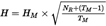
where:
=
the volatility adjustment to be applied;
=
the volatility adjustment where there is daily revaluation;
=
the actual number of business days between revaluations;
=
the liquidation period for the type of transaction in question.
Article 227 Conditions for applying a 0 % volatility adjustment under the Financial Collateral Comprehensive Method
1.In relation to repurchase transactions and securities lending or borrowing transactions, where an institution uses the Supervisory Volatility Adjustments Approach under Article 224 or the Own Estimates Approach under Article 225 and where the conditions set out in points (a) to (h) of paragraph 2 are satisfied, institutions may, instead of applying the volatility adjustments calculated under Articles 224 to 226, apply a 0 % volatility adjustment. Institutions using the internal models approach set out in Article 221 shall not use the treatment set out in this Article.
2.Institutions may apply a 0 % volatility adjustment where all the following conditions are met:
(a)both the exposure and the collateral are cash or debt securities issued by central governments or central banks within the meaning of Article 197(1)(b) and eligible for a 0 % risk weight under Chapter 2;
(b)both the exposure and the collateral are denominated in the same currency;
(c)either the maturity of the transaction is no more than one day or both the exposure and the collateral are subject to daily marking-to-market or daily re-margining;
(d)the time between the last marking-to-market before a failure to re-margin by the counterparty and the liquidation of the collateral is no more than four business days;
(e)the transaction is settled in a settlement system proven for that type of transaction;
(f)the documentation covering the agreement or transaction is standard market documentation for repurchase transactions or securities lending or borrowing transactions in the securities concerned;
(g)the transaction is governed by documentation specifying that where the counterparty fails to satisfy an obligation to deliver cash or securities or to deliver margin or otherwise defaults, then the transaction is immediately terminable;
(h)the counterparty is considered a core market participant by the competent authorities.
3.The core market participants referred to in point (h) of paragraph 2 shall include the following entities:
(a)the entities mentioned in Article 197(1)(b) exposures to which are assigned a 0 % risk weight under Chapter 2;
(b)institutions;
[F442 (ba)investment firms;F442]
(c)other financial undertakings [F443 that are an insurance undertaking or reinsurance undertaking, an insurance holding company (as defined in the Solvency 2 Regulations 2015), or a mixed financial holding companyF443] exposures to which are assigned a 20 % risk weight under the Standardised Approach or which, in the case of institutions calculating risk-weighted exposure amounts and expected loss amounts under the IRB Approach, do not have a credit assessment by a recognised ECAI and are internally rated by the institution;
(d)regulated CIUs that are subject to capital or leverage requirements;
(e)regulated pension funds;
(f)recognised clearing organisations.
Article 228 Calculating risk-weighted exposure amounts and expected loss amounts under the Financial Collateral Comprehensive method
1. Under the Standardised Approach, institutions shall use E* as calculated under Article 223(5) as the exposure value for the purposes of Article 113. In the case of off-balance sheet items listed in Annex I, institutions shall use E* as the value to which the percentages indicated in Article 111(1) shall be applied to arrive at the exposure value.
2. Under the IRB Approach, institutions shall use the effective LGD (LGD*) as the LGD for the purposes of Chapter 3. Institutions shall calculate LGD* as follows:

where:
=
the LGD that would apply to the exposure under Chapter 3 where the exposure was not collateralised;
=
the exposure value in accordance with Article 223(3);
=
the fully adjusted exposure value in accordance with Article 223(5).
Article 229 Valuation principles for other eligible collateral under the IRB Approach
1 . For immovable property collateral, the collateral shall be valued by an independent valuer at or at less than the market value. An institution shall require the independent valuer to document the market value in a transparent and clear manner.
[F444 If rigorous criteria are in force at the time in the United Kingdom for the assessment of the mortgage lending valueF444] the immovable property may instead be valued by an independent valuer at or at less than the mortgage lending value. Institutions shall require the independent valuer not to take into account speculative elements in the assessment of the mortgage lending value and to document that value in a transparent and clear manner.
The value of the collateral shall be the market value or mortgage lending value reduced as appropriate to reflect the results of the monitoring required under Article 208(3) and to take account of any prior claims on the immovable property.
2 . For receivables, the value of receivables shall be the amount receivable.
3 . Institutions shall value physical collateral other than immovable property at its market value. For the purposes of this Article, the market value is the estimated amount for which the property would exchange on the date of valuation between a willing buyer and a willing seller in an arm's-length transaction.
Article 230 Calculating risk-weighted exposure amounts and expected loss amounts for other eligible collateral under the IRB Approach
1 . Institutions shall use LGD* calculated in accordance with this paragraph and paragraph 2 as the LGD for the purposes of Chapter 3.
Where the ratio of the value of the collateral (C) to the exposure value (E) is below the required minimum collateralisation level of the exposure (C*) as laid down in Table 5, LGD* shall be the LGD laid down in Chapter 3 for uncollateralised exposures to the counterparty. For this purpose, institutions shall calculate the exposure value of the items listed in Article 166(8) to (10) by using a conversion factor or percentage of 100 % rather than the conversion factors or percentages indicated in those paragraphs.
Where the ratio of the value of the collateral to the exposure value exceeds a second, higher threshold level of C** as laid down in Table 5, LGD* shall be that prescribed in Table 5.
Where the required level of collateralisation C** is not achieved in respect of the exposure as a whole, institutions shall consider the exposure to be two exposures — one corresponding to the part in respect of which the required level of collateralisation C** is achieved and one corresponding to the remainder.
2 . The applicable LGD* and required collateralisation levels for the secured parts of exposures are set out in Table 5 of this paragraph.
Table 5
Minimum LGD for secured parts of exposures
| LGD* for senior exposure | LGD* for subordinated exposures | Required minimum collateralisation level of the exposure (C*) | Required minimum collateralisation level of the exposure (C**) | |
|---|---|---|---|---|
| Receivables | 35 % | 65 % | 0 % | 125 % |
| Residential property/commercial immovable property | 35 % | 65 % | 30 % | 140 % |
| Other collateral | 40 % | 70 % | 30 % | 140 % |
3 . As an alternative to the treatment set out in paragraphs 1 and 2, and subject to Article 124(2), institutions may assign a 50 % risk weight to the part of the exposure that is, within the limits set out in Article 125(2)(d) and Article 126(2)(d) respectively, fully collateralised by residential property or commercial immovable property situated within the territory of [F445 the United KingdomF445] where all the conditions in Article 199(3) or (4) are met.
Article 231 Calculating risk-weighted exposure amounts and expected loss amounts in the case of mixed pools of collateral
1. An institution shall calculate the value of LGD* that it shall use as the LGD for the purposes of Chapter 3 in accordance with paragraphs 2 and 3 where both the following conditions are met:
(a) the institution uses the IRB Approach to calculate risk-weighted exposure amounts and expected loss amounts;
(b) an exposure is collateralised by both financial collateral and other eligible collateral.
2. Institutions shall be required to subdivide the volatility-adjusted value of the exposure, obtained by applying the volatility adjustment as set out in Article 223(5) to the value of the exposure, into parts so as to obtain a part covered by eligible financial collateral, a part covered by receivables, a part covered by commercial immovable property collateral or residential property collateral, a part covered by other eligible collateral, and the unsecured part, as applicable.
3. Institutions shall calculate LGD* for each part of the exposure obtained in paragraph 2 separately in accordance with the relevant provisions of this Chapter.
Article 232 Other funded credit protection
1. Where the conditions set out in Article 212(1) are met, a deposit with a third party institution may be treated as a guarantee by the third party institution.
2. Where the conditions set out in Article 212(2) are met, institutions shall subject the portion of the exposure collateralised by the current surrender value of life insurance policies pledged to the lending institution to the following treatment:
(a) where the exposure is subject to the Standardised Approach, it shall be risk-weighted by using the risk weights specified in paragraph 3;
(b) where the exposure is subject to the IRB Approach but not subject to the institution's own estimates of LGD, it shall be assigned an LGD of 40 %.
In the event of a currency mismatch, institutions shall reduce the current surrender value in accordance with Article 233(3), the value of the credit protection being the current surrender value of the life insurance policy.
3. For the purposes of point (a) of paragraph 2, institutions shall assign the following risk weights on the basis of the risk weight assigned to a senior unsecured exposure to the undertaking providing the life insurance:
(a) a risk weight of 20 %, where the senior unsecured exposure to the undertaking providing the life insurance is assigned a risk weight of 20 %;
(b) a risk weight of 35 %, where the senior unsecured exposure to the undertaking providing the life insurance is assigned a risk weight of 50 %;
(c) a risk weight of 70 %, where the senior unsecured exposure to the undertaking providing the life insurance is assigned a risk weight of 100 %;
(d) a risk weight of 150 %, where the senior unsecured exposure to the undertaking providing the life insurance is assigned a risk weight of 150 %.
4. Institutions may treat instruments repurchased on request that are eligible under Article 200(c) as a guarantee by the issuing institution. The value of the eligible credit protection shall be the following:
(a) where the instrument will be repurchased at its face value, the value of the protection shall be that amount;
(b) where the instrument will be repurchased at market price, the value of the protection shall be the value of the instrument valued in the same way as the debt securities that meet the conditions in Article 197(4).
Sub-Section 2 Unfunded credit protection
Article 233 Valuation
1. For the purpose of calculating the effects of unfunded credit protection in accordance with this Sub-section, the value of unfunded credit protection (G) shall be the amount that the protection provider has undertaken to pay in the event of the default or non-payment of the borrower or on the occurrence of other specified credit events.
2. In the case of credit derivatives which do not include as a credit event restructuring of the underlying obligation involving forgiveness or postponement of principal, interest or fees that result in a credit loss event the following shall apply:
(a) where the amount that the protection provider has undertaken to pay is not higher than the exposure value, institutions shall reduce the value of the credit protection calculated under paragraph 1 by 40 %;
(b) where the amount that the protection provider has undertaken to pay is higher than the exposure value, the value of the credit protection shall be no higher than 60 % of the exposure value.
3. Where unfunded credit protection is denominated in a currency different from that in which the exposure is denominated, institutions shall reduce the value of the credit protection by the application of a volatility adjustment as follows:

where:
=
the amount of credit protection adjusted for foreign exchange risk,
=
the nominal amount of the credit protection;
=
the volatility adjustment for any currency mismatch between the credit protection and the underlying obligation determined in accordance with paragraph 4.
Where there is no currency mismatch H fx is equal to zero.
4. Institutions shall base the volatility adjustments for any currency mismatch on a 10 business day liquidation period, assuming daily revaluation, and may calculate them based on the Supervisory Volatility Adjustments Approach or the Own Estimates Approach as set out in Articles 224 and 225 respectively. Institutions shall scale up the volatility adjustments in accordance with Article 226.
Article 234 Calculating risk-weighted exposure amounts and expected loss amounts in the event of partial protection and tranching
Where an institution transfers a part of the risk of a loan in one or more tranches, the rules set out in Chapter 5 shall apply. Institutions may consider materiality thresholds on payments below which no payment shall be made in the event of loss to be equivalent to retained first loss positions and to give rise to a tranched transfer of risk.
Article 235 Calculating risk-weighted exposure amounts under the Standardised Approach
1.For the purposes of Article 113(3) institutions shall calculate the risk-weighted exposure amounts in accordance with the following formula:

where:
=
the exposure value in accordance with Article 111; for this purpose, the exposure value of an off-balance sheet item listed in Annex I shall be 100 % of its value rather than the exposure value indicated in Article 111(1);
=
the amount of credit risk protection as calculated under Article 233(3) (G*) further adjusted for any maturity mismatch as laid down in Section 5;
=
the risk weight of exposures to the obligor as specified under Chapter 2 [F446 of this Regulation and Articles 132a to 132c of Chapter 3 of the Standardised Approach and Internal Ratings Based Approach to Credit Risk (CRR) Part of the PRA RulebookF446] ;
=
the risk weight of exposures to the protection provider as specified under Chapter 2 [F446 of this Regulation and Articles 132a to 132c of Chapter 3 of the Standardised Approach and Internal Ratings Based Approach to Credit Risk (CRR) Part of the PRA RulebookF446] .
2.Where the protected amount (G A ) is less than the exposure (E), institutions may apply the formula specified in paragraph 1 only where the protected and unprotected parts of the exposure are of equal seniority.
3.Institutions may extend the treatment set out in Article 114(4) and (7) to exposures or parts of exposures guaranteed by the central government or central bank, where the guarantee is denominated in the domestic currency of the borrower and the exposure is funded in that currency.
Article 236 Calculating risk-weighted exposure amounts and expected loss amounts under the IRB Approach
1. For the covered portion of the exposure value (E), based on the adjusted value of the credit protection G A , the PD for the purposes of Section 4 of Chapter 3 may be the PD of the protection provider, or a PD between that of the borrower and that of the guarantor where a full substitution is deemed not to be warranted. In the case of subordinated exposures and non-subordinated unfunded protection, the LGD to be applied by institutions for the purposes of Section 4 of Chapter 3 may be that associated with senior claims.
2. For any uncovered portion of the exposure value (E) the PD shall be that of the borrower and the LGD shall be that of the underlying exposure.
3. For the purposes of this Article, G A is the value of G* as calculated under Article 233(3) further adjusted for any maturity mismatch as laid down in Section 5. E is the exposure value determined in accordance with Section 5 of Chapter 3. For this purpose, institutions shall calculate the exposure value of the items listed in Article 166(8) to (10) by using a conversion factor or percentage of 100 % rather than the conversion factors or percentages indicated in those paragraphs.
Section 5 Maturity mismatches
Article 237 Maturity mismatch
1. For the purpose of calculating risk-weighted exposure amounts, a maturity mismatch occurs when the residual maturity of the credit protection is less than that of the protected exposure. Where protection has a residual maturity of less than three months and the maturity of the protection is less than the maturity of the underlying exposure that protection does not qualify as eligible credit protection.
2. Where there is a maturity mismatch the credit protection shall not qualify as eligible where either of the following conditions is met:
(a) the original maturity of the protection is less than one year;
(b) the exposure is a short term exposure specified by the competent authorities as being subject to a one-day floor rather than a one-year floor in respect of the maturity value (M) under Article 162(3).
Article 238 Maturity of credit protection
1. Subject to a maximum of five years, the effective maturity of the underlying shall be the longest possible remaining time before the obligor is scheduled to fulfil its obligations. Subject to paragraph 2, the maturity of the credit protection shall be the time to the earliest date at which the protection may terminate or be terminated.
2. Where there is an option to terminate the protection which is at the discretion of the protection seller, institutions shall take the maturity of the protection to be the time to the earliest date at which that option may be exercised. Where there is an option to terminate the protection which is at the discretion of the protection buyer and the terms of the arrangement at origination of the protection contain a positive incentive for the institution to call the transaction before contractual maturity, an institution shall take the maturity of the protection to be the time to the earliest date at which that option may be exercised; otherwise the institution may consider that such an option does not affect the maturity of the protection.
3. Where a credit derivative is not prevented from terminating prior to expiration of any grace period required for a default on the underlying obligation to occur as a result of a failure to pay institutions shall reduce the maturity of the protection by the length of the grace period.
Article 239 Valuation of protection
1. For transactions subject to funded credit protection under the Financial Collateral Simple Method, where there is a mismatch between the maturity of the exposure and the maturity of the protection, the collateral does not qualify as eligible funded credit protection.
2. For transactions subject to funded credit protection under the Financial Collateral Comprehensive Method, institutions shall reflect the maturity of the credit protection and of the exposure in the adjusted value of the collateral in accordance with the following formula:

where:
=
the volatility adjusted value of the collateral as specified in Article 223(2) or the amount of the exposure, whichever is lower;
=
the number of years remaining to the maturity date of the credit protection calculated in accordance with Article 238, or the value of T, whichever is lower;
=
the number of years remaining to the maturity date of the exposure calculated in accordance with Article 238, or five years, whichever is lower;
=
0,25.
Institutions shall use C VAM as C VA further adjusted for maturity mismatch in the formula for the calculation of the fully adjusted value of the exposure (E*) set out in Article 223(5).
3. For transactions subject to unfunded credit protection, institutions shall reflect the maturity of the credit protection and of the exposure in the adjusted value of the credit protection in accordance with the following formula:

where:
=
G* adjusted for any maturity mismatch;
=
the amount of the protection adjusted for any currency mismatch;
=
is the number of years remaining to the maturity date of the credit protection calculated in accordance with Article 238, or the value of T, whichever is lower;
=
is the number of years remaining to the maturity date of the exposure calculated in accordance with Article 238, or five years, whichever is lower;
=
0,25.
Institutions shall use G A as the value of the protection for the purposes of Articles 233 to 236.
Section 6 Basket CRM techniques
Article 240 First-to-default credit derivatives
Where an institution obtains credit protection for a number of exposures under terms that the first default among the exposures shall trigger payment and that this credit event shall terminate the contract, the institution may amend the calculation of the risk-weighted exposure amount and, as relevant, the expected loss amount of the exposure which would, in the absence of the credit protection, produce the lowest risk-weighted exposure amount in accordance with this Chapter:
for institutions using the Standardised Approach, the risk-weighted exposure amount shall be that calculated under the Standardised Approach;
for institutions using the IRB Approach, the risk-weighted exposure amount shall be the sum of the risk-weighted exposure amount calculated under the IRB Approach and 12,5 times the expected loss amount.
The treatment set out in this Article applies only where the exposure value is less than or equal to the value of the credit protection.
Article 241 Nth-to-default credit derivatives
Where the nth default among the exposures triggers payment under the credit protection, the institution purchasing the protection may only recognise the protection for the calculation of risk-weighted exposure amounts and, as applicable, expected loss amounts where protection has also been obtained for defaults 1 to n-1 or when n-1 defaults have already occurred. In such cases, the institution may amend the calculation of the risk-weighted exposure amount and, as applicable, the expected loss amount of the exposure which would, in the absence of the credit protection, produce the n-th lowest risk-weighted exposure amount in accordance with this Chapter. Institutions shall calculate the nth lowest amount as specified in points (a) and (b) of Article 240.
The treatment set out in this Article applies only where the exposure value is less than or equal to the value of the credit protection.
All exposures in the basket shall meet the requirements laid down in Article 204(2) and Article 216(1)(d).
[F78CHAPTER 5 Securitisation
Section 1 Definitions and criteria for simple, transparent and standardised securitisations
Article 242 Definitions
For the purposes of this Chapter, the following definitions apply:
(1) ‘ clean-up call option ’ means a contractual option that entitles the originator to call the securitisation positions before all of the securitised exposures have been repaid, either by repurchasing the underlying exposures remaining in the pool in the case of traditional securitisations or by terminating the credit protection in the case of synthetic securitisations, in both cases when the amount of outstanding underlying exposures falls to or below certain pre-specified level;
(2) ‘ credit-enhancing interest-only strip ’ means an on-balance sheet asset that represents a valuation of cash flows related to future margin income and is a subordinated tranche in the securitisation;
(3) ‘ liquidity facility ’ means a liquidity facility as defined [F447 in regulation 32A of the Securitisation Regulations 2024 F447] ;
(4) ‘ unrated position ’ means a securitisation position which does not have an eligible credit assessment in accordance with Section 4;
(5) ‘ rated position ’ means a securitisation position which has an eligible credit assessment in accordance with Section 4;
(6) ‘ senior securitisation position ’ means a position backed or secured by a first claim on the whole of the underlying exposures, disregarding for these purposes amounts due under interest rate or currency derivative contracts, fees or other similar payments, and irrespective of any difference in maturity with one or more other senior tranches with which that position shares losses on a pro-rata basis;
(7) ‘ IRB pool ’ means a pool of underlying exposures of a type in relation to which the institution has permission to use the IRB Approach and is able to calculate risk- weighted exposure amounts in accordance with Chapter 3 for all of these exposures;
(8) ‘ mixed pool ’ means a pool of underlying exposures of a type in relation to which the institution has permission to use the IRB Approach and is able to calculate risk- weighted exposure amounts in accordance with Chapter 3 for some, but not all, of the exposures;
(9) ‘ overcollateralisation ’ means any form of credit enhancement by virtue of which underlying exposures are posted in value which is higher than the value of the securitisation positions;
(10) ‘ simple, transparent and standardised securitisation ’ or ‘ STS securitisation ’ means—
[F448 (a)an STS securitisation as defined in regulation 9 of the Securitisation Regulations 2024,F448]
[F449 (b)an overseas STS securitisation as defined in regulation 12(2) of the Securitisation Regulations 2024F449] [F450 , or
(c)a qualifying EU securitisation as defined in regulation 12(3) of the Securitisation Regulations 2024;F450]
(11) ‘ asset-backed commercial paper programme ’ or ‘ ABCP programme ’ means an asset backed commercial paper programme or ABCP programme as defined in [F451 regulation 3(1) of the Securitisation Regulations 2024 F451] ;
(12) ‘ asset-backed commercial paper transaction ’ or ‘ ABCP transaction ’ means an asset-backed commercial paper transaction or ABCP transaction as defined in [F452 regulation 3(1) of the Securitisation Regulations 2024 F452] ;
(13) ‘ traditional securitisation ’ means a traditional securitisation as defined [F453 for the purposes of rules made by the PRA under section 137G of FSMA in relation to securitisation F453] ;
(14) ‘ synthetic securitisation ’ means a synthetic securitisation as defined [F454 for the purposes of rules made by the PRA under section 137G of FSMA in relation to securitisation F454] ;
(15) ‘ revolving exposure ’ means a revolving exposure as defined [F455 for the purposes of rules made by the PRA under section 137G of FSMA in relation to securitisation F455] ;
(16) ‘ early amortisation provision ’ [F456 means a contractual clause in a securitisation of revolving exposures or a revolving securitisation, as defined for the purposes of rules made by the PRA under section 137G of FSMA in relation to securitisation, which requires, on the occurrence of defined events, investors’ securitisation positions to be redeemed before the originally stated maturity of those positions F456] ;
(17) ‘ first loss tranche ’ means a first loss tranche as defined [F457 for the purposes of rules made by the PRA under section 137G of FSMA in relation to securitisation F457] ;
(18) ‘ mezzanine securitisation position ’ means a position in the securitisation which is subordinated to the senior securitisation position and more senior than the first loss tranche, and which is subject to a risk weight lower than 1 250 % and higher than 25 % in accordance with Subsections 2 and 3 of Section 3;
[F458 (19) “ promotional entity ” means any undertaking or entity—
(a) which is established by a government department or devolved administration or by a local authority in any part of the United Kingdom (“the establishing body”);
(b)which grants promotional loans or guarantees;
(c)whose primary goal is not to make profit or maximise market share, but is to promote public policy objectives of the establishing body; and
(d)in relation to which F459...—
(i)the establishing body is obliged to protect its economic basis and maintain its viability throughout its lifetime; or
(ii)at least 90% of its original capital or funding or the promotional loan it grants is directly or indirectly guaranteed by a government department, a devolved administration or a local authority in any part of the United Kingdom.F458]
Article 243 Criteria for STS securitisations qualifying for differentiated capital treatment
1.Positions in an ABCP programme or ABCP transaction that qualify as positions in an STS securitisation shall be eligible for the treatment set out in Articles 260, 262 and 264 where the following requirements are met:
(a)the underlying exposures meet, at the time of their inclusion in the ABCP programme, to the best knowledge of the originator or the original lender, the conditions for being assigned, under the Standardised Approach and taking into account any eligible credit risk mitigation, a risk weight equal to or smaller than 75 % on an individual exposure basis where the exposure is a retail exposure or 100 % for any other exposures; and
(b)the aggregate exposure value of all exposures to a single obligor at ABCP programme level does not exceed 2 % of the aggregate exposure value of all exposures within the ABCP programme at the time the exposures were added to the ABCP programme. For the purposes of this calculation, loans or leases to a group of connected clients, to the best knowledge of the sponsor, shall be considered as exposures to a single obligor.
In the case of trade receivables, point (b) of the first subparagraph shall not apply where the credit risk of those trade receivables is fully covered by eligible credit protection in accordance with Chapter 4, provided that in that case the protection provider is an institution, [F460 an investment firm,F460] an insurance undertaking or a reinsurance undertaking. For the purposes of this subparagraph, only the portion of the trade receivables remaining after taking into account the effect of any purchase price discount and overcollateralisation shall be used to determine whether they are fully covered and whether the concentration limit is met.
In the case of securitised residual leasing values, point (b) of the first subparagraph shall not apply where those values are not exposed to refinancing or resell risk due to a legally enforceable commitment to repurchase or refinance the exposure at a pre-determined amount by a third party eligible under Article 201(1).
By way of derogation from point (a) of the first subparagraph, where an institution applies Article 248(3) or has been granted permission to apply the Internal Assessment Approach in accordance with Article 265, the risk weight that institution would assign to a liquidity facility that completely covers the ABCP issued under the programme is equal to or smaller than 100 %.
2.Positions in a securitisation, other than an ABCP programme or ABCP transaction, that qualify as positions in an STS securitisation, shall be eligible for the treatment set out in Articles 260, 262 and 264 where the following requirements are met:
(a)at the time of inclusion in the securitisation, the aggregate exposure value of all exposures to a single obligor in the pool does not exceed 2 % of the exposure values of the aggregate outstanding exposure values of the pool of underlying exposures. For the purposes of this calculation, loans or leases to a group of connected clients shall be considered as exposures to a single obligor.
In the case of securitised residual leasing values, the first subparagraph of this point shall not apply where those values are not exposed to refinancing or resell risk due to a legally enforceable commitment to repurchase or refinance the exposure at a pre-determined amount by a third party eligible under Article 201(1);
(b)at the time of their inclusion in the securitisation, the underlying exposures meet the conditions for being assigned, under the Standardised Approach and taking into account any eligible credit risk mitigation, a risk weight equal to or smaller than:
40 % on an exposure value-weighted average basis for the portfolio where the exposures are loans secured by residential mortgages or fully guaranteed residential loans, as referred to in point (e) of Article 129(1);
50 % on an individual exposure basis where the exposure is a loan secured by a commercial mortgage;
75 % on an individual exposure basis where the exposure is a retail exposure;
for any other exposures, 100 % on an individual exposure basis;
(c)where points (b)(i) and (b)(ii) apply, the loans secured by lower ranking security rights on a given asset shall only be included in the securitisation where all loans secured by prior ranking security rights on that asset are also included in the securitisation;
(d)where point (b)(i) of this paragraph applies, no loan in the pool of underlying exposures shall have a loan-to-value ratio higher than 100 %, at the time of inclusion in the securitisation, measured in accordance with point (d)(i) of Article 129(1) and Article 229(1).
Section 2 Recognition of significant risk transfer
Article 244 Traditional securitisation
1 . The originator institution of a traditional securitisation may exclude underlying exposures from its calculation of risk-weighted exposure amounts and, where relevant, expected loss amounts if either of the following conditions is fulfilled:
( a ) significant credit risk associated with the underlying exposures has been transferred to third parties;
( b ) the originator institution applies a 1 250 % risk weight to all securitisation positions it holds in the securitisation or deducts these securitisation positions from Common Equity Tier 1 items in accordance with point (k) of Article 36(1).
2 . Significant credit risk shall be considered as transferred in either of the following cases:
(a) the risk-weighted exposure amounts of the mezzanine securitisation positions held by the originator institution in the securitisation do not exceed 50 % of the risk-weighted exposure amounts of all mezzanine securitisation positions existing in this securitisation;
(b) the originator institution does not hold more than 20 % of the exposure value of the first loss tranche in the securitisation, provided that both of the following conditions are met:
the originator can demonstrate that the exposure value of the first loss tranche exceeds a reasoned estimate of the expected loss on the underlying exposures by a substantial margin;
there are no mezzanine securitisation positions.
Where the possible reduction in risk-weighted exposure amounts, which the originator institution would achieve by the securitisation under points (a) or (b), is not justified by a commensurate transfer of credit risk to third parties, [F461 the competent authorityF461] may decide on a case-by-case basis that significant credit risk shall not be considered as transferred to third parties.
3 . By way of derogation from paragraph 2, [F462 the competent authorityF462] may allow originator institutions to recognise significant credit risk transfer in relation to a securitisation where the originator institution demonstrates in each case that the reduction in own funds requirements which the originator achieves by the securitisation is justified by a commensurate transfer of credit risk to third parties. Permission may only be granted where the institution meets both of the following conditions:
(a) the institution has adequate internal risk management policies and methodologies to assess the transfer of credit risk;
(b) the institution has also recognised the transfer of credit risk to third parties in each case for the purposes of the institution’s internal risk management and its internal capital allocation.
4 . In addition to the requirements set out in paragraphs 1, 2 and 3, all of the following conditions shall be met:
(a) the transaction documentation reflects the economic substance of the securitisation;
(b) the securitisation positions do not constitute payment obligations of the originator institution;
(c) the underlying exposures are placed beyond the reach of the originator institution and its creditors in a manner that meets the requirement set out in [F463 paragraph 2.2.2 of the FCA Securitisation Sourcebook, as it has effect from time to timeF463] ;
(d) the originator institution does not retain control over the underlying exposures. It shall be considered that control is retained over the underlying exposures where the originator has the right to repurchase from the transferee the previously transferred exposures in order to realise their benefits or if it is otherwise required to re-assume transferred risk. The originator institution’s retention of servicing rights or obligations in respect of the underlying exposures shall not of itself constitute control of the exposures;
(e) the securitisation documentation does not contain terms or conditions that:
require the originator institution to alter the underlying exposures to improve the average quality of the pool; or
increase the yield payable to holders of positions or otherwise enhance the positions in the securitisation in response to a deterioration in the credit quality of the underlying exposures;
(f) where applicable, the transaction documentation makes it clear that the originator or the sponsor may only purchase or repurchase securitisation positions or repurchase, restructure or substitute the underlying exposures beyond their contractual obligations where such arrangements are executed in accordance with prevailing market conditions and the parties to them act in their own interest as free and independent parties (arm’s length);
(g) where there is a clean-up call option, that option shall also meet all of the following conditions:
it can be exercised at the discretion of the originator institution;
it may only be exercised when 10 % or less of the original value of the underlying exposures remains unamortised;
it is not structured to avoid allocating losses to credit enhancement positions or other positions held by investors in the securitisation and is not otherwise structured to provide credit enhancement;
(h) the originator institution has received an opinion from a qualified legal counsel confirming that the securitisation complies with the conditions set out in point (c) of this paragraph.
F464 5 .. . . . . . . . . . . . . . . . . . . . . . . . . . . . . . . .
F465 6 .. . . . . . . . . . . . . . . . . . . . . . . . . . . . . . . .
Article 245 Synthetic securitisation
1 . The originator institution of a synthetic securitisation may calculate risk-weighted exposure amounts, and, where relevant, expected loss amounts with respect to the underlying exposures in accordance with Articles 251 and 252, where either of the following conditions is met:
( a ) significant credit risk has been transferred to third parties either through funded or unfunded credit protection;
( b ) the originator institution applies a 1 250 % risk weight to all securitisation positions that it retains in the securitisation or deducts these securitisation positions from Common Equity Tier 1 items in accordance with point (k) of Article 36(1).
2 . Significant credit risk shall be considered as transferred in either of the following cases:
( a ) the risk-weighted exposure amounts of the mezzanine securitisation positions held by the originator institution in the securitisation do not exceed 50 % of the risk-weighted exposure amounts of all mezzanine securitisation positions existing in this securitisation;
( b ) the originator institution does not hold more than 20 % of the exposure value of the first loss tranche in the securitisation, provided that both of the following conditions are met:
the originator can demonstrate that the exposure value of the first loss tranche exceeds a reasoned estimate of the expected loss on the underlying exposures by a substantial margin;
there are no mezzanine securitisation positions.
Where the possible reduction in risk-weighted exposure amounts, which the originator institution would achieve by the securitisation, is not justified by a commensurate transfer of credit risk to third parties, [F466 the competent authorityF466] may decide on a case-by-case basis that significant credit risk shall not be considered as transferred to third parties.
3 . By way of derogation from paragraph 2, [F467 the competent authorityF467] may allow originator institutions to recognise significant credit risk transfer in relation to a securitisation where the originator institution demonstrates in each case that the reduction in own funds requirements which the originator achieves by the securitisation is justified by a commensurate transfer of credit risk to third parties. Permission may only be granted where the institution meets both of the following conditions:
( a ) the institution has adequate internal risk-management policies and methodologies to assess the transfer of risk;
( b ) the institution has also recognised the transfer of credit risk to third parties in each case for the purposes of the institution’s internal risk management and its internal capital allocation.
4 . In addition to the requirements set out in paragraphs 1, 2 and 3, all of the following conditions shall be met:
( a ) the transaction documentation reflects the economic substance of the securitisation;
( b ) the credit protection by virtue of which credit risk is transferred complies with Article 249;
( c ) the securitisation documentation does not contain terms or conditions that:
impose significant materiality thresholds below which credit protection is deemed not to be triggered if a credit event occurs;
allow for the termination of the protection due to deterioration of the credit quality of the underlying exposures;
require the originator institution to alter the composition of the underlying exposures to improve the average quality of the pool; or
increase the institution’s cost of credit protection or the yield payable to holders of positions in the securitisation in response to a deterioration in the credit quality of the underlying pool;
( d ) the credit protection is enforceable in all relevant jurisdictions;
( e ) where applicable, the transaction documentation makes it clear that the originator or the sponsor may only purchase or repurchase securitisation positions or repurchase, restructure or substitute the underlying exposures beyond their contractual obligations where such arrangements are executed in accordance with prevailing market conditions and the parties to them act in their own interest as free and independent parties (arm’s length);
( f ) where there is a clean-up call option, that option meets all the following conditions:
it may be exercised at the discretion of the originator institution;
it may only be exercised when 10 % or less of the original value of the underlying exposures remains unamortised;
it is not structured to avoid allocating losses to credit enhancement positions or other positions held by investors in the securitisation and is not otherwise structured to provide credit enhancement;
( g ) the originator institution has received an opinion from a qualified legal counsel confirming that the securitisation complies with the conditions set out in point (d) of this paragraph;
F468 5 .. . . . . . . . . . . . . . . . . . . . . . . . . . . . . . . .
F469 6 .. . . . . . . . . . . . . . . . . . . . . . . . . . . . . . . .
Article 246 Operational requirements for early amortisation provisions
Where the securitisation includes revolving exposures and early amortisation provisions or similar provisions, significant credit risk shall only be considered transferred by the originator institution where the requirements laid down in Articles 244 and 245 are met and the early amortisation provision, once triggered, does not:
subordinate the institution’s senior or pari passu claim on the underlying exposures to the other investors’ claims;
subordinate further the institution’s claim on the underlying exposures relative to other parties’ claims; or
otherwise increase the institution’s exposure to losses associated with the underlying revolving exposures.
Section 3 Calculation of risk-weighted exposure amounts
Subsection 1 General Provisions
Article 247 Calculation of risk-weighted exposure amounts
1. Where an originator institution has transferred significant credit risk associated with the underlying exposures of the securitisation in accordance with Section 2, that institution may:
(a) in the case of a traditional securitisation, exclude the underlying exposures from its calculation of risk-weighted exposure amounts, and, as relevant, expected loss amounts;
(b) in the case of a synthetic securitisation, calculate risk-weighted exposure amounts, and, where relevant, expected loss amounts, with respect to the underlying exposures in accordance with Articles 251 and 252.
2. Where the originator institution has decided to apply paragraph 1, it shall calculate the risk-weighted exposure amounts as set out in this Chapter for the positions that it may hold in the securitisation.
Where the originator institution has not transferred significant credit risk or has decided not to apply paragraph 1, it shall not be required to calculate risk-weighted exposure amounts for any position it may have in the securitisation but shall continue including the underlying exposures in its calculation of risk-weighted exposure amounts and, where relevant, expected loss amounts as if they had not been securitised.
3. Where there is an exposure to positions in different tranches in a securitisation, the exposure to each tranche shall be considered a separate securitisation position. The providers of credit protection to securitisation positions shall be considered as holding positions in the securitisation. Securitisation positions shall include exposures to a securitisation arising from interest rate or currency derivative contracts that the institution has entered into with the transaction.
4. Unless a securitisation position is deducted from Common Equity Tier 1 items pursuant to point (k) of Article 36(1), the risk-weighted exposure amount shall be included in the institution’s total of risk-weighted exposure amounts for the purposes of Article 92(3).
5. The risk-weighted exposure amount of a securitisation position shall be calculated by multiplying the exposure value of the position, calculated as set out in Article 248, by the relevant total risk weight.
6. The total risk weight shall be determined as the sum of the risk weight set out in this Chapter and any additional risk weight in accordance with Article 270a.
Article 248 Exposure value
1.The exposure value of a securitisation position shall be calculated as follows:
(a)the exposure value of an on-balance sheet securitisation position shall be its accounting value remaining after any relevant specific credit risk adjustments on the securitisation position have been applied in accordance with Article 110;
(b)the exposure value of an off-balance sheet securitisation position shall be its nominal value less any relevant specific credit risk adjustments on the securitisation position in accordance with Article 110, multiplied by the relevant conversion factor as set out in this point. The conversion factor shall be 100 %, except in the case of cash advance facilities. To determine the exposure value of the undrawn portion of the cash advance facilities, a conversion factor of 0 % may be applied to the nominal amount of a liquidity facility that is unconditionally cancellable provided that repayment of draws on the facility are senior to any other claims on the cash flows arising from the underlying exposures and the institution has demonstrated to the satisfaction of the competent authority that it is applying an appropriately conservative method for measuring the amount of the undrawn portion;
(c)the exposure value for the counterparty credit risk of a securitisation position that results from a derivative instrument listed in Annex II, shall be determined in accordance with Chapter 6;
(d)an originator institution may deduct from the exposure value of a securitisation position which is assigned 1 250 % risk weight in accordance with Subsection 3 or deducted from Common Equity Tier 1 in accordance with point (k) of Article 36(1), the amount of the specific credit risk adjustments on the underlying exposures in accordance with Article 110, and any non-refundable purchase price discounts connected with such underlying exposures to the extent that such discounts have caused the reduction of own funds.
The [[F470,F471 PRA mayF471] makeF470] technical standards to specify what constitutes an appropriately conservative method for measuring the amount of the undrawn portion referred to in point (b) of the first subparagraph.
F472...
2.Where an institution has two or more overlapping positions in a securitisation, it shall include only one of the positions in its calculation of risk-weighted exposure amounts.
Where the positions partially overlap, the institution may split the position into two parts and recognise the overlap in relation to one part only in accordance with the first subparagraph. Alternatively, the institution may treat the positions as if they were fully overlapping by expanding for capital calculation purposes the position that produces the higher risk-weighted exposure amounts.
The institution may also recognise an overlap between the specific risk own funds requirements for positions in the trading book and the own funds requirements for securitisation positions in the non-trading book, provided that the institution is able to calculate and compare the own funds requirements for the relevant positions.
For the purposes of this paragraph, two positions shall be deemed to be overlapping where they are mutually offsetting in such a manner that the institution is able to preclude the losses arising from one position by performing the obligations required under the other position.
3.Where point (d) of Article 270c applies to positions in an ABCP, the institution may use the risk weight assigned to a liquidity facility in order to calculate the risk-weighted exposure amount for the ABCP, provided that the liquidity facility covers 100 % of the ABCP issued by the ABCP programme and the liquidity facility ranks pari passu with the ABCP in a manner that they form an overlapping position. The institution shall notify [F473 the competent authorityF473] where it has applied the provisions laid down in this paragraph. For the purposes of determining the 100 % coverage set out in this paragraph, the institution may take into account other liquidity facilities in the ABCP programme, provided that they form an overlapping position with the ABCP.
Article 249 Recognition of credit risk mitigation for securitisation positions
1.An institution may recognise funded or unfunded credit protection with respect to a securitisation position where the requirements for credit risk mitigation laid down in this Chapter and in Chapter 4 are met.
2.Eligible funded credit protection shall be limited to financial collateral which is eligible for the calculation of risk-weighted exposure amounts under Chapter 2 [F474 of this Regulation and Articles 132a to 132c of Chapter 3 of the Standardised Approach and Internal Ratings Based Approach to Credit Risk (CRR) Part of the PRA RulebookF474] as laid down under Chapter 4 and recognition of credit risk mitigation shall be subject to compliance with the relevant requirements as laid down under Chapter 4.
Eligible unfunded credit protection and unfunded credit protection providers shall be limited to those which are eligible in accordance with Chapter 4 and recognition of credit risk mitigation shall be subject to compliance with the relevant requirements as laid down under Chapter 4.
3.By way of derogation from paragraph 2, the eligible providers of unfunded credit protection listed in points (a) to (h) of Article 201(1) shall have been assigned a credit assessment by a recognised ECAI which is credit quality step 2 or above at the time the credit protection was first recognised and credit quality step 3 or above thereafter. The requirement set out in this subparagraph shall not apply to qualifying central counterparties.
Institutions which are allowed to apply the IRB Approach to a direct exposure to the protection provider may assess eligibility in accordance with the first subparagraph based on the equivalence of the PD for the protection provider to the PD associated with the credit quality steps referred to in Article 136.
4.By way of derogation from paragraph 2, SSPEs shall be eligible protection providers where all of the following conditions are met:
(a)the SSPE owns assets that qualify as eligible financial collateral in accordance with Chapter 4;
(b)the assets referred to in point (a) are not subject to claims or contingent claims ranking ahead or pari passu with the claim or contingent claim of the institution receiving unfunded credit protection; and
(c)all the requirements for the recognition of financial collateral set out in Chapter 4 are met.
5.For the purposes of paragraph 4, the amount of the protection adjusted for any currency and maturity mismatches (Ga) in accordance with Chapter 4 shall be limited to the volatility adjusted market value of those assets and the risk weight of exposures to the protection provider as specified under the Standardised Approach (g) shall be determined as the weighted-average risk weight that would apply to those assets as financial collateral under the Standardised Approach.
6.Where a securitisation position benefits from full credit protection or a partial credit protection on a pro-rata basis, the following requirements shall apply:
(a)the institution providing credit protection shall calculate risk-weighted exposure amounts for the portion of the securitisation position benefiting from credit protection in accordance with Subsection 3 as if it held that portion of the position directly;
(b)the institution buying credit protection shall calculate risk-weighted exposure amounts in accordance with Chapter 4 for the protected portion.
7.In all cases not covered by paragraph 6, the following requirements shall apply:
(a)the institution providing credit protection shall treat the portion of the position benefiting from credit protection as a securitisation position and shall calculate risk-weighted exposure amounts as if it held that position directly in accordance with Subsection 3, subject to paragraphs 8, 9 and 10;
(b)the institution buying credit protection shall calculate risk-weighted exposure amounts for the protected portion of the position referred to in point (a) in accordance with Chapter 4. The institution shall treat the portion of the securitisation position not benefiting from credit protection as a separate securitisation position and shall calculate risk-weighted exposure amounts in accordance with Subsection 3, subject to paragraphs 8, 9 and 10.
8.Institutions using the Securitisation Internal Ratings Based Approach (SEC-IRBA) or the Securitisation Standardised Approach (SEC-SA) under Subsection 3 shall determine the attachment point (A) and detachment point (D) separately for each of the positions derived in accordance with paragraph 7 as if these had been issued as separate securitisation positions at the time of origination of the transaction. The value of K IRB or K SA , respectively, shall be calculated taking into account the original pool of exposures underlying the securitisation.
9.Institutions using the Securitisation External Ratings Based Approach (SEC-ERBA) under Subsection 3 for the original securitisation position shall calculate risk-weighted exposure amounts for the positions derived in accordance with paragraph 7 as follows:
(a)where the derived position has the higher seniority, it shall be assigned the risk weight of the original securitisation position;
(b)where the derived position has the lower seniority, it may be assigned an inferred rating in accordance with Article 263(7). In that case, thickness input T shall only be computed on the basis of the derived position. Where a rating may not be inferred, the institution shall apply the higher of the risk weight resulting from either:
applying the SEC-SA in accordance with paragraph 8 and Subsection 3; or
the risk weight of the original securitisation position under the SEC-ERBA.
10.The derived position with the lower seniority shall be treated as a non-senior securitisation position even if the original securitisation position prior to protection qualifies as senior.
Article 250 Implicit support
1 . A sponsor institution, or an originator institution which in respect of a securitisation has made use of Article 247(1) and (2) in the calculation of risk-weighted exposure amounts or has sold instruments from its trading book to the effect that it is no longer required to hold own funds for the risks of those instruments shall not provide support, directly or indirectly, to the securitisation beyond its contractual obligations with a view to reducing potential or actual losses to investors.
2 . A transaction shall not be considered as support for the purposes of paragraph 1 where the transaction has been duly taken into account in the assessment of significant credit risk transfer and both parties have executed the transaction acting in their own interest as free and independent parties (arm’s length). For these purposes, the institution shall undertake a full credit review of the transaction and, at a minimum, take into account all of the following items:
( a ) the repurchase price;
( b ) the institution’s capital and liquidity position before and after repurchase;
( c ) the performance of the underlying exposures;
( d ) the performance of the securitisation positions;
( e ) the impact of support on the losses expected to be incurred by the originator relative to investors.
3 . The originator institution and the sponsor institution shall notify the competent authority of any transaction entered into in relation to the securitisation in accordance with paragraph 2.
F475 4 .. . . . . . . . . . . . . . . . . . . . . . . . . . . . . . . .
5 . If an originator institution or a sponsor institution fails to comply with paragraph 1 in respect of a securitisation, the institution shall include all of the underlying exposures of that securitisation in its calculation of risk-weighted exposure amounts as if they had not been securitised and disclose:
( a ) that it has provided support to the securitisation in breach of paragraph 1; and
( b ) the impact of the support provided in terms of own funds requirements.
Article 251 Originator institutions’ calculation of risk-weighted exposure amounts securitised in a synthetic securitisation
1.For the purpose of calculating risk-weighted exposure amounts for the underlying exposures, the originator institution of a synthetic securitisation shall use the calculation methodologies set out in this Section where applicable instead of those set out in Chapter 2 [F476 of this Regulation and Articles 132a to 132c of Chapter 3 of the Standardised Approach and Internal Ratings Based Approach to Credit Risk (CRR) Part of the PRA RulebookF476] . For institutions calculating risk-weighted exposure amounts and, where relevant, expected loss amounts with respect to the underlying exposures under Chapter 3, the expected loss amount in respect of such exposures shall be zero.
2.The requirements set out in paragraph 1 of this Article shall apply to the entire pool of exposures backing the securitisation. Subject to Article 252, the originator institution shall calculate risk-weighted exposure amounts with respect to all tranches in the securitisation in accordance with this Section, including the positions in relation to which the institution is able to recognise credit risk mitigation in accordance with Article 249. The risk weight to be applied to positions which benefit from credit risk mitigation may be amended in accordance with Chapter 4.
Article 252 Treatment of maturity mismatches in synthetic securitisations
For the purposes of calculating risk-weighted exposure amounts in accordance with Article 251, any maturity mismatch between the credit protection by which the transfer of risk is achieved and the underlying exposures shall be calculated as follows:
the maturity of the underlying exposures shall be taken to be the longest maturity of any of those exposures subject to a maximum of 5 years. The maturity of the credit protection shall be determined in accordance with Chapter 4;
an originator institution shall ignore any maturity mismatch in calculating risk-weighted exposure amounts for securitisation positions subject to a risk weight of 1 250 % in accordance with this Section. For all other positions, the maturity mismatch treatment set out in Chapter 4 shall be applied in accordance with the following formula:

where:
=
risk-weighted exposure amounts for the purposes of point (a) of Article 92(3);
=
risk-weighted exposure amounts for the underlying exposures as if they had not been securitised, calculated on a pro-rata basis;
=
risk-weighted exposure amounts calculated under Article 251 as if there was no maturity mismatch;
=
maturity of the underlying exposures, expressed in years;
=
maturity of credit protection, expressed in years;
=
0,25
Article 253 Reduction in risk-weighted exposure amounts
1. Where a securitisation position is assigned a 1 250 % risk weight under this Section, institutions may deduct the exposure value of such position from Common Equity Tier 1 capital in accordance with point (k) of Article 36(1) as an alternative to including the position in their calculation of risk-weighted exposure amounts. For that purpose, the calculation of the exposure value may reflect eligible funded credit protection in accordance with Article 249.
2. Where an institution makes use of the alternative set out in paragraph 1, it may subtract the amount deducted in accordance with point (k) of Article 36(1) from the amount specified in Article 268 as maximum capital requirement that would be calculated in respect of the underlying exposures as if they had not been securitised.
Subsection 2 Hierarchy of methods and common parameters
Article 254 Hierarchy of methods
1 . Institutions shall use one of the methods set out in Subsection 3 to calculate risk-weighted exposure amounts in accordance with the following hierarchy:
( a ) where the conditions set out in Article 258 are met, an institution shall use the SEC-IRBA in accordance with Articles 259 and 260;
( b ) where the SEC-IRBA may not be used, an institution shall use the SEC-SA in accordance with Articles 261 and 262;
( c ) where the SEC-SA may not be used, an institution shall use the SEC-ERBA in accordance with Articles 263 and 264 for rated positions or positions in respect of which an inferred rating may be used.
2 . For rated positions or positions in respect of which an inferred rating may be used, an institution shall use the SEC-ERBA instead of the SEC-SA in each of the following cases:
( a ) where the application of the SEC-SA would result in a risk weight higher than 25 % for positions qualifying as positions in an STS securitisation;
( b ) where the application of the SEC-SA would result in a risk weight higher than 25 % or the application of the SEC-ERBA would result in a risk weight higher than 75 % for positions not qualifying as positions in an STS securitisation;
( c ) for securitisation transactions backed by pools of auto loans, auto leases and equipment leases.
3 . [F477 The third and fourth subparagraphs apply where, on or before 17 November 2018, an institution notified the competent authority of a relevant decision.“A relevant decision” is a decision made under the first subparagraph, as it had effect on 17 November 2018 by virtue of the first subparagraph of Article 3 (entry into force) , to apply the SEC-ERBA instead of the SEC-SA to all its rated securitisation positions or positions in respect of which an inferred rating may be used. F477]
Any subsequent decision to further change the approach applied to all of its rated securitisation positions shall be notified by the institution to its competent authority before the 15th November immediately following that decision.
In the absence of any objection by the competent authority by 15 December immediately following the deadline referred to in the second or third subparagraph, as appropriate, the decision notified by the institution shall take effect from 1 January of the following year and shall be valid until a subsequently notified decision comes into effect. An institution shall not use different approaches in the course of the same year.
4 . By way of derogation from paragraph 1, [F478 the competent authorityF478] may prohibit institutions, on a case by case basis, from applying the SEC-SA when the risk-weighted exposure amount resulting from the application of the SEC-SA is not commensurate to the risks posed to the institution or to financial stability, including but not limited to the credit risk embedded in the exposures underlying the securitisation. In the case of exposures not qualifying as positions in an STS securitisation, particular regard shall be had to securitisations with highly complex and risky features.
5 . Without prejudice to paragraph 1 of this Article, an institution may apply the Internal Assessment Approach to calculate risk-weighted exposure amounts in relation to an unrated position in an ABCP programme or ABCP transaction in accordance with Article 266, provided that the conditions set out in Article 265 are met. Where an institution has received permission to apply the Internal Assessment Approach in accordance with Article 265(2), and a specific position in an ABCP programme or ABCP transaction falls within the scope of application covered by such permission, the institution shall apply that approach to calculate the risk-weighted exposure amount of that position.
6 . For a position in a re-securitisation, institutions shall apply the SEC-SA in accordance with Article 261, with the modifications set out in Article 269.
7 . In all other cases, a risk weight of 1 250 % shall be assigned to securitisation positions.
F479 8 .. . . . . . . . . . . . . . . . . . . . . . . . . . . . . . . .
Article 255 Determination of K IRB and K SA
1.Where an institution applies the SEC-IRBA under Subsection 3, the institution shall calculate K IRB in accordance with paragraphs 2 to 5.
2.Institutions shall determine K IRB by multiplying the risk-weighted exposure amounts that would be calculated under Chapter 3 in respect of the underlying exposures as if they had not been securitised by 8 % divided by the exposure value of the underlying exposures. K IRB shall be expressed in decimal form between zero and one.
3.For K IRB calculation purposes, the risk-weighted exposure amounts that would be calculated under Chapter 3 in respect of the underlying exposures shall include:
(a)the amount of expected losses associated with all the underlying exposures of the securitisation including defaulted underlying exposures that are still part of the pool in accordance with Chapter 3; and
(b)the amount of unexpected losses associated with all the underlying exposures including defaulted underlying exposures in the pool in accordance with Chapter 3.
4.Institutions may calculate K IRB in relation to the underlying exposures of the securitisation in accordance with the provisions set out in Chapter 3 for the calculation of capital requirements for purchased receivables. For these purposes, retail exposures shall be treated as purchased retail receivables and non-retail exposures as purchased corporate receivables.
5.Institutions shall calculate K IRB separately for dilution risk in relation to the underlying exposures of a securitisation where dilution risk is material to such exposures.
Where losses from dilution and credit risks are treated in an aggregate manner in the securitisation, institutions shall combine the respective K IRB for dilution and credit risk into a single K IRB for the purposes of Subsection 3. The presence of a single reserve fund or overcollateralisation available to cover losses from either credit or dilution risk may be regarded as an indication that these risks are treated in an aggregate manner.
Where dilution and credit risk are not treated in an aggregate manner in the securitisation, institutions shall modify the treatment set out in the second subparagraph to combine the respective K IRB for dilution and credit risk in a prudent manner.
6.Where an institution applies the SEC-SA under Subsection 3, it shall calculate K SA by multiplying the risk-weighted exposure amounts that would be calculated under Chapter 2 [F480 of this Regulation and Articles 132a to 132c of Chapter 3 of the Standardised Approach and Internal Ratings Based Approach to Credit Risk (CRR) Part of the PRA RulebookF480] in respect of the underlying exposures as if they had not been securitised by 8 % divided by the value of the underlying exposures. K SA shall be expressed in decimal form between zero and one.
For the purposes of this paragraph, institutions shall calculate the exposure value of the underlying exposures without netting any specific credit risk adjustments and additional value adjustments in accordance with Articles 34 and 110 and other own funds reductions.
7.For the purposes of paragraphs 1 to 6, where a securitisation structure involves the use of an SSPE, all the SSPE’s exposures related to the securitisation shall be treated as underlying exposures. Without prejudice to the preceding, the institution may exclude the SSPE’s exposures from the pool of underlying exposures for K IRB or K SA calculation purposes if the risk from the SSPE’s exposures is immaterial or if it does not affect the institution’s securitisation position.
In the case of funded synthetic securitisations, any material proceeds from the issuance of credit-linked notes or other funded obligations of the SSPE that serve as collateral for the repayment of the securitisation positions shall be included in the calculation of K IRB or K SA if the credit risk of the collateral is subject to the tranched loss allocation.
F4818.. . . . . . . . . . . . . . . . . . . . . . . . . . . . . . . .
9.The [[F482,F483 PRA mayF483] makeF482] technical standards to further specify the conditions to allow institutions to calculate K IRB for the pools of underlying exposures in accordance with paragraph 4, in particular with regard to:
(a)internal credit policy and models for calculating K IRB for securitisations;
(b)use of different risk factors relating to the pool of underlying exposures and, where sufficient accurate or reliable data on that pool are not available, of proxy data to estimate PD and LGD; and
(c)due diligence requirements to monitor the actions and policies of sellers of receivables or other originators.
F484...
Article 256 Determination of attachment point (A) and detachment point (D)
1. For the purposes of Subsection 3, institutions shall set the attachment point (A) at the threshold at which losses within the pool of underlying exposures would start to be allocated to the relevant securitisation position.
The attachment point (A) shall be expressed as a decimal value between zero and one and shall be equal to the greater of zero and the ratio of the outstanding balance of the pool of underlying exposures in the securitisation minus the outstanding balance of all tranches that rank senior or pari passu to the tranche containing the relevant securitisation position including the exposure itself to the outstanding balance of all the underlying exposures in the securitisation.
2. For the purposes of Subsection 3, institutions shall set the detachment point (D) at the threshold at which losses within the pool of underlying exposures would result in a complete loss of principal for the tranche containing the relevant securitisation position.
The detachment point (D) shall be expressed as a decimal value between zero and one and shall be equal to the greater of zero and the ratio of the outstanding balance of the pool of underlying exposures in the securitisation minus the outstanding balance of all tranches that rank senior to the tranche containing the relevant securitisation position to the outstanding balance of all the underlying exposures in the securitisation.
3. For the purposes of paragraphs 1 and 2, institutions shall treat overcollateralisation and funded reserve accounts as tranches and the assets comprising such reserve accounts as underlying exposures.
4. For the purposes of paragraphs 1 and 2, institutions shall disregard unfunded reserve accounts and assets that do not provide credit enhancement, such as those that only provide liquidity support, currency or interest rate swaps and cash collateral accounts related to those positions in the securitisation. For funded reserve accounts and assets providing credit enhancement, the institution shall only treat as securitisation positions the parts of those accounts or assets that are loss-absorbing.
5. Where two or more positions of the same transaction have different maturities but share pro rata loss allocation, the calculation of the attachment points (A) and the detachment points (D) shall be based on the aggregated outstanding balance of those positions and the resulting attachment points (A) and detachment points (D) shall be the same.
Article 257 Determination of tranche maturity (M T )
1 . For the purposes of Subsection 3 and subject to paragraph 2, institutions may measure the maturity of a tranche (M T ) as either:
( a ) the weighted average maturity of the contractual payments due under the tranche in accordance with the following formula:

where CF t denotes all contractual payments (principal, interests and fees) payable by the borrower during period t; or
( b ) the final legal maturity of the tranche in accordance with the following formula:

where M L is the final legal maturity of the tranche.
2 . For the purposes of paragraph 1, the determination of a tranche maturity (M T ) shall be subject in all cases to a floor of 1 year and a cap of 5 years.
3 . Where an institution may become exposed to potential losses from the underlying exposures by virtue of contract, the institution shall determine the maturity of the securitisation position by taking into account the maturity of the contract plus the longest maturity of such underlying exposures. For revolving exposures, the longest contractually possible remaining maturity of the exposure that might be added during the revolving period shall apply.
F485 4 .. . . . . . . . . . . . . . . . . . . . . . . . . . . . . . . .
Subsection 3 Methods to calculate risk-weighted exposure amounts
Article 258 Conditions for the use of the Internal Ratings Based Approach (SEC-IRBA)
1 . Institutions shall use the SEC-IRBA to calculate risk-weighted exposure amounts in relation to a securitisation position where the following conditions are met:
( a ) the position is backed by an IRB pool or a mixed pool, provided that, in the latter case, the institution is able to calculate K IRB in accordance with Section 3 on a minimum of 95 % of the underlying exposure amount;
( b ) there is sufficient information available in relation to the underlying exposures of the securitisation for the institution to be able to calculate K IRB ; and
( c ) the institution has not been precluded from using the SEC-IRBA in relation to a specified securitisation position in accordance with paragraph 2.
2 .[F486 The competent authorityF486] may on a case-by-case basis preclude the use of the SEC-IRBA where securitisations have highly complex or risky features. For these purposes, the following may be regarded as highly complex or risky features:
( a ) credit enhancement that can be eroded for reasons other than portfolio losses;
( b ) pools of underlying exposures with a high degree of internal correlation as a result of concentrated exposures to single sectors or geographical areas;
( c ) transactions where the repayment of the securitisation positions is highly dependent on risk drivers not reflected in K IRB ; or
( d ) highly complex loss allocations between tranches.
Article 259 Calculation of risk-weighted exposure amounts under the SEC-IRBA
1. Under the SEC-IRBA, the risk-weighted exposure amount for a securitisation position shall be calculated by multiplying the exposure value of the position calculated in accordance with Article 248 by the applicable risk weight determined as follows, in all cases subject to a floor of 15 %:


where:
is the capital charge of the pool of underlying exposures as defined in Article 255
is the detachment point as determined in accordance with Article 256
is the attachment point as determined in accordance with Article 256

where:
=
– (1/(p * K IRB ))
=
D – K IRB
=
max (A – K IRB ; 0)
where:

where:
is the effective number of exposures in the pool of underlying exposures, calculated in accordance with paragraph 4;
is the exposure-weighted average loss-given-default of the pool of underlying exposures, calculated in accordance with paragraph 5;
is the maturity of the tranche as determined in accordance with Article 257.
The parameters A, B, C, D, and E shall be determined according to the following look-up table:
| A | B | C | D | E | ||
|---|---|---|---|---|---|---|
| Non-retail | Senior, granular (N ≥ 25) | 0 | 3,56 | -1,85 | 0,55 | 0,07 |
| Senior, non-granular (N < 25) | 0,11 | 2,61 | -2,91 | 0,68 | 0,07 | |
| Non-senior, granular (N ≥ 25) | 0,16 | 2,87 | -1,03 | 0,21 | 0,07 | |
| Non-senior, non-granular (N < 25) | 0,22 | 2,35 | -2,46 | 0,48 | 0,07 | |
| Retail | Senior | 0 | 0 | -7,48 | 0,71 | 0,24 |
| Non-senior | 0 | 0 | -5,78 | 0,55 | 0,27 | |
2. If the underlying IRB pool comprises both retail and non-retail exposures, the pool shall be divided into one retail and one non-retail subpool and, for each subpool, a separate p-parameter (and the corresponding input parameters N, K IRB and LGD) shall be estimated. Subsequently, a weighted average p-parameter for the transaction shall be calculated on the basis of the p-parameters of each subpool and the nominal size of the exposures in each subpool.
3. Where an institution applies the SEC-IRBA to a mixed pool, the calculation of the p-parameter shall be based on the underlying exposures subject to the IRB Approach only. The underlying exposures subject to the Standardised Approach shall be ignored for these purposes.
4. The effective number of exposures (N) shall be calculated as follows:

where EAD i represents the exposure value associated with the ith exposure in the pool.
Multiple exposures to the same obligor shall be consolidated and treated as a single exposure.
5. The exposure-weighted average LGD shall be calculated as follows:

where LGD i represents the average LGD associated with all exposures to the ith obligor.
Where credit and dilution risks for purchased receivables are managed in an aggregate manner in a securitisation, the LGD input shall be construed as a weighted average of the LGD for credit risk and 100 % LGD for dilution risk. The weights shall be the stand-alone IRB Approach capital requirements for credit risk and dilution risk, respectively. For these purposes, the presence of a single reserve fund or overcollateralisation available to cover losses from either credit or dilution risk may be regarded as an indication that these risks are managed in an aggregate manner.
6. Where the share of the largest underlying exposure in the pool (C 1 ) is no more than 3 %, institutions may use the following simplified method to calculate N and the exposure-weighted average LGDs:

LGD = 0,50
where
denotes the share of the pool corresponding to the sum of the largest m exposures; and
is set by the institution.
If only C 1 is available and this amount is no more than 0,03, then the institution may set LGD as 0,50 and N as 1/C 1 .
7. Where the position is backed by a mixed pool and the institution is able to calculate K IRB on at least 95 % of the underlying exposure amounts in accordance with point (a) of Article 258(1), the institution shall calculate the capital charge for the pool of underlying exposures as:

where
d is the share of the exposure amount of underlying exposures for which the institution can calculate K IRB over the exposure amount of all underlying exposures.
8. Where an institution has a securitisation position in the form of a derivative to hedge market risks, including interest rate or currency risks, the institution may attribute to that derivative an inferred risk weight equivalent to the risk weight of the reference position calculated in accordance with this Article.
For the purposes of the first subparagraph, the reference position shall be the position that is pari passu in all respects to the derivative or, in the absence of such pari passu position, the position that is immediately subordinate to the derivative.
Article 260 Treatment of STS securitisations under the SEC-IRBA
Under the SEC-IRBA, the risk weight for a position in an STS securitisation shall be calculated in accordance with Article 259, subject to the following modifications:
risk-weight floor for senior securitisation positions = 10 %

Article 261 Calculation of risk-weighted exposure amounts under the Standardised Approach (SEC-SA)
1. Under the SEC-SA, the risk-weighted exposure amount for a position in a securitisation shall be calculated by multiplying the exposure value of the position as calculated in accordance with Article 248 by the applicable risk weight determined as follows, in all cases subject to a floor of 15 %:


where:
is the detachment point as determined in accordance with Article 256;
is the attachment point as determined in accordance with Article 256;
is a parameter calculated in accordance with paragraph 2;

where:
=
– (1/(p · K A ))
=
D – K A
=
max (A – K A ; 0)
=
1 for a securitisation exposure that is not a re-securitisation exposure
2. For the purposes of paragraph 1, K A shall be calculated as follows:

where:
K SA is the capital charge of the underlying pool as defined in Article 255;
W = ratio of:
the sum of the nominal amount of underlying exposures in default, to
the sum of the nominal amount of all underlying exposures.
For these purposes, an exposure in default shall mean an underlying exposure which is either: (i) 90 days or more past due; (ii) subject to bankruptcy or insolvency proceedings; (iii) subject to foreclosure or similar proceeding; or (iv) in default in accordance with the securitisation documentation.
Where an institution does not know the delinquency status for 5 % or less of underlying exposures in the pool, the institution may use the SEC-SA subject to the following adjustment in the calculation K A :

Where the institution does not know the delinquency status for more than 5 % of underlying exposures in the pool, the position in the securitisation must be risk-weighted at 1 250 %.
3. Where an institution has a securitisation position in the form of a derivative to hedge market risks, including interest rate or currency risks, the institution may attribute to that derivative an inferred risk weight equivalent to the risk weight of the reference position calculated in accordance with this Article.
For the purposes of this paragraph, the reference position shall be the position that is pari passu in all respects to the derivative or, in the absence of such pari passu position, the position that is immediately subordinate to the derivative.
Article 262 Treatment of STS securitisations under the SEC-SA
Under the SEC-SA the risk weight for a position in an STS securitisation shall be calculated in accordance with Article 261, subject to the following modifications:
risk-weight floor for senior securitisation positions = 10 %
p = 0,5
Article 263 Calculation of risk-weighted exposure amounts under the External Ratings Based Approach (SEC-ERBA)
1. Under the SEC-ERBA, the risk-weighted exposure amount for a securitisation position shall be calculated by multiplying the exposure value of the position as calculated in accordance with Article 248 by the applicable risk weight in accordance with this Article.
2. For exposures with short-term credit assessments or when a rating based on a short-term credit assessment may be inferred in accordance with paragraph 7, the following risk weights shall apply:
Table 1
| Credit Quality Step | 1 | 2 | 3 | All other ratings |
| Risk weight | 15 % | 50 % | 100 % | 1 250 % |
3. For exposures with long-term credit assessments or when a rating based on a long-term credit assessment may be inferred in accordance with paragraph 7 of this Article, the risk weights set out in Table 2 shall apply, adjusted as applicable for tranche maturity (M T ) in accordance with Article 257 and paragraph 4 of this Article and for tranche thickness for non-senior tranches in accordance with paragraph 5 of this Article:
Table 2
| Credit Quality Step | Senior tranche | Non-senior (thin) tranche | ||
|---|---|---|---|---|
| Tranche maturity (M T ) | Tranche maturity (M T ) | |||
| 1 year | 5 years | 1 year | 5 years | |
| 1 | 15 % | 20 % | 15 % | 70 % |
| 2 | 15 % | 30 % | 15 % | 90 % |
| 3 | 25 % | 40 % | 30 % | 120 % |
| 4 | 30 % | 45 % | 40 % | 140 % |
| 5 | 40 % | 50 % | 60 % | 160 % |
| 6 | 50 % | 65 % | 80 % | 180 % |
| 7 | 60 % | 70 % | 120 % | 210 % |
| 8 | 75 % | 90 % | 170 % | 260 % |
| 9 | 90 % | 105 % | 220 % | 310 % |
| 10 | 120 % | 140 % | 330 % | 420 % |
| 11 | 140 % | 160 % | 470 % | 580 % |
| 12 | 160 % | 180 % | 620 % | 760 % |
| 13 | 200 % | 225 % | 750 % | 860 % |
| 14 | 250 % | 280 % | 900 % | 950 % |
| 15 | 310 % | 340 % | 1 050 % | 1 050 % |
| 16 | 380 % | 420 % | 1 130 % | 1 130 % |
| 17 | 460 % | 505 % | 1 250 % | 1 250 % |
| All other | 1 250 % | 1 250 % | 1 250 % | 1 250 % |
4. In order to determine the risk weight for tranches with a maturity between 1 and 5 years, institutions shall use linear interpolation between the risk weights applicable for 1 and 5 years maturity respectively in accordance with Table 2.
5. In order to account for tranche thickness, institutions shall calculate the risk weight for non-senior tranches as follows:

where
T = tranche thickness measured as D – A
where
is the detachment point as determined in accordance with Article 256
is the attachment point as determined in accordance with Article 256
6. The risk weights for non-senior tranches resulting from paragraphs 3, 4 and 5 shall be subject to a floor of 15 %. In addition, the resulting risk weights shall be no lower than the risk weight corresponding to a hypothetical senior tranche of the same securitisation with the same credit assessment and maturity.
7. For the purposes of using inferred ratings, institutions shall attribute to an unrated position an inferred rating equivalent to the credit assessment of a rated reference position which meets all of the following conditions:
(a) the reference position ranks pari passu in all respects to the unrated securitisation position or, in the absence of a pari passu ranking position, the reference position is immediately subordinate to the unrated position;
(b) the reference position does not benefit from any third-party guarantees or other credit enhancements that are not available to the unrated position;
(c) the maturity of the reference position shall be equal to or longer than that of the unrated position in question;
(d) on an ongoing basis, any inferred rating shall be updated to reflect any changes in the credit assessment of the reference position.
8. Where an institution has a securitisation position in the form of a derivative to hedge market risks, including interest rate or currency risks, the institution may attribute to that derivative an inferred risk weight equivalent to the risk weight of the reference position calculated in accordance with this Article.
For the purposes of the first subparagraph, the reference position shall be the position that is pari passu in all respects to the derivative or, in the absence of such pari passu position, the position that is immediately subordinate to the derivative.
Article 264 Treatment of STS securitisations under the SEC-ERBA
1. Under the SEC-ERBA, the risk weight for a position in an STS securitisation shall be calculated in accordance with Article 263, subject to the modifications laid down in this Article.
2. For exposures with short-term credit assessments or when a rating based on a short-term credit assessment may be inferred in accordance with Article 263(7), the following risk weights shall apply:
Table 3
| Credit Quality Step | 1 | 2 | 3 | All other ratings |
| Risk weight | 10 % | 30 % | 60 % | 1 250 % |
3. For exposures with long-term credit assessments or when a rating based on a long-term credit assessment may be inferred in accordance with Article 263(7), risk weights shall be determined in accordance with Table 4, adjusted for tranche maturity (M T ) in accordance with Article 257 and Article 263(4) and for tranche thickness for non-senior tranches in accordance with Article 263(5):
Table 4
| Credit Quality Step | Senior tranche | Non-senior (thin) tranche | ||
|---|---|---|---|---|
| Tranche maturity (M T ) | Tranche maturity (M T ) | |||
| 1 year | 5 years | 1 year | 5 years | |
| 1 | 10 % | 10 % | 15 % | 40 % |
| 2 | 10 % | 15 % | 15 % | 55 % |
| 3 | 15 % | 20 % | 15 % | 70 % |
| 4 | 15 % | 25 % | 25 % | 80 % |
| 5 | 20 % | 30 % | 35 % | 95 % |
| 6 | 30 % | 40 % | 60 % | 135 % |
| 7 | 35 % | 40 % | 95 % | 170 % |
| 8 | 45 % | 55 % | 150 % | 225 % |
| 9 | 55 % | 65 % | 180 % | 255 % |
| 10 | 70 % | 85 % | 270 % | 345 % |
| 11 | 120 % | 135 % | 405 % | 500 % |
| 12 | 135 % | 155 % | 535 % | 655 % |
| 13 | 170 % | 195 % | 645 % | 740 % |
| 14 | 225 % | 250 % | 810 % | 855 % |
| 15 | 280 % | 305 % | 945 % | 945 % |
| 16 | 340 % | 380 % | 1 015 % | 1 015 % |
| 17 | 415 % | 455 % | 1 250 % | 1 250 % |
| All other | 1 250 % | 1 250 % | 1 250 % | 1 250 % |
Article 265 Scope and operational requirements for the Internal Assessment Approach
1 . Institutions may calculate the risk-weighted exposure amounts for unrated positions in ABCP programmes or ABCP transactions under the Internal Assessment Approach in accordance with Article 266 where the conditions set out in paragraph 2 of this Article are met.
Where an institution has received permission to apply the Internal Assessment Approach in accordance with paragraph 2 of this Article, and a specific position in an ABCP programme or ABCP transaction falls within the scope of application covered by such permission, the institution shall apply that approach to calculate the risk-weighted exposure amount of that position.
2 .[F487 The competent authorityF487] shall grant institutions permission to apply the Internal Assessment Approach within a clearly defined scope of application where all of the following conditions are met:
( a ) all positions in the commercial paper issued from the ABCP programme are rated positions;
( b ) the internal assessment of the credit quality of the position reflects the publicly available assessment methodology of one or more ECAIs for the rating of securitisation positions backed by underlying exposures of the type securitised;
( c ) the commercial paper issued from the ABCP programme is predominantly issued to third-party investors;
( d ) the institution’s internal assessment process is at least as conservative as the publicly available assessments of those ECAIs which have provided an external rating for the commercial paper issued from the ABCP programme, in particular with regard to stress factors and other relevant quantitative elements;
( e ) the institution’s internal assessment methodology takes into account all relevant publicly available rating methodologies of the ECAIs that rate the commercial paper of the ABCP programme and includes rating grades corresponding to the credit assessments of ECAIs. The institution shall document in its internal records an explanatory statement describing how the requirements set out in this point have been met and shall update such statement on a regular basis;
( f ) the institution uses the internal assessment methodology for internal risk management purposes, including in its decision-making, management information and internal capital allocation processes;
( g ) internal or external auditors, an ECAI, or the institution’s internal credit review or risk management function perform regular reviews of the internal assessment process and the quality of the internal assessments of the credit quality of the institution’s exposures to an ABCP programme or ABCP transaction;
( h ) the institution tracks the performance of its internal ratings over time to evaluate the performance of its internal assessment methodology and makes adjustments, as necessary, to that methodology when the performance of the exposures routinely diverges from that indicated by the internal ratings;
( i ) the ABCP programme includes underwriting and liability management standards in the form of guidelines to the programme administrator on, at least:
the asset eligibility criteria, subject to point (j);
the types and monetary value of the exposures arising from the provision of liquidity facilities and credit enhancements;
the loss distribution between the securitisation positions in the ABCP programme or ABCP transaction;
the legal and economic isolation of the transferred assets from the entity selling the assets;
( j ) the asset eligibility criteria in the ABCP programme provide for, at least:
exclusion of the purchase of assets that are significantly past due or defaulted;
limitation of excessive concentration to individual obligor or geographic area; and
limitation of the tenor of the assets to be purchased;
( k ) an analysis of the asset seller’s credit risk and business profile is performed including, at least, an assessment of the seller’s:
past and expected future financial performance;
current market position and expected future competitiveness;
leverage, cash flow, interest coverage and debt rating; and
underwriting standards, servicing capabilities, and collection processes;
( l ) the ABCP programme has collection policies and processes that take into account the operational capability and credit quality of the servicer and comprises features that mitigate performance-related risks of the seller and the servicer. For the purposes of this point, performance-related risks may be mitigated through triggers based on the seller or servicer’s current credit quality to prevent commingling of funds in the event of the seller’s or servicer’s default;
( m ) the aggregated estimate of loss on an asset pool that may be purchased under the ABCP programme takes into account all sources of potential risk, such as credit and dilution risk;
( n ) where the seller-provided credit enhancement is sized based only on credit-related losses and dilution risk is material for the particular asset pool, the ABCP programme comprises a separate reserve for dilution risk;
( o ) the size of the required enhancement level in the ABCP programme is calculated taking into account several years of historical information, including losses, delinquencies, dilutions, and the turnover rate of the receivables;
( p ) the ABCP programme comprises structural features in the purchase of exposures in order to mitigate potential credit deterioration of the underlying portfolio. Such features may include wind-down triggers specific to a pool of exposures;
( q ) the institution evaluates the characteristics of the underlying asset pool, such as its weighted-average credit score, and identifies any concentrations to an individual obligor or geographic area and the granularity of the asset pool.
3 . Where the institution’s internal audit, credit review, or risk management functions perform the review provided for in point (g) of paragraph 2, those functions shall be independent from the institution’s internal functions dealing with ABCP programme business and customer relations.
4 . Institutions which have received permission to apply the Internal Assessment Approach shall not revert to the use of other methods for positions that fall within scope of application of the Internal Assessment Approach unless both of the following conditions are met:
( a ) the institution has demonstrated to the satisfaction of the competent authority that the institution has good cause to do so;
( b ) the institution has received the prior permission of the competent authority.
Article 266 Calculation of risk-weighted exposure amounts under the Internal Assessment Approach
1. Under the Internal Assessment Approach, the institution shall assign the unrated position in the ABCP programme or ABCP transaction to one of the rating grades laid down in point (e) of Article 265(2) on the basis of its internal assessment. The position shall be attributed a derived rating which shall be the same as the credit assessments corresponding to that rating grade as laid down in point (e) of Article 265(2).
2. The rating derived in accordance with paragraph 1 shall be at least at the level of investment grade or better at the time it was first assigned and shall be regarded as an eligible credit assessment by an ECAI for the purposes of calculating risk-weighted exposure amounts in accordance with Article 263 or Article 264, as applicable.
Subsection 4 Caps for securitisation positions
Article 267 Maximum risk weight for senior securitisation positions: look-through approach
1.An institution which has knowledge at all times of the composition of the underlying exposures may assign the senior securitisation position a maximum risk weight equal to the exposure-weighted-average risk weight that would be applicable to the underlying exposures as if the underlying exposures had not been securitised.
2.In the case of pools of underlying exposures where the institution uses exclusively the Standardised Approach or the IRB Approach, the maximum risk weight of the senior securitisation position shall be equal to the exposure-weighted-average risk weight that would apply to the underlying exposures under [F488 Chapter 2 of this Regulation and Articles 132a to 132c of Chapter 3 of the Standardised Approach and Internal Ratings Based Approach to Credit Risk (CRR) Part of the PRA Rulebook or Chapter 3F488] , respectively, as if they had not been securitised.
In the case of mixed pools the maximum risk weight shall be calculated as follows:
(a)where the institution applies the SEC-IRBA, the Standardised Approach portion and the IRB Approach portion of the underlying pool shall each be assigned the corresponding Standardised Approach risk weight and IRB Approach risk weight respectively;
(b)where the institution applies the SEC-SA or the SEC-ERBA, the maximum risk weight for senior securitisation positions shall be equal to the Standardised Approach weighted-average risk weight of the underlying exposures.
3.For the purposes of this Article, the risk weight that would be applicable under the IRB Approach in accordance with Chapter 3 shall include the ratio of:
(a)expected losses multiplied by 12,5 to
(b)the exposure value of the underlying exposures.
4.Where the maximum risk weight calculated in accordance with paragraph 1 results in a lower risk weight than the risk-weight floors set out in Articles 259 to 264, as applicable, the former shall be used instead.
Article 268 Maximum capital requirements
1.An originator institution, a sponsor institution or other institution using the SEC-IRBA or an originator institution or sponsor institution using the SEC-SA or the SEC-ERBA may apply a maximum capital requirement for the securitisation position it holds equal to the capital requirements that would be calculated under [F489 Chapter 2 of this Regulation and Articles 132a to 132c of Chapter 3 of the Standardised Approach and Internal Ratings Based Approach to Credit Risk (CRR) Part of the PRA Rulebook or Chapter 3 of this RegulationF489] in respect of the underlying exposures had they not been securitised. For the purposes of this Article, the IRB Approach capital requirement shall include the amount of the expected losses associated with those exposures calculated under Chapter 3 and that of unexpected losses.
2.In the case of mixed pools, the maximum capital requirement shall be determined by calculating the exposure-weighted average of the capital requirements of the IRB Approach and Standardised Approach portions of the underlying exposures in accordance with paragraph 1.
3.The maximum capital requirement shall be the result of multiplying the amount calculated in accordance with paragraphs 1 or 2 by the largest proportion of interest that the institution holds in the relevant tranches (V), expressed as a percentage and calculated as follows:
(a)for an institution that has one or more securitisation positions in a single tranche, V shall be equal to the ratio of the nominal amount of the securitisation positions that the institution holds in that given tranche to the nominal amount of the tranche;
(b)for an institution that has securitisation positions in different tranches, V shall be equal to the maximum proportion of interest across tranches. For these purposes, the proportion of interest for each of the different tranches shall be calculated as set out in point (a).
4.When calculating the maximum capital requirement for a securitisation position in accordance with this Article, the entire amount of any gain on sale and credit-enhancing interest-only strips arising from the securitisation transaction shall be deducted from Common Equity Tier 1 items in accordance with point (k) of Article 36(1).
Subsection 5 Miscellaneous provisions
Article 269 Re-securitisations
1. For a position in a re-securitisation, institutions shall apply the SEC-SA in accordance with Article 261, with the following changes:
(a) W = 0 for any exposure to a securitisation tranche within the pool of underlying exposures;
(b) p = 1,5;
(c) the resulting risk weight shall be subject to a risk-weight floor of 100 %.
2. K SA for the underlying securitisation exposures shall be calculated in accordance with Subsection 2.
3. The maximum capital requirements set out in Subsection 4 shall not be applied to re-securitisation positions.
4. Where the pool of underlying exposures consists of a mix of securitisation tranches and other types of assets, the K A parameter shall be determined as the nominal exposure weighted-average of the K A calculated individually for each subset of exposures.
[F490Article 269a NPE securitisations
1.The risk weight for a position in an NPE securitisation calculated in accordance with this Chapter is subject to the requirements laid down in the Non-Performing Exposures Securitisation (CRR) Part of the PRA Rulebook.
2.In this Article:
‘non-performing exposure’ means an exposure that meets any of the conditions set out in Article 47a(3);
‘NPE securitisation’ means a securitisation backed by a pool of non-performing exposures the nominal value of which makes up not less than 90% of the entire pool’s nominal value at the time of origination and at any later time where assets are added to or removed from the underlying pool due to replenishment or restructuring. F490]
Article 270 Senior positions in SME securitisations
An originator institution may calculate the risk-weighted exposure amounts in respect of a securitisation position in accordance with Articles 260, 262 or 264, as applicable, where the following conditions are met:
(a) the securitisation meets the requirements for STS securitisation set out in [F491 rules made by the FCA by virtue of regulation 5 of the Securitisation Regulations 2024 which make provision corresponding to that previously made by Articles 19, 20(7) to (14) and 21 to 28 of Regulation (EU) 2017/2402, as it had effect immediately before its revocation by the Financial Services and Markets Act 2023F491] ;
[F492 (aa)the originator, sponsor and SSPE must be established in the United Kingdom;F492]
(b) the position qualifies as the senior securitisation position;
(c) the securitisation is backed by a pool of exposures to undertakings, provided that at least 70 % of those in terms of portfolio balance qualify as SMEs within the meaning of Article 501 at the time of issuance of the securitisation or in the case of revolving securitisations at the time an exposure is added to the securitisation;
(d) the credit risk associated with the positions not retained by the originator institution is transferred through a guarantee or a counter-guarantee meeting the requirements for unfunded credit protection set out in Chapter 4 for the Standardised Approach to credit risk;
(e) the third party to which the credit risk is transferred is one or more of the following:
(i) the central government or the central bank of [F493 the United KingdomF493] , a multilateral development bank, an international organisation or a promotional entity, provided that the exposures to the guarantor or counter-guarantor qualify for a 0 % risk weight under Chapter 2;
(ii) an institutional investor as defined in [F494 regulation 3(1) of the Securitisation Regulations 2024F494] provided that the guarantee or counter-guarantee is fully collateralised by cash on deposit with the originator institution.
Article 270a Additional risk weight
1.Where an institution does not meet the requirements in [F495 PRA securitisation rulesF495] in any material respect by reason of negligence or omission by the institution, [F496 the competent authorityF496] shall impose a proportionate additional risk weight of no less than 250 % of the risk weight, capped at 1 250 %, which shall apply to the relevant securitisation positions in the manner specified in Article 247(6) or Article 337(3) of this Regulation respectively. The additional risk weight shall progressively increase with each subsequent infringement of the due diligence and risk management provisions. [F496 The competent authorityF496] shall take into account the exemptions for certain securitisations provided for [F497 in PRA securitisation rules from risk retention requirements imposed by those rulesF497] by reducing the risk weight they would otherwise impose under this Article in respect of [F498 the securitisation if that exemption did not apply.F498]
[F499 1A. In paragraph 1, “ PRA securitisation rules ” means rules made by the PRA under section 137G of FSMA which relate to securitisation. F499]
2.The [[F500,F501 PRA mayF501] makeF500] technical standards to facilitate the convergence of supervisory practices with regard to the implementation of paragraph 1, including the measures to be taken in the case of breach of the due diligence and risk management obligations. F502...
F503...
Section 4 External credit assessments
Article 270b Use of credit assessments by ECAIs
Institutions may use only credit assessments to determine the risk weight of a securitisation position in accordance with this Chapter where the credit assessment has been issued or has been endorsed by an ECAI in accordance with Regulation (EC) No 1060/2009.
Article 270c Requirements to be met by the credit assessments of ECAIs
For the purposes of calculating risk-weighted exposure amounts in accordance with Section 3, institutions shall only use a credit assessment of an ECAI where all of the following conditions are met:
there is no mismatch between the types of payments reflected in the credit assessment and the types of payments to which the institution is entitled under the contract giving rise to the securitisation position in question;
the ECAI publishes the credit assessments and information on loss and cash-flow analysis, sensitivity of ratings to changes in the underlying ratings assumptions, including the performance of underlying exposures, and on the procedures, methodologies, assumptions, and key elements underpinning the credit assessments in accordance with Regulation (EC) No 1060/2009. For the purposes of this point, information shall be considered as publicly available where it is published in accessible format. Information that is made available only to a limited number of entities shall not be considered as publicly available;
the credit assessments are included in the ECAI’s transition matrix;
the credit assessments are not based or partly based on unfunded support provided by the institution itself. Where a position is based or partly based on unfunded support, the institution shall consider that position as if it were unrated for the purposes of calculating risk-weighted exposure amounts for this position in accordance with Section 3;
the ECAI has committed to publishing explanations on how the performance of underlying exposures affects the credit assessment.
Article 270d Use of credit assessments
1. An institution may decide to nominate one or more ECAIs the credit assessments of which shall be used in the calculation of its risk-weighted exposure amounts under this Chapter (a ‘ nominated ECAI ’ ).
2. An institution shall use the credit assessments of its securitisation positions in a consistent and non-selective manner and, for these purposes, shall comply with the following requirements:
(a) an institution shall not use an ECAI’s credit assessments for its positions in some tranches and another ECAI’s credit assessments for its positions in other tranches within the same securitisation that may or may not be rated by the first ECAI;
(b) where a position has two credit assessments by nominated ECAIs, the institution shall use the less favourable credit assessment;
(c) where a position has three or more credit assessments by nominated ECAIs, the two most favourable credit assessments shall be used. Where the two most favourable assessments are different, the less favourable of the two shall be used;
(d) an institution shall not actively solicit the withdrawal of less favourable ratings.
3. Where the exposures underlying a securitisation benefit from full or partial eligible credit protection in accordance with Chapter 4, and the effect of such protection has been reflected in the credit assessment of a securitisation position by a nominated ECAI, the institution shall use the risk weight associated with that credit assessment. Where the credit protection referred to in this paragraph is not eligible under Chapter 4, the credit assessment shall not be recognised and the securitisation position shall be treated as unrated.
4. Where a securitisation position benefits from eligible credit protection in accordance with Chapter 4 and the effect of such protection has been reflected in its credit assessment by a nominated ECAI, the institution shall treat the securitisation position as if it were unrated and calculate the risk-weighted exposure amounts in accordance with Chapter 4.
Article 270e Securitisation mapping
[F504 The PRA mayF504] [F505 makeF505] technical standards to map in an objective and consistent manner the credit quality steps set out in this Chapter relative to the relevant credit assessments of all ECAIs. [F506 For the purposes of this Article, the PRA shallF506] in particular:
differentiate between the relative degrees of risk expressed by each assessment;
consider quantitative factors, such as default or loss rates and the historical performance of credit assessments of each ECAI across different asset classes;
consider qualitative factors such as the range of transactions assessed by the ECAI, its methodology and the meaning of its credit assessments in particular whether such assessments take into account expected loss or first Euro loss, and timely payment of interests or ultimate payment of interests;
seek to ensure that securitisation positions to which the same risk weight is applied on the basis of the credit assessments of ECAIs are subject to equivalent degrees of credit risk.
F507...F78]
CHAPTER 6 Counterparty credit risk
Section 1 Definitions
Article 271 Determination of the exposure value
1 . An institution shall determine the exposure value of derivative instruments listed in Annex II in accordance with this Chapter.
2 . An institution may determine the exposure value of repurchase transactions, securities or commodities lending or borrowing transactions, long settlement transactions and margin lending transactions in accordance with this Chapter instead of making use of Chapter 4.
Article 272 Definitions
For the purposes of this Chapter and of Title VI of this Part, the following definitions shall apply:
General terms
(1)‘ counterparty credit risk ’ or ‘ CCR ’ means the risk that the counterparty to a transaction could default before the final settlement of the transaction's cash flows;
Transaction types
(2)‘ long settlement transactions ’ means transactions where a counterparty undertakes to deliver a security, a commodity, or a foreign exchange amount against cash, other financial instruments, or commodities, or vice versa, at a settlement or delivery date specified by contract that is later than the market standard for this particular type of transaction or five business days after the date on which the institution enters into the transaction, whichever is earlier;
(3)‘ margin lending transactions ’ means transactions in which an institution extends credit in connection with the purchase, sale, carrying or trading of securities. Margin lending transactions do not include other loans that are secured by collateral in the form of securities;
Netting set F508... and related terms
(4)‘ netting set ’ means a group of transactions between an institution and a single counterparty that is subject to a legally enforceable bilateral netting arrangement that is recognised under Section 7 and Chapter 4.
Each transaction that is not subject to a legally enforceable bilateral netting arrangement which is recognised under Section 7 shall be treated as its own netting set for the purposes of this Chapter.
Under the Internal Model Method set out in Section 6, all netting sets with a single counterparty may be treated as a single netting set if negative simulated market values of the individual netting sets are set to 0 in the estimation of expected exposure (hereinafter referred to as ‘ EE ’ );
(5)F509 ...
(6)F510 ...
(7)‘ margin agreement ’ means an agreement or provisions of an agreement under which one counterparty must supply collateral to a second counterparty when an exposure of that second counterparty to the first counterparty exceeds a specified level;
(8)F511 ...
(9)‘ margin period of risk ’ means the time period from the most recent exchange of collateral covering a netting set of transactions with a defaulting counterparty until the transactions are closed out and the resulting market risk is re-hedged;
(10)‘ effective maturity ’ under the Internal Model Method for a netting set with maturity greater than one year means the ratio of the sum of expected exposure over the life of the transactions in the netting set discounted at the risk-free rate of return, divided by the sum of expected exposure over one year in the netting set discounted at the risk-free rate.
This effective maturity may be adjusted to reflect rollover risk by replacing expected exposure with effective expected exposure for forecasting horizons under one year;
(11)‘ cross-product netting ’ means the inclusion of transactions of different product categories within the same netting set pursuant to the cross-product netting rules set out in this Chapter;
(12)F512 ...
Distributions
(13)‘ distribution of market values ’ means the forecast of the probability distribution of net market values of transactions within a netting set for a future date (the forecasting horizon), given the realised market value of those transactions at the date of the forecast;
(14)‘ distribution of exposures ’ means the forecast of the probability distribution of market values that is generated by setting forecast instances of negative net market values equal to zero;
(15)‘ risk-neutral distribution ’ means a distribution of market values or exposures over a future time period where the distribution is calculated using market implied values such as implied volatilities;
(16)‘ actual distribution ’ means a distribution of market values or exposures at a future time period where the distribution is calculated using historic or realised values such as volatilities calculated using past price or rate changes;
Exposure measures and adjustments
(17)‘ current exposure ’ means the larger of zero and the market value of a transaction or portfolio of transactions within a netting set with a counterparty that would be lost upon the default of the counterparty, assuming no recovery on the value of those transactions in insolvency or liquidation;
(18)‘ peak exposure ’ means a high percentile of the distribution of exposures at particular future date before the maturity date of the longest transaction in the netting set;
(19)‘ expected exposure ’ (hereinafter referred to as ‘ EE ’ ) means the average of the distribution of exposures at a particular future date before the longest maturity transaction in the netting set matures;
(20)‘ effective expected exposure at a specific date ’ (hereinafter referred to as ‘ Effective EE ’ ) means the maximum expected exposure that occurs at that date or any prior date. Alternatively, it may be defined for a specific date as the greater of the expected exposure at that date or the effective expected exposure at any prior date;
(21)‘ expected positive exposure ’ (hereinafter referred to as ‘ EPE ’ ) means the weighted average over time of expected exposures, where the weights are the proportion of the entire time period that an individual expected exposure represents.
When calculating the own funds requirement, institutions shall take the average over the first year or, if all the contracts within the netting set mature within less than one year, over the time period until the contract with the longest maturity in the netting set has matured;
(22)‘ effective expected positive exposure ’ (hereinafter referred to as ‘ Effective EPE ’ ) means the weighted average of effective expected exposure over the first year of a netting set or, if all the contracts within the netting set mature within less than one year, over the time period of the longest maturity contract in the netting set, where the weights are the proportion of the entire time period that an individual expected exposure represents;
CCR related risks
(23)‘ rollover risk ’ means the amount by which EPE is understated when future transactions with a counterparty are expected to be conducted on an ongoing basis.
The additional exposure generated by those future transactions is not included in calculation of EPE;
(24)‘ counterparty ’ for the purposes of Section 7 means any legal or natural person that enters into a netting agreement, and has the contractual capacity to do so;
(25)‘ contractual cross product netting agreement ’ means a bilateral contractual agreement between an institution and a counterparty which creates a single legal obligation (based on netting of covered transactions) covering all bilateral master agreements and transactions belonging to different product categories that are included within the agreement;
For the purposes of this definition, ‘ different product categories ’ means:
(a)repurchase transactions, securities and commodities lending and borrowing transactions;
(b)margin lending transactions;
(c)the contracts listed in Annex II;
(26)F513 ...
Section 2 Methods for calculating the exposure value
F514 Article 273 Methods for calculating the exposure value
Section 3 Mark-to-Market Method
F515 Article 274 Mark-to-Market Method
Section 4 Original Exposure Method
F516 Article 275 Original Exposure Method
Section 5 Standardised Method
F517 Article 276 Standardised Method
. . . . . . . . . . . . . . . . . . . . . . . . . . . . . . . .
F517 Article 277 Transactions with a linear risk profile
. . . . . . . . . . . . . . . . . . . . . . . . . . . . . . . .
F517 Article 278 Transactions with a non-linear risk profile
. . . . . . . . . . . . . . . . . . . . . . . . . . . . . . . .
F517 Article 279 Treatment of collateral
. . . . . . . . . . . . . . . . . . . . . . . . . . . . . . . .
F517 Article 279a Supervisory delta
. . . . . . . . . . . . . . . . . . . . . . . . . . . . . . . .
F517 Article 280 Calculation of risk positions
. . . . . . . . . . . . . . . . . . . . . . . . . . . . . . . .
F517 Article 281 Interest rate risk positions
. . . . . . . . . . . . . . . . . . . . . . . . . . . . . . . .
F517 Article 282 Hedging sets
. . . . . . . . . . . . . . . . . . . . . . . . . . . . . . . .
Section 6 Internal Model Method
Article 283 Permission to use the Internal Model Method
1.Provided that the competent authorities are satisfied that the requirement in paragraph 2 have been met by an institution, they shall permit that institution to use the Internal Model Method (IMM) to calculate the exposure value for any of the following transactions:
(a)transactions in Article 273(2)(a);
(b)transactions in Article 273(2)(b), (c) and (d);
(c)transactions in Article 273(2)(a) to (d),
Where an institution is permitted to use the IMM to calculate exposure value for any of the transactions mentioned in points (a) to (c) of the first subparagraph, it may also use the IMM for the transactions in Article 273(2)(e).
Notwithstanding the third subparagraph of Article 273(1), an institution may choose not to apply this method to exposures that are immaterial in size and risk. In such case, an institution shall apply one of the methods set out in [F518 Sections 3 to 5 of Chapter 3 of the Counterparty Credit Risk (CRR) Part of the PRA RulebookF518] to these exposures where the relevant requirements for each approach are met.
2.Competent authorities shall permit institutions to use IMM for the calculations referred to in paragraph 1 only if the institution has demonstrated that it complies with the requirements set out in this Section, and the competent authorities verified that the systems for the management of CCR maintained by the institution are sound and properly implemented.
3.The competent authorities may permit institutions for a limited period to implement the IMM sequentially across different transaction types. During this period of sequential implementation institutions may use the methods set out in [F519 Sections 3 to 5 of Chapter 3 of the Counterparty Credit Risk (CRR) Part of the PRA RulebookF519] for transaction type for which they do not use the IMM.
4.[F520 For all OTC derivative transactions, and for long settlement transactions for which an institution has not received permission under paragraph 1 to use the IMM, the institution shall use the methods set out in [F521 Section 3 of Chapter 3 of the Counterparty Credit Risk (CRR) Part of the PRA RulebookF521] . Those methods may be used in combination on a permanent basis within a group.F520]
5.An institution which is permitted in accordance with paragraph 1 to use the IMM shall not revert to the use of the methods set out in [F522 Sections 3 to 5 of Chapter 3 of the Counterparty Credit Risk (CRR) Part of the PRA RulebookF522] unless it is permitted by the competent authority to do so. Competent authorities shall give such permission if the institution demonstrates good cause.
6.If an institution ceases to comply with the requirements laid down in this Section, it shall notify the competent authority and do one of the following:
(a)present to the competent authority a plan for a timely return to compliance;
(b)demonstrate to the satisfaction of the competent authority that the effect of non-compliance is immaterial.
Article 284 Exposure value
1 . Where an institution is permitted, in accordance with Article 283(1), to use the IMM to calculate the exposure value of some or all transactions mentioned in that paragraph, it shall measure the exposure value of those transactions at the level of the netting set.
The model used by the institution for that purpose shall:
( a ) specify the forecasting distribution for changes in the market value of the netting set attributable to joint changes in relevant market variables, such as interest rates, foreign exchange rates;
( b ) calculate the exposure value for the netting set at each of the future dates on the basis of the joint changes in the market variables.
2 . In order for the model to capture the effects of margining, the model of the collateral value shall meet the quantitative, qualitative and data requirements for the IMM in accordance with this Section and the institution may include in its forecasting distributions for changes in the market value of the netting set only eligible financial collateral as referred to in Articles 197 and 198 and points (c) and (d) of Article 299(2).
3 . The own funds requirement for counterparty credit risk with respect to the CCR exposures to which an institution applies the IMM, shall be the higher of the following:
( a ) the own funds requirement for those exposures calculated on the basis of Effective EPE using current market data;
( b ) the own funds requirement for those exposures calculated on the basis of Effective EPE using a single consistent stress calibration for all CCR exposures to which they apply the IMM.
4 . Except for counterparties identified as having Specific Wrong-Way risk that fall within the scope of Article 291(4) and (5), institutions shall calculate the exposure value as the product of alpha (α) times Effective EPE, as follows:
Exposure value = α · Effective EPE
where:
=
1.4, unless competent authorities require a higher α or permit institutions to use their own estimates in accordance with paragraph 9;
Effective EPE shall be calculated by estimating expected exposure (EEt) as the average exposure at future date t, where the average is taken across possible future values of relevant market risk factors.
The model shall estimate EE at a series of future dates t1, t2, t3, etc.
5 . Effective EE shall be calculated recursively as:

where:
the current date is denoted as t 0 ;
Effective EE t0 equals current exposure.
6 . Effective EPE is the average Effective EE during the first year of future exposure. If all contracts in the netting set mature within less than one year, EPE shall be the average of EE until all contracts in the netting set mature. Effective EPE shall be calculated as a weighted average of Effective EE: X2]

[X2 where the weights 
7 . Institutions shall calculate EE or peak exposure measures on the basis of a distribution of exposures that accounts for the possible non-normality of the distribution of exposures.
8 . An institution may use a measure of the distribution calculated by the IMM that is more conservative than α multiplied by Effective EPE as calculated in accordance with the equation in paragraph 4 for every counterparty.
9 . Notwithstanding paragraph 4, competent authorities may permit institutions to use their own estimates of alpha, where:
( a ) alpha shall equal the ratio of internal capital from a full simulation of CCR exposure across counterparties (numerator) and internal capital based on EPE (denominator);
( b ) in the denominator, EPE shall be used as if it were a fixed outstanding amount.
When estimated in accordance with this paragraph, alpha shall be no lower than 1,2.
10 . For the purposes of an estimate of alpha under paragraph 9, an institution shall ensure that the numerator and denominator are calculated in a manner consistent with the modelling methodology, parameter specifications and portfolio composition. The approach used to estimate α shall be based on the institution's internal capital approach, be well documented and be subject to independent validation. In addition, an institution shall review its estimates of alpha on at least a quarterly basis, and more frequently when the composition of the portfolio varies over time. An institution shall also assess the model risk.
11 . An institution shall demonstrate to the satisfaction of the competent authorities that its internal estimates of alpha capture in the numerator material sources of dependency of distribution of market values of transactions or of portfolios of transactions across counterparties. Internal estimates of alpha shall take account of the granularity of portfolios.
12 . In supervising the use of estimates under paragraph 9, competent authorities shall have regard to the significant variation in estimates of alpha that arises from the potential for mis-specification in the models used for the numerator, especially where convexity is present.
13 . Where appropriate, volatilities and correlations of market risk factors used in the joint modelling of market and credit risk shall be conditioned on the credit risk factor to reflect potential increases in volatility or correlation in an economic downturn.
Article 285 Exposure value for netting sets subject to a margin agreement
1 . If the netting set is subject to a margin agreement and daily mark-to-market valuation, the institution shall calculate Effective EPE as set out in this paragraph. If the model captures the effects of margining when estimating EE, the institution may, subject to the permission of the competent authority, use the model's EE measure directly in the equation in Article 284(5). Competent authorities shall grant such permission only if they verify that the model properly captures the effects of margining when estimating EE. An institution that has not received such permission shall use one of the following Effective EPE measures:
( a ) Effective EPE, calculated without taking into account any collateral held or posted by way of margin plus any collateral that has been posted to the counterparty independent of the daily valuation and margining process or current exposure;
( b ) Effective EPE, calculated as the potential increase in exposure over the margin period of risk, plus the larger of:
the current exposure including all collateral currently held or posted, other than collateral called or in dispute;
the largest net exposure, including collateral under the margin agreement, that would not trigger a collateral call. This amount shall reflect all applicable thresholds, minimum transfer amounts, independent amounts and initial margins under the margin agreement.
For the purposes of point (b), institutions shall calculate the add-on as the expected positive change of the mark-to-market value of the transactions during the margin period of risk. Changes in the value of collateral shall be reflected using the Supervisory Volatility Adjustments Approach in accordance with Section 4 of Chapter 4 or the own estimates of volatility adjustments of the Financial Collateral Comprehensive Method, but no collateral payments shall be assumed during the margin period of risk. The margin period of risk is subject to the minimum periods set out in paragraphs 2 to 5.
2 . For transactions subject to daily re-margining and mark-to-market valuation, the margin period of risk used for the purpose of modelling the exposure value with margin agreements shall not be less than:
( a ) 5 business days for netting sets consisting only of repurchase transactions, securities or commodities lending or borrowing transactions and margin lending transactions;
( b ) 10 business days for all other netting sets.
3 . Points (a) and (b) of paragraph 2 shall be subject to the following exceptions:
( a ) for all netting sets where the number of trades exceeds 5 000 at any point during a quarter, the margin period of risk for the following quarter shall not be less than 20 business days. This exception shall not apply to institutions' trade exposures;
( b ) for netting sets containing one or more trades involving either illiquid collateral, or an OTC derivative that cannot be easily replaced, the margin period of risk shall not be less than 20 business days.
An institution shall determine whether collateral is illiquid or whether OTC derivatives cannot be easily replaced in the context of stressed market conditions, characterised by the absence of continuously active markets where a counterparty would, within two days or fewer, obtain multiple price quotations that would not move the market or represent a price reflecting a market discount (in the case of collateral) or premium (in the case of an OTC derivative).
An institution shall consider whether trades or securities it holds as collateral are concentrated in a particular counterparty and if that counterparty exited the market precipitously whether the institution would be able to replace those trades or securities.
4 . If an institution has been involved in more than two margin call disputes on a particular netting set over the immediately preceding two quarters that have lasted longer than the applicable margin period of risk under paragraphs 2 and 3, the institution shall use a margin period of risk that is at least double the period specified in paragraphs 2 and 3 for that netting set for the subsequent two quarters.
5 . For re-margining with a periodicity of N days, the margin period of risk shall be at least equal to the period specified in paragraphs 2 and 3, F, plus N days minus one day. That is:
Margin Period of Risk = F + N – 1
6 . If the internal model includes the effect of margining on changes in the market value of the netting set, an institution shall model collateral, other than cash of the same currency as the exposure itself, jointly with the exposure in its exposure value calculations for OTC derivatives and securities-financing transactions.
7 . If an institution is not able to model collateral jointly with the exposure, it shall not recognise in its exposure value calculations for OTC derivatives and securities-financing transactions the effect of collateral other than cash of the same currency as the exposure itself, unless it uses either volatility adjustments that meet the standards of the financial collateral comprehensive Method with own volatility adjustments estimates or the standard Supervisory Volatility Adjustments Approach in accordance with Chapter 4.
8 . An institution using the IMM shall ignore in its models the effect of a reduction of the exposure value due to any clause in a collateral agreement that requires receipt of collateral when counterparty credit quality deteriorates.
Article 286 Management of CCR — Policies, processes and systems
1 . An institution shall establish and maintain a CCR management framework, consisting of:
( a ) policies, processes and systems to ensure the identification, measurement, management, approval and internal reporting of CCR;
( b ) procedures for ensuring that those policies, processes and systems are complied with.
Those policies, processes and systems shall be conceptually sound, implemented with integrity and documented. The documentation shall include an explanation of the empirical techniques used to measure CCR.
2 . The CCR management framework required by paragraph 1 shall take account of market, liquidity, and legal and operational risks that are associated with CCR. In particular, the framework shall ensure that the institution complies with the following principles:
( a ) it does not undertake business with a counterparty without assessing its creditworthiness;
( b ) it takes due account of settlement and pre-settlement credit risk;
( c ) it manages such risks as comprehensively as practicable at the counterparty level by aggregating CCR exposures with other credit exposures and at the firm-wide level.
3 . An institution using the IMM shall ensure that its CCR management framework accounts to the satisfaction of the competent authority for the liquidity risks of all of the following:
( a ) potential incoming margin calls in the context of exchanges of variation margin or other margin types, such as initial or independent margin, under adverse market shocks;
( b ) potential incoming calls for the return of excess collateral posted by counterparties;
( c ) calls resulting from a potential downgrade of its own external credit quality assessment.
An institution shall ensure that the nature and horizon of collateral re-use is consistent with its liquidity needs and does not jeopardise its ability to post or return collateral in a timely manner.
4 . An institution's management body and senior management shall be actively involved in, and ensure that adequate resources are allocated to, the management of CCR. Senior management shall be aware of the limitations and assumptions of the model used and the impact those limitations and assumptions can have on the reliability of the output through a formal process. Senior management shall be also aware of the uncertainties of the market environment and operational issues and of how these are reflected in the model.
5 . The daily reports prepared on an institution's exposures to CCR in accordance with Article 287(2)(b) shall be reviewed by a level of management with sufficient seniority and authority to enforce both reductions of positions taken by individual credit managers or traders and reductions in the institution's overall CCR exposure.
6 . An institution's CCR management framework established in accordance with paragraph 1 shall be used in conjunction with internal credit and trading limits. Credit and trading limits shall be related to the institution's risk measurement model in a manner that is consistent over time and that is well understood by credit managers, traders and senior management. An institution shall have a formal process to report breaches of risk limits to the appropriate level of management.
7 . An institution's measurement of CCR shall include measuring daily and intra-day use of credit lines. The institution shall measure current exposure gross and net of collateral. At portfolio and counterparty level, the institution shall calculate and monitor peak exposure or potential future exposure at the confidence interval chosen by the institution. The institution shall take account of large or concentrated positions, including by groups of related counterparties, by industry and by market.
8 . An institution shall establish and maintain a routine and rigorous program of stress testing. The results of that stress testing shall be reviewed regularly and at least quarterly by senior management and shall be reflected in the CCR policies and limits set by the management body or senior management. Where stress tests reveal particular vulnerability to a given set of circumstances, the institution shall take prompt steps to manage those risks.
Article 287 Organisation structures for CCR management
1 . An institution using the IMM shall establish and maintain:
( a ) a risk control unit that complies with paragraph 2;
( b ) a collateral management unit that complies with paragraph 3.
2 . The risk control unit shall be responsible for the design and implementation of its CCR management, including the initial and on-going validation of the model, and shall carry out the following functions and meet the following requirements:
( a ) it shall be responsible for the design and implementation of the CCR management system of the institution;
( b ) it shall produce daily reports on and analyse the output of the institution's risk measurement model. That analysis shall include an evaluation of the relationship between measures of CCR exposure values and trading limits;
( c ) it shall control input data integrity and produce and analyse reports on the output of the institution's risk measurement model, including an evaluation of the relationship between measures of risk exposure and credit and trading limits;
( d ) it shall be independent from units responsible for originating, renewing or trading exposures and free from undue influence;
( e ) it shall be adequately staffed;
( f ) it shall report directly to the senior management of the institution;
( g ) its work shall be closely integrated into the day-to-day credit risk management process of the institution;
( h ) its output shall be an integral part of the process of planning, monitoring and controlling the institution's credit and overall risk profile.
3 . The collateral management unit shall carry out the following tasks and functions:
( a ) calculating and making margin calls, managing margin call disputes and reporting levels of independent amounts, initial margins and variation margins accurately on a daily basis;
( b ) controlling the integrity of the data used to make margin calls, and ensuring that it is consistent and reconciled regularly with all relevant sources of data within the institution;
( c ) tracking the extent of re-use of collateral and any amendment of the rights of the institution to or in connection with the collateral that it posts;
( d ) reporting to the appropriate level of management the types of collateral assets that are reused, and the terms of such reuse including instrument, credit quality and maturity;
( e ) tracking concentration to individual types of collateral assets accepted by the institution;
( f ) reporting collateral management information on a regular basis, but at least quarterly, to senior management, including information on the type of collateral received and posted, the size, aging and cause for margin call disputes. That internal reporting shall also reflect trends in these figures.
4 . Senior management shall allocate sufficient resources to the collateral management unit required under paragraph 1(b) to ensure that its systems achieve an appropriate level of operational performance, as measured by the timeliness and accuracy of margin calls by the institution and the timeliness of the response of the institution to margin calls by its counterparties. Senior management shall ensure that the unit is adequately staffed to process calls and disputes in a timely manner even under severe market crisis, and to enable the institution to limit its number of large disputes caused by trade volumes.
Article 288 Review of CCR management system
An institution shall regularly conduct an independent review of its CCR management system through its internal auditing process. That review shall include both the activities of the control and collateral management units required by Article 287 and shall specifically address, as a minimum:
the adequacy of the documentation of the CCR management system and process required by Article 286;
the organisation of the CCR control unit required by Article 287(1)(a);
the organisation of the collateral management unit required by Article 287(1)(b);
the integration of CCR measures into daily risk management;
the approval process for risk pricing models and valuation systems used by front and back-office personnel;
the validation of any significant change in the CCR measurement process;
the scope of CCR captured by the risk measurement model;
the integrity of the management information system;
the accuracy and completeness of CCR data;
the accurate reflection of legal terms in collateral and netting agreements into exposure value measurements;
the verification of the consistency, timeliness and reliability of data sources used to run models, including the independence of such data sources;
the accuracy and appropriateness of volatility and correlation assumptions;
the accuracy of valuation and risk transformation calculations;
the verification of the model's accuracy through frequent back-testing as set out in points (b) to (e) of Article 293(1);
the compliance of the CCR control unit and collateral management unit with the relevant regulatory requirements.
Article 289 Use test
1 . Institutions shall ensure that the distribution of exposures generated by the model used to calculate Effective EPE is closely integrated into the day-to-day CCR management process of the institution, and that the output of the model is taken into account in the process of credit approval, CCR management, internal capital allocation and corporate governance.
2 . The institution shall demonstrate to the satisfaction of the competent authorities that it has been using a model to calculate the distribution of exposures upon which the EPE calculation is based that meets, broadly, the requirements set out in this Section for at least one year prior to permission to use the IMM by the competent authorities in accordance with Article 283.
3 . The model used to generate a distribution of exposures to CCR shall be part of the CCR management framework required by Article 286. This framework shall include the measurement of usage of credit lines, aggregating CCR exposures with other credit exposures and internal capital allocation.
4 . In addition to EPE, an institution shall measure and manage current exposures. Where appropriate, the institution shall measure current exposure gross and net of collateral. The use test is satisfied if an institution uses other CCR measures, such as peak exposure, based on the distribution of exposures generated by the same model to compute EPE.
5 . An institution shall have the systems capability to estimate EE daily if necessary, unless it demonstrates to the satisfaction of its competent authorities that its exposures to CCR warrant less frequent calculation. The institution shall estimate EE along a time profile of forecasting horizons that adequately reflects the time structure of future cash flows and maturity of the contracts and in a manner that is consistent with the materiality and composition of the exposures.
6 . Exposure shall be measured, monitored and controlled over the life of all contracts in the netting set and not only to the one-year horizon. The institution shall have procedures in place to identify and control the risks for counterparties where the exposure rises beyond the one-year horizon. The forecast increase in exposure shall be an input into the institution's internal capital model.
Article 290 Stress testing
1.An institution shall have a comprehensive stress testing programme for CCR, including for use in assessment of own funds requirements for CCR, which complies with the requirements laid down in paragraphs 2 to 10.
2.It shall identify possible events or future changes in economic conditions that could have unfavourable effects on an institution's credit exposures and assess the institution's ability to withstand such changes.
3.[F523 The stress measures under the programme shall be compared against risk limits and considered by the institution as part of [F524 rule 6.1 of the Internal Capital Adequacy Part of the PRA rulebookF524] .F523]
4.The programme shall comprehensively capture trades and aggregate exposures across all forms of counterparty credit risk at the level of specific counterparties in a sufficient time frame to conduct regular stress testing.
5.It shall provide for at least monthly exposure stress testing of principal market risk factors such as interest rates, FX, equities, credit spreads, and commodity prices for all counterparties of the institution, in order to identify, and enable the institution when necessary to reduce outsized concentrations in specific directional risks. Exposure stress testing -including single factor, multifactor and material non-directional risks- and joint stressing of exposure and creditworthiness shall be performed at the counterparty-specific, counterparty group and aggregate institution-wide CCR levels.
6.It shall apply at least quarterly multifactor stress testing scenarios and assess material non-directional risks including yield curve exposure and basis risks. Multiple-factor stress tests shall, at a minimum, address the following scenarios in which the following occurs:
(a)severe economic or market events have occurred;
(b)broad market liquidity has decreased significantly;
(c)a large financial intermediary is liquidating positions.
7.The severity of the shocks of the underlying risk factors shall be consistent with the purpose of the stress test. When evaluating solvency under stress, the shocks of the underlying risk factors shall be sufficiently severe to capture historical extreme market environments and extreme but plausible stressed market conditions. The stress tests shall evaluate the impact of such shocks on own funds, own funds requirements and earnings. For the purpose of day-to-day portfolio monitoring, hedging, and management of concentrations the testing programme shall also consider scenarios of lesser severity and higher probability.
8.The programme shall include provision, where appropriate, for reverse stress tests to identify extreme, but plausible, scenarios that could result in significant adverse outcomes. Reverse stress testing shall account for the impact of material non-linearity in the portfolio.
9.The results of the stress testing under the programme shall be reported regularly, at least on a quarterly basis, to senior management. The reports and analysis of the results shall cover the largest counterparty-level impacts across the portfolio, material concentrations within segments of the portfolio (within the same industry or region), and relevant portfolio and counterparty specific trends.
10.Senior management shall take a lead role in the integration of stress testing into the risk management framework and risk culture of the institution and ensure that the results are meaningful and used to manage CCR. The results of stress testing for significant exposures shall be assessed against guidelines that indicate the institution's risk appetite, and referred to senior management for discussion and action when excessive or concentrated risks are identified.
Article 291 Wrong-Way Risk
1.For the purposes of this Article:
(a) ‘ General Wrong-Way risk ’ arises when the likelihood of default by counterparties is positively correlated with general market risk factors;
(b) ‘ Specific Wrong-Way risk ’ arises when future exposure to a specific counterparty is positively correlated with the counterparty's PD due to the nature of the transactions with the counterparty. An institution shall be considered to be exposed to Specific Wrong-Way risk if the future exposure to a specific counterparty is expected to be high when the counterparty's probability of a default is also high.
2.An institution shall give due consideration to exposures that give rise to a significant degree of Specific and General Wrong-Way risk.
3.In order to identify General Wrong-Way risk, an institution shall design stress testing and scenario analyses to stress risk factors that are adversely related to counterparty creditworthiness. Such testing shall address the possibility of severe shocks occurring when relationships between risk factors have changed. An institution shall monitor General Wrong Way risk by product, by region, by industry, or by other categories that are relevant to the business.
4.An institution shall maintain procedures to identify, monitor and control cases of Specific Wrong-Way risk for each legal entity, beginning at the inception of a transaction and continuing through the life of the transaction.
5.Institutions shall calculate the own funds requirements for CCR in relation to transactions where Specific Wrong-Way risk has been identified and where there exists a legal connection between the counterparty and the issuer of the underlying of the OTC derivative or the underlying of the transactions referred to in points (b), (c) and (d) of Article 273(2)), in accordance with the following principles:
(a)the instruments where Specific Wrong-Way risk exists shall not be included in the same netting set as other transactions with the counterparty, and shall each be treated as a separate netting set;
(b)within any such separate netting set, for single-name credit default swaps the exposure value equals the full expected loss in the value of the remaining fair value of the underlying instruments based on the assumption that the underlying issuer is in liquidation;
(c)LGD for an institution using the approach set out in Chapter 3 shall be 100 % for such swap transactions;
(d)for an institution using the approach set out in Chapter 2 [F525 of this Regulation and Articles 132a to 132c of Chapter 3 of the Standardised Approach and Internal Ratings Based Approach to Credit Risk (CRR) Part of the PRA RulebookF525] , the applicable risk weight shall be that of an unsecured transaction;
(e)for all other transactions referencing a single name in any such separate netting set, the calculation of the exposure value shall be consistent with the assumption of a jump-to-default of those underlying obligations where the issuer is legally connected with the counterparty. For transactions referencing a basket of names or index, the jump-to-default of the respective underlying obligations where the issuer is legally connected with the counterparty, shall be applied, if material;
(f)to the extent that this uses existing market risk calculations for own funds requirements for incremental default and migration risk as set out in Title IV, Chapter 5, Section 4 that already contain an LGD assumption, the LGD in the formula used shall be 100 %.
6.Institutions shall provide senior management and the appropriate committee of the management body with regular reports on both Specific and General Wrong-Way risks and the steps being taken to manage those risks.
Article 292 Integrity of the modelling process
1 . An institution shall ensure the integrity of modelling process as set out in Article 284 by adopting at least the following measures:
( a ) the model shall reflect transaction terms and specifications in a timely, complete, and conservative fashion;
( b ) those terms shall include at least contract notional amounts, maturity, reference assets, margining arrangements and netting arrangements;
( c ) those terms and specifications shall be maintained in a database that is subject to formal and periodic audit;
( d ) a process for recognising netting arrangements that requires legal staff to verify that netting under those arrangements is legally enforceable;
( e ) the verification required under point (d) shall be entered into the database mentioned in point (c) by an independent unit;
( f ) the transmission of transaction terms and specification data to the EPE model shall be subject to internal audit;
( g ) there shall be processes for formal reconciliation between the model and source data systems to verify on an ongoing basis that transaction terms and specifications are being reflected in EPE correctly or at least conservatively.
2 . Current market data shall be used to determine current exposures. An institution may calibrate its EPE model using either historic market data or market implied data to establish parameters of the underlying stochastic processes, such as drift, volatility and correlation. If an institution uses historical data, it shall use at least three years of such data. The data shall be updated at least quarterly, and more frequently if necessary to reflect market conditions.
To calculate the Effective EPE using a stress calibration, an institution shall calibrate Effective EPE using either three years of data that includes a period of stress to the credit default spreads of its counterparties or market implied data from such a period of stress.
The requirements in paragraphs 3, 4 and 5 shall be applied by the institution for that purpose.
3 . An institution shall demonstrate to the satisfaction of the competent authority, at least quarterly, that the stress period used for the calculation under this paragraph coincides with a period of increased credit default swap or other credit (such as loan or corporate bond) spreads for a representative selection of its counterparties with traded credit spreads. In situations where the institution does not have adequate credit spread data for a counterparty, it shall map that counterparty to specific credit spread data based on region, internal rating and business types.
4 . The EPE model for all counterparties shall use data, either historic or implied, that include the data from the stressed credit period and shall use such data in a manner consistent with the method used for the calibration of the EPE model to current data.
5 . To evaluate the effectiveness of its stress calibration for EEPE, an institution shall create several benchmark portfolios that are vulnerable to the main risk factors to which the institution is exposed. The exposure to these benchmark portfolios shall be calculated using (a) a stress methodology, based on current market values and model parameters calibrated to stressed market conditions, and (b) the exposure generated during the stress period, but applying the method set out in this Section (end of stress period market value, volatilities, and correlations from the 3-year stress period).
The competent authorities shall require an institution to adjust the stress calibration if the exposures of those benchmark portfolios deviate substantially from each other.
6 . An institution shall subject the model to a validation process that is clearly articulated in the institutions' policies and procedures. That validation process shall:
( a ) specify the kind of testing needed to ensure model integrity and identify conditions under which the assumptions underlying the model are inappropriate and may therefore result in an understatement of EPE;
( b ) include a review of the comprehensiveness of the model.
7 . An institution shall monitor the relevant risks and have processes in place to adjust its estimation of Effective EPE when those risks become significant. In complying with this paragraph, the institution shall:
( a ) identify and manage its exposures to Specific Wrong-Way risk arising as specified in Article 291(1)(b) and exposures to General Wrong-Way risk arising as specified in Article 291(1)(a);
( b ) for exposures with a rising risk profile after one year, compare on a regular basis the estimate of a relevant measure of exposure over one year with the same exposure measure over the life of the exposure;
( c ) for exposures with a residual maturity below one year, compare on a regular basis the replacement cost (current exposure) and the realised exposure profile, and store data that would allow such a comparison.
8 . An institution shall have internal procedures to verify that, prior to including a transaction in a netting set, the transaction is covered by a legally enforceable netting contract that meets the requirements set out in Section 7.
9 . An institution that uses collateral to mitigate its CCR shall have internal procedures to verify that, prior to recognising the effect of collateral in its calculations, the collateral meets the legal certainty standards set out in Chapter 4.
F526 10 .. . . . . . . . . . . . . . . . . . . . . . . . . . . . . . . .
Article 293 Requirements for the risk management system
1 . An institution shall comply with the following requirements:
( a ) it shall meet the qualitative requirements set out in Part Three, Title IV, Chapter 5;
( b ) it shall conduct a regular programme of back-testing, comparing the risk measures generated by the model with realised risk measures, and hypothetical changes based on static positions with realised measures;
( c ) it shall carry out an initial validation and an on-going periodic review of its CCR exposure model and the risk measures generated by it. The validation and review shall be independent of the model development;
( d ) the management body and senior management shall be involved in the risk control process and shall ensure that adequate resources are devoted to credit and counterparty credit risk control. In this regard, the daily reports prepared by the independent risk control unit established in accordance Article 287(1)(a) shall be reviewed by a level of management with sufficient seniority and authority to enforce both reductions of positions taken by individual traders and reductions in the overall risk exposure of the institution;
( e ) the internal risk measurement exposure model shall be integrated into the day-to-day risk management process of the institution;
( f ) the risk measurement system shall be used in conjunction with internal trading and exposure limits. In this regard, exposure limits shall be related to the institution's risk measurement model in a manner that is consistent over time and that is well understood by traders, the credit function and senior management;
( g ) an institution shall ensure that its risk management system is well documented. In particular, it shall maintain a documented set of internal policies, controls and procedures concerning the operation of the risk measurement system, and arrangements to ensure that those policies are complied with;
( h ) an independent review of the risk measurement system shall be carried out regularly in the institution's own internal auditing process. This review shall include both the activities of the business trading units and of the independent risk control unit. A review of the overall risk management process shall take place at regular intervals (and no less than once a year) and shall specifically address, as a minimum, all items referred to in Article 288;
( i ) the on-going validation of counterparty credit risk models, including back-testing, shall be reviewed periodically by a level of management with sufficient authority to decide the action that will be taken to address weaknesses in the models.
2 . Competent authorities shall take into account the extent to which an institution meets the requirements of paragraph 1 when setting the level of alpha, as set out in Article 284(4). Only those institutions that comply fully with those requirements shall be eligible for application of the minimum multiplication factor.
3 . An institution shall document the process for initial and on-going validation of its CCR exposure model and the calculation of the risk measures generated by the models to a level of detail that would enable a third party to recreate, respectively, the analysis and the risk measures. That documentation shall set out the frequency with which back testing analysis and any other on-going validation will be conducted, how the validation is conducted with respect to data flows and portfolios and the analyses that are used.
4 . An institution shall define criteria with which to assess its CCR exposure models and the models that input into the calculation of exposure and maintain a written policy that describes the process by which unacceptable performance will be identified and remedied.
5 . An institution shall define how representative counterparty portfolios are constructed for the purposes of validating an CCR exposure model and its risk measures.
6 . The validation of CCR exposure models and their risk measures that produce forecast distributions shall consider more than a single statistic of the forecast distribution.
Article 294 Validation requirements
1 . As part of the initial and on-going validation of its CCR exposure model and its risk measures, an institution shall ensure that the following requirements are met:
( a ) the institution shall carry out back-testing using historical data on movements in market risk factors prior to the permission by the competent authorities in accordance with Article 283(1). That back-testing shall consider a number of distinct prediction time horizons out to at least one year, over a range of various initialisation dates and covering a wide range of market conditions;
( b ) the institution using the approach set out in Article 285(1)(b) shall regularly validate its model to test whether realised current exposures are consistent with prediction over all margin periods within one year. If some of the trades in the netting set have a maturity of less than one year, and the netting set has higher risk factor sensitivities without these trades, the validation shall take this into account;
( c ) it shall back-test the performance of its CCR exposure model and the model's relevant risk measures as well as the market risk factor predictions. For collateralised trades, the prediction time horizons considered shall include those reflecting typical margin periods of risk applied in collateralised or margined trading;
( d ) if the model validation indicates that Effective EPE is underestimated, the institution shall take the action necessary to address the inaccuracy of the model;
( e ) it shall test the pricing models used to calculate CCR exposure for a given scenario of future shocks to market risk factors as part of the initial and on-going model validation process. Pricing models for options shall account for the nonlinearity of option value with respect to market risk factors;
( f ) the CCR exposure model shall capture the transaction-specific information necessary to be able to aggregate exposures at the level of the netting set. An institution shall verify that transactions are assigned to the appropriate netting set within the model;
( g ) the CCR exposure model shall include transaction-specific information to capture the effects of margining. It shall take into account both the current amount of margin and margin that would be passed between counterparties in the future. Such a model shall account for the nature of margin agreements that are unilateral or bilateral, the frequency of margin calls, the margin period of risk, the minimum threshold of un-margined exposure the institution is willing to accept, and the minimum transfer amount. Such a model shall either estimate the mark-to-market change in the value of collateral posted or apply the rules set out in Chapter 4;
( h ) the model validation process shall include static, historical back-testing on representative counterparty portfolios. An institution shall conduct such back-testing on a number of representative counterparty portfolios that are actual or hypothetical at regular intervals. Those representative portfolios shall be chosen on the basis of their sensitivity to the material risk factors and combinations of risk factors to which the institution is exposed;
( i ) an institution shall conduct back-testing that is designed to test the key assumptions of the CCR exposure model and the relevant risk measures, including the modelled relationship between tenors of the same risk factor, and the modelled relationships between risk factors;
( j ) the performance of CCR exposure models and its risk measures shall be subject to appropriate back-testing practice. The back testing programme shall be capable of identifying poor performance in an EPE model's risk measures;
( k ) an institution shall validate its CCR exposure models and all risk measures out to time horizons commensurate with the maturity of trades for which exposure is calculated using IMM in accordance to the Article 283;
( l ) an institution shall regularly test the pricing models used to calculate counterparty exposure against appropriate independent benchmarks as part of the on-going model validation process;
( m ) the on-going validation of an institution's CCR exposure model and the relevant risk measures shall include an assessment of the adequacy of the recent performance;
( n ) the frequency with which the parameters of an CCR exposure model are updated shall be assessed by an institution as part of the initial and on-going validation process;
( o ) the initial and on-going validation of CCR exposure models shall assess whether or not the counterparty level and netting set exposure calculations of exposure are appropriate.
2 . A measure that is more conservative than the metric used to calculate regulatory exposure value for every counterparty may be used in place of alpha multiplied by Effective EPE with the prior permission of the competent authorities. The degree of relative conservatism will be assessed upon initial approval by the competent authorities and at the regular supervisory reviews of the EPE models. An institution shall validate the conservatism regularly. The on-going assessment of model performance shall cover all counterparties for which the models are used.
3 . If back-testing indicates that a model is not sufficiently accurate, the competent authorities shall revoke its permission for the model, or impose appropriate measures to ensure that the model is improved promptly.
Section 7 Contractual netting
Article 295 Recognition of contractual netting as risk-reducing
Institutions may treat as risk reducing in accordance with Article 298 only the following types of contractual netting agreements where the netting agreement has been recognised by competent authorities in accordance with Article 296 and where the institution meets the requirements set out in Article 297:
bilateral contracts for novation between an institution and its counterparty under which mutual claims and obligations are automatically amalgamated in such a way that the novation fixes one single net amount each time it applies so as to create a single new contract that replaces all former contracts and all obligations between parties pursuant to those contracts and is binding on the parties;
other bilateral agreements between an institution and its counterparty;
contractual cross-product netting agreements for institutions that have received the approval to use the method set out in Section 6 for transactions falling under the scope of that method. F527...
Netting across transactions entered into by different legal entities of a group shall not be recognised for the purposes of calculating the own funds requirements.
Article 296 Recognition of contractual netting agreements
1 . Competent authorities shall recognise a contractual netting agreement only where the conditions in paragraph 2 and, where relevant, 3 are fulfilled.
2 . The following conditions shall be fulfilled by all contractual netting agreements used by an institution for the purposes of determining exposure value in this Part:
( a ) the institution has concluded a contractual netting agreement with its counterparty which creates a single legal obligation, covering all included transactions, such that, in the event of default by the counterparty it would be entitled to receive or obliged to pay only the net sum of the positive and negative mark-to-market values of included individual transactions;
( b ) the institution has made available to the competent authorities written and reasoned legal opinions to the effect that, in the event of a legal challenge of the netting agreement, the institution's claims and obligations would not exceed those referred to in point (a). The legal opinion shall refer to the applicable law:
the jurisdiction in which the counterparty is incorporated;
if a branch of an undertaking is involved, which is located in a country other than that where the undertaking is incorporated, the jurisdiction in which the branch is located;
the jurisdiction whose law governs the individual transactions included in the netting agreement;
the jurisdiction whose law governs any contract or agreement necessary to effect the contractual netting;
( c ) credit risk to each counterparty is aggregated to arrive at a single legal exposure across transactions with each counterparty. This aggregation shall be factored into credit limit purposes and internal capital purposes;
( d ) the contract shall not contain any clause which, in the event of default of a counterparty, permits a non-defaulting counterparty to make limited payments only, or no payments at all, to the estate of the defaulting party, even if the defaulting party is a net creditor (i.e. walk-away clause).
If F528... the competent authorities are not satisfied that the contractual netting is legally valid and enforceable under the law of each of the jurisdictions referred to in point (b) the contractual netting agreement shall not be recognised as risk-reducing for either of the counterparties. F529...
3 . The legal opinions referred to in point (b) may be drawn up by reference to types of contractual netting. The following additional conditions shall be fulfilled by contractual cross-product netting agreements:
( a ) the net sum referred to in point (a) of paragraph 2 is the net sum of the positive and negative close out values of any included individual bilateral master agreement and of the positive and negative mark-to-market value of the individual transactions (the ‘ cross-product net amount ’ );
( b ) the legal opinions referred to in point (b) of paragraph 2 shall address the validity and enforceability of the entire contractual cross-product netting agreement under its terms and the impact of the netting arrangement on the material provisions of any included individual bilateral master agreement.
Article 297 Obligations of institutions
1 . An institution shall establish and maintain procedures to ensure that the legal validity and enforceability of its contractual netting is reviewed in the light of changes in the law of relevant jurisdictions referred to in Article 296(2)(b).
2 . The institution shall maintain all required documentation relating to its contractual netting in its files.
3 . The institution shall factor the effects of netting into its measurement of each counterparty's aggregate credit risk exposure and the institution shall manage its CCR on the basis of those effects of that measurement.
4 . In the case of contractual cross-product netting agreements referred to in Article 295, the institution shall maintain procedures under Article 296(2)(c) to verify that any transaction which is to be included in a netting set is covered by a legal opinion referred to in Article 296(2)(b).
Taking into account the contractual cross-product netting agreement, the institution shall continue to comply with the requirements for the recognition of bilateral netting and the requirements of Chapter 4 for the recognition of credit risk mitigation, as applicable, with respect to each included individual bilateral master agreement and transaction.
[F530 Article 298 Effects of recognition of netting as risk-reducing
Netting for the purposes of [F531 Section 6 of this Chapter, and Sections 3 to 5 of Chapter 3 of the Counterparty Credit Risk (CRR) Part of the PRA RulebookF531] shall be recognised as set out in those Sections.F530]
Section 8 Items in the trading book
Article 299 Items in the trading book
1.For the purposes of the application of this Article, Annex II shall include a reference to derivative instruments for the transfer of credit risk as mentioned in [F532 paragraph 8 of Part 1 of Schedule 2 to the Regulated Activities OrderF532] .
2.When calculating risk-weighted exposure amounts for counterparty risk of items in the trading book, institutions shall comply with the following principles:
F533(a). . . . . . . . . . . . . . . . . . . . . . . . . . . . . . . .
(b)institutions shall not use the Financial Collateral Simple Method set out in Article 222 for the recognition of the effects of financial collateral;
(c)in the case of repurchase transactions and securities or commodities lending or borrowing transactions booked in the trading book, institutions may recognise as eligible collateral all financial instruments and commodities that are eligible to be included in the trading book;
(d)for exposures arising from OTC derivative instruments booked in the trading book, institutions may recognise commodities that are eligible to be included in the trading book as eligible collateral;
(e)for the purposes of calculating volatility adjustments where such financial instruments or commodities which are not eligible under Chapter 4 are lent, sold or provided, or borrowed, purchased or received by way of collateral or otherwise under such a transaction, and an institution is using the Supervisory Volatility Adjustments Approach under Section 3 of Chapter 4, institutions shall treat such instruments and commodities in the same way as non-main index equities listed on a recognised exchange;
(f)where an institution is using the Own Estimates of Volatility adjustments Approach under Section 3 of Chapter 4 in respect of financial instruments or commodities which are not eligible under Chapter 4, it shall calculate volatility adjustments for each individual item. Where an institution has obtained the approval to use the internal models approach defined in Chapter 4, it may also apply that approach in the trading book;
(g)in relation to the recognition of master netting agreements covering repurchase transactions, securities or commodities lending or borrowing transactions, or other capital market-driven transactions, institutions shall only recognise netting across positions in the trading book and the non-trading book when the netted transactions fulfil the following conditions:
all transactions are marked to market daily;
any items borrowed, purchased or received under the transactions may be recognised as eligible financial collateral under Chapter 4 without the application of points (c) to (f) of this paragraph;
(h)where a credit derivative included in the trading book forms part of an internal hedge and the credit protection is recognised under this Regulation in accordance with Article 204, institutions shall apply one of the following approaches:
treat it as if there were no counterparty risk arising from the position in that credit derivative;
consistently include for the purpose of calculating the own funds requirements for counterparty credit risk all credit derivatives in the trading book forming part of internal hedges or purchased as protection against a CCR exposure where the credit protection is recognised as eligible under Chapter 4.
Section 9 Own funds requirements for exposures to a central counterparty
F534 Article 300 Definitions
. . . . . . . . . . . . . . . . . . . . . . . . . . . . . . . .
F534 Article 301 Material scope
. . . . . . . . . . . . . . . . . . . . . . . . . . . . . . . .
F534 Article 302 Monitoring of exposures to CCPs
. . . . . . . . . . . . . . . . . . . . . . . . . . . . . . . .
F534 Article 303 Treatment of clearing members' exposures to CCPs
. . . . . . . . . . . . . . . . . . . . . . . . . . . . . . . .
F534 Article 304 Treatment of clearing members' exposures to clients
. . . . . . . . . . . . . . . . . . . . . . . . . . . . . . . .
F534 Article 305 Treatment of clients' exposures
. . . . . . . . . . . . . . . . . . . . . . . . . . . . . . . .
F534 Article 306 Own funds requirements for trade exposures
. . . . . . . . . . . . . . . . . . . . . . . . . . . . . . . .
F534 Article 307 Own funds requirements for pre-funded contributions to the default fund of a CCP
. . . . . . . . . . . . . . . . . . . . . . . . . . . . . . . .
F534 Article 308 Own funds requirements for pre-funded contributions to the default fund of a QCCP
. . . . . . . . . . . . . . . . . . . . . . . . . . . . . . . .
F534 Article 309 Own funds requirements for pre-funded contributions to the default fund of a non-qualifying CCP and for unfunded contributions to a non-qualifying CCP
. . . . . . . . . . . . . . . . . . . . . . . . . . . . . . . .
F534 Article 310 Alternative calculation of own funds requirement for exposures to a QCCP
. . . . . . . . . . . . . . . . . . . . . . . . . . . . . . . .
F534 Article 311 Own funds requirements for exposures to CCPs that cease to meet certain conditions
. . . . . . . . . . . . . . . . . . . . . . . . . . . . . . . .
TITLE III OWN FUNDS REQUIREMENTS FOR OPERATIONAL RISK
CHAPTER 1 General principles governing the use of the different approaches
Article 312 Permission and notification
1.To qualify for use of the Standardised Approach, institutions shall meet the criteria set out in Article 320, in addition to meeting the general risk management standards set out in [F535 Directive 2013/36/EU UK law which implementedF535] Articles 74 and 85 [F536 of that DirectiveF536] . Institutions shall notify the competent authorities prior to using the Standardised Approach.
Competent authorities shall permit institutions to use an alternative relevant indicator for the business lines of retail banking and commercial banking where the conditions set out in Articles 319(2) and 320 are met.
2.Competent authorities shall permit institutions to use Advanced Measurement Approaches based on their own operational risk measurement systems, where all the qualitative and quantitative standards set out in Articles 321 and 322 respectively are met and where institutions meet the general risk management standards set out in Articles 74 and 85 of Directive 2013/36/EU and Section II, Chapter 3, Title VII of that Directive.
Institutions shall also apply for permission from their competent authorities where they want to implement material extensions and changes to those Advanced Measurement Approaches. Competent authorities shall grant the permission only where institutions would continue to meet the standards specified in the first subparagraph following those material extensions and changes.
3.Institutions shall notify the competent authorities of all changes to their Advanced Measurement Approaches models.
4.[F537 The [F538 PRA mayF538] make technical standardsF537] to specify the following:
(a)the assessment methodology under which [F539 it permitsF539] institutions to use Advanced Measurement Approaches;
(b)the conditions for assessing the materiality of extensions and changes to the Advanced Measurement Approaches;
(c)the modalities of the notification required in paragraph 3.
F540...
Article 313 Reverting to the use of less sophisticated approaches
1. Institutions that use the Standardised Approach shall not revert to the use of the Basic Indicator Approach unless the conditions in paragraph 3 are met.
2. Institutions that use the Advanced Measurement Approaches shall not revert to the use of the Standardised Approach or the Basic Indicator Approach unless the conditions in paragraph 3 are met.
3. An institution may only revert to the use of a less sophisticated approach for operational risk where both the following conditions are met:
(a) the institution has demonstrated to the satisfaction of the competent authority that the use of a less sophisticated approach is not proposed in order to reduce the operational risk related own funds requirements of the institution, is necessary on the basis of nature and complexity of the institution and would not have a material adverse impact on the solvency of the institution or its ability to manage operational risk effectively;
(b) the institution has received the prior permission of the competent authority.
Article 314 Combined use of different approaches
1.Institutions may use a combination of approaches provided that they obtain permission from the competent authorities. Competent authorities shall grant such permission where the requirements set out in paragraphs 2 to 4, as applicable, are met.
2.An institution may use an Advanced Measurement Approach in combination with either the Basic Indicator Approach or the Standardised Approach, where both of the following conditions are met:
(a)the combination of Approaches used by the institution captures all its operational risks and competent authorities are satisfied with the methodology used by the institution to cover different activities, geographical locations, legal structures or other relevant divisions determined on an internal basis;
(b)the criteria set out in Article 320 and the standards set out in Articles 321 and 322 are fulfilled for the part of activities covered by the Standardised Approach and the Advanced Measurement Approaches respectively.
3.For institutions that want to use an Advanced Measurement Approach in combination with either the Basic Indicator Approach or the Standardised Approach competent authorities shall impose the following additional conditions for granting permission:
(a)on the date of implementation of an Advanced Measurement Approach, a significant part of the institution's operational risks are captured by that Approach;
(b)the institution takes a commitment to apply the Advanced Measurement Approach across a material part of its operations within a time schedule that was submitted to and approved by its competent authorities.
4.An institution may request permission from a competent authority to use a combination of the Basic Indicator Approach and the Standardised Approach only in exceptional circumstances such as the recent acquisition of new business which may require a transitional period for the application of the Standardised Approach.
A competent authority shall grant such permission only where the institution has committed to apply the Standardised Approach within a time schedule that was submitted to and approved by the competent authority.
5.[F541 The [F542 PRA mayF542] make technical standardsF541] to specify the following:
(a)the conditions that [F543 itF543] shall use when assessing the methodology referred to in point (a) of paragraph 2;
(b)the conditions that [F543 itF543] shall use when deciding whether to impose the additional conditions referred to in paragraph 3.
F544...
CHAPTER 2 Basic Indicator Approach
Article 315 Own funds requirement
1 . Under the Basic Indicator Approach, the own funds requirement for operational risk is equal to 15 % of the average over three years of the relevant indicator as set out in Article 316.
Institutions shall calculate the average over three years of the relevant indicator on the basis of the last three twelve-monthly observations at the end of the financial year. When audited figures are not available, institutions may use business estimates.
2 . Where an institution has been in operation for less than three years it may use forward-looking business estimates in calculating the relevant indicator, provided that it starts using historical data as soon as it is available.
3 . Where an institution can prove to its competent authority that, due to a merger, an acquisition or a disposal of entities or activities, using a three year average to calculate the relevant indicator would lead to a biased estimation for the own funds requirement for operational risk, the competent authority may permit the institution to amend the calculation in a way that would take into account such events F545... . In such circumstances, the competent authority may, on its own initiative, also require an institution to amend the calculation.
4 . Where for any given observation, the relevant indicator is negative or equal to zero, institutions shall not take into account this figure in the calculation of the average over three years. Institutions shall calculate the average over three years as the sum of positive figures divided by the number of positive figures.
F546 Article 316 Relevant indicator
. . . . . . . . . . . . . . . . . . . . . . . . . . . . . . . .
CHAPTER 3 Standardised Approach
Article 317 Own funds requirement
1 . Under the Standardised Approach, institutions shall divide their activities into the business lines set out in Table 2 of paragraph 4 and in accordance with the principles set out in Article 318.
2 . Institutions shall calculate the own funds requirement for operational risk as the average over three years of the sum of the annual own funds requirements across all business lines referred to in Table 2 of paragraph 4. The annual own funds requirement of each business line is equal to the product of the corresponding beta factor referred to in that Table and the part of the relevant indicator mapped to the respective business line.
3 . In any given year, institutions may offset negative own funds requirements resulting from a negative part of the relevant indicator in any business line with positive own funds requirements in other business lines without limit. However, where the aggregate own funds requirement across all business lines within a given year is negative, institutions shall use the value zero as the input to the numerator for that year.
4 . Institutions shall calculate the average over three years of the sum referred to in paragraph 2 on the basis of the last three twelve-monthly observations at the end of the financial year. When audited figures are not available, institutions may use business estimates.
Where an institution can prove to its competent authority that, due to a merger, an acquisition or a disposal of entities or activities, using a three year average to calculate the relevant indicator would lead to a biased estimation for the own funds requirement for operational risk, the competent authority may permit institutions to amend the calculation in a way that would take into account such events F547... . In such circumstances, the competent authority may, on its own initiative, also require an institution to amend the calculation.
Where an institution has been in operation for less than three years it may use forward-looking business estimates in calculating the relevant indicator, provided that it starts using historical data as soon as it is available.
Table 2
| Business line | List of activities | Percentage (beta factor) |
|---|---|---|
| Corporate finance | Underwriting of financial instruments or placing of financial instruments on a firm commitment basis Services related to underwriting Investment advice Advice to undertakings on capital structure, industrial strategy and related matters and advice and services relating to the mergers and the purchase of undertakings Investment research and financial analysis and other forms of general recommendation relating to transactions in financial instruments | 18 % |
| Trading and sales | Dealing on own account Money broking Reception and transmission of orders in relation to one or more financial instruments Execution of orders on behalf of clients Placing of financial instruments without a firm commitment basis Operation of Multilateral Trading Facilities | 18 % |
Retail brokerage (Activities with natural persons or with SMEs meeting the criteria set out in Article 123 for the retail exposure class) | Reception and transmission of orders in relation to one or more financial instruments Execution of orders on behalf of clients Placing of financial instruments without a firm commitment basis | 12 % |
| Commercial banking | Acceptance of deposits and other repayable funds Lending Financial leasing Guarantees and commitments | 15 % |
Retail banking (Activities with natural persons or with SMEs meeting the criteria set out in Article 123 for the retail exposure class) | Acceptance of deposits and other repayable funds Lending Financial leasing Guarantees and commitments | 12 % |
| Payment and settlement | Money transmission services, Issuing and administering means of payment | 18 % |
| Agency services | Safekeeping and administration of financial instruments for the account of clients, including custodianship and related services such as cash/collateral management | 15 % |
| Asset management | Portfolio management Managing of UCITS Other forms of asset management | 12 % |
Article 318 Principles for business line mapping
1.Institutions shall develop and document specific policies and criteria for mapping the relevant indicator for current business lines and activities into the standardised framework set out in Article 317. They shall review and adjust those policies and criteria as appropriate for new or changing business activities and risks.
2.Institutions shall apply the following principles for business line mapping:
(a)institutions shall map all activities into the business lines in a mutually exclusive and jointly exhaustive manner;
(b)institutions shall allocate any activity which cannot be readily mapped into the business line framework, but which represents an ancillary activity to an activity included in the framework, to the business line it supports. Where more than one business line is supported through the ancillary activity, institutions shall use an objective-mapping criterion;
(c)where an activity cannot be mapped into a particular business line then institutions shall use the business line yielding the highest percentage. The same business line equally applies to any ancillary activity associated with that activity;
(d)institutions may use internal pricing methods to allocate the relevant indicator between business lines. Costs generated in one business line which are imputable to a different business line may be reallocated to the business line to which they pertain;
(e)the mapping of activities into business lines for operational risk capital purposes shall be consistent with the categories institutions use for credit and market risks;
(f)senior management shall be responsible for the mapping policy under the control of the management body of the institution;
(g)institutions shall subject the mapping process to business lines to independent review.
3.[F548 The [F549 PRA mayF549] make technical standardsF548] to determine the conditions of application of the principles for business line mapping provided in this Article.
F550...
Article 319 Alternative Standardised Approach
1. Under the Alternative Standardised Approach, for the business lines ‘ retail banking ’ and ‘ commercial banking ’ , institutions shall apply the following:
(a) the relevant indicator is a normalised income indicator equal to the nominal amount of loans and advances multiplied by 0,035;
(b) the loans and advances consist of the total drawn amounts in the corresponding credit portfolios. For the ‘ commercial banking ’ business line, institutions shall also include securities held in the non trading book in the nominal amount of loans and advances.
2. To be permitted to use the Alternative Standardised Approach, an institution shall meet all the following conditions:
(a) its retail or commercial banking activities shall account for at least 90 % of its income;
(b) a significant proportion of its retail or commercial banking activities shall comprise loans associated with a high PD;
(c) the Alternative Standardised Approach provides an appropriate basis for calculating its own funds requirement for operational risk.
Article 320 Criteria for the Standardised Approach
The criteria referred to in the first subparagraph of Article 312(1) are the following:
an institution shall have in place a well-documented assessment and management system for operational risk with clear responsibilities assigned for this system. It shall identify its exposures to operational risk and track relevant operational risk data, including material loss data. This system shall be subject to regular independent review carried out by an internal or external party possessing the necessary knowledge to carry out such review;
an institution's operational risk assessment system shall be closely integrated into the risk management processes of the institution. Its output shall be an integral part of the process of monitoring and controlling the institution's operational risk profile;
an institution shall implement a system of reporting to senior management that provides operational risk reports to relevant functions within the institution. An institution shall have in place procedures for taking appropriate action according to the information within the reports to management.
CHAPTER 4 Advanced measurement approaches
Article 321 Qualitative standards
The qualitative standards referred to in Article 312(2) are the following:
an institution's internal operational risk measurement system shall be closely integrated into its day-to-day risk management processes;
an institution shall have an independent risk management function for operational risk;
an institution shall have in place regular reporting of operational risk exposures and loss experience and shall have in place procedures for taking appropriate corrective action;
an institution's risk management system shall be well documented. An institution shall have in place routines for ensuring compliance and policies for the treatment of non-compliance;
an institution shall subject its operational risk management processes and measurement systems to regular reviews performed by internal or external auditors;
an institution's internal validation processes shall operate in a sound and effective manner;
data flows and processes associated with an institution's risk measurement system shall be transparent and accessible.
Article 322 Quantitative Standards
1. The quantitative standards referred to in Article 312(2) include the standards relating to process, to internal data, to external data, to scenario analysis, to business environment and to internal control factors laid down in paragraphs 2 to 6 respectively.
2. The standards relating to process are the following:
(a) an institution shall calculate its own funds requirement as comprising both expected loss and unexpected loss, unless expected loss is adequately captured in its internal business practices. The operational risk measure shall capture potentially severe tail events, achieving a soundness standard comparable to a 99,9 % confidence interval over a one year period;
(b) an institution's operational risk measurement system shall include the use of internal data, external data, scenario analysis and factors reflecting the business environment and internal control systems as set out in paragraphs 3 to 6. An institution shall have in place a well documented approach for weighting the use of these four elements in its overall operational risk measurement system;
(c) an institution's risk measurement system shall capture the major drivers of risk affecting the shape of the tail of the estimated distribution of losses;
(d) an institution may recognise correlations in operational risk losses across individual operational risk estimates only where its systems for measuring correlations are sound, implemented with integrity, and take into account the uncertainty surrounding any such correlation estimates, particularly in periods of stress. An institution shall validate its correlation assumptions using appropriate quantitative and qualitative techniques;
(e) an institution's risk measurement system shall be internally consistent and shall avoid the multiple counting of qualitative assessments or risk mitigation techniques recognised in other areas of this Regulation.
3. The standards relating to internal data are the following:
(a) an institution shall base its internally generated operational risk measures on a minimum historical observation period of five years. When an institution first moves to an Advanced Measurement Approach, it may use a three-year historical observation period;
(b) an institution shall be able to map their historical internal loss data into the business lines defined in Article 317 and into the event types defined in Article 324, and to provide these data to competent authorities upon request. In exceptional circumstances, an institution may allocate loss events which affect the entire institution to an additional business line ‘ corporate items ’ . An institution shall have in place documented, objective criteria for allocating losses to the specified business lines and event types. An institution shall record the operational risk losses that are related to credit risk and that the institution has historically included in the internal credit risk databases in the operational risk databases and shall identify them separately. Such losses shall not be subject to the operational risk charge, provided that the institution is required to continue to treat them as credit risk for the purposes of calculating own funds requirements. An institution shall include operational risk losses that are related to market risks in the scope of the own funds requirement for operational risk;
(c) an institution's internal loss data shall be comprehensive in that it captures all material activities and exposures from all appropriate sub-systems and geographic locations. An institution shall be able to justify that any excluded activities or exposures, both individually and in combination, would not have a material impact on the overall risk estimates. An institution shall define appropriate minimum loss thresholds for internal loss data collection;
(d) aside from information on gross loss amounts, an institution shall collect information about the date of the loss event, any recoveries of gross loss amounts, as well as descriptive information about the drivers or causes of the loss event;
(e) an institution shall have in place specific criteria for assigning loss data arising from a loss event in a centralised function or an activity that spans more than one business line, as well as from related loss events over time;
(f) an institution shall have in place documented procedures for assessing the on-going relevance of historical loss data, including those situations in which judgement overrides, scaling, or other adjustments may be used, to what extent they may be used and who is authorised to make such decisions.
4. The qualifying standards relating to external data are the following:
(a) an institution's operational risk measurement system shall use relevant external data, especially when there is reason to believe that the institution is exposed to infrequent, yet potentially severe, losses. An institution shall have a systematic process for determining the situations for which external data shall be used and the methodologies used to incorporate the data in its measurement system;
(b) an institution shall regularly review the conditions and practices for external data and shall document them and subject them to periodic independent review.
5. An institution shall use scenario analysis of expert opinion in conjunction with external data to evaluate its exposure to high severity events. Over time, the institution shall validate and reassess such assessments through comparison to actual loss experience to ensure their reasonableness.
6. The qualifying standards relating to business environment and internal control factors are the following:
(a) an institution's firm-wide risk assessment methodology shall capture key business environment and internal control factors that can change the institutions operational risk profile;
(b) an institution shall justify the choice of each factor as a meaningful driver of risk, based on experience and involving the expert judgment of the affected business areas;
(c) an institution shall be able to justify to competent authorities the sensitivity of risk estimates to changes in the factors and the relative weighting of the various factors. In addition to capturing changes in risk due to improvements in risk controls, an institution's risk measurement framework shall also capture potential increases in risk due to greater complexity of activities or increased business volume;
(d) an institution shall document its risk measurement framework and shall subject it to independent review within the institution and by competent authorities. Over time, an institution shall validate and reassess the process and the outcomes through comparison to actual internal loss experience and relevant external data.
Article 323 Impact of insurance and other risk transfer mechanisms
1 . The competent authorities shall permit institutions to recognise the impact of insurance subject to the conditions set out in paragraphs 2 to 5 and other risk transfer mechanisms where the institution can demonstrate that a noticeable risk mitigating effect is achieved.
2 . The insurance provider shall be authorised to provide insurance or re-insurance and shall have a minimum claims paying ability rating by an ECAI which has been determined by [F551 the competent authoritiesF551] to be associated with credit quality step 3 or above under the rules for the risk weighting of exposures to institutions under Title II, Chapter 2.
3 . The insurance and the institutions' insurance framework shall meet all the following conditions:
( a ) the insurance policy has an initial term of no less than one year. For policies with a residual term of less than one year, an institution shall make appropriate haircuts reflecting the declining residual term of the policy, up to a full 100 % haircut for policies with a residual term of 90 days or less;
( b ) the insurance policy has a minimum notice period for cancellation of the contract of 90 days;
( c ) the insurance policy has no exclusions or limitations triggered by supervisory actions or, in the case of a failed institution, that preclude the institution's receiver or liquidator from recovering the damages suffered or expenses incurred by the institution, except in respect of events occurring after the initiation of receivership or liquidation proceedings in respect of the institution. However, the insurance policy may exclude any fine, penalty, or punitive damages resulting from actions by the competent authorities;
( d ) the risk mitigation calculations shall reflect the insurance coverage in a manner that is transparent in its relationship to, and consistent with, the actual likelihood and impact of loss used in the overall determination of operational risk capital;
( e ) the insurance is provided by a third party entity. In the case of insurance through captives and affiliates, the exposure has to be laid off to an independent third party entity that meets the eligibility criteria set out in paragraph 2;
( f ) the framework for recognising insurance is well reasoned and documented.
4 . The methodology for recognising insurance shall capture all the following elements through discounts or haircuts in the amount of insurance recognition:
( a ) the residual term of the insurance policy, where less than one year;
( b ) the policy's cancellation terms, where less than one year;
( c ) the uncertainty of payment as well as mismatches in coverage of insurance policies.
5 . The reduction in own funds requirements from the recognition of insurances and other risk transfer mechanisms shall not exceed 20 % of the own funds requirement for operational risk before the recognition of risk mitigation techniques.
Article 324 Loss event type classification
The loss events types referred to in point (b) of Article 322(3) are the following:
Table 3
| Event-Type Category | Definition |
|---|---|
| Internal fraud | Losses due to acts of a type intended to defraud, misappropriate property or circumvent regulations, the law or company policy, excluding diversity/discrimination events, which involves at least one internal party |
| External fraud | Losses due to acts of a type intended to defraud, misappropriate property or circumvent the law, by a third party |
| Employment Practices and Workplace Safety | Losses arising from acts inconsistent with employment, health or safety laws or agreements, from payment of personal injury claims, or from diversity/discrimination events |
| Clients, Products & Business Practices | Losses arising from an unintentional or negligent failure to meet a professional obligation to specific clients (including fiduciary and suitability requirements), or from the nature or design of a product |
| Damage to Physical Assets | Losses arising from loss or damage to physical assets from natural disaster or other events |
| Business disruption and system failures | Losses arising from disruption of business or system failures |
| Execution, Delivery & Process Management | Losses from failed transaction processing or process management, from relations with trade counterparties and vendors |
TITLE IV OWN FUNDS REQUIREMENTS FOR MARKET RISK
CHAPTER 1 General provisions
Article 325 Approaches for calculating the own funds requirements for market risk
1.An institution shall calculate the own funds requirements for market risk of all trading book positions and non-trading book positions that are subject to foreign exchange risk or commodity risk in accordance with the following approaches:
(a)the standardised approach referred to in paragraph 2;
(b)the internal model approach set out in Chapter 5 of this Title for those risk categories for which the institution has been granted permission in accordance with Article 363 to use that approach.
2.The own funds requirements for market risk calculated in accordance with the standardised approach referred to in point (a) of paragraph 1 shall mean the sum of the following own funds requirements, as applicable:
(a)the own funds requirements for position risk referred to in Chapter 2;
(b)the own funds requirements for foreign exchange risk referred to in Chapter 3;
(c)the own funds requirements for commodity risk referred to in Chapter 4.
F5523.. . . . . . . . . . . . . . . . . . . . . . . . . . . . . . . .
4.An institution may use in combination the approaches set out in points (a) and (b) of paragraph 1 of this Article on a permanent basis within a group in accordance with Article 363.
F5535.. . . . . . . . . . . . . . . . . . . . . . . . . . . . . . . .
F5536.. . . . . . . . . . . . . . . . . . . . . . . . . . . . . . . .
F5537.. . . . . . . . . . . . . . . . . . . . . . . . . . . . . . . .
F5538.. . . . . . . . . . . . . . . . . . . . . . . . . . . . . . . .
F5539.. . . . . . . . . . . . . . . . . . . . . . . . . . . . . . .
F554 Article 325a Exemptions from specific reporting requirements for market risk
. . . . . . . . . . . . . . . . . . . . . . . . . . . . . . . .
Article 325b Permission for consolidated requirements
1 . Subject to paragraph 2, and only for the purpose of calculating net positions and own funds requirements in accordance with this Title on a consolidated basis, institutions may use positions in one institution or undertaking to offset positions in another institution or undertaking.
2 . Institutions may apply paragraph 1 only with the permission of the competent authorities which shall be granted if all the following conditions are met:
( a ) there is a satisfactory allocation of own funds within the group;
( b ) the regulatory, legal or contractual framework in which the institutions operate guarantees mutual financial support within the group.
3 . Where there are undertakings located in third countries, all the following conditions shall be met in addition to those set out in paragraph 2:
( a ) such undertakings have been authorised in a third country and either satisfy the definition of a credit institution or are recognised third-country investment firms;
( b ) on an individual basis, such undertakings comply with own funds requirements equivalent to those laid down in this Regulation;
( c ) no regulations exist in the third countries in question which might significantly affect the transfer of funds within the group.
F555CHAPTER 1a Alternative standardised approach
F555Section 1 General provisions
F555Article 325c Scope and structure of the alternative standardised approach
. . . . . . . . . . . . . . . . . . . . . . . . . . . . . . . .
F555Section 2 Sensitivities-based method for calculating the own funds requirement
F555Article 325d Definitions
. . . . . . . . . . . . . . . . . . . . . . . . . . . . . . . .
F555Article 325e Components of the sensitivities-based method
. . . . . . . . . . . . . . . . . . . . . . . . . . . . . . . .
F555Article 325f Own funds requirements for delta and vega risks
. . . . . . . . . . . . . . . . . . . . . . . . . . . . . . . .
F555Article 325g Own funds requirements for curvature risk
. . . . . . . . . . . . . . . . . . . . . . . . . . . . . . . .
F555Article 325h Aggregation of risk-class specific own funds requirements for delta, vega and curvature risks
. . . . . . . . . . . . . . . . . . . . . . . . . . . . . . . .
F555Article 325i Treatment of index instruments and multi-underlying options
. . . . . . . . . . . . . . . . . . . . . . . . . . . . . . . .
F555Article 325j Treatment of collective investment undertakings
. . . . . . . . . . . . . . . . . . . . . . . . . . . . . . . .
F555Article 325k Underwriting positions
. . . . . . . . . . . . . . . . . . . . . . . . . . . . . . . .
F555Section 3 Risk factor and sensitivity definitions
F555Subsection 1 Risk factor definitions
F555 Article 325l General interest rate risk factors
. . . . . . . . . . . . . . . . . . . . . . . . . . . . . . . .
F555 Article 325m Credit spread risk factors for non-securitisation
. . . . . . . . . . . . . . . . . . . . . . . . . . . . . . . .
F555 Article 325n Credit spread risk factors for securitisation
. . . . . . . . . . . . . . . . . . . . . . . . . . . . . . . .
F555 Article 325o Equity risk factors
. . . . . . . . . . . . . . . . . . . . . . . . . . . . . . . .
F555 Article 325p Commodity risk factors
. . . . . . . . . . . . . . . . . . . . . . . . . . . . . . . .
F555 Article 325q Foreign exchange risk factors
. . . . . . . . . . . . . . . . . . . . . . . . . . . . . . . .
F555Subsection 2 Sensitivity definitions
F555 Article 325r Delta risk sensitivities
. . . . . . . . . . . . . . . . . . . . . . . . . . . . . . . .
F555 Article 325s Vega risk sensitivities
. . . . . . . . . . . . . . . . . . . . . . . . . . . . . . . .
F555 Article 325t Requirements on sensitivity computations
. . . . . . . . . . . . . . . . . . . . . . . . . . . . . . . .
F555Section 4 The residual risk add-on
F555Article 325u Own funds requirements for residual risks
. . . . . . . . . . . . . . . . . . . . . . . . . . . . . . . .
F555Section 5 Own funds requirements for the default risk
F555Article 325v Definitions and general provisions
. . . . . . . . . . . . . . . . . . . . . . . . . . . . . . . .
F555Subsection 1 Own funds requirements for the default risk for non-securitisations
F555 Article 325w Gross jump-to-default amounts
. . . . . . . . . . . . . . . . . . . . . . . . . . . . . . . .
F555 Article 325x Net jump-to-default amounts
. . . . . . . . . . . . . . . . . . . . . . . . . . . . . . . .
F555 Article 325y Calculation of the own funds requirements for the default risk
. . . . . . . . . . . . . . . . . . . . . . . . . . . . . . . .
F555Subsection 2 Own funds requirements for the default risk for securitisations not included in the ACTP
F555 Article 325z Jump-to-default amounts
. . . . . . . . . . . . . . . . . . . . . . . . . . . . . . . .
F555 Article 325aa Calculation of the own funds requirement for the default risk for securitisations
. . . . . . . . . . . . . . . . . . . . . . . . . . . . . . . .
F555Subsection 3 Own funds requirements for the default risk for securitisations included in the ACTP
F555 Article 325ab Scope
. . . . . . . . . . . . . . . . . . . . . . . . . . . . . . . .
F555 Article 325ac Jump-to-default amounts for the ACTP
. . . . . . . . . . . . . . . . . . . . . . . . . . . . . . . .
F555 Article 325ad Calculation of the own funds requirements for the default risk for the ACTP
. . . . . . . . . . . . . . . . . . . . . . . . . . . . . . . .
F555Section 6 Risk weights and correlations
F555Subsection 1 Delta risk weights and correlations
F555 Article 325ae Risk weights for general interest rate risk
. . . . . . . . . . . . . . . . . . . . . . . . . . . . . . . .
F555 Article 325af Intra bucket correlations for general interest rate risk
. . . . . . . . . . . . . . . . . . . . . . . . . . . . . . . .
F555 Article 325ag Correlations across buckets for general interest rate risk
. . . . . . . . . . . . . . . . . . . . . . . . . . . . . . . .
F555 Article 325ah Risk weights for credit spread risk for non-securitisations
. . . . . . . . . . . . . . . . . . . . . . . . . . . . . . . .
F555 Article 325ai Intra-bucket correlations for credit spread risk for non-securitisations
. . . . . . . . . . . . . . . . . . . . . . . . . . . . . . . .
F555 Article 325aj Correlations across buckets for credit spread risk for non-securitisations
. . . . . . . . . . . . . . . . . . . . . . . . . . . . . . . .
F555 Article 325ak Risk weights for credit spread risk for securitisations included in the ACTP
. . . . . . . . . . . . . . . . . . . . . . . . . . . . . . . .
F555 Article 325al Correlations for credit spread risk for securitisations included in the ACTP
. . . . . . . . . . . . . . . . . . . . . . . . . . . . . . . .
F555 Article 325am Risk weights for credit spread risk for securitisations not included in the ACTP
. . . . . . . . . . . . . . . . . . . . . . . . . . . . . . . .
F555 Article 325an Intra-bucket correlations for credit spread risk for securitisations not included in the ACTP
. . . . . . . . . . . . . . . . . . . . . . . . . . . . . . . .
F555 Article 325ao Correlations across buckets for credit spread risk for securitisations not included in the ACTP
. . . . . . . . . . . . . . . . . . . . . . . . . . . . . . . .
F555 Article 325ap Risk weights for equity risk
. . . . . . . . . . . . . . . . . . . . . . . . . . . . . . . .
F555 Article 325aq Intra-bucket correlations for equity risk
. . . . . . . . . . . . . . . . . . . . . . . . . . . . . . . .
F555 Article 325ar Correlations across buckets for equity risk
. . . . . . . . . . . . . . . . . . . . . . . . . . . . . . . .
F555 Article 325as Risk weights for commodity risk
. . . . . . . . . . . . . . . . . . . . . . . . . . . . . . . .
F555 Article 325at Intra-bucket correlations for commodity risk
. . . . . . . . . . . . . . . . . . . . . . . . . . . . . . . .
F555 Article 325au Correlations across buckets for commodity risk
. . . . . . . . . . . . . . . . . . . . . . . . . . . . . . . .
F555 Article 325av Risk weights for foreign exchange risk
. . . . . . . . . . . . . . . . . . . . . . . . . . . . . . . .
F555 Article 325aw Correlations for foreign exchange risk
. . . . . . . . . . . . . . . . . . . . . . . . . . . . . . . .
F555Subsection 2 Vega and curvature risk weights and correlations
F555 Article 325ax Vega and curvature risk weights
. . . . . . . . . . . . . . . . . . . . . . . . . . . . . . . .
F555 Article 325ay Vega and curvature risk correlations
. . . . . . . . . . . . . . . . . . . . . . . . . . . . . . . .
F556CHAPTER 1b Alternative internal model approach
F556Section 1 Permission and own funds requirements
F556Article 325az Alternative internal model approach and permission to use alternative internal models
. . . . . . . . . . . . . . . . . . . . . . . . . . . . . . . .
F556Article 325ba Own funds requirements when using alternative internal models
. . . . . . . . . . . . . . . . . . . . . . . . . . . . . . . .
F556Section 2 General requirements
F556Article 325bb Expected shortfall risk measure
. . . . . . . . . . . . . . . . . . . . . . . . . . . . . . . .
F556Article 325bc Partial expected shortfall calculations
. . . . . . . . . . . . . . . . . . . . . . . . . . . . . . . .
F556Article 325bd Liquidity horizons
. . . . . . . . . . . . . . . . . . . . . . . . . . . . . . . .
F556Article 325be Assessment of the modellability of risk factors
. . . . . . . . . . . . . . . . . . . . . . . . . . . . . . . .
F556Article 325bf Regulatory back-testing requirements and multiplication factors
. . . . . . . . . . . . . . . . . . . . . . . . . . . . . . . .
F556Article 325bg Profit and loss attribution requirement
. . . . . . . . . . . . . . . . . . . . . . . . . . . . . . . .
F556Article 325bh Requirements on risk measurement
. . . . . . . . . . . . . . . . . . . . . . . . . . . . . . . .
F556Article 325bi Qualitative requirements
. . . . . . . . . . . . . . . . . . . . . . . . . . . . . . . .
F556Article 325bj Internal validation
. . . . . . . . . . . . . . . . . . . . . . . . . . . . . . . .
F556Article 325bk Calculation of stress scenario risk measure
. . . . . . . . . . . . . . . . . . . . . . . . . . . . . . . .
F556Section 3 Internal default risk model
F556Article 325bl Scope of the internal default risk model
. . . . . . . . . . . . . . . . . . . . . . . . . . . . . . . .
F556Article 325bm Permission to use an internal default risk model
. . . . . . . . . . . . . . . . . . . . . . . . . . . . . . . .
F556Article 325bn Own funds requirements for default risk using an internal default risk model
. . . . . . . . . . . . . . . . . . . . . . . . . . . . . . . .
F556Article 325bo Recognition of hedges in an internal default risk model
. . . . . . . . . . . . . . . . . . . . . . . . . . . . . . . .
F556Article 325bp Particular requirements for an internal default risk model
. . . . . . . . . . . . . . . . . . . . . . . . . . . . . . . .
CHAPTER 2 Own funds requirements for position risk
Section 1 General provisions and specific instruments
Article 326 Own funds requirements for position risk
The institution's own funds requirement for position risk shall be the sum of the own funds requirements for the general and specific risk of its positions in debt and equity instruments. Securitisation positions in the trading book shall be treated as debt instruments.
Article 327 Netting
1 . The absolute value of the excess of an institution's long (short) positions over its short (long) positions in the same equity, debt and convertible issues and identical financial futures, options, warrants and covered warrants shall be its net position in each of those different instruments. In calculating the net position, positions in derivative instruments shall be treated as laid down in Articles 328 to 330. Institutions' holdings of their own debt instruments shall be disregarded in calculating specific risk capital requirements under Article 336.
2 . No netting shall be allowed between a convertible and an offsetting position in the instrument underlying it, unless the competent authorities adopt an approach under which the likelihood of a particular convertible's being converted is taken into account or require an own funds requirement to cover any loss which conversion might entail. F557...
3 . All net positions, irrespective of their signs, shall be converted on a daily basis into the institution's reporting currency at the prevailing spot exchange rate before their aggregation.
Article 328 Interest rate futures and forwards
1 . Interest-rate futures, forward-rate agreements (FRAs) and forward commitments to buy or sell debt instruments shall be treated as combinations of long and short positions. Thus a long interest-rate futures position shall be treated as a combination of a borrowing maturing on the delivery date of the futures contract and a holding of an asset with maturity date equal to that of the instrument or notional position underlying the futures contract in question. Similarly a sold FRA will be treated as a long position with a maturity date equal to the settlement date plus the contract period, and a short position with maturity equal to the settlement date. Both the borrowing and the asset holding shall be included in the first category set out in Table 1 in Article 336 in order to calculate the own funds requirement for specific risk for interest-rate futures and FRAs. A forward commitment to buy a debt instrument shall be treated as a combination of a borrowing maturing on the delivery date and a long (spot) position in the debt instrument itself. The borrowing shall be included in the first category set out in Table 1 in Article 336 for purposes of specific risk, and the debt instrument under whichever column is appropriate for it in the same table.
2 . For the purposes of this Article, ‘ long position ’ means a position in which an institution has fixed the interest rate it will receive at some time in the future, and ‘ short position ’ means a position in which it has fixed the interest rate it will pay at some time in the future.
Article 329 Options and warrants
1.Options and warrants on interest rates, debt instruments, equities, equity indices, financial futures, swaps and foreign currencies shall be treated as if they were positions equal in value to the amount of the underlying instrument to which the option refers, multiplied by its delta for the purposes of this Chapter. The latter positions may be netted off against any offsetting positions in the identical underlying securities or derivatives. The delta used shall be that of the exchange concerned. For OTC-options, or where delta is not available from the exchange concerned, the institution may calculate delta itself using an appropriate model, subject to permission by the competent authorities. Permission shall be granted if the model appropriately estimates the rate of change of the option's or warrant's value with respect to small changes in the market price of the underlying.
2.Institutions shall adequately reflect other risks, apart from the delta risk, associated with options in the own funds requirements.
3.[F558 The [F559 PRA mayF559] make technical standardsF558] defining a range of methods to reflect in the own funds requirements other risks, apart from delta risk, referred to in paragraph 2 in a manner proportionate to the scale and complexity of institutions' activities in options and warrants.
F560...
F5614.. . . . . . . . . . . . . . . . . . . . . . . . . . . . . . . .
Article 330 Swaps
Swaps shall be treated for interest-rate risk purposes on the same basis as on-balance-sheet instruments. Thus, an interest-rate swap under which an institution receives floating-rate interest and pays fixed-rate interest shall be treated as equivalent to a long position in a floating-rate instrument of maturity equivalent to the period until the next interest fixing and a short position in a fixed-rate instrument with the same maturity as the swap itself.
Article 331 Interest rate risk on derivative instruments
1 . Institutions which mark to market and manage the interest-rate risk on the derivative instruments covered in Articles 328 to 330 on a discounted-cash-flow basis may, subject to permission by the competent authorities, use sensitivity models to calculate the positions referred to in those Articles and may use them for any bond which is amortised over its residual life rather than via one final repayment of principal. Permission shall be granted if these models generate positions which have the same sensitivity to interest-rate changes as the underlying cash flows. This sensitivity shall be assessed with reference to independent movements in sample rates across the yield curve, with at least one sensitivity point in each of the maturity bands set out in Table 2 in Article 339. The positions shall be included in the calculation of own funds requirements for general risk of debt instruments.
2 . Institutions which do not use models under paragraph 1 may, treat as fully offsetting any positions in derivative instruments covered in Articles 328 to 330 which meet the following conditions at least:
( a ) the positions are of the same value and denominated in the same currency;
( b ) the reference rate (for floating-rate positions) or coupon (for fixed-rate positions) is closely matched;
( c ) the next interest-fixing date or, for fixed coupon positions, residual maturity corresponds with the following limits:
less than one month hence: same day;
between one month and one year hence: within seven days;
over one year hence: within 30 days.
Article 332 Credit Derivatives
1 . When calculating the own funds requirement for general and specific risk of the party who assumes the credit risk (the ‘ protection seller ’ ), unless specified differently, the notional amount of the credit derivative contract shall be used. Notwithstanding the first sentence, the institution may elect to replace the notional value by the notional value plus the net market value change of the credit derivative since trade inception, a net downward change from the protection seller's perspective carrying a negative sign. For the purpose of calculating the specific risk charge, other than for total return swaps, the maturity of the credit derivative contract, rather than the maturity of the obligation, shall apply. Positions are determined as follows:
( a ) a total return swap creates a long position in the general risk of the reference obligation and a short position in the general risk of a government bond with a maturity equivalent to the period until the next interest fixing and which is assigned a 0 % risk weight under Title II, Chapter 2. It also creates a long position in the specific risk of the reference obligation;
( b ) a credit default swap does not create a position for general risk. For the purposes of specific risk, the institution shall record a synthetic long position in an obligation of the reference entity, unless the derivative is rated externally and meets the conditions for a qualifying debt item, in which case a long position in the derivative is recorded. If premium or interest payments are due under the product, these cash flows shall be represented as notional positions in government bonds;
( c ) a single name credit linked note creates a long position in the general risk of the note itself, as an interest rate product. For the purpose of specific risk, a synthetic long position is created in an obligation of the reference entity. An additional long position is created in the issuer of the note. Where the credit linked note has an external rating and meets the conditions for a qualifying debt item, a single long position with the specific risk of the note need only be recorded;
( d ) in addition to a long position in the specific risk of the issuer of the note, a multiple name credit linked note providing proportional protection creates a position in each reference entity, with the total notional amount of the contract assigned across the positions according to the proportion of the total notional amount that each exposure to a reference entity represents. Where more than one obligation of a reference entity can be selected, the obligation with the highest risk weighting determines the specific risk;
( e ) a first-asset-to-default credit derivative creates a position for the notional amount in an obligation of each reference entity. If the size of the maximum credit event payment is lower than the own funds requirement under the method in the first sentence of this point, the maximum payment amount may be taken as the own funds requirement for specific risk.
A -n-th-asset-to-default credit derivative creates a position for the notional amount in an obligation of each reference entity less the n-1 reference entities with the lowest specific risk own funds requirement. If the size of the maximum credit event payment is lower than the own funds requirement under the method in the first sentence of this point, this amount may be taken as the own funds requirement for specific risk.
Where an n-th-to-default credit derivative is externally rated, the protection seller shall calculate the specific risk own funds requirement using the rating of the derivative and apply the respective securitisation risk weights as applicable.
2 . For the party who transfers credit risk (the protection buyer), the positions are determined as the mirror principle of the protection seller, with the exception of a credit linked note (which entails no short position in the issuer). When calculating the own funds requirement for the ‘ protection buyer ’ , the notional amount of the credit derivative contract shall be used. Notwithstanding the first sentence, the institution may elect to replace the notional value by the notional value plus the net market value change of the credit derivative since trade inception, a net downward change from the protection seller's perspective carrying a negative sign. If at a given moment there is a call option in combination with a step-up, such moment is treated as the maturity of the protection.
3 . Credit derivatives in accordance with Article 338(1) or (3) shall be included only in the determination of the specific risk own funds requirement in accordance with Article 338(4).
Article 333 Securities sold under a repurchase agreement or lent
The transferor of securities or guaranteed rights relating to title to securities in a repurchase agreement and the lender of securities in a securities lending shall include these securities in the calculation of its own funds requirement under this Chapter provided that such securities are trading book positions.
Section 2 Debt instruments
Article 334 Net positions in debt instruments
Net positions shall be classified according to the currency in which they are denominated and shall calculate the own funds requirement for general and specific risk in each individual currency separately.
Sub-Section 1 Specific risk
Article 335 Cap on the own funds requirement for a net position
The institution may cap the own funds requirement for specific risk of a net position in a debt instrument at the maximum possible default-risk related loss. For a short position, that limit may be calculated as a change in value due to the instrument or, where relevant, the underlying names immediately becoming default risk-free.
Article 336 Own funds requirement for non-securitisation debt instruments
1 . The institution shall assign its net positions in the trading book in instruments that are not securitisation positions as calculated in accordance with Article 327 to the appropriate categories in Table 1 on the basis of their issuer or obligor, external or internal credit assessment, and residual maturity, and then multiply them by the weightings shown in that table. It shall sum its weighted positions resulting from the application of this Article regardless of whether they are long or short in order to calculate its own funds requirement against specific risk.
Table 1
| Categories | Specific risk own funds requirement |
|---|---|
| Debt securities which would receive a 0 % risk weight under the Standardised Approach for credit risk. | 0 % |
| Debt securities which would receive a 20 % or 50 % risk weight under the Standardised Approach for credit risk and other qualifying items as defined in paragraph 4. | 0,25 % (residual term to final maturity six months or less) 1,00 % (residual term to final maturity greater than six months and up to and including 24 months) 1,60 % (residual term to maturity exceeding 24 months) |
| Debt securities which would receive a 100 % risk weight under the Standardised Approach for credit risk. | 8,00 % |
| Debt which would receive a 150 % risk weight under the Standardised Approach for credit risk. | 12,00 % |
2 . For institutions which apply the IRB Approach to the exposure class of which the issuer of the debt instrument forms part, to qualify for a risk weight under the Standardised Approach for credit risk as referred to in paragraph 1, the issuer of the exposure shall have an internal rating with a PD equivalent to or lower than that associated with the appropriate credit quality step under the Standardised Approach.
3 . Institutions may calculate the specific risk requirements for any bonds that qualify for a 10 % risk weight in accordance with the treatment set out in Article 129(4), (5) and (6) as half of the applicable specific risk own funds requirement for the second category in Table 1.
4 . Other qualifying items are:
( a ) long and short positions in assets for which a credit assessment by a nominated ECAI is not available and which meet all of the following conditions:
they are considered by the institution concerned to be sufficiently liquid;
their investment quality is, according to the institution's own discretion, at least equivalent to that of the assets referred to under Table 1 second row;
they are listed on at least one regulated market in [F562 the United KingdomF562] or on a stock exchange in a third country provided that the exchange is recognised by the competent authorities of [F563 the United KingdomF563] ;
( b ) long and short positions in assets issued by institutions subject to the own funds requirements set out in this Regulation which are considered by the institution concerned to be sufficiently liquid and whose investment quality is, according to the institution's own discretion, at least equivalent to that of the assets referred to under Table 1 second row;
( c ) securities issued by institutions that are deemed to be of equivalent, or higher, credit quality than those associated with credit quality step 2 under the Standardised Approach for credit risk of exposures to institutions and that are subject to supervisory and regulatory arrangements comparable to those under this Regulation and [F564 Directive 2013/36/EU UK lawF564] .
Institutions that make use of point (a) or (b) shall have a documented methodology in place to assess whether assets meet the requirements in those points and shall notify this methodology to the competent authorities.
[F78 Article 337 Own funds requirement for securitisation instruments
1 . For instruments in the trading book that are securitisation positions, the institution shall weight the net positions as calculated in accordance with Article 327(1) with 8 % of the risk weight the institution would apply to the position in its non-trading book according to Section 3 of Chapter 5 of Title II.
2 . When determining risk weights for the purposes of paragraph 1, estimates of PD and LGD may be determined based on estimates that are derived from an internal incremental default and migration risk model (IRC model) of an institution that has been granted permission to use an internal model for specific risk of debt instruments. The latter alternative may be used only subject to permission by the competent authorities, which shall be granted if those estimates meet the quantitative requirements for the IRB Approach set out in Chapter 3 of Title II.
F565...
3 . For securitisation positions that are subject to an additional risk weight in accordance with Article 247(6), 8 % of the total risk weight shall be applied.
4 . The institution shall sum its weighted positions resulting from the application of paragraphs 1, 2 and 3 regardless of whether they are long or short, in order to calculate its own funds requirement against specific risk, except for securitisation positions subject to Article 338(4).
5 . Where an originator institution of a traditional securitisation does not meet the conditions for significant risk transfer set out in Article 244, the originator institution shall include the exposures underlying the securitisation in its calculation of own funds requirement as if those exposures had not been securitised.
Where an originator institution of a synthetic securitisation does not meet the conditions for significant risk transfer set out in Article 245, the originator institution shall include the exposures underlying the securitisation in its calculation of own funds requirements as if those exposures had not been securitised and shall ignore the effect of the synthetic securitisation for credit protection purposes.F78]
Article 338 Own funds requirement for the correlation trading portfolio
1 . The correlation trading portfolio shall consist of securitisation positions and n-th-to-default credit derivatives that meet all of the following criteria:
( a ) the positions are neither re-securitisation positions, nor options on a securitisation tranche, nor any other derivatives of securitisation exposures that do not provide a pro-rata share in the proceeds of a securitisation tranche;
( b ) all reference instruments are either of the following:
single-name instruments, including single-name credit derivatives, for which a liquid two-way market exists;
commonly-traded indices based on those reference entities.
A two-way market is deemed to exist where there are independent bona fide offers to buy and sell so that a price reasonably related to the last sales price or current bona fide competitive bid and offer quotations can be determined within one day and settled at such price within a relatively short time conforming to trade custom.
2 . Positions which reference any of the following shall not be part of the correlation trading portfolio:
( a ) an underlying that is capable of being assigned to the exposure class ‘ retail exposures ’ or to the exposure class ‘ exposures secured by mortgages on immovable property ’ under the Standardised Approach for credit risk in an institution's non-trading book;
( b ) a claim on a special purpose entity, collateralised, directly or indirectly, by a position that would itself not be eligible for inclusion in the correlation trading portfolio in accordance with paragraph 1 and this paragraph.
3 . An institution may include in the correlation trading portfolio positions which are neither securitisation positions nor n-th-to-default credit derivatives but which hedge other positions of that portfolio, provided that a liquid two-way market as described in the last subparagraph of paragraph 1 exists for the instrument or its underlyings.
4 . An institution shall determine the larger of the following amounts as the specific risk own funds requirement for the correlation trading portfolio:
( a ) the total specific risk own funds requirement that would apply just to the net long positions of the correlation trading portfolio;
( b ) the total specific risk own funds requirement that would apply just to the net short positions of the correlation trading portfolio.
Sub-Section 2 General risk
Article 339 Maturity-based calculation of general risk
1 . In order to calculate own funds requirements against general risk all positions shall be weighted according to maturity as explained in paragraph 2 in order to compute the amount of own funds required against them. This requirement shall be reduced when a weighted position is held alongside an opposite weighted position within the same maturity band. A reduction in the requirement shall also be made when the opposite weighted positions fall into different maturity bands, with the size of this reduction depending both on whether the two positions fall into the same zone, or not, and on the particular zones they fall into.
2 . The institution shall assign its net positions to the appropriate maturity bands in column 2 or 3, as appropriate, in Table 2 in paragraph 4. It shall do so on the basis of residual maturity in the case of fixed-rate instruments and on the basis of the period until the interest rate is next set in the case of instruments on which the interest rate is variable before final maturity. It shall also distinguish between debt instruments with a coupon of 3 % or more and those with a coupon of less than 3 % and thus allocate them to column 2 or column 3 in Table 2. It shall then multiply each of them by the weighing for the maturity band in question in column 4 in Table 2.
3 . The institution shall then work out the sum of the weighted long positions and the sum of the weighted short positions in each maturity band. The amount of the former which are matched by the latter in a given maturity band shall be the matched weighted position in that band, while the residual long or short position shall be the unmatched weighted position for the same band. The total of the matched weighted positions in all bands shall then be calculated.
4 . The institution shall compute the totals of the unmatched weighted long positions for the bands included in each of the zones in Table 2 in order to derive the unmatched weighted long position for each zone. Similarly, the sum of the unmatched weighted short positions for each band in a particular zone shall be summed to compute the unmatched weighted short position for that zone. That part of the unmatched weighted long position for a given zone that is matched by the unmatched weighted short position for the same zone shall be the matched weighted position for that zone. That part of the unmatched weighted long or unmatched weighted short position for a zone that cannot be thus matched shall be the unmatched weighted position for that zone.
Table 2
| Zone | Maturity band | Weighting (in %) | Assumed interest rate change (in %) | |
|---|---|---|---|---|
| Coupon of 3 % or more | Coupon of less than 3 % | |||
| One | 0 ≤ 1 month | 0 ≤ 1 month | 0,00 | — |
| > 1 ≤ 3 months | > 1 ≤ 3 months | 0,20 | 1,00 | |
| > 3 ≤ 6 months | > 3 ≤ 6 months | 0,40 | 1,00 | |
| > 6 ≤ 12 months | > 6 ≤ 12 months | 0,70 | 1,00 | |
| Two | > 1 ≤ 2 years | > 1,0 ≤ 1,9 years | 1,25 | 0,90 |
| > 2 ≤ 3 years | > 1,9 ≤ 2,8 years | 1,75 | 0,80 | |
| > 3 ≤ 4 years | > 2,8 ≤ 3,6 years | 2,25 | 0,75 | |
| Three | > 4 ≤ 5 years | > 3,6 ≤ 4,3 years | 2,75 | 0,75 |
| > 5 ≤ 7 years | > 4,3 ≤ 5,7 years | 3,25 | 0,70 | |
| > 7 ≤ 10 years | > 5,7 ≤ 7,3 years | 3,75 | 0,65 | |
| > 10 ≤ 15 years | > 7,3 ≤ 9,3 years | 4,50 | 0,60 | |
| > 15 ≤ 20 years | > 9,3 ≤ 10,6 years | 5,25 | 0,60 | |
| > 20 years | > 10,6 ≤ 12,0 years | 6,00 | 0,60 | |
| > 12,0 ≤ 20,0 years | 8,00 | 0,60 | ||
| > 20 years | 12,50 | 0,60 | ||
5 . The amount of the unmatched weighted long or short position in zone one which is matched by the unmatched weighted short or long position in zone two shall then be the matched weighted position between zones one and two. The same calculation shall then be undertaken with regard to that part of the unmatched weighted position in zone two which is left over and the unmatched weighted position in zone three in order to calculate the matched weighted position between zones two and three.
6 . The institution may reverse the order in paragraph 5 so as to calculate the matched weighted position between zones two and three before calculating that position between zones one and two.
7 . The remainder of the unmatched weighted position in zone one shall then be matched with what remains of that for zone three after the latter's matching with zone two in order to derive the matched weighted position between zones one and three.
8 . Residual positions, following the three separate matching calculations in paragraphs 5, 6 and 7 shall be summed.
9 . The institution's own funds requirement shall be calculated as the sum of:
( a ) 10 % of the sum of the matched weighted positions in all maturity bands;
( b ) 40 % of the matched weighted position in zone one;
( c ) 30 % of the matched weighted position in zone two;
( d ) 30 % of the matched weighted position in zone three;
( e ) 40 % of the matched weighted position between zones one and two and between zones two and three;
( f ) 150 % of the matched weighted position between zones one and three;
( g ) 100 % of the residual unmatched weighted positions.
Article 340 Duration-based calculation of general risk
1 . Institutions may use an approach for calculating the own funds requirement for the general risk on debt instruments which reflects duration, instead of the approach set out in Article 339, provided that the institution does so on a consistent basis.
2 . Under the duration-based approach referred to in paragraph 1, the institution shall take the market value of each fixed-rate debt instrument and hence calculate its yield to maturity, which is implied discount rate for that instrument. In the case of floating-rate instruments, the institution shall take the market value of each instrument and hence calculate its yield on the assumption that the principal is due when the interest rate can next be changed.
3 . The institution shall then calculate the modified duration of each debt instrument on the basis of the following formula:

where:
=
duration calculated according to the following formula:

where:
=
yield to maturity;
=
cash payment in time t;
=
total maturity.
Correction shall be made to the calculation of the modified duration for debt instruments which are subject to prepayment risk. F566...
4 . The institution shall then allocate each debt instrument to the appropriate zone in Table 3. It shall do so on the basis of the modified duration of each instrument.
Table 3
| Zone | Modified duration (in years) | Assumed interest (change in %) |
|---|---|---|
| One | > 0 ≤ 1,0 | 1,0 |
| Two | > 1,0 ≤ 3,6 | 0,85 |
| Three | > 3,6 | 0,7 |
5 . The institution shall then calculate the duration-weighted position for each instrument by multiplying its market price by its modified duration and by the assumed interest-rate change for an instrument with that particular modified duration (see column 3 in Table 3).
6 . The institution shall calculate its duration-weighted long and its duration-weighted short positions within each zone. The amount of the former which are matched by the latter within each zone shall be the matched duration-weighted position for that zone.
The institution shall then calculate the unmatched duration-weighted positions for each zone. It shall then follow the procedures laid down for unmatched weighted positions in Article 339(5) to (8).
7 . The institution's own funds requirement shall then be calculated as the sum of the following:
( a ) 2 % of the matched duration-weighted position for each zone;
( b ) 40 % of the matched duration-weighted positions between zones one and two and between zones two and three;
( c ) 150 % of the matched duration-weighted position between zones one and three;
( d ) 100 % of the residual unmatched duration-weighted positions.
Section 3 Equities
Article 341 Net positions in equity instruments
1.The institution shall separately sum all its net long positions and all its net short positions in accordance with Article 327. The sum of the absolute values of the two figures shall be its overall gross position.
2.The institution shall calculate, separately for each market, the difference between the sum of the net long and the net short positions. The sum of the absolute values of those differences shall be its overall net position.
3.[F567 The [F568 PRA mayF568] make technical standardsF567] defining the term market referred to in paragraph 2.
F569...
Article 342 Specific risk of equity instruments
The institution shall multiply its overall gross position by 8 % in order to calculate its own funds requirement against specific risk.
Article 343 General risk of equity instruments
The own funds requirement against general risk shall be the institution's overall net position multiplied by 8 %.
Article 344 Stock indices
1.[F570 The [F571 PRA mayF571] make technical standardsF570] listing the stock indices for which the treatments set out in the second sentence of paragraph 4 is available.
F572...
F5732.. . . . . . . . . . . . . . . . . . . . . . . . . . . . . . . .
3. Stock-index futures, the delta-weighted equivalents of options in stock-index futures and stock indices collectively referred to hereafter as ‘ stock-index futures ’ , may be broken down into positions in each of their constituent equities. These positions may be treated as underlying positions in the equities in question, and may, be netted against opposite positions in the underlying equities themselves. Institutions shall notify the competent authority of the use they make of that treatment.
4.Where a stock-index future is not broken down into its underlying positions, it shall be treated as if it were an individual equity. However, the specific risk on this individual equity can be ignored if the stock-index future in question is exchange traded and represents a relevant appropriately diversified index.
Section 4 Underwriting
Article 345 Reduction of net positions
1 . In the case of the underwriting of debt and equity instruments, an institution may use the following procedure in calculating its own funds requirements. The institution shall first calculate the net positions by deducting the underwriting positions which are subscribed or sub-underwritten by third parties on the basis of formal agreements. The institution shall then reduce the net positions by the reduction factors in Table 4 and calculate its own funds requirements using the reduced underwriting positions.
Table 4
| working day 0: | 100 % |
| working day 1: | 90 % |
| working days 2 to 3: | 75 % |
| working day 4: | 50 % |
| working day 5: | 25 % |
| after working day 5: | 0 %. |
‘ Working day zero ’ shall be the working day on which the institution becomes unconditionally committed to accepting a known quantity of securities at an agreed price.
2 . The institutions shall notify to the competent authorities the use they make of paragraph 1.
Section 5 Specific risk own funds requirements for positions hedged by credit derivatives
Article 346 Allowance for hedges by credit derivatives
1 . An allowance shall be given for hedges provided by credit derivatives, in accordance with the principles set out in paragraphs 2 to 6.
2 . Institutions shall treat the position in the credit derivative as one ‘ leg ’ and the hedged position that has the same nominal, or, where applicable, notional amount, as the other ‘ leg ’ .
3 . Full allowance shall be given when the values of the two legs always move in the opposite direction and broadly to the same extent. This will be the case in the following situations:
( a ) the two legs consist of completely identical instruments;
( b ) a long cash position is hedged by a total rate of return swap (or vice versa) and there is an exact match between the reference obligation and the underlying exposure (i.e., the cash position). The maturity of the swap itself may be different from that of the underlying exposure.
In these situations, a specific risk own funds requirement shall not be applied to either side of the position.
4 . An 80 % offset will be applied when the values of the two legs always move in the opposite direction and where there is an exact match in terms of the reference obligation, the maturity of both the reference obligation and the credit derivative, and the currency of the underlying exposure. In addition, key features of the credit derivative contract shall not cause the price movement of the credit derivative to materially deviate from the price movements of the cash position. To the extent that the transaction transfers risk, an 80 % specific risk offset will be applied to the side of the transaction with the higher own funds requirement, while the specific risk requirements on the other side shall be zero.
5 . Partial allowance shall be given, absent the situations in paragraphs 3 and 4, in the following situations:
( a ) the position falls under paragraph 3(b) but there is an asset mismatch between the reference obligation and the underlying exposure. However, the positions meet the following requirements:
the reference obligation ranks pari passu with or is junior to the underlying obligation;
the underlying obligation and reference obligation share the same obligor and have legally enforceable cross-default or cross-acceleration clauses;
( b ) the position falls under paragraph 3(a) or paragraph 4 but there is a currency or maturity mismatch between the credit protection and the underlying asset. Such currency mismatch shall be included in the own funds requirement for foreign exchange risk;
( c ) the position falls under paragraph 4 but there is an asset mismatch between the cash position and the credit derivative. However, the underlying asset is included in the (deliverable) obligations in the credit derivative documentation.
In order to give partial allowance, rather than adding the specific risk own funds requirements for each side of the transaction, only the higher of the two own funds requirements shall apply.
6 . In all situations not falling under paragraphs 3 to 5, an own funds requirement for specific risk shall be calculated for both sides of the positions separately.
Article 347 Allowance for hedges by first and nth-to default credit derivatives
In the case of first-to-default credit derivatives and nth-to-default credit derivatives, the following treatment applies for the allowance to be given in accordance with Article 346:
where an institution obtains credit protection for a number of reference entities underlying a credit derivative under the terms that the first default among the assets shall trigger payment and that this credit event shall terminate the contract, the institution may offset specific risk for the reference entity to which the lowest specific risk percentage charge among the underlying reference entities applies in accordance with Table 1 in Article 336;
where the nth default among the exposures triggers payment under the credit protection, the protection buyer may only offset specific risk if protection has also been obtained for defaults 1 to n-1 or when n-1 defaults have already occurred. In such cases, the methodology set out in point (a) for first-to-default credit derivatives shall be followed appropriately amended for nth-to-default products.
Section 6 Own funds requirements for CIUs
Article 348 Own funds requirements for CIUs
1 . Without prejudice to other provisions in this Section, positions in CIUs shall be subject to an own funds requirement for position risk, comprising specific and general risk, of 32 %. Without prejudice to Article 353 taken together with the amended gold treatment set out in Article 352(4) and Article 367(2)(b) positions in CIUs shall be subject to an own funds requirement for position risk, comprising specific and general risk, and foreign-exchange risk of 40 %.
2 . Unless noted otherwise in Article 350, no netting is permitted between the underlying investments of a CIU and other positions held by the institution.
Article 349 General criteria for CIUs
CIUs shall be eligible for the approach set out in Article 350, where all the following conditions are met:
the CIU's prospectus or equivalent document shall include all of the following:
the categories of assets in which the CIU is authorised to invest;
where investment limits apply, the relative limits and the methodologies to calculate them;
where leverage is allowed, the maximum level of leverage;
where concluding OTC financial derivatives transactions or repurchase transactions or securities borrowing or lending is allowed, a policy to limit counterparty risk arising from these transactions;
the business of the CIU shall be reported in half-yearly and annual reports to enable an assessment to be made of the assets and liabilities, income and operations over the reporting period;
the shares or units of the CIU shall be redeemable in cash, out of the undertaking's assets, on a daily basis at the request of the unit holder;
investments in the CIU shall be segregated from the assets of the CIU manager;
there shall be adequate risk assessment of the CIU, by the investing institution;
CIUs shall be managed by persons supervised in accordance with [F574 United Kingdom legislation which implemented Directive 2009/65/ECF574] or equivalent legislation.
Article 350 Specific methods for CIUs
1.Where the institution is aware of the underlying investments of the CIU on a daily basis, the institution may look through to those underlying investments in order to calculate the own funds requirements for position risk, comprising specific and general risk. Under such an approach, positions in CIUs shall be treated as positions in the underlying investments of the CIU. Netting shall be permitted between positions in the underlying investments of the CIU and other positions held by the institution, provided that the institution holds a sufficient quantity of shares or units to allow for redemption/creation in exchange for the underlying investments.
2.Institutions may calculate the own funds requirements for position risk, comprising specific and general risk, for positions in CIUs by assuming positions representing those necessary to replicate the composition and performance of the externally generated index or fixed basket of equities or debt securities referred to in point (a), subject to the following conditions:
(a)the purpose of the CIU's mandate is to replicate the composition and performance of an externally generated index or fixed basket of equities or debt securities;
(b)a minimum correlation coefficient between daily returns on the CIU and the index or basket of equities or debt securities it tracks of 0,9 can be clearly established over a minimum period of six months.
3.Where the institution is not aware of the underlying investments of the CIU on a daily basis, the institution may calculate the own funds requirements for position risk, comprising specific and general risk, subject to the following conditions:
(a)it will be assumed that the CIU first invests to the maximum extent allowed under its mandate in the asset classes attracting the highest own funds requirement for specific and general risk separately, and then continues making investments in descending order until the maximum total investment limit is reached. The position in the CIU will be treated as a direct holding in the assumed position;
(b)institutions shall take account of the maximum indirect exposure that they could achieve by taking leveraged positions through the CIU when calculating their own funds requirement for specific and general risk separately, by proportionally increasing the position in the CIU up to the maximum exposure to the underlying investment items resulting from the mandate;
(c)if the own funds requirement for specific and general risk together in accordance with this paragraph exceed that set out in Article 348(1) the own funds requirement shall be capped at that level.
4.Institutions may rely on the following third parties to calculate and report own funds requirements for position risk for positions in CIUs falling under paragraphs 1 to 4, in accordance with the methods set out in this Chapter:
(a)the depository of the CIU provided that the CIU exclusively invests in securities and deposits all securities at this depository;
(b)for other CIUs, the CIU management companyF575....
The correctness of the calculation shall be confirmed by an external auditor.
CHAPTER 3 Own funds requirements for foreign-exchange risk
Article 351 De minimis and weighting for foreign exchange risk
If the sum of an institution's overall net foreign-exchange position and its net gold position, calculated in accordance with the procedure set out in Article 352, including for any foreign exchange and gold positions for which own funds requirements are calculated using an internal model, exceeds 2 % of its total own funds, the institution shall calculate an own funds requirement for foreign exchange risk. The own funds requirement for foreign exchange risk shall be the sum of its overall net foreign-exchange position and its net gold position in the reporting currency, multiplied by 8 %.
Article 352 Calculation of the overall net foreign exchange position
1.The institution's net open position in each currency (including the reporting currency) and in gold shall be calculated as the sum of the following elements (positive or negative):
(a)the net spot position (i.e. all asset items less all liability items, including accrued interest, in the currency in question or, for gold, the net spot position in gold);
(b)the net forward position, which are all amounts to be received less all amounts to be paid under forward exchange and gold transactions, including currency and gold futures and the principal on currency swaps not included in the spot position;
(c)irrevocable guarantees and similar instruments that are certain to be called and likely to be irrecoverable;
(d)the net delta, or delta-based, equivalent of the total book of foreign-currency and gold options;
(e)the market value of other options.
The delta used for purposes of point (d) shall be that of the exchange concerned. For OTC options, or where delta is not available from the exchange concerned, the institution may calculate delta itself using an appropriate model, subject to permission by the competent authorities. Permission shall be granted if the model appropriately estimates the rate of change of the option's or warrant's value with respect to small changes in the market price of the underlying.
The institution may include net future income/expenses not yet accrued but already fully hedged if it does so consistently.
The institution may break down net positions in composite currencies into the component currencies in accordance with the quotas in force.
2.Any positions which an institution has deliberately taken in order to hedge against the adverse effect of the exchange rate on its ratios in accordance with Article 92(1) may, subject to permission by the competent authorities, be excluded from the calculation of net open currency positions. Such positions shall be of a non-trading or structural nature and any variation of the terms of their exclusion, subject to separate permission by the competent authorities. The same treatment subject to the same conditions may be applied to positions which an institution has which relate to items that are already deducted in the calculation of own funds.
3.An institution may use the net present value when calculating the net open position in each currency and in gold provided that the institution applies this approach consistently.
4.Net short and long positions in each currency other than the reporting currency and the net long or short position in gold shall be converted at spot rates into the reporting currency. They shall then be summed separately to form the total of the net short positions and the total of the net long positions respectively. The higher of these two totals shall be the institution's overall net foreign-exchange position.
5.Institutions shall adequately reflect other risks associated with options, apart from the delta risk, in the own funds requirements.
6.[F576 The [F577 PRA mayF577] make technical standardsF576] defining a range of methods to reflect in the own funds requirements other risks, apart from delta risk, in a manner proportionate to the scale and complexity of institutions' activities in options.
F578...
Article 353 Foreign exchange risk of CIUs
1.For the purposes of Article 352, in respect of CIUs the actual foreign exchange positions of the CIU shall be taken into account.
2.Institutions may rely on the following third parties' reporting of the foreign exchange positions in the CIU:
(a)the depository institution of the CIU provided that the CIU exclusively invests in securities and deposits all securities at this depository institution;
(b)for other CIUs, the CIU management companyF579....
The correctness of the calculation shall be confirmed by an external auditor.
3.Where an institution is not aware of the foreign exchange positions in a CIU, it shall be assumed that the CIU is invested up to the maximum extent allowed under the CIU's mandate in foreign exchange and institutions shall, for trading book positions, take account of the maximum indirect exposure that they could achieve by taking leveraged positions through the CIU when calculating their own funds requirement for foreign exchange risk. This shall be done by proportionally increasing the position in the CIU up to the maximum exposure to the underlying investment items resulting from the investment mandate. The assumed position of the CIU in foreign exchange shall be treated as a separate currency according to the treatment of investments in gold, subject to the addition of the total long position to the total long open foreign exchange position and the total short position to the total short open foreign exchange position where the direction of the CIU's investment is available. There shall be no netting allowed between such positions prior to the calculation.
Article 354 Closely correlated currencies
1.Institutions may provide lower own funds requirements against positions in relevant closely correlated currencies. A pair of currencies is deemed to be closely correlated only if the likelihood of a loss — calculated on the basis of daily exchange-rate data for the preceding three or five years — occurring on equal and opposite positions in such currencies over the following 10 working days, which is 4 % or less of the value of the matched position in question (valued in terms of the reporting currency) has a probability of at least 99 %, when an observation period of three years is used, and 95 %, when an observation period of five years is used. The own-funds requirement on the matched position in two closely correlated currencies shall be 4 % multiplied by the value of the matched position.
2.In calculating the requirements of this Chapter, institutions may disregard positions in currencies, which are subject to a legally binding intergovernmental agreement to limit its variation relative to other currencies covered by the same agreement. Institutions shall calculate their matched positions in such currencies and subject them to an own funds requirement no lower than half of the maximum permissible variation laid down in the intergovernmental agreement in question in respect of the currencies concerned.
3.[F580 The [F581 PRA mayF581] make technical standardsF580] listing the currencies for which the treatment set out in paragraph 1 is available.
F582...
F5834.. . . . . . . . . . . . . . . . . . . . . . . . . . . . . . . .
5.Only the unmatched positions in currencies referred to in this Article shall be incorporated into the overall net open position in accordance with Article 352(4).
6.Where daily exchange-rate data for the preceding three or five years — occurring on equal and opposite positions in a pair of currencies over the following 10 working days show that these two currencies are perfectly positively correlated and the institution always can face a zero bid/ask spread on the respective trades, the institution can, upon explicit permission by its competent authority, apply an own funds requirement of 0 % until the end of 2017.
CHAPTER 4 Own funds requirements for commodities risk
Article 355 Choice of method for commodities risk
Subject to Articles 356 to 358, institutions shall calculate the own funds requirement for commodities risk with one of the methods set out in Article 359, 360 or 361.
Article 356 Ancillary commodities business
1 . Institutions with ancillary agricultural commodities business may determine the own funds requirements for their physical commodity stock at the end of each year for the following year where all of the following conditions are met:
( a ) at any time of the year it holds own funds for this risk which are not lower than the average own funds requirement for that risk estimated on a conservative basis for the coming year;
( b ) it estimates on a conservative basis the expected volatility for the figure calculated under point (a);
( c ) its average own funds requirement for this risk does not exceed 5 % of its own funds or EUR 1 million and, taking into account the volatility estimated in accordance with (b), the expected peak own funds requirements do not exceed 6,5 % of its own funds;
( d ) the institution monitors on an ongoing basis whether the estimates carried out under points (a) and (b) still reflect the reality.
2 . Institutions shall notify to the competent authorities the use they make of the option provided in paragraph 1.
Article 357 Positions in commodities
1 . Each position in commodities or commodity derivatives shall be expressed in terms of the standard unit of measurement. The spot price in each commodity shall be expressed in the reporting currency.
2 . Positions in gold or gold derivatives shall be considered as being subject to foreign-exchange risk and treated in accordance with Chapter 3 or 5, as appropriate, for the purpose of calculating commodities risk.
3 . For the purpose of Article 360(1), the excess of an institution's long positions over its short positions, or vice versa, in the same commodity and identical commodity futures, options and warrants shall be its net position in each commodity. Derivative instruments shall be treated, as laid down in Article 358, as positions in the underlying commodity.
4 . For the purposes of calculating a position in a commodity, the following positions shall be treated as positions in the same commodity:
( a ) positions in different sub-categories of commodities in cases where the sub-categories are deliverable against each other;
( b ) positions in similar commodities if they are close substitutes and where a minimum correlation of 0,9 between price movements can be clearly established over a minimum period of one year.
Article 358 Particular instruments
1.Commodity futures and forward commitments to buy or sell individual commodities shall be incorporated in the measurement system as notional amounts in terms of the standard unit of measurement and assigned a maturity with reference to expiry date.
2.Commodity swaps where one side of the transaction is a fixed price and the other the current market price shall be treated, as a series of positions equal to the notional amount of the contract, with, where relevant, one position corresponding with each payment on the swap and slotted into the maturity bands in Article 359(1). The positions shall be long positions if the institution is paying a fixed price and receiving a floating price and short positions if the institution is receiving a fixed price and paying a floating price. Commodity swaps where the sides of the transaction are in different commodities are to be reported in the relevant reporting ladder for the maturity ladder approach.
3.Options and warrants on commodities or on commodity derivatives shall be treated as if they were positions equal in value to the amount of the underlying to which the option refers, multiplied by its delta for the purposes of this Chapter. The latter positions may be netted off against any offsetting positions in the identical underlying commodity or commodity derivative. The delta used shall be that of the exchange concerned. For OTC options, or where delta is not available from the exchange concerned the institution may calculate delta itself using an appropriate model, subject to permission by the competent authorities. Permission shall be granted if the model appropriately estimates the rate of change of the option's or warrant's value with respect to small changes in the market price of the underlying.
Institutions shall adequately reflect other risks associated with options, apart from the delta risk, in the own funds requirements.
4.[F584 The [F585 PRA mayF585] make technical standardsF584] defining a range of methods to reflect in the own funds requirements other risks, apart from delta risk, in a manner proportionate to the scale and complexity of institutions' activities in options.
F586...
5. Where an institution is either of the following, it shall include the commodities concerned in the calculation of its own funds requirement for commodities risk:
(a)the transferor of commodities or guaranteed rights relating to title to commodities in a repurchase agreement;
(b)the lender of commodities in a commodities lending agreement.
Article 359 Maturity ladder approach
1 . The institution shall use a separate maturity ladder in line with Table 1 for each commodity. All positions in that commodity shall be assigned to the appropriate maturity bands. Physical stocks shall be assigned to the first maturity band between 0 and up to and including 1 month.
Table 1
| Maturity band (1) | Spread rate (in %) (2) |
|---|---|
| 0 ≤ 1 month | 1,50 |
| > 1 ≤ 3 months | 1,50 |
| > 3 ≤ 6 months | 1,50 |
| > 6 ≤ 12 months | 1,50 |
| > 1 ≤ 2 years | 1,50 |
| > 2 ≤ 3 years | 1,50 |
| > 3 years | 1,50 |
2 . Positions in the same commodity may be offset and assigned to the appropriate maturity bands on a net basis for the following:
( a ) positions in contracts maturing on the same date;
( b ) positions in contracts maturing within 10 days of each other if the contracts are traded on markets which have daily delivery dates.
3 . The institution shall then calculate the sum of the long positions and the sum of the short positions in each maturity band. The amount of the former which are matched by the latter in a given maturity band shall be the matched positions in that band, while the residual long or short position shall be the unmatched position for the same band.
4 . That part of the unmatched long position for a given maturity band that is matched by the unmatched short position, or vice versa, for a maturity band further out shall be the matched position between two maturity bands. That part of the unmatched long or unmatched short position that cannot be thus matched shall be the unmatched position.
5 . The institution's own funds requirement for each commodity shall be calculated on the basis of the relevant maturity ladder as the sum of the following:
( a ) the sum of the matched long and short positions, multiplied by the appropriate spread rate as indicated in the second column of Table 1 for each maturity band and by the spot price for the commodity;
( b ) the matched position between two maturity bands for each maturity band into which an unmatched position is carried forward, multiplied by 0,6 %, which is the carry rate and by the spot price for the commodity;
( c ) the residual unmatched positions, multiplied by 15 % which is the outright rate and by the spot price for the commodity.
6 . The institution's overall own funds requirement for commodities risk shall be calculated as the sum of the own funds requirements calculated for each commodity in accordance with paragraph 5.
Article 360 Simplified approach
1 . The institution's own funds requirement for each commodity shall be calculated as the sum of the following:
( a ) 15 % of the net position, long or short, multiplied by the spot price for the commodity;
( b ) 3 % of the gross position, long plus short, multiplied by the spot price for the commodity.
2 . The institution's overall own funds requirement for commodities risk shall be calculated as the sum of the own funds requirements calculated for each commodity in accordance with paragraph 1.
Article 361 Extended maturity ladder approach
Institutions may use the minimum spread, carry and outright rates set out in the following Table 2 instead of those indicated in Article 359 provided that the institutions:
undertake significant commodities business;
have an appropriately diversified commodities portfolio;
are not yet in a position to use internal models for the purpose of calculating the own funds requirement for commodities risk.
Table 2
| Precious metals (except gold) | Base metals | Agricultural products (softs) | Other, including energy products | |
|---|---|---|---|---|
| Spread rate (%) | 1,0 | 1,2 | 1,5 | 1,5 |
| Carry rate (%) | 0,3 | 0,5 | 0,6 | 0,6 |
| Outright rate (%) | 8 | 10 | 12 | 15 |
Institutions shall notify the use they make of this Article to their competent authorities together with evidence of their efforts to implement an internal model for the purpose of calculating the own funds requirement for commodities risk.
CHAPTER 5 Use of internal models to calculate own funds requirements
Section 1 Permission and own funds requirements
Article 362 Specific and general risks
Position risk on a traded debt instrument or equity instrument or derivative thereof may be divided into two components for purposes of this Chapter. The first shall be its specific risk component and shall encompass the risk of a price change in the instrument concerned due to factors related to its issuer or, in the case of a derivative, the issuer of the underlying instrument. The general risk component shall encompass the risk of a price change in the instrument due in the case of a traded debt instrument or debt derivative to a change in the level of interest rates or in the case of an equity or equity derivative to a broad equity-market movement unrelated to any specific attributes of individual securities.
Article 363 Permission to use internal models
1.After having verified an institution's compliance with the requirements of Sections 2, 3 and 4 as relevant, competent authorities shall grant permission to institutions to calculate their own funds requirements for one or more of the following risk categories by using their internal models instead of or in combination with the methods in Chapters 2 to 4:
(a)general risk of equity instruments;
(b)specific risk of equity instruments;
(c)general risk of debt instruments;
(d)specific risk of debt instruments;
(e) foreign-exchange risk;
(f)commodities risk.
2.For risk categories for which the institution has not been granted the permission referred to in paragraph 1 to use its internal models, that institution shall continue to calculate own funds requirements in accordance with those Chapters 2, 3 and 4 as relevant. Permission by the competent authorities for the use of internal models shall be required for each risk category and shall be granted only if the internal model covers a significant share of the positions of a certain risk category.
3.Material changes to the use of internal models that the institution has received permission to use, the extension of the use of internal models that the institution has received permission to use, in particular to additional risk categories, and the initial calculation of stressed value-at-risk in accordance with Article 365(2) require a separate permission by the competent authority.
Institutions shall notify the competent authorities of all other extensions and changes to the use of those internal models that the institution has received permission to use.
4.[F587 The [F588 PRA mayF588] make technical standardsF587] to specify the following:
(a)the conditions for assessing materiality of extensions and changes to the use of internal models;
(b)the assessment methodology under which [F589 it permitsF589] institutions to use internal models;
(c)the conditions under which the share of positions covered by the internal model within a risk category shall be considered significant as referred to in paragraph 2.
F590...
Article 364 Own funds requirements when using internal models
1 . Each institution using an internal model shall fulfil, in addition to own funds requirements calculated in accordance with Chapters 2, 3 and 4 for those risk categories for which permission to use an internal model has not been granted, an own funds requirement expressed as the sum of points (a) and (b):
( a ) the higher of the following values:
its previous day's value-at-risk number calculated in accordance with Article 365(1) (VaR t-1 );
an average of the daily value-at-risk numbers calculated in accordance with Article 365(1) on each of the preceding sixty business days (VaR avg ), multiplied by the multiplication factor (m c ) in accordance with Article 366;
( b ) the higher of the following values:
its latest available stressed-value-at-risk number calculated in accordance with Article 365(2) (sVaR t-1 ); and
an average of the stressed value-at-risk numbers calculated in the manner and frequency specified in Article 365(2) during the preceding sixty business days (sVaR avg ), multiplied by the multiplication factor (m s ) in accordance with Article 366;
2 . Institutions that use an internal model to calculate their own funds requirement for specific risk of debt instruments shall fulfil an additional own funds requirement expressed as the sum of the following points (a) and (b):
( a ) the own funds requirement calculated in accordance with Article 337 and 338 for the specific risk of securitisation positions and nth to default credit derivatives in the trading book with the exception of those incorporated in an own funds requirement for the specific risk of the correlation trading portfolio in accordance with Section 5 and, where applicable, the own funds requirement for specific risk in accordance with Chapter 2, Section 6, for those positions in CIUs for which neither the conditions in Article 350(1) nor Article 350(2) are fulfilled;
( b ) the higher of:
the most recent risk number for the incremental default and migration risk calculated in accordance with Section 3;
the average of this number over the preceding 12 weeks.
3 . Institutions that have a correlation trading portfolio, which meets the requirements in Article 338(1) to (3), may fulfil an own funds requirement on the basis of Article 377 instead of Article 338(4), calculated as the higher of the following:
( a ) the most recent risk number for the correlation trading portfolio calculated in accordance with Section 5;
( b ) the average of this number over the preceding 12-weeks;
( c ) 8 % of the own funds requirement that would, at the time of calculation of the most recent risk number referred to in point (a), be calculated in accordance with Article 338(4) for all those positions incorporated into the internal model for the correlation trading portfolio.
Section 2 General requirements
Article 365 VaR and stressed VaR Calculation
1 . The calculation of the value-at-risk number referred to in Article 364 shall be subject to the following requirements:
( a ) daily calculation of the value-at-risk number;
( b ) a 99th percentile, one-tailed confidence interval;
( c ) a 10-day holding period;
( d ) an effective historical observation period of at least one year except where a shorter observation period is justified by a significant upsurge in price volatility;
( e ) at least monthly data set updates.
The institution may use value-at-risk numbers calculated according to shorter holding periods than 10 days scaled up to 10 days by an appropriate methodology that is reviewed periodically.
2 . In addition, the institution shall at least weekly calculate a ‘ stressed value-at-risk ’ of the current portfolio, in accordance with the requirements set out in the first paragraph, with value-at-risk model inputs calibrated to historical data from a continuous 12-month period of significant financial stress relevant to the institution's portfolio. The choice of such historical data shall be subject to at least annual review by the institution, which shall notify the outcome to the competent authorities. F591 ...
Article 366 Regulatory back testing and multiplication factors
1 . The results of the calculations referred to in Article 365 shall be scaled up by the multiplication factors (m c ) and (m s ).
2 . Each of the multiplication factors (m c ) and (m s ) shall be the sum of at least 3 and an addend between 0 and 1 in accordance with Table 1. That addend shall depend on the number of overshootings for the most recent 250 business days as evidenced by the institution's back-testing of the value-at-risk number as set out in Article 365(1).
Table 1
| Number of overshootings | addend |
|---|---|
| Fewer than 5 | 0,00 |
| 5 | 0,40 |
| 6 | 0,50 |
| 7 | 0,65 |
| 8 | 0,75 |
| 9 | 0,85 |
| 10 or more | 1,00 |
3 . The institutions shall count daily overshootings on the basis of back-testing on hypothetical and actual changes in the portfolio's value. An overshooting is a one-day change in the portfolio's value that exceeds the related one-day value-at-risk number generated by the institution's model. For the purpose of determining the addend the number of overshootings shall be assessed at least quarterly and shall be equal to the higher of the number of overshootings under hypothetical and actual changes in the value of the portfolio.
Back-testing on hypothetical changes in the portfolio's value shall be based on a comparison between the portfolio's end-of-day value and, assuming unchanged positions, its value at the end of the subsequent day.
Back-testing on actual changes in the portfolio's value shall be based on a comparison between the portfolio's end-of-day value and its actual value at the end of the subsequent day excluding fees, commissions, and net interest income.
4 . The competent authorities may in individual cases limit the addend to that resulting from overshootings under hypothetical changes, where the number of overshootings under actual changes does not result from deficiencies in the internal model.
5 . In order to allow competent authorities to monitor the appropriateness of the multiplication factors on an ongoing basis, institutions shall notify promptly, and in any case no later than within five working days, the competent authorities of overshootings that result from their back-testing programme.
Article 367 Requirements on risk measurement
1 . Any internal model used to calculate capital requirements for position risk, foreign exchange risk, commodities risk and any internal model for correlation trading shall meet all of the following requirements:
( a ) the model shall capture accurately all material price risks;
( b ) the model shall capture a sufficient number of risk factors, depending on the level of activity of the institution in the respective markets. Where a risk factor is incorporated into the institution's pricing model but not into the risk-measurement model, the institution shall be able to justify such an omission to the satisfaction of the competent authority. The risk- measurement model shall capture nonlinearities for options and other products as well as correlation risk and basis risk. Where proxies for risk factors are used they shall show a good track record for the actual position held.
2 . Any internal model used to calculate capital requirements for position risk, foreign exchange risk or commodities risk shall meet all of the following requirements:
( a ) the model shall incorporate a set of risk factors corresponding to the interest rates in each currency in which the institution has interest rate sensitive on- or off-balance sheet positions. The institution shall model the yield curves using one of the generally accepted approaches. For material exposures to interest-rate risk in the major currencies and markets, the yield curve shall be divided into a minimum of six maturity segments, to capture the variations of volatility of rates along the yield curve. The model shall also capture the risk of less than perfectly correlated movements between different yield curves;
( b ) the model shall incorporate risk factors corresponding to gold and to the individual foreign currencies in which the institution's positions are denominated. For CIUs the actual foreign exchange positions of the CIU shall be taken into account. Institutions may rely on third party reporting of the foreign exchange position of the CIU, where the correctness of that report is adequately ensured. If an institution is not aware of the foreign exchange positions of a CIU, this position shall be carved out and treated in accordance with Article 353(3);
( c ) the model shall use a separate risk factor at least for each of the equity markets in which the institution holds significant positions;
( d ) the model shall use a separate risk factor at least for each commodity in which the institution holds significant positions. The model shall also capture the risk of less than perfectly correlated movements between similar, but not identical, commodities and the exposure to changes in forward prices arising from maturity mismatches. It shall also take account of market characteristics, notably delivery dates and the scope provided to traders to close out positions;
( e ) the institution's internal model shall conservatively assess the risk arising from less liquid positions and positions with limited price transparency under realistic market scenarios. In addition, the internal model shall meet minimum data standards. Proxies shall be appropriately conservative and shall be used only where available data is insufficient or is not reflective of the true volatility of a position or portfolio.
3 . Institutions may, in any internal model used for purposes of this Chapter, use empirical correlations within risk categories and across risk categories only if the institution's approach for measuring correlations is sound and implemented with integrity.
Article 368 Qualitative requirements
1 . Any internal model used for purposes of this Chapter shall be conceptually sound and implemented with integrity and, in particular, all of the following qualitative requirements shall be met:
( a ) any internal model used to calculate capital requirements for position risk, foreign exchange risk or commodities risk shall be closely integrated into the daily risk-management process of the institution and serve as the basis for reporting risk exposures to senior management;
( b ) the institution shall have a risk control unit that is independent from business trading units and reports directly to senior management. The unit shall be responsible for designing and implementing any internal model used for purposes of this Chapter. The unit shall conduct the initial and on-going validation of any internal model used for purposes of this Chapter, being responsible for the overall risk management system. The unit shall produce and analyse daily reports on the output of any internal model used for calculating capital requirements for position risk, foreign exchange risk and commodities risk, and on the appropriate measures to be taken in terms of trading limits;
( c ) the institution's management body and senior management shall be actively involved in the risk-control process and the daily reports produced by the risk-control unit are reviewed by a level of management with sufficient authority to enforce both reductions of positions taken by individual traders as well as in the institution's overall risk exposure;
( d ) the institution shall have sufficient numbers of staff skilled in the use of sophisticated internal models, and including those used for purposes of this Chapter, in the trading, risk-control, audit and back-office areas;
( e ) the institution shall have established procedures for monitoring and ensuring compliance with a documented set of internal policies and controls concerning the overall operation of its internal models, and including those used for purposes of this Chapter;
( f ) any internal model used for purposes of this Chapter shall have a proven track record of reasonable accuracy in measuring risks;
( g ) the institution shall frequently conduct a rigorous programme of stress testing, including reverse stress tests, which encompasses any internal model used for purposes of this Chapter and the results of these stress tests shall be reviewed by senior management and reflected in the policies and limits it sets. This process shall particularly address illiquidity of markets in stressed market conditions, concentration risk, one way markets, event and jump-to-default risks, non-linearity of products, deep out-of-the-money positions, positions subject to the gapping of prices and other risks that may not be captured appropriately in the internal models. The shocks applied shall reflect the nature of the portfolios and the time it could take to hedge out or manage risks under severe market conditions;
( h ) the institution shall conduct, as part of its regular internal auditing process, an independent review of its internal models, and including those used for purposes of this Chapter.
2 . The review referred to in point (h) of paragraph 1 shall include both the activities of the business trading units and of the independent risk-control unit. At least once a year, the institution shall conduct a review of its overall risk-management process. The review shall consider the following:
( a ) the adequacy of the documentation of the risk-management system and process and the organisation of the risk-control unit;
( b ) the integration of risk measures into daily risk management and the integrity of the management information system;
( c ) the process the institution employs for approving risk-pricing models and valuation systems that are used by front and back-office personnel;
( d ) the scope of risks captured by the risk-measurement model and the validation of any significant changes in the risk-measurement process;
( e ) the accuracy and completeness of position data, the accuracy and appropriateness of volatility and correlation assumptions, and the accuracy of valuation and risk sensitivity calculations;
( f ) the verification process the institution employs to evaluate the consistency, timeliness and reliability of data sources used to run internal models, including the independence of such data sources;
( g ) the verification process the institution uses to evaluate back-testing that is conducted to assess the models' accuracy.
3 . As techniques and best practices evolve, institutions shall apply those new techniques and practices in any internal model used for purposes of this Chapter.
Article 369 Internal Validation
1 . Institutions shall have processes in place to ensure that all their internal models used for purposes of this Chapter have been adequately validated by suitably qualified parties independent of the development process to ensure that they are conceptually sound and adequately capture all material risks. The validation shall be conducted when the internal model is initially developed and when any significant changes are made to the internal model. The validation shall also be conducted on a periodic basis but especially where there have been any significant structural changes in the market or changes to the composition of the portfolio which might lead to the internal model no longer being adequate. As techniques and best practices for internal validation evolve, institutions shall apply these advances. Internal model validation shall not be limited to back-testing, but shall, at a minimum, also include the following:
( a ) tests to demonstrate that any assumptions made within the internal model are appropriate and do not underestimate or overestimate the risk;
( b ) in addition to the regulatory back-testing programmes, institutions shall carry out their own internal model validation tests, including back-testing, in relation to the risks and structures of their portfolios;
( c ) the use of hypothetical portfolios to ensure that the internal model is able to account for particular structural features that may arise, for example material basis risks and concentration risk.
2 . The institution shall perform back-testing on both actual and hypothetical changes in the portfolio's value.
Section 3 Requirements particular to specific risk modelling
Article 370 Requirements for modelling specific risk
An internal model used for calculating own funds requirements for specific risk and an internal model for correlation trading shall meet the following additional requirements:
it explains the historical price variation in the portfolio;
it captures concentration in terms of magnitude and changes of composition of the portfolio;
it is robust to an adverse environment;
it is validated through back-testing aimed at assessing whether specific risk is being accurately captured. If the institution performs such back-testing on the basis of relevant sub-portfolios, these shall be chosen in a consistent manner;
it captures name-related basis risk and shall in particular be sensitive to material idiosyncratic differences between similar but not identical positions;
it captures event risk.
Article 371 Exclusions from specific risk models
1 . An institution may choose to exclude from the calculation of its specific risk own funds requirement using an internal model those positions for which it fulfils an own funds requirement for specific risk in accordance with Article 332(1)(e) or Article 337 with exception of those positions that are subject to the approach set out in Article 377.
2 . An institution may choose not to capture default and migration risks for traded debt instruments in its internal model where it is capturing those risks through the requirements set out in Section 4.
Section 4 Internal model for incremental default and migration risk
Article 372 Requirement to have an internal IRC model
An institution that uses an internal model for calculating own funds requirements for specific risk of traded debt instruments shall also have an internal incremental default and migration risk (IRC) model in place to capture the default and migration risks of its trading book positions that are incremental to the risks captured by the value-at-risk measure as specified in Article 365(1). The institution shall demonstrate that its internal model meets the following standards under the assumption of a constant level of risk, and adjusted where appropriate to reflect the impact of liquidity, concentrations, hedging and optionality:
the internal model provides a meaningful differentiation of risk and accurate and consistent estimates of incremental default and migration risk;
the internal model's estimates for potential losses play an essential role in the risk management of the institution;
the market and position data used for the internal model are up-to-date and subject to an appropriate quality assessment;
the requirements in Article 367(3), Article 368, Article 369(1) and points (b), (c), (e) and (f) of Article 370 are met.
F592...
Article 373 Scope of the internal IRC model
The internal IRC model shall cover all positions subject to an own funds requirement for specific interest rate risk, including those subject to a 0 % specific risk capital charge under Article 336, but shall not cover securitisation positions and n-th-to-default credit derivatives.
The institution may, subject to permission by the competent authorities, choose to consistently include all listed equity positions and derivatives positions based on listed equities. The permission shall be granted if such inclusion is consistent with how the institution internally measures and manages risk.
Article 374 Parameters of the internal IRC model
1 . Institutions shall use the internal model to calculate a number which measures losses due to default and internal or external ratings migration at the 99,9 % confidence interval over a time horizon of one year. Institutions shall calculate this number at least weekly.
2 . Correlation assumptions shall be supported by analysis of objective data in a conceptually sound framework. The internal model shall appropriately reflect issuer concentrations. Concentrations that can arise within and across product classes under stressed conditions shall also be reflected.
3 . The internal IRC model shall reflect the impact of correlations between default and migration events. The impact of diversification between, on the one hand, default and migration events and, on the other hand, other risk factors shall not be reflected.
4 . The internal model shall be based on the assumption of a constant level of risk over the one-year time horizon, implying that given individual trading book positions or sets of positions that have experienced default or migration over their liquidity horizon are re-balanced at the end of their liquidity horizon to attain the initial level of risk. Alternatively, an institution may choose to consistently use a one-year constant position assumption.
5 . The liquidity horizons shall be set according to the time required to sell the position or to hedge all material relevant price risks in a stressed market, having particular regard to the size of the position. Liquidity horizons shall reflect actual practice and experience during periods of both systematic and idiosyncratic stresses. The liquidity horizon shall be measured under conservative assumptions and shall be sufficiently long that the act of selling or hedging, in itself, would not materially affect the price at which the selling or hedging would be executed.
6 . The determination of the appropriate liquidity horizon for a position or set of positions is subject to a floor of three months.
7 . The determination of the appropriate liquidity horizon for a position or set of positions shall take into account an institution's internal policies relating to valuation adjustments and the management of stale positions. When an institution determines liquidity horizons for sets of positions rather than for individual positions, the criteria for defining sets of positions shall be defined in a way that meaningfully reflects differences in liquidity. The liquidity horizons shall be greater for positions that are concentrated, reflecting the longer period needed to liquidate such positions. The liquidity horizon for a securitisation warehouse shall reflect the time to build, sell and securitise the assets, or to hedge the material risk factors, under stressed market conditions.
Article 375 Recognition of hedges in the internal IRC model
1 . Hedges may be incorporated into an institution's internal model to capture the incremental default and migration risks. Positions may be netted when long and short positions refer to the same financial instrument. Hedging or diversification effects associated with long and short positions involving different instruments or different securities of the same obligor, as well as long and short positions in different issuers, may only be recognised by explicitly modelling gross long and short positions in the different instruments. Institutions shall reflect the impact of material risks that could occur during the interval between the hedge's maturity and the liquidity horizon as well as the potential for significant basis risks in hedging strategies by product, seniority in the capital structure, internal or external rating, maturity, vintage and other differences in the instruments. An institution shall reflect a hedge only to the extent that it can be maintained even as the obligor approaches a credit or other event.
2 . For positions that are hedged via dynamic hedging strategies, a rebalancing of the hedge within the liquidity horizon of the hedged position may be recognised provided that the institution:
( a ) chooses to model rebalancing of the hedge consistently over the relevant set of trading book positions;
( b ) demonstrates that the inclusion of rebalancing results in a better risk measurement;
( c ) demonstrates that the markets for the instruments serving as hedges are liquid enough to allow for such rebalancing even during periods of stress. Any residual risks resulting from dynamic hedging strategies shall be reflected in the own funds requirement.
Article 376 Particular requirements for the internal IRC model
1 . The internal model to capture the incremental default and migration risks shall reflect the nonlinear impact of options, structured credit derivatives and other positions with material nonlinear behaviour with respect to price changes. The institution shall also have due regard to the amount of model risk inherent in the valuation and estimation of price risks associated with such products.
2 . The internal model shall be based on data that are objective and up-to-date.
3 . As part of the independent review and validation of their internal models used for purposes of this Chapter, inclusively for purposes of the risk measurement system, an institution shall in particular do all of the following:
( a ) validate that its modelling approach for correlations and price changes is appropriate for its portfolio, including the choice and weights of its systematic risk factors;
( b ) perform a variety of stress tests, including sensitivity analysis and scenario analysis, to assess the qualitative and quantitative reasonableness of the internal model, particularly with regard to the treatment of concentrations. Such tests shall not be limited to the range of events experienced historically;
( c ) apply appropriate quantitative validation including relevant internal modelling benchmarks.
4 . The internal model shall be consistent with the institution's internal risk management methodologies for identifying, measuring, and managing trading risks.
5 . Institutions shall document their internal models so that its correlation and other modelling assumptions are transparent to the competent authorities.
6 . The internal model shall conservatively assess the risk arising from less liquid positions and positions with limited price transparency under realistic market scenarios. In addition, the internal model shall meet minimum data standards. Proxies shall be appropriately conservative and may be used only where available data is insufficient or is not reflective of the true volatility of a position or portfolio.
Section 5 Internal model for correlation trading
Article 377 Requirements for an internal model for correlation trading
1 . Competent authorities shall grant permission to use an internal model for the own funds requirement for the correlation trading portfolio instead of the own funds requirement in accordance with Article 338 to institutions that are allowed to use an internal model for specific risk of debt instruments and that meet the requirements in paragraphs 2 to 6 of this Article and in Article 367(1) and (3), Article 368, Article 369(1) and points (a), (b), (c), (e) and (f) of Article 370.
2 . Institutions shall use this internal model to calculate a number which adequately measures all price risks at the 99,9 % confidence interval over a time horizon of one year under the assumption of a constant level of risk, and adjusted where appropriate to reflect the impact of liquidity, concentrations, hedging and optionality. Institutions shall calculate this number at least weekly.
3 . The following risks shall be adequately captured by the model referred to in paragraph 1:
( a ) the cumulative risk arising from multiple defaults, including different ordering of defaults, in tranched products;
( b ) credit spread risk, including the gamma and cross-gamma effects;
( c ) volatility of implied correlations, including the cross effect between spreads and correlations;
( d ) basis risk, including both of the following:
the basis between the spread of an index and those of its constituent single names;
the basis between the implied correlation of an index and that of bespoke portfolios;
( e ) recovery rate volatility, as it relates to the propensity for recovery rates to affect tranche prices;
( f ) to the extent the comprehensive risk measure incorporates benefits from dynamic hedging, the risk of hedge slippage and the potential costs of rebalancing such hedges;
( g ) any other material price risks of positions in the correlation trading portfolio.
4 . An institution shall use sufficient market data within the model referred to in paragraph 1 in order to ensure that it fully captures the salient risks of those exposures in its internal approach in accordance with the requirements set out in this Article. It shall be able to demonstrate to the competent authority through back testing or other appropriate means that its model can appropriately explain the historical price variation of those products.
The institution shall have appropriate policies and procedures in place in order to separate the positions for which it holds permission to incorporate them in the own funds requirement in accordance with this Article from other positions for which it does not hold such permission.
5 . With regard to the portfolio of all the positions incorporated in the model referred to in paragraph 1, the institution shall regularly apply a set of specific, predetermined stress scenarios. Such stress scenarios shall examine the effects of stress to default rates, recovery rates, credit spreads, basis risk, correlations and other relevant risk factors on the correlation trading portfolio. The institution shall apply stress scenarios at least weekly and report at least quarterly to the competent authorities the results, including comparisons with the institution's own funds requirement in accordance with this Article. Any instances where the stress test results materially exceed the own funds requirement for the correlation trading portfolio shall be reported to the competent authorities in a timely manner. F593...
6 . The internal model shall conservatively assess the risk arising from less liquid positions and positions with limited price transparency under realistic market scenarios. In addition, the internal model shall meet minimum data standards. Proxies shall be appropriately conservative and may be used only where available data is insufficient or is not reflective of the true volatility of a position or portfolio.
TITLE V OWN FUNDS REQUIREMENTS FOR SETTLEMENT RISK
Article 378 Settlement/delivery risk
In the case of transactions in which debt instruments, equities, foreign currencies and commodities excluding repurchase transactions and securities or commodities lending and securities or commodities borrowing are unsettled after their due delivery dates, an institution shall calculate the price difference to which it is exposed.
The price difference is calculated as the difference between the agreed settlement price for the debt instrument, equity, foreign currency or commodity in question and its current market value, where the difference could involve a loss for the credit institution.
The institution shall multiply that price difference by the appropriate factor in the right column of the following Table 1 in order to calculate the institution's own funds requirement for settlement risk.
Table 1
| Number of working days after due settlement date | (%) |
|---|---|
| 5 — 15 | 8 |
| 16 — 30 | 50 |
| 31 — 45 | 75 |
| 46 or more | 100 |
Article 379 Free deliveries
1.An institution shall be required to hold own funds, as set out in Table 2, where the following occurs:
it has paid for securities, foreign currencies or commodities before receiving them or it has delivered securities, foreign currencies or commodities before receiving payment for them;
in the case of cross-border transactions, one day or more has elapsed since it made that payment or delivery.
Table 2
Capital treatment for free deliveries
| Column 1 | Column 2 | Column 3 | Column 4 |
|---|---|---|---|
| Transaction Type | Up to first contractual payment or delivery leg | From first contractual payment or delivery leg up to four days after second contractual payment or delivery leg | From 5 business days post second contractual payment or delivery leg until extinction of the transaction |
| Free delivery | No capital charge | Treat as an exposure | Treat as an exposure risk weighted at 1 250 % |
2. In applying a risk weight to free delivery exposures treated according to Column 3 of Table 2, an institution using the Internal Ratings Based approach set out in Part Three, Title II, Chapter 3 may assign PDs to counterparties, for which it has no other non-trading book exposure, on the basis of the counterparty's external rating. Institutions using own estimates of ‘ LGDs ’ may apply the LGD set out in Article 161(1) to free delivery exposures treated according to Column 3 of Table 2 provided that they apply it to all such exposures. Alternatively, an institution using the Internal Ratings Based approach set out in Part Three, Title II, Chapter 3 may apply the risk weights of the Standardised Approach, as set out in Part Three, Title II, Chapter 2 [F594 of this Regulation and Articles 132a to 132c of Chapter 3 of the Standardised Approach and Internal Ratings Based Approach to Credit Risk (CRR) Part of the PRA Rulebook F594] provided that it applies them to all such exposures or may apply a 100 % risk weight to all such exposures.
If the amount of positive exposure resulting from free delivery transactions is not material, institutions may apply a risk weight of 100 % to these exposures, except where a risk weight of 1 250 % in accordance with Column 4 of Table 2 in paragraph 1 is required.
3.As an alternative to applying a risk weight of 1 250 % to free delivery exposures according to Column 4 of Table 2 in paragraph 1, institutions may deduct the value transferred plus the current positive exposure of those exposures from Common Equity Tier 1 items in accordance with point (k) of Article 36(1).
Article 380 Waiver
Where a system wide failure of a settlement system, a clearing system or a CCP occurs, competent authorities may waive the own funds requirements calculated as set out in Articles 378 and 379 until the situation is rectified. In this case, the failure of a counterparty to settle a trade shall not be deemed a default for purposes of credit risk.
TITLE VI OWN FUNDS REQUIREMENTS FOR CREDIT VALUATION ADJUSTMENT RISK
Article 381 Meaning of credit valuation adjustment
For the purposes of this Title [F595 , Chapter 6 of Title II of this Regulation and Sections 3 to 5 of Chapter 3 of the Counterparty Credit Risk (CRR) Part of the PRA Rulebook F595] , ‘ credit valuation adjustment ’ or ‘ CVA ’ means an adjustment to the mid-market valuation of the portfolio of transactions with a counterparty. That adjustment reflects the current market value of the credit risk of the counterparty to the institution, but does not reflect the current market value of the credit risk of the institution to the counterparty.
Article 382 Scope
1.An institution shall calculate the own funds requirements for CVA risk in accordance with this Title for all OTC derivative instruments in respect of all of its business activities, other than credit derivatives recognised to reduce risk-weighted exposure amounts for credit risk.
2.An institution shall include securities financing transactions in the calculation of own funds required by paragraph 1 if the competent authority determines that the institution's CVA risk exposures arising from those transactions are material.
3.Transactions with a qualifying central counterparty and a client's transactions with a clearing member, when the clearing member is acting as an intermediary between the client and a qualifying central counterparty and the transactions give rise to a trade exposure of the clearing member to the qualifying central counterparty, are excluded from the own funds requirements for CVA risk.
4.The following transactions shall be excluded from the own funds requirements for CVA risk:
(a)transactions with non-financial counterparties as defined in point (9) of Article 2 of Regulation (EU) No 648/2012, or with non-financial counterparties established in a third country, where those transactions do not exceed the clearing threshold as specified in Article 10(3) and (4) of that Regulation;
(b)intragroup transactions as provided for in Article 3 of Regulation (EU) No 648/2012 [F596 , unless the competent authority requires intragroup transactions between structurally separated [F597 entitiesF597] to be included in the own funds requirements;F596]
(c)transactions with counterparties referred to in point (10) of Article 2 of Regulation (EU) No 648/2012 and subject to the transitional provisions set out in Article 89(1) of that Regulation until those transitional provisions cease to apply;
(d)transactions with counterparties referred to in Article 1(4) and (5) of Regulation (EU) No 648/2012 and transactions with counterparties for which Article 114(4) and Article 115(2) of this Regulation specifies a risk weight of 0 % for exposures to those counterparties.
The exemption from the CVA risk charge for those transactions referred to in point (c) of this paragraph) which are entered into during the transitional period laid down in Article 89(1) of Regulation (EU) No 648/2012 shall apply for the length of the contract of that transaction.
In regard to point (a), where an institution ceases to be exempt through crossing the exemption threshold or due to a change in the exemption threshold, outstanding contracts shall remain exempt until the date of their maturity.
5 .F598...
[F599 The [F600 PRA mayF600] make technical standardsF599] to specify the procedures for excluding transactions with non-financial counterparties established in a third country from the own funds requirement for CVA risk charge.
F601...
Article 383 Advanced method
1.An institution which has permission to use an internal model for the specific risk of debt instruments in accordance with point (d) of Article 363 (1) shall, for all transactions for which it has permission to use the IMM for determining the exposure value for the associated counterparty credit risk exposure in accordance with Article 283, determine the own funds requirements for CVA risk by modelling the impact of changes in the counterparties' credit spreads on the CVAs of all counterparties of those transactions, taking into account CVA hedges that are eligible in accordance with Article 386.
An institution shall use its internal model for determining the own funds requirements for the specific risk associated with traded debt positions and shall apply a 99 % confidence interval and a 10-day equivalent holding period. The internal model shall be used in such way that it simulates changes in the credit spreads of counterparties, but does not model the sensitivity of CVA to changes in other market factors, including changes in the value of the reference asset, commodity, currency or interest rate of a derivative.
The own funds requirements for CVA risk for each counterparty shall be calculated in accordance with the following formula:

where:
=
the time of the i-th revaluation, starting from t 0 =0;
=
the longest contractual maturity across the netting sets with the counterparty;
=
is the credit spread of the counterparty at tenor ti, used to calculate the CVA of the counterparty. Where the credit default swap spread of the counterparty is available, an institution shall use that spread. Where such a credit default swap spread is not available, an institution shall use a proxy spread that is appropriate having regard to the rating, industry and region of the counterparty;
=
the LGD of the counterparty that shall be based on the spread of a market instrument of the counterparty if a counterparty instrument is available. Where a counterparty instrument is not available, it shall be based on the proxy spread that is appropriate having regard to the rating, industry and region of the counterparty.
The first factor within the sum represents an approximation of the market implied marginal probability of a default occurring between times t i-1 and t i ;
=
the expected exposure to the counterparty at revaluation time ti, where exposures of different netting sets for such counterparty are added, and where the longest maturity of each netting set is given by the longest contractual maturity inside the netting set; An institution shall apply the treatment set out in paragraph 3 in the case of margined trading, if the institution uses the EPE measure referred to in point (a) or (b) of Article 285(1) for margined trades;
=
the default risk-free discount factor at time ti, where D 0 =1.
2.When calculating the own funds requirements for CVA risk for a counterparty, an institution shall base all inputs into its internal model for specific risk of debt instruments on the following formulae (whichever is appropriate):
(a)where the model is based on full repricing, the formula in paragraph 1 shall be used directly;
(b)where the model is based on credit spread sensitivities for specific tenors, an institution shall base each credit spread sensitivity ('Regulatory CS01') on the following formula:

For the final time bucket i=T, the corresponding formula is

( c ) where the model uses credit spread sensitivities to parallel shifts in credit spreads, an institution shall use the following formula:

(d)where the model uses second-order sensitivities to shifts in credit spreads (spread gamma), the gammas shall be calculated based on the formula in paragraph 1.
3.An institution using the EPE measure for collateralised OTC derivatives referred to in point (a) or (b) of Article 285(1) shall, when determining the own funds requirements for CVA risk in accordance with paragraph 1, do both of the following:
(a)assume a constant EE profile;
(b)set EE equal to the effective expected exposure as calculated under Article 285(1)(b) for a maturity equal to the greater of the following:
half of the longest maturity occurring in the netting set;
the notional weighted average maturity of all transactions inside the netting set.
4.An institution which is permitted by the competent authority in accordance with Article 283 to use IMM to calculate exposure values in relation to the majority of its business, but which uses the methods set out in [F602 Section 3, Section 4 or Section 5 of Chapter 3 of the Counterparty Credit Risk (CRR) Part of the PRA RulebookF602] for smaller portfolios, and which has permission to use the market risk internal model for the specific risk of debt instruments in accordance with point (d) of Article 363(1) may, subject to permission from the competent authorities, calculate the own funds requirements for CVA risk in accordance with paragraph 1 for the non-IMM netting sets. Competent authorities shall grant this permission only if the institution uses the methods set out in [F602 Section 3, Section 4 or Section 5 of Chapter 3 of the Counterparty Credit Risk (CRR) Part of the PRA RulebookF602] for a limited number of smaller portfolios.
For the purposes of a calculation under the preceding subparagraph and where the IMM model does not produce an expected exposure profile, an institution shall do both of the following:
(a)assume a constant EE profile;
(b)set EE equal to the exposure value as computed under the methods set out in [F603 Section 3, Section 4 or Section 5 of Chapter 3 of the Counterparty Credit Risk (CRR) Part of the PRA RulebookF603] , or IMM for a maturity equal to the greater of:
half of the longest maturity occurring in the netting set;
the notional weighted average maturity of all transactions inside the netting set.
5.An institution shall determine the own funds requirements for CVA risk in accordance with Article 364(1) and Articles 365 and 367 as the sum of non-stressed and stressed value-at-risk, which shall be calculated as follows:
(a)for the non-stressed value-at-risk, current parameter calibrations for expected exposure as set out in the first subparagraph of Article 292(2), shall be used;
(b)for the stressed value-at-risk, future counterparty EE profiles using a stressed calibration as set out in the second subparagraph of Article 292(2) shall be used. The period of stress for the credit spread parameters shall be the most severe one-year stress period contained within the three-year stress period used for the exposure parameters;
(c)the three-times multiplication factor used in the calculation of own funds requirements based on a value-at-risk and a stressed value-at-risk in accordance with 364(1) will apply to these calculations. F604...;
(d)the calculation shall be carried out on at least a monthly basis and the EE that is used shall be calculated on the same frequency. If lower than a daily frequency is used, for the purpose of the calculation specified in points (a)(ii) and (b)(ii) of Article 364(1) institutions shall take the average over three months.
6.For exposures to a counterparty, for which the institution's approved internal model for the specific risk of debt instruments does not produce a proxy spread that is appropriate with respect to the criteria of rating, industry and region of the counterparty, the institution shall use the method set out in Article 384 to calculate the own funds requirement for CVA risk.
7.[F605 The [F606 PRA mayF606] make technical standardsF605] to specify in greater detail:
(a)how a proxy spread is to be determined by the institution's approved internal model for the specific risk of debt instruments for the purposes of identifying si and LGDMKT referred to in paragraph 1;
(b)the number and size of portfolios that fulfil the criterion of a limited number of smaller portfolios referred to in paragraph 4.
F607...
Article 384 Standardised method
1 . An institution which does not calculate the own funds requirements for CVA risk for its counterparties in accordance with Article 383 shall calculate a portfolio own funds requirements for CVA risk for each counterparty in accordance with the following formula, taking into account CVA hedges that are eligible in accordance with Article 386:

where:
=
the one-year risk horizon (in units of a year); h = 1;
=
the weight applicable to counterparty ‘ i ’ .
Counterparty ‘ i ’ shall be mapped to one of the six weights wi based on an external credit assessment by a nominated ECAI, as set out in Table 1. For a counterparty for which a credit assessment by a nominated ECAI is not available:
an institution using the approach in Title II, Chapter 3 shall map the internal rating of the counterparty to one of the external credit assessment;
an institution using the approach in Title II, Chapter 2 [F608 of this Regulation and Articles 132a to 132c of Chapter 3 of the Standardised Approach and Internal Ratings Based Approach to Credit Risk (CRR) Part of the PRA RulebookF608] shall assign wi=1,0 % to this counterparty. However, if an institution uses Article 128 to risk weight counterparty credit risk exposures to this counterparty, wi=3,0 % shall be assigned;

=
the total counterparty credit risk exposure value of counterparty ‘ i ’ (summed across its netting sets) including the effect of collateral in accordance with the methods set out in [F609 Sections 3 to 5 of Chapter 3 of the Counterparty Credit Risk (CRR) Part of the PRA Rulebook and Section 6 of this Chapter F609] as applicable to the calculation of the own funds requirements for counterparty credit risk for that counterparty. F610 ...
[F611 An institution using one of the methods set out in Sections 3 to 5 of Chapter 3 of the Counterparty Credit Risk (CRR) Part of the PRA Rulebook may use, as the fully adjusted exposure value, the value calculated in accordance with Article 223(5) (financial collateral comprehensive method). For an institution not using the method set out in Section 6 of Chapter 6 of Title II, the exposure shall be discounted applying the following factor:F611]
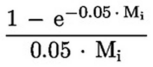
=
the notional of purchased single name credit default swap hedges (summed if more than one position) referencing counterparty ‘ i ’ and used to hedge CVA risk.
That notional amount shall be discounted by applying the following factor:

=
is the full notional of one or more index credit default swap of purchased protection used to hedge CVA risk.
That notional amount shall be discounted by applying the following factor:

=
is the weight applicable to index hedges.
An institution shall determine w ind by calculating a weighted average of wi that are applicable to the individual constituents of the index;
=
the effective maturity of the transactions with counterparty i.
For an institution using the method set out in Section 6 of Title II, Chapter 6, M i shall be calculated in accordance with Article 162(2)(g). However, for that purpose, M i shall not be capped at five years but at the longest contractual remaining maturity in the netting set.
For an institution not using the method set out in Section 6 of Title II, Chapter 6, M i is the average notional weighted maturity as referred to in point (b) of Article 162(2). However, for that purpose, M i shall not be capped at five years but at the longest contractual remaining maturity in the netting set.

=
the maturity of the hedge instrument with notional B i (the quantities 
=
the maturity of the index hedge.
In the case of more than one index hedge position, M ind is the notional-weighted maturity.
2 . Where a counterparty is included in an index on which a credit default swap used for hedging counterparty credit risk is based, the institution may subtract the notional amount attributable to that counterparty in accordance with its reference entity weight from the index CDS notional amount and treat it as a single name hedge (B i ) of the individual counterparty with maturity based on the maturity of the index.
Table 1
| Credit quality step | Weight w i |
|---|---|
| 1 | 0,7 % |
| 2 | 0,8 % |
| 3 | 1,0 % |
| 4 | 2,0 % |
| 5 | 3,0 % |
| 6 | 10,0 % |
F612 Article 385 Alternative to using CVA methods to calculating own funds requirements
. . . . . . . . . . . . . . . . . . . . . . . . . . . . . . . .
Article 386 Eligible hedges
1. Hedges shall be ‘ eligible hedges ’ for the purposes of the calculation of own funds requirements for CVA risk in accordance with Articles 383 and 384 only where they are used for the purpose of mitigating CVA risk and managed as such, and are one of the following:
(a) single-name credit default swaps or other equivalent hedging instruments referencing the counterparty directly;
(b) index credit default swaps, provided that the basis between any individual counterparty spread and the spreads of index credit default swap hedges is reflected, to the satisfaction of the competent authority, in the value-at-risk and the stressed value-at-risk.
The requirement in point (b) that the basis between any individual counterparty spread and the spreads of index credit default swap hedges is reflected in the value-at-risk and the stressed value-at-risk shall also apply to cases where a proxy is used for the spread of a counterparty.
For all counterparties for which a proxy is used, an institution shall use reasonable basis time series out of a representative group of similar names for which a spread is available.
If the basis between any individual counterparty spread and the spreads of index credit default swap hedges is not reflected to the satisfaction of the competent authority, then an institution shall reflect only 50 % of the notional amount of index hedges in the value-at-risk and the stressed value-at-risk.
Over-hedging of the exposures with single name credit default swaps under the method laid out in Article 383 is not allowed.
2. An institution shall not reflect other types of counterparty risk hedges in the calculation of the own funds requirements for CVA risk. In particular, tranched or nth-to-default credit default swaps and credit linked notes are not eligible hedges for the purposes the calculation of the own funds requirements for CVA risk.
3. Eligible hedges that are included in the calculation of the own funds requirements for CVA risk shall not be included in the calculation of the own funds requirements for specific risk as set out in Title IV or treated as credit risk mitigation other than for the counterparty credit risk of the same portfolio of transaction.
PART FOUR LARGE EXPOSURES
F613 Article 387 Subject matter
. . . . . . . . . . . . . . . . . . . . . . . . . . . . . . . .
F613 Article 388 Negative Scope
. . . . . . . . . . . . . . . . . . . . . . . . . . . . . . . .
F613 Article 389 Definition
. . . . . . . . . . . . . . . . . . . . . . . . . . . . . . . .
F613 Article 390 Calculation of the exposure value
. . . . . . . . . . . . . . . . . . . . . . . . . . . . . . . .
Article 391 Definition of an institution for large exposures purposes
F614. . . . . . . . . . . . . . . . . . . . . . . . . . . . . . . .
[F68 For the purposes of [F615 provision in CRR rules that governs the calculation of large exposures in respect of institutions authorised in third countries which apply prudential supervisory and regulatory requirements at least equivalent to those applied in the United KingdomF615] , the [F616 Treasury may by regulations determineF616] whether a third country applies prudential supervisory and regulatory requirements at least equivalent to those applied in the [F617 United KingdomF617] .F68]
[F618 A country or territory listed in Annex I, II or III of Commission Implementing Decision 2014/908/EU of 12 December 2014 on the equivalence of the supervisory and regulatory requirements of certain third countries and territories for the purposes of the treatment of exposures according to Regulation (EU) No 575/2013 of the European Parliament and of the Council is to be treated as equivalent for the purposes of the rules mentioned in the preceding paragraph of this Article until regulations made under that paragraph come into force as respects that country.F618]
F619 Article 392 Definition of a large exposure
. . . . . . . . . . . . . . . . . . . . . . . . . . . . . . . .
F619 Article 393 Capacity to identify and manage large exposures
. . . . . . . . . . . . . . . . . . . . . . . . . . . . . . . .
F619 Article 394 Reporting requirements
. . . . . . . . . . . . . . . . . . . . . . . . . . . . . . . .
F619 Article 395 Limits to large exposures
. . . . . . . . . . . . . . . . . . . . . . . . . . . . . . . .
F619 Article 396 Compliance with large exposures requirements
. . . . . . . . . . . . . . . . . . . . . . . . . . . . . . . .
F619 Article 397 Calculating additional own funds requirements for large exposures in the trading book
. . . . . . . . . . . . . . . . . . . . . . . . . . . . . . . .
F619 Article 398 Procedures to prevent institutions from avoiding the additional own funds requirement
. . . . . . . . . . . . . . . . . . . . . . . . . . . . . . . .
F619 Article 399 Eligible credit mitigation techniques
. . . . . . . . . . . . . . . . . . . . . . . . . . . . . . . .
F619 Article 400 Exemptions
. . . . . . . . . . . . . . . . . . . . . . . . . . . . . . . .
F619 Article 401 Calculating the effect of the use of credit risk mitigation techniques
. . . . . . . . . . . . . . . . . . . . . . . . . . . . . . . .
F619 Article 402 Exposures arising from mortgage lending
. . . . . . . . . . . . . . . . . . . . . . . . . . . . . . . .
F619 Article 403 Substitution approach
. . . . . . . . . . . . . . . . . . . . . . . . . . . . . . . .
F324 PART FIVE [F324EXPOSURES TO TRANSFERRED CREDIT RISK
F324 TITLE I GENERAL PROVISIONS FOR THIS PART
F324 Article 404 Scope of application
. . . . . . . . . . . . . . . . . . . . . . . . . . . . . . . .
F324 TITLE II REQUIREMENTS FOR INVESTOR INSTITUTIONS
F324 Article 405 Retained interest of the issuer
. . . . . . . . . . . . . . . . . . . . . . . . . . . . . . . .
F324 Article 406 Due diligence
. . . . . . . . . . . . . . . . . . . . . . . . . . . . . . . .
F324 Article 407 Additional risk weight
. . . . . . . . . . . . . . . . . . . . . . . . . . . . . . . .
F324 TITLE III REQUIREMENTS FOR SPONSOR AND ORIGINATOR INSTITUTIONS
F324 Article 408 Criteria for credit granting
. . . . . . . . . . . . . . . . . . . . . . . . . . . . . . . .
F324 Article 409 Disclosure to investors
. . . . . . . . . . . . . . . . . . . . . . . . . . . . . . . .
F324 Article 410 Uniform condition of applicationF324]
. . . . . . . . . . . . . . . . . . . . . . . . . . . . . . . .
PART SIX LIQUIDITY
TITLE I DEFINITIONS AND LIQUIDITY COVERAGE REQUIREMENT
F620 Article 411 Definitions
. . . . . . . . . . . . . . . . . . . . . . . . . . . . . . . .
F620 Article 412 Liquidity coverage requirement
. . . . . . . . . . . . . . . . . . . . . . . . . . . . . . . .
F620 Article 413 Stable Funding
. . . . . . . . . . . . . . . . . . . . . . . . . . . . . . . .
F620 Article 414 Compliance with liquidity requirements
. . . . . . . . . . . . . . . . . . . . . . . . . . . . . . . .
TITLE II LIQUIDITY REPORTING
F620 Article 415 Reporting obligation and reporting format
. . . . . . . . . . . . . . . . . . . . . . . . . . . . . . . .
F620 Article 416 Reporting on liquid assets
. . . . . . . . . . . . . . . . . . . . . . . . . . . . . . . .
F620 Article 417 Operational requirements for holdings of liquid assets
. . . . . . . . . . . . . . . . . . . . . . . . . . . . . . . .
F620 Article 418 Valuation of liquid assets
. . . . . . . . . . . . . . . . . . . . . . . . . . . . . . . .
F620 Article 419 Currencies with constraints on the availability of liquid assets
. . . . . . . . . . . . . . . . . . . . . . . . . . . . . . . .
F620 Article 420 Liquidity outflows
. . . . . . . . . . . . . . . . . . . . . . . . . . . . . . . .
F620 Article 421 Outflows on retail deposits
. . . . . . . . . . . . . . . . . . . . . . . . . . . . . . . .
F620 Article 422 Outflows on other liabilities
. . . . . . . . . . . . . . . . . . . . . . . . . . . . . . . .
F620 Article 423 Additional outflows
. . . . . . . . . . . . . . . . . . . . . . . . . . . . . . . .
F620 Article 424 Outflows from credit and liquidity facilities
. . . . . . . . . . . . . . . . . . . . . . . . . . . . . . . .
F620 Article 425 Inflows
. . . . . . . . . . . . . . . . . . . . . . . . . . . . . . . .
F620 Article 426 Updating Future liquidity requirements
. . . . . . . . . . . . . . . . . . . . . . . . . . . . . . . .
TITLE III REPORTING ON STABLE FUNDING
F620 Article 427 Items providing stable funding
. . . . . . . . . . . . . . . . . . . . . . . . . . . . . . . .
F620 Article 428 Items requiring stable funding
. . . . . . . . . . . . . . . . . . . . . . . . . . . . . . . .
PART SEVEN LEVERAGE
F621 Article 429 Calculation of the leverage ratio
. . . . . . . . . . . . . . . . . . . . . . . . . . . . . . . .
F622 Article 429a Exposure value of derivatives
. . . . . . . . . . . . . . . . . . . . . . . . . . . . . . . .
F623 Article 429b Counterparty credit risk add-on for repurchase transactions, securities or commodities lending or borrowing transactions, long settlement transactions and margin lending transactions
. . . . . . . . . . . . . . . . . . . . . . . . . . . . . . . .
[F68PART SEVEN A REPORTING REQUIREMENTSF68]
Article 430 Reporting on prudential requirements and financial information
F624 1.. . . . . . . . . . . . . . . . . . . . . . . . . . . . . . . .
F6252.. . . . . . . . . . . . . . . . . . . . . . . . . . . . . . . .
F626 7.. . . . . . . . . . . . . . . . . . . . . . . . . . . . . . . .
F6278.. . . . . . . . . . . . . . . . . . . . . . . . . . . . . . . .
F628 Article 430b Specific reporting requirements for market risk
. . . . . . . . . . . . . . . . . . . . . . . . . . . . . . . .
F629 Article 430c Feasibility report on the integrated reporting system
. . . . . . . . . . . . . . . . . . . . . . . . . . . . . . . .
F630PART EIGHT DISCLOSURE BY INSTITUTIONS
F630TITLE I GENERAL PRINCIPLES
F630Article 431 Scope of disclosure requirements
. . . . . . . . . . . . . . . . . . . . . . . . . . . . . . . .
F630Article 432 Non-material, proprietary or confidential information
. . . . . . . . . . . . . . . . . . . . . . . . . . . . . . . .
F630Article 433 Frequency of disclosure
. . . . . . . . . . . . . . . . . . . . . . . . . . . . . . . .
F630Article 434 Means of disclosures
. . . . . . . . . . . . . . . . . . . . . . . . . . . . . . . .
F630Article 434a Uniform disclosure formats
. . . . . . . . . . . . . . . . . . . . . . . . . . . . . . . .
F630TITLE II TECHNICAL CRITERIA ON TRANSPARENCY AND DISCLOSURE
F630Article 435 Risk management objectives and policies
. . . . . . . . . . . . . . . . . . . . . . . . . . . . . . . .
F630Article 436 Scope of application
. . . . . . . . . . . . . . . . . . . . . . . . . . . . . . . .
F630Article 437 Own funds
. . . . . . . . . . . . . . . . . . . . . . . . . . . . . . . .
F630Article 438 Capital requirements
. . . . . . . . . . . . . . . . . . . . . . . . . . . . . . . .
F630Article 439 Exposure to counterparty credit risk
. . . . . . . . . . . . . . . . . . . . . . . . . . . . . . . .
F630Article 440 Capital buffers
. . . . . . . . . . . . . . . . . . . . . . . . . . . . . . . .
F630Article 441 Indicators of global systemic importance
. . . . . . . . . . . . . . . . . . . . . . . . . . . . . . . .
F630Article 442 Credit risk adjustments
. . . . . . . . . . . . . . . . . . . . . . . . . . . . . . . .
F630Article 443 Unencumbered assets
. . . . . . . . . . . . . . . . . . . . . . . . . . . . . . . .
F630Article 444 Use of ECAIs
. . . . . . . . . . . . . . . . . . . . . . . . . . . . . . . .
F630Article 445 Exposure to market risk
. . . . . . . . . . . . . . . . . . . . . . . . . . . . . . . .
F630Article 446 Operational risk
. . . . . . . . . . . . . . . . . . . . . . . . . . . . . . . .
F630Article 447 Exposures in equities not included in the trading book
. . . . . . . . . . . . . . . . . . . . . . . . . . . . . . . .
F630Article 448 Exposure to interest rate risk on positions not included in the trading book
. . . . . . . . . . . . . . . . . . . . . . . . . . . . . . . .
F630Article 449 Exposure to securitisation positions
. . . . . . . . . . . . . . . . . . . . . . . . . . . . . . . .
F630Article 450 Remuneration policy
. . . . . . . . . . . . . . . . . . . . . . . . . . . . . . . .
F630Article 451 Leverage
. . . . . . . . . . . . . . . . . . . . . . . . . . . . . . . .
F630TITLE III QUALIFYING REQUIREMENTS FOR THE USE OF PARTICULAR INSTRUMENTS OR METHODOLOGIES
F630Article 452 Use of the IRB Approach to credit risk
. . . . . . . . . . . . . . . . . . . . . . . . . . . . . . . .
F630Article 453 Use of credit risk mitigation techniques
. . . . . . . . . . . . . . . . . . . . . . . . . . . . . . . .
F630Article 454 Use of the Advanced Measurement Approaches to operational risk
. . . . . . . . . . . . . . . . . . . . . . . . . . . . . . . .
F630Article 455 Use of Internal Market Risk Models
. . . . . . . . . . . . . . . . . . . . . . . . . . . . . . . .
PART NINE [F631Regulations, enhanced prudential measures and technical standardsF631]
Article 456 [F632Regulations modifying this RegulationF632]
1.[F633 The Treasury may make regulationsF633] concerning the following matters:
(a)clarification of the definitions set out in Articles 4, 5, 142, 153, 192, 242, 272 [F634 and 381F634] F635 ...;
(b)clarification of the definitions set out in Articles 4, 5, 142, 153, 192, 242, 272 [F636 and 381F636] in order to take account, in the application of this Regulation, of developments on financial markets;
(c)amendment of the list of exposure classes in Articles 112 and 147 in order to take account of developments on financial markets;
(d)the amount specified in point (c) of Article 123, Article 147(5)(a), Article 153(4) and Article 162(4), to take into account the effects of inflation;
(e)the list and classification of the off-balance sheet items in Annexes I and II, in order to take account of developments on financial markets;
F637(f). . . . . . . . . . . . . . . . . . . . . . . . . . . . . . . .
F638(g). . . . . . . . . . . . . . . . . . . . . . . . . . . . . . . .
(h)amendment of the own funds requirements as set out in F639... Articles 50a to 50d of Regulation (EU) No 648/2012 to take account of developments or amendments of the international standards for exposures to a central counterparty;
F640(i). . . . . . . . . . . . . . . . . . . . . . . . . . . . . . . .
F640(j). . . . . . . . . . . . . . . . . . . . . . . . . . . . . . . .
2.[F641 The Treasury may by regulations amend Articles 381, 382(1) to (3) [F642 , 383, 384 and 386F642] concerning—F641]
(a)the treatment of CVA risk as a stand-alone charge versus an integrated component of the market risk framework;
(b)the scope of the CVA risk charge including the exemption in Article 482;
(c)eligible hedges;
(d)calculation of capital requirements of CVA risk.
F643...
Article 457 Technical adjustments and corrections
[F644 The Treasury may by regulationsF644] make technical adjustment and corrections of non-essential elements in the following provisions in order to take account of developments in new financial products or activities, to make adjustments taking into account developments [F645 after IP completion day in the law of the United Kingdom, or any part of it,F645] on financial services and accounting [F646 including UK-adopted international accounting standardsF646] :
the own funds requirements for credit risk laid down in [F647 Articles 111 to 127, 129 to 131, 133, 134, 143 to 151, 153 to 157 and 159 to 191F647] ;
the effects of credit risk mitigation in accordance with Articles 193 to 241;
[F78 the own funds requirements for securitisation laid down in Articles 242 to 270a;F78]
the own funds requirements for counterparty credit risks in accordance with Articles 272 [F648 and 283 to 299F648] ;
the own funds requirements for operational risk laid down in [F649 Articles 315 and 317 to 324F649] ;
the own funds requirements for market risk laid down in Articles 325 to 377;
the own funds requirements for settlement risk laid down in Articles 378 and 379;
the own funds requirements for credit valuation adjustment risk laid down in Articles 383, 384 and 386;
Part Two F650... only as a result of developments in accounting standards or requirements which take account of [F651 the law of the United Kingdom, or any part of itF651] .
[F652Article 458 Enhanced prudential measures directions & recommendations: Interpretation
1.In this Article and in Articles 458A to 458C—
‘enhanced prudential measures direction’ means a direction of the Financial Policy Committee under section 9H of the 1998 Act to a competent authority describing stricter measures in relation to a relevant prudential area than are required by this Regulation or any legislation made under it;
‘enhanced prudential measures recommendation’ means a recommendation of the Financial Policy Committee under section 9Q of the 1998 Act to a competent authority, describing stricter measures in relation to a relevant prudential area than are required by this Regulation or any legislation made under it;
‘enhanced prudential implementation action’ means action to comply with an enhanced prudential measures direction or enhanced prudential measures recommendation;
‘FPC’ means the Financial Policy Committee;
‘regulated person’ has the meaning given in section 9H(2) of the 1998 Act;
‘relevant prudential area’ means—
(i)the level of own funds provided for in Article 92,
(ii)F653 ...
(iii)F653 ...
(iv)F653 ...
(v)risk weights for targeting asset bubbles in the residential and commercial property sector, or
(vi)intra financial sector exposures.
‘the 1998 Act’ means the Bank of England Act 1998 ;
F654 ...
Article 458A Enhanced prudential measures
1.Where the FPC issues an enhanced prudential measure direction or enhanced prudential measure recommendation, the competent authority may exercise its functions to introduce an enhanced prudential implementation action.
2.An enhanced prudential implementation action shall have effect notwithstanding any provision to the contrary in this Regulation or any legislation made under it.
Article 458B Enhanced prudential measures: effect of revocation
1.Paragraph 2 applies where—
(a)the FPC revokes an enhanced prudential measures direction in accordance with section 9J of the 1998 Act; or
(b)the FPC withdraws an enhanced prudential measures recommendation and notifies the competent authority of that withdrawal.
2A competent authority which has introduced an enhanced prudential implementation action must consider whether it is appropriate to cease to implement that action.
Article 458C Enhanced prudential measures: publication and application
1Once the Bank has published the relevant information concerning the enhanced prudential measure direction or enhanced prudential measure recommendation in accordance with section 9U and, where relevant, section 9V(3) of the 1998 Act, a competent authority must publish on its website the following information—
(a)the fact that it has introduced an enhanced prudential implementation action;
(b)any requirements of this Regulation or any delegated legislation made under it that the competent authority considered inconsistent with the enhanced prudential implementation action; and
(c)a statement that the relevant enhanced prudential implementation action shall have effect notwithstanding any provision to the contrary in this Regulation or any legislation made under it.
2.Until the Bank has published the relevant information concerning the enhanced prudential measure direction or enhanced prudential measure recommendation in accordance with section 9U and, where relevant, section 9V(3) of the 1998 Act, the competent authority must take reasonable steps to bring the enhanced prudential implementation action to the attention of the regulated persons subject to it.
3.A failure by the competent authority to publish information as required by paragraph 1 does not affect the validity, continuing operation or enforcement of the enhanced prudential implementation action to which the requirement to publish relates.F652]
Article 459 Prudential requirements
[F655 The Treasury may by regulations imposeF655] , for a period of one year, stricter prudential requirements for exposures where this is necessary to address changes in the intensity of microprudential and macroprudential risks which arise from market developments [F656 in the United Kingdom or outside the United KingdomF656] , and where the instruments of this Regulation and [F657 Directive 2013/36/EU UK lawF657] are not sufficient to address these risks F658... concerning:
the level of own funds laid down in Article 92;
F659 ...
F659 ...
F660...
F661 Article 460 Liquidity
. . . . . . . . . . . . . . . . . . . . . . . . . . . . . . . .
F662 Article 461 Review of the phasing-in of the liquidity coverage requirement
. . . . . . . . . . . . . . . . . . . . . . . . . . . . . . . .
F663 Article 461a Alternative standardised approach for market risk
. . . . . . . . . . . . . . . . . . . . . . . . . . . . . . . .
F664 Article 462 Exercise of the delegation
. . . . . . . . . . . . . . . . . . . . . . . . . . . . . . . .
F665 Article 463 Objections to regulatory technical standards
. . . . . . . . . . . . . . . . . . . . . . . . . . . . . . . .
F666 Article 464 European Banking Committee
. . . . . . . . . . . . . . . . . . . . . . . . . . . . . . . .
[F667Article 464A Regulations: general provisions
1.Any power to make regulations conferred on the Treasury by this Regulation, is exercisable by statutory instrument.
2.Such regulations may—
(a)contain incidental, supplemental, consequential and transitional provision, and
(b)may make different provision for different purposes.
3.A statutory instrument containing regulations made under Article 456 of this Regulation may not be made unless a draft of the instrument has been laid before and approved by a resolution of each House of Parliament.
4.A statutory instrument containing regulations made under any other provision of this Regulation is subject to annulment in pursuance of a resolution of either House of Parliament.
Article 464B Power to make technical standards
F6681.. . . . . . . . . . . . . . . . . . . . . . . . . . . . . . . .
2.In addition to the powers to make technical standards set out elsewhere in this Regulation, [F669 the PRA mayF669] make technical standards for the following purposes—
(a)to specify—
(i)the information to be provided to the relevant competent authority in the application for authorisation of a credit institution under Part 4A of FSMA;
(ii)the requirements applicable to shareholders and members with qualifying holdings; and
(iii)obstacles which may prevent effective exercise of the supervisory functions of the competent authority;
(b) to define what is meant by ‘exposures to specific risk which are material in absolute terms’ and the thresholds for large numbers of material counterparties and positions in debt instruments of different issuers;
(c)to specify—
(i)the procedure for sharing assessments of the quality of institutions' internal approaches for calculating own funds requirements between competent authorities;
(ii)the standards for the assessment of the quality of institutions' internal approaches for calculating own funds requirements by competent authorities;
(d)to specify—
(i)the template, the definitions and the IT-solutions to be applied in the UK for institutions to report the results of the calculations of their internal approaches for their exposures or positions that are included in their benchmark portfolios;
(ii)the benchmark portfolio or portfolios which institutions must report;
(e)to specify the classes of instruments that can be fully converted to Common Equity Tier 1 instruments or written down, and qualitative and appropriate quantitative criteria to identify categories of staff whose professional activities have a material impact on the institution's risk profile;
(f)to specify the method for the identification of the geographical location of an institution's credit exposures for the purposes of calculating institution-specific countercyclical capital buffer rates.
3.In addition to the powers to make technical standards set out elsewhere in this Regulation, the PRA F670... may make technical standards to specify—
(a) the methodology in accordance with which the PRA shall identify a UK parent institution or UK parent financial holding company or UK parent mixed financial holding company as a global systemically important institution (‘G-SII’); and
(b)the methodology for the definition of the sub-categories and the allocation of G-SIIs in sub-categories based on their systemic significance; taking into account any international agreed standards.F667]
PART TEN TRANSITIONAL PROVISIONS, REPORTS, REVIEWS AND AMENDMENTS
TITLE I TRANSITIONAL PROVISIONS
CHAPTER 1 Own funds requirements, unrealised gains and losses measured at fair value and deductions
Section 1 Own funds requirements
Article 465 Own funds requirements
1. By way of derogation from points (a) and (b) of Article 92(1) the following own funds requirements shall apply during the period from 1 January 2014 to 31 December 2014 :
(a) a Common Equity Tier 1 capital ratio of a level that falls within a range of 4 % to 4,5 %;
(b) a Tier 1 capital ratio of a level that falls within a range of 5,5 % to 6 %.
2. Competent authorities shall determine and publish the levels of the Common Equity Tier 1 and Tier 1 capital ratios in the ranges specified in paragraph 1 that institutions shall meet or exceed.
F1 Article 466 First time application of International Financial Reporting Standards
. . . . . . . . . . . . . . . . . . . . . . . . . . . . . . . .
Section 2 Unrealised gains and losses measured at fair value
F244 Article 467 [F244Unrealised losses measured at fair valueF244]
. . . . . . . . . . . . . . . . . . . . . . . . . . . . . . . .
F1Article 468 Temporary treatment of unrealised gains and losses measured at fair value through other comprehensive income in view of the COVID-19 pandemic
. . . . . . . . . . . . . . . . . . . . . . . . . . . . . . . .
Section 3 Deductions
Sub-Section 1 Deductions from Common Equity Tier 1 items
F671Article 469 Deductions from Common Equity Tier 1 items
. . . . . . . . . . . . . . . . . . . . . . . . . . . . . . . .
F1Article 469a Derogation from deductions from Common Equity Tier 1 items for non-performing exposures
. . . . . . . . . . . . . . . . . . . . . . . . . . . . . . . .
F672Article 470 Exemption from deduction from Common Equity Tier 1 items
. . . . . . . . . . . . . . . . . . . . . . . . . . . . . . . .
F1Article 471 Exemption from Deduction of Equity Holdings in Insurance Companies from Common Equity Tier 1 Items
. . . . . . . . . . . . . . . . . . . . . . . . . . . . . . . .
F673Article 472 Items not deducted from Common Equity Tier 1
. . . . . . . . . . . . . . . . . . . . . . . . . . . . . . . .
F1Article 473 Introduction of amendments to IAS 19
. . . . . . . . . . . . . . . . . . . . . . . . . . . . . . . .
F1Article 473a Introduction of IFRS 9
. . . . . . . . . . . . . . . . . . . . . . . . . . . . . . . .
Sub-Section 2 Deductions from Additional Tier 1 items
F1Article 474 Deductions from Additional Tier 1 items
. . . . . . . . . . . . . . . . . . . . . . . . . . . . . . . .
F674Article 475 Items not deducted from Additional Tier 1 items
. . . . . . . . . . . . . . . . . . . . . . . . . . . . . . . .
Sub-Section 3 Deductions from Tier 2 items
F1Article 476 Deductions from Tier 2 items
. . . . . . . . . . . . . . . . . . . . . . . . . . . . . . . .
F675Article 477 Deductions from Tier 2 items
. . . . . . . . . . . . . . . . . . . . . . . . . . . . . . . .
Sub-Section 4 Applicable percentages for deduction
F676Article 478 Applicable percentages for deduction from Common Equity Tier 1, Additional Tier 1 and Tier 2 items
. . . . . . . . . . . . . . . . . . . . . . . . . . . . . . . .
Section 4 minority interest and additional Tier 1 and Tier 2 instruments issued by subsidiaries
F1Article 479 Recognition in consolidated Common Equity Tier 1 capital of instruments and items that do not qualify as minority interests
. . . . . . . . . . . . . . . . . . . . . . . . . . . . . . . .
F1Article 480 Recognition in consolidated own funds of minority interests and qualifying Additional Tier 1 and Tier 2 capital
. . . . . . . . . . . . . . . . . . . . . . . . . . . . . . . .
Section 5 Additional filters and deductions
F677 Article 481 Additional filters and deductions
F1Article 482 Scope of application for derivatives transactions with pension funds
. . . . . . . . . . . . . . . . . . . . . . . . . . . . . . . .
CHAPTER 2 Grandfathering of capital instruments
Section 1 Instruments constituting State aid
F1Article 483 Grandfathering of State aid instruments
. . . . . . . . . . . . . . . . . . . . . . . . . . . . . . . .
Section 2 Instruments not constituting State aid
Sub-Section 1 Grandfathering eligibility and limits
F1Article 484 Eligibility for grandfathering of items that qualified as own funds under national transposition measures for Directive 2006/48/EC
. . . . . . . . . . . . . . . . . . . . . . . . . . . . . . . .
F1Article 485 Eligibility for inclusion in the Common Equity Tier 1 of share premium accounts related to items that qualified as own funds under national transposition measures for Directive 2006/48/EC
. . . . . . . . . . . . . . . . . . . . . . . . . . . . . . . .
F1Article 486 Limits for grandfathering of items within Common Equity Tier 1, Additional Tier 1 and Tier 2 items
. . . . . . . . . . . . . . . . . . . . . . . . . . . . . . . .
F1 Article 487 Items excluded from grandfathering in Common Equity Tier 1 or Additional Tier 1 items in other elements of own funds
. . . . . . . . . . . . . . . . . . . . . . . . . . . . . . . .
F1Article 488 Amortisation of items grandfathered as Tier 2 items
. . . . . . . . . . . . . . . . . . . . . . . . . . . . . . . .
Sub-Section 2 Inclusion of instruments with a call and incentive to redeem in additional Tier 1 and Tier 2 items
F1Article 489 Hybrid instruments with a call and incentive to redeem
. . . . . . . . . . . . . . . . . . . . . . . . . . . . . . . .
F1Article 490 Tier 2 items with an incentive to redeem
. . . . . . . . . . . . . . . . . . . . . . . . . . . . . . . .
F1Article 491 Effective maturity
. . . . . . . . . . . . . . . . . . . . . . . . . . . . . . . .
CHAPTER 3 Transitional provisions for disclosure of own funds
F678 Article 492 Disclosure of own funds
. . . . . . . . . . . . . . . . . . . . . . . . . . . . . . . .
CHAPTER 4 Large exposures, own funds requirements, leverage and the Basel I Floor
F679Article 493 Transitional provisions for large exposures
. . . . . . . . . . . . . . . . . . . . . . . . . . . . . . . .
F1Article 494 Transitional provisions concerning the requirement for own funds and eligible liabilities
. . . . . . . . . . . . . . . . . . . . . . . . . . . . . . . .
F1Article 494a Grandfathering of issuances through special purpose entities
. . . . . . . . . . . . . . . . . . . . . . . . . . . . . . . .
F1Article 494b Grandfathering of own funds instruments and eligible liabilities instruments
. . . . . . . . . . . . . . . . . . . . . . . . . . . . . . . .
F680Article 495 Treatment of equity exposures under the IRB Approach
. . . . . . . . . . . . . . . . . . . . . . . . . . . . . . . .
Article 496 Own funds requirements for covered bonds
1.[F681 Competent authorities may waive in full or in part the 10 % limit for senior units issued by French Fonds Communs de Créances or by securitisation entities which are equivalent to French Fonds Communs de Créances laid down in points (d) and (f) of Article 129(1), provided that both of the following conditions are fulfilled:F681]
(a)the securitised residential property or commercial immovable property exposures were originated by a member of the same consolidated group of which the issuer of the covered bonds is a member, or by an entity affiliated to the same central body to which the issuer of the covered bonds is affiliated, where that common group membership or affiliation shall be determined at the time the senior units are made collateral for covered bonds;
(b)a member of the same consolidated group of which the issuer of the covered bonds is a member, or an entity affiliated to the same central body to which the issuer of the covered bonds is affiliated, retains the whole first loss tranche supporting those senior units.
2.Until 31 December 2014, for the purposes of point (c) of Article 129(1), the senior unsecured exposures of institutions which qualified for a 20 % risk weight under national law before 28 June 2013 shall be considered to qualify for credit quality step 1.
3.Until 31 December 2014, for the purposes of Article 129(5), the senior unsecured exposures of institutions which qualified for a 20 % risk weight under national law before 28 June 2013shall be considered to qualify for a 20 % risk weight.
[F2 Article 497 Own funds requirements for exposures to CCPs cross-notes
1.Where a third-country CCP applies for recognition in accordance with Article 25 of Regulation (EU) No 648/2012, institutions may consider that CCP as a QCCP from the date on which it submitted its application for recognition to [F682 the BankF682] and until one of the following dates:
(a)where the [F683 Treasury have made regulations underF683] Article 25(6) of Regulation (EU) No 648/2012 in relation to the third country in which the CCP is established and that implementing act has entered into force, two years after the date of submission of the application;
(b)where the [F684 Treasury have not yet made regulations underF684] Article 25(6) of Regulation (EU) No 648/2012 in relation to the third country in which the CCP is established or where that implementing act has not yet entered into force, the earlier of the following dates:
two years after the date of entry into force of the [F685 regulationsF685] ;
for CCPs that submitted the application after 27 June 2019, two years after the date of submission of the application;
for those CCPs that submitted the application before 27 June 2019, 28 June 2021.
2.Until the expiration of the deadline referred to in paragraph 1 of this Article, where a CCP referred to in that paragraph does not have a default fund and does not have in place a binding arrangement with its clearing members that allows it to use all or part of the initial margin received from its clearing members as if they were pre-funded contributions, the institution shall substitute the formula for calculating the own funds requirement in Article 308(2) with the following one:

where:

=
the hypothetical capital of the QCCP communicated to the institution by the QCCP in accordance with Article 50c of Regulation (EU) No 648/2012;
=
the pre-funded financial resources of the CCP communicated to the institution by the CCP in accordance with Article 50c of Regulation (EU) No 648/2012;
=
the index denoting the clearing member;
=
the initial margin posted with the CCP by clearing member i; and
=
the total amount of initial margin communicated to the institution by the CCP in accordance with Article 89(5a) of Regulation (EU) No 648/2012.
3.In exceptional circumstances, where it is necessary and proportionate in order to avoid disruption to international financial markets, the [F686 Treasury may by regulationsF686] extend [F687 by 12 months on each occasionF687] the transitional provisions set out in paragraph 1 of this Article.F2]
[[F688,X4 Article 498 Exemption for Commodities dealers
Until [F689 1 January 2022F689] , the provisions on own funds requirements as set out in this Regulation shall not apply to investment firms the main business of which consists exclusively of the provision of investment services or activities in relation to the financial instruments set out in [F690 paragraphs 5, 6, 7, 9, 10 and 11 of Part 1 of Schedule 2 to the Regulated Activities OrderF690] and to which Directive 2004/39/EC did not apply on 31 December 2006.X4,F688]]
F691 Article 499 Leverage
. . . . . . . . . . . . . . . . . . . . . . . . . . . . . . . .
[F2 Article 500 Adjustment for massive disposals
1 . By way of derogation from point (a) of Article 181(1), an institution may adjust its LGD estimates by partly or fully offsetting the effect of massive disposals of defaulted exposures on realised LGDs up to the difference between the average estimated LGDs for comparable exposures in default that have not been finally liquidated and the average realised LGDs including on the basis of the losses realised due to massive disposals, as soon as all the following conditions are met:
( a ) the institution has notified the [F692 PRAF692] of a plan providing the scale, composition and the dates of the disposals of defaulted exposures;
( b ) the dates of the disposals of defaulted exposures are after 23 November 2016 but not later than 28 June 2022 ;
( c ) the cumulative amount of defaulted exposures disposed of since the date of the first disposal in accordance with the plan referred to in point (a) has surpassed 20 % of the cumulative amount of all observed defaults as of the date of the first disposal referred to in points (a) and (b).
The adjustment referred to in the first subparagraph may only be carried out until 28 June 2022 and its effects may last for as long as the corresponding exposures are included in the institution's own LGD estimates.
2 . Institutions shall notify the [F692 PRAF692] without delay when the condition set out in point (c) of paragraph 1 has been met.F2]
F693 Article 500a Temporary treatment of public debt issued in the currency of another Member State
. . . . . . . . . . . . . . . . . . . . . . . . . . . . . . . .
F694 Article 500b Temporary exclusion of certain exposures to central banks from the total exposure measure in view of the COVID-19 pandemic
. . . . . . . . . . . . . . . . . . . . . . . . . . . . . . . .
[F695Article 500c Exclusion of overshootings from the calculation of the back-testing addend in view of the COVID-19 pandemic
By way of derogation from Article 366(3), competent authorities may, in exceptional circumstances and in individual cases, permit institutions to exclude the overshootings evidenced by the institution’s back-testing on hypothetical or actual changes from the calculation of the addend set out in Article 366(3), provided that those overshootings do not result from deficiencies in the internal model and provided that they occurred between 1 January 2020 and 31 December 2021.F695]
F697 Article 500d F696... Calculation of the exposure value of regular-way purchases and sales awaiting settlement in view of the COVID-19 pandemic
. . . . . . . . . . . . . . . . . . . . . . . . . . . . . . . .
[F2 Article 501 Adjustment of risk-weighted non-defaulted SME exposures
1.Institutions shall adjust the risk-weighted exposure amounts for non-defaulted exposures to an SME (RWEA), which are calculated in accordance with Chapter 2 or 3 of Title II of Part Three [F698 of this Regulation and Articles 132a to 132c of Chapter 3 of the Standardised Approach and Internal Ratings Based Approach to Credit Risk (CRR) Part of the PRA RulebookF698] , as applicable, in accordance with the following formula:

where:
=
the RWEA adjusted by an SME supporting factor; and
=
the total amount owed to the institution, its subsidiaries, its parent undertakings and other subsidiaries of those parent undertakings, including any exposure in default, but excluding claims or contingent claims secured on residential property collateral, by the SME or the group of connected clients of the SME.
2.For the purposes of this Article:
(a)the exposure to an SME shall be included either in the retail or in the corporates or secured by mortgages on immovable property classes;
[F699 (b)an SME is defined as set out in Article 4(1)(128D) of this Regulation, save that in Article 2 of the Annex to Commission Recommendation 2003/361/EC only the annual turnover shall be taken into account;F699]
(c)institutions shall take reasonable steps to correctly determine E* and obtain the information required under point (b).F2]
[F68 Article 501a Adjustment to own funds requirements for credit risk for exposures to entities that operate or finance physical structures or facilities, systems and networks that provide or support essential public services
[F68 1. Own funds requirements for credit risk calculated in accordance with Title II of Part III shall be multiplied by a factor of 0,75, provided that the exposure complies with all the following criteria:
(a) the exposure is included either in the corporate exposure class or in the specialised lending exposures class, with the exclusion of exposures in default;
(b) the exposure is to an entity which was created specifically to finance or operate physical structures or facilities, systems and networks that provide or support essential public services;
(c) the source of repayment of the obligation is represented for not less than two thirds of its amount by the income generated by the assets being financed, rather than the independent capacity of a broader commercial enterprise, or by subsidies, grants or funding provided by one or more of the entities listed in points (b)(i) and (b)(ii) of paragraph 2;
(d) the obligor can meet its financial obligations even under severely stressed conditions that are relevant for the risk of the project;
(e) the cash flows that the obligor generates are predictable and cover all future loan repayments during the duration of the loan;
(f) the re-financing risk of the exposure is low or adequately mitigated, taking into account any subsidies, grants or funding provided by one or more of the entities listed in points (b)(i) and (b)(ii) of paragraph 2;
(g) the contractual arrangements provide lenders with a high degree of protection including the following:
where the revenues of the obligor are not funded by payments from a large number of users, the contractual arrangements shall include provisions that effectively protect lenders against losses resulting from the termination of the project by the party which agrees to purchase the goods or services provided by the obligor;
the obligor has sufficient reserve funds fully funded in cash or other financial arrangements with highly rated guarantors to cover the contingency funding and working capital requirements over the lifetime of the assets referred to in point (b) of this paragraph;
the lenders have a substantial degree of control over the assets and the income generated by the obligor;
the lenders have the benefit of security to the extent permitted by applicable law in assets and contracts critical to the infrastructure business or have alternative mechanisms in place to secure their position;
equity is pledged to lenders such that they are able to take control of the entity upon default;
the use of net operating cash flows after mandatory payments from the project for purposes other than servicing debt obligations is restricted;
there are contractual restrictions on the ability of the obligor to perform activities that may be detrimental to lenders, including the restriction that new debt cannot be issued without the consent of existing debt providers;
(h) the obligation is senior to all other claims other than statutory claims and claims from derivatives counterparties;
(i) where the obligor is in the construction phase, the following criteria shall be fulfilled by the equity investor, or where there is more than one equity investor, the following criteria shall be fulfilled by a group of equity investors as a whole:
the equity investors have a history of successfully overseeing infrastructure projects, the financial strength and the relevant expertise;
the equity investors have a low risk of default, or there is a low risk of material losses for the obligor as a result of their default;
there are adequate mechanisms in place to align the interest of the equity investors with the interests of lenders;
(j) the obligor has adequate safeguards to ensure completion of the project according to the agreed specification, budget or completion date; including strong completion guarantees or the involvement of an experienced constructor and adequate contract provisions for liquidated damages;
(k) where operating risks are material, they are properly managed;
(l) the obligor uses tested technology and design;
(m) all necessary permits and authorisations have been obtained;
(n) the obligor uses derivatives only for risk-mitigation purposes;
(o) the obligor has carried out an assessment whether the assets being financed contribute to the following environmental objectives:
climate change mitigation;
climate change adaptation;
sustainable use and protection of water and marine resources;
transition to a circular economy, waste prevention and recycling;
pollution prevention and control;
protection of healthy ecosystems.
2 . For the purposes of point (e) of paragraph 1, the cash flows generated shall not be considered predictable unless a substantial part of the revenues satisfies the following conditions:
(a) one of the following criteria is met:
the revenues are availability-based;
the revenues are subject to a rate-of-return regulation;
the revenues are subject to a take-or-pay contract;
the level of output or the usage and the price shall independently meet one of the following criteria:
it is regulated,
it is contractually fixed,
it is sufficiently predictable as a result of low demand risk;
(b) where the revenues of the obligor are not funded by payments from a large number of users, the party which agrees to purchase the goods or services provided by the obligor shall be one of the following:
a central bank, a central government, a regional government or a local authority, provided that they are assigned a risk weight of 0 % in accordance with Articles 114 and 115 or are assigned an ECAI rating with a credit quality step of at least 3;
a public sector entity, provided that it is assigned a risk weight of 20 % or below in accordance with Article 116 or is assigned an ECAI rating with a credit quality step of at least 3;
a multilateral development bank referred to in Article 117(2);
an international organisation referred to in Article 118;
a corporate entity which has been assigned an ECAI rating with a credit quality step of at least 3;
an entity that is replaceable without a significant change in the level and timing of revenues.
3 . Institutions shall report to competent authorities every six months on the total amount of exposures to infrastructure project entities calculated in accordance with paragraph 1 of this Article.F68]
F7004.. . . . . . . . . . . . . . . . . . . . . . . . . . . . . . . .
F7005.. . . . . . . . . . . . . . . . . . . . . . . . . . . . . . . .F68]
F701 Article 501b Derogation from reporting requirements
. . . . . . . . . . . . . . . . . . . . . . . . . . . . . . . .
F702TITLE II REPORTS AND REVIEWS
Article 501c Prudential treatment of exposures related to environmental and/or social objectives
F702. . . . . . . . . . . . . . . . . . . . . . . . . . . . . . . .
Article 502 Cyclicality of capital requirements
F702. . . . . . . . . . . . . . . . . . . . . . . . . . . . . . . .
Article 503 Own funds requirements for exposures in the form of covered bonds
F702. . . . . . . . . . . . . . . . . . . . . . . . . . . . . . . .
Article 504 Capital instruments subscribed by public authorities in emergency situations
F702. . . . . . . . . . . . . . . . . . . . . . . . . . . . . . . .
Article 504a Holdings of eligible liabilities instruments
F702. . . . . . . . . . . . . . . . . . . . . . . . . . . . . . . .
Article 505 Review of long-term financing
F702. . . . . . . . . . . . . . . . . . . . . . . . . . . . . . . .
Article 506 Credit risk — definition of default
F702. . . . . . . . . . . . . . . . . . . . . . . . . . . . . . . .
Article 507 Large exposures
F702. . . . . . . . . . . . . . . . . . . . . . . . . . . . . . . .
Article 508 Level of application
F702. . . . . . . . . . . . . . . . . . . . . . . . . . . . . . . .
Article 509 Liquidity requirements
F702. . . . . . . . . . . . . . . . . . . . . . . . . . . . . . . .
Article 510 Net Stable Funding Requirements
F702. . . . . . . . . . . . . . . . . . . . . . . . . . . . . . . .
Article 511 Leverage
F702. . . . . . . . . . . . . . . . . . . . . . . . . . . . . . . .
Article 512 Exposures to transferred credit risk
F702. . . . . . . . . . . . . . . . . . . . . . . . . . . . . . . .
Article 513 Macroprudential rules
F702. . . . . . . . . . . . . . . . . . . . . . . . . . . . . . . .
Article 514 Method for the calculation of the exposure value of derivative transactions
F702. . . . . . . . . . . . . . . . . . . . . . . . . . . . . . . .
Article 515 Monitoring and evaluation
F702. . . . . . . . . . . . . . . . . . . . . . . . . . . . . . . .
Article 516 Long-term financing
F702. . . . . . . . . . . . . . . . . . . . . . . . . . . . . . . .
Article 517 Definition of eligible capital
F702. . . . . . . . . . . . . . . . . . . . . . . . . . . . . . . .
Article 518 Review of capital instruments which may be written down or converted at the point of non-viability
F702. . . . . . . . . . . . . . . . . . . . . . . . . . . . . . . .
Article 518a Review of cross-default provisions
F702. . . . . . . . . . . . . . . . . . . . . . . . . . . . . . . .
Article 518b Report on overshootings and supervisory powers to limit distributions
F702. . . . . . . . . . . . . . . . . . . . . . . . . . . . . . . .
Article 519 Deduction of defined benefit pension fund assets from Common Equity Tier 1 items
F702. . . . . . . . . . . . . . . . . . . . . . . . . . . . . . . .
Article 519a Reporting and review
F702. . . . . . . . . . . . . . . . . . . . . . . . . . . . . . . .
Article 519b Own funds requirements for market risk
F702. . . . . . . . . . . . . . . . . . . . . . . . . . . . . . . .
[F68TITLE IIA IMPLEMENTATION OF RULESF68]
F703 Article 519c Compliance tool
. . . . . . . . . . . . . . . . . . . . . . . . . . . . . . . .
TITLE III AMENDMENTS
Article 520 Amendment of Regulation (EU) No 648/2012
Regulation (EU) No 648/2012 is amended as follows:
the following Chapter is added in Title IV:
‘CHAPTER 4 Calculations and reporting for the purposes of Regulation (EU) No 575/2013
Article 50a Calculation of K CCP
1. For the purposes of Article 308 of Regulation (EU) No 575/2013 of the European Parliament and of the Council of 26 June 2013 on prudential requirements for credit institutions and investment firms (21) , a CCP shall calculate K CCP as specified in paragraph 2 of this Article for all contracts and transactions it clears for all its clearing members falling within the coverage of the given default fund.
2. A CCP shall calculate the hypothetical capital (K CCP ) as follows:

where:
=
exposure value before risk mitigation that is equal to the exposure value of the CCP to clearing member i arising from all the contracts and transactions with that clearing member, calculated without taking into account the collateral posted by that clearing member;
=
the initial margin posted to the CCP by clearing member i;
=
the pre-funded contribution of clearing member i;
=
a risk weight of 20 %;
=
8 %.
All values in the formula in the first subparagraph shall relate to the valuation at the end of the day before the margin called on the final margin call of that day is exchanged.
3. A CCP shall undertake the calculation required by paragraph 2 at least quarterly or more frequently where required by the competent authorities of those of its clearing members which are institutions.
4. For the purpose of paragraph 3, EBA shall develop draft implementing technical standards to specify the following:
(a) the frequency and dates of the calculation laid down in paragraph 2;
(b) the situations in which the competent authority of an institution acting as a clearing member may require higher frequencies of calculation and reporting than those referred to in point (a).
EBA shall submit those draft implementing technical standards to the Commission by 1 January 2014 .
Power is conferred on the Commission to adopt the implementing technical standards referred to in the first subparagraph in accordance with Article 15 of Regulation (EU) No 1093/2010.
Article 50b General rules for the calculation of K CCP
For the purposes of the calculation laid down in Article 50a(2), the following shall apply:
a CCP shall calculate the value of the exposures it has to its clearing members as follows:
for exposures arising from contracts and transactions listed in Article 301(1)(a) and (d) of Regulation (EU) No 575/2013 it shall calculate them in accordance with the mark-to-market method laid down in Article 274 thereof;
for exposures arising from contracts and transactions listed in Article 301(1)(b), (c) and (e) of Regulation (EU) No 575/2013 it shall calculate them in accordance with the Financial Collateral Comprehensive Method specified in Article 223 of that Regulation with supervisory volatility adjustments, specified in Articles 223 and 224 of that Regulation. The exception set out in point (a) of Article 285(3) of that Regulation, shall not apply;
for exposures arising from transactions not listed in Article 301(1) of Regulation (EU) No 575/2013 and which entails settlement risk only it shall calculate them in accordance with Part Three, Title V of that Regulation;
for institutions that fall under the scope of Regulation (EU) No 575/2013 the netting sets are the same as those defined in Part Three, Title II of that Regulation;
when calculating the values referred to in point (a), the CCP shall subtract from its exposures the collateral posted by its clearing members, appropriately reduced by the supervisory volatility adjustments in accordance with the Financial Collateral Comprehensive Method specified in Article 224 of Regulation (EU) No 575/2013;
where a CCP has exposures to one or more CCPs it shall treat any such exposures as if they were exposures to clearing members and include any margin or pre-funded contributions received from those CCPs in the calculation of K CCP ;
where a CCP has in place a binding contractual arrangement with its clearing members that allows it to use all or part of the initial margin received from its clearing members as if they were pre-funded contributions, the CCP shall consider that initial margin as prefunded contributions for the purposes of the calculation in paragraph 1 and not as initial margin;
when applying the Mark-to-Market Method as set out in Article 274 of Regulation (EU) No 575/2013, a CCP shall replace the formula in point (c)(ii) of Article 298(1) of that Regulation with the following:

where the numerator of NGR is calculated in accordance with Article 274(1) of that Regulation and just before the variation margin is actually exchanged at the end of the settlement period, and the denominator is gross replacement cost;
where a CCP cannot calculate the value of NGR as set out in point (c)(ii) of Article 298(1) of Regulation (EU) No 575/2013, it shall:
notify those of its clearing members which are institutions and their competent authorities about its inability to calculate NGR and the reasons why it is unable to carry out the calculation;
for a period of three months, it may use a value of NGR of 0,3 to perform the calculation of PCE red specified in point (h) of this Article;
where, at the end of the period specified in point (ii) of point (i), the CCP would still be unable to calculate the value of NGR, it shall do the following:
stop calculating K CCP ;
notify those of its clearing members which are institutions and their competent authorities that it has stopped calculating K CCP ;
for the purpose of calculating the potential future exposure for options and swaptions in accordance with the Mark-to-Market Method specified in Article 274 of Regulation (EU) No 575/2013, a CCP shall multiply the notional amount of the contract by the absolute value of the option's delta 
where a CCP has more than one default fund, it shall carry out the calculation laid down in Article 50a(2) for each default fund separately.
Article 50c Reporting of information
1. For the purposes of Article 308 of Regulation (EU) No 575/2013, a CCP shall report the following information to those of its clearing members which are institutions and to their competent authorities:
(a) the hypothetical capital (K CCP );
(b) the sum of pre-funded contributions (DF CM );
(c) the amount of its pre-funded financial resources that it is required to use — by law or due to a contractual agreement with its clearing members — to cover its losses following the default of one or more of its clearing members before using the default fund contributions of the remaining clearing members (DF CCP );
(d) the total number of its clearing members (N);
(e) the concentration factor (β), as set out in Article 50d.
Where the CCP has more than one default fund, it shall report the information in the first subparagraph for each default fund separately.
2. The CCP shall notify those of its clearing members which are institutions at least quarterly or more frequently where required by the competent authorities of those clearing members.
3. EBA shall develop draft implementing technical standards to specify the following:
(a) the uniform template for the purpose of the reporting specified in paragraph 1;
(b) the frequency and dates of the reporting specified in paragraph 2;
(c) the situations in which the competent authority of an institution acting as a clearing member may require higher frequencies of reporting than those referred to in point (b).
EBA shall submit those draft implementing technical standards to the Commission by 1 January 2014 .
Power is conferred on the Commission to adopt the implementing technical standards referred to in the first subparagraph in accordance with Article 15 of Regulation (EU) No 1093/2010.
Article 50d Calculation of specific items to be reported by the CCP
For the purposes of Article 50c, the following shall apply:
where the rules of a CCP provide that it use part or all of its financial resources in parallel to the pre-funded contributions of its clearing members in a manner that makes those resources equivalent to pre-funded contributions of a clearing member in terms of how they absorb the losses incurred by the CCP in the case of the default or insolvency of one or more of its clearing members, the CCP shall add the corresponding amount of those resources to DF CM ;
where the rules of a CCP provide that it use part or all of its financial resources to cover its losses due to the default of one or more of its clearing members after it has depleted its default fund, but before it calls on the contractually committed contributions of its clearing members, the CCP shall add the corresponding amount of those additional financial resources 

a CCP shall calculate the concentration factor (β) in accordance with the following formula:

where:
=
the reduced figure for potential future credit exposure for all contracts and transaction of a CCP with clearing member i ;
=
the reduced figure for potential future credit exposure for all contracts and transaction of a CCP with the clearing member that has the largest PCE red value;
=
the reduced figure for potential future credit exposure for all contracts and transaction of a CCP with the clearing member that has the second largest PCE red value.’ ;
in Article 11(15), point (b) is deleted;
in Article 89, the following paragraph is inserted:
‘5a. Until 15 months after the date of entry into force of the latest of the regulatory technical standards referred to in Articles 16, 25, 26, 29, 34, 41, 42, 44, 45, 47 and 49, or until a decision is made under Article 14 on the authorisation of the CCP, whichever is earlier, that CCP shall apply the treatment specified in the third subparagraph of this paragraph.
Until 15 months after the date of entry into force of the latest of the regulatory technical standards referred to in Articles 16, 26, 29, 34, 41, 42, 44, 45, 47 and 49, or until a decision is made under Article 25 on the recognition of the CCP, whichever is earlier, that CCP shall apply the treatment specified in the third subparagraph of this paragraph.
Until the deadlines defined in the first two subparagraphs of this paragraph, and subject to the fourth subparagraph of this paragraph, where a CCP neither has a default fund nor has in place a binding arrangement with its clearing members that allows it to use all or part of the initial margin received from its clearing members as if they were pre-funded contributions, the information it is to report in accordance with Article 50c(1) shall include the total amount of initial margin it has received from its clearing members.
The deadlines referred to in the first and second subparagraphs of this paragraph may be extended by six months in accordance with a Commission implementing act adopted pursuant to Article 497(3) of Regulation (EU) No 575/2013.’ .
PART ELEVEN FINAL PROVISIONS
Article 521 Entry into force and date of application
1 . This Regulation shall enter into force on the day following that of its publication in the Official Journal of the European Union .
2 . This Regulation shall apply from 1 January 2014 , with the exception of:
( a ) Article 8(3), Article 21 and Article 451(1), which shall apply from 1 January 2015 ;
( b ) Article 413(1), which shall apply from 1 January 2016 ;
( c ) the provisions of this Regulation that require the ESAs to submit to the Commission draft technical standards and the provisions of this Regulation that empower the Commission to adopt delegated acts or implementing acts, which shall apply from 28 June 2013 .
[F704Article 522 Savings provisions: pre-exit decisions
1.Where a decision of the type set out in paragraph 2 is made before IP completion by a body other than the PRA or FCA—
(a)that decision shall continue to have effect on and after IP completion;
(b)the PRA F705... shall have the same powers in respect of that decision on and after IP completion as if it was a decision taken by the PRAF706...; and
(c)those powers shall include the power to review, vary, modify or revoke the decision.
2.The types of decision are—
(a)in respect of applications for the permissions referred to in Articles 143(1), 143(3), 151(4), 151(9), 283, 312(2) and 363 of Regulation No 575/2013, a decision whether or not to grant the permission sought and to determine the terms and conditions pursuant to which any such permission should be subject, where that decision has been made—
(i)jointly by the competent authorities in accordance with Article 20(1) of Regulation No 575/2013; or
(ii)by the consolidating supervisor in accordance with Article 20(4) of Regulation No 575/2013;
(b)a decision whether the criteria for a specific intragroup treatment referred to in Articles 422(9) and 425(4) of Regulation No 575/2013 are met, where that decision has been made—
(i)jointly by the competent authorities in accordance with Article 20(1) of Regulation No 575/2013; or
(ii)by the competent authority responsible for the supervision of the subsidiary on an individual basis in accordance with Article 20(5) of Regulation No 575/2013;
(c)a decision on whether the conditions in points (a) to (d) of Article 8(1) of Regulation No 575/2013 are met and identifying a single liquidity sub-group for the application of Article 8 of Regulation No 575/2013 (including where that decision also imposes constraints on the locations and ownership of liquid assets and requires minimum amounts of liquid assets to be held by institutions that are exempt from the application of Part 6), where that decision has been made—
(i)jointly by the competent authorities in accordance with Article 21(1) of Regulation No 575/2013; or
(ii)by the competent authority responsible for supervision on an individual basis in accordance with Article 21(2) of Regulation No 575/2013;
(d)a decision on the application of Articles 73 and 97 of Directive 2013/36/EU to determine the adequacy of the consolidated level of own funds held by the group of institutions with respect to its financial situation and risk profile and the required level of own funds for the application of Article 104(1)(a) of Directive 2013/36/EU to each entity within the group of institutions and on a consolidated basis, where that decision has been made—
(i)jointly by the competent authorities in accordance with Article 113(1) of Directive 2013/36/EU; or
(ii)by the consolidating supervisor in accordance with Article 113(3) of Directive 2013/36/EU;
(e)a decision on measures required to address any significant matters and material findings relating to liquidity supervision including relating to the adequacy of the organisation and the treatment of risks as required pursuant to Article 86 of Directive 2013/36/EU and relating to the need for institution-specific liquidity requirements in accordance with Article 105 of Directive 2013/36/EU, where that decision has been made—
(i)jointly by the competent authorities in accordance with Article 113(1) of Directive 2013/36/EU; or
(ii)by the consolidating supervisor in accordance with Article 113(3) of Directive 2013/36EU;
(f)a decision to update a decision of the type specified in (d) or (e), where that decision has been made—
(i)jointly by the competent authorities in accordance with Article 113(4) of Directive 2013/36/EU;
(ii)by the consolidating supervisor in accordance with Article 113(4) of Directive 2013/36/EU; or
(iii)as a decision of bilateral application made in accordance with Article 105 (4) of Directive 2013/36/EU by the consolidating supervisor and a relevant competent authority where one of those parties was the PRA or FCA;
(g)a decision under the second sub-paragraph of Article 124(2) of Regulation No 575/2013, taken by a competent authority other than the PRA or FCA, to set higher risk weights or apply stricter criteria in respect of exposures secured on residential or commercial immovable property located in its territory;
(h)a decision under the second sentence of Article 164(5) of Regulation No 575/2013, taken by a competent authority other than the PRA or FCA, to set higher minimum values of exposure weighted average LGD for exposures secured by immovable property located in their territory;
(i)a decision determining whether the criteria referred to in Article 29(2) and Article 34(2) of Commission Delegated Regulation (EU) 2015/61 of 10th of October 2014 are met, where that decision has been made—
(i)jointly by the competent authorities in accordance with Article 20(1) of Regulation No 575/2013; or
(ii)by the competent authority responsible for the supervision of the subsidiary on an individual basis in accordance with Article 20(5) of Regulation No 575/2013.
3.For the purposes of paragraph 2, references to specific provisions of Regulation No 575/2013, Directive 2013/36/EU, and Commission Delegated Regulation (EU) 2015/61 are to those instruments as they stood immediately before IP completion, and without the modifications made under the European (Withdrawal) Act 2018.F704]
F707 ...
ANNEX I Classification of off-balance sheet items
1. Full risk:
guarantees having the character of credit substitutes, (e.g. guarantees for the good payment of credit facilities);
credit derivatives;
acceptances;
endorsements on bills not bearing the name of another institution [F708 or an investment firmF708] ;
transactions with recourse (e.g. factoring, invoice discount facilities);
irrevocable standby letters of credit having the character of credit substitutes;
assets purchased under outright forward purchase agreements;
forward deposits;
the unpaid portion of partly-paid shares and securities;
[F709 other off-balance sheet items:
including agreements where the transferee is merely entitled to return the assets at the purchase price or for a different amount agreed in advance on a date specified or to be specified, the transaction in question shall be deemed to be a sale with an option to purchase; and
excluding agreements where the transferor is not entitled to show in his balance sheets the assets transferred;F709]
other items also carrying full risk.
2. Medium risk:
trade finance off-balance sheet items, namely documentary credits issued or confirmed (see also ‘ Medium/low risk ’ );
other off-balance sheet items:
shipping guarantees, customs and tax bonds;
undrawn credit facilities (agreements to lend, purchase securities, provide guarantees or acceptance facilities) with an original maturity of more than one year;
note issuance facilities (NIFs) and revolving underwriting facilities (RUFs);
other items also carrying medium risk and as communicated to [F710 the competent authorityF710] .
3. Medium/low risk:
trade finance off-balance sheet items:
documentary credits in which underlying shipment acts as collateral and other self-liquidating transactions;
warranties (including tender and performance bonds and associated advance payment and retention guarantees) and guarantees not having the character of credit substitutes;
irrevocable standby letters of credit not having the character of credit substitutes;
other off-balance sheet items:
undrawn credit facilities which comprise agreements to lend, purchase securities, provide guarantees or acceptance facilities with an original maturity of up to and including one year which may not be cancelled unconditionally at any time without notice or that do not effectively provide for automatic cancellation due to deterioration in a borrower's creditworthiness;
other items also carrying medium/low risk and as communicated to [F711 the competent authorityF711] .
4. Low risk:
undrawn credit facilities comprising agreements to lend, purchase securities, provide guarantees or acceptance facilities which may be cancelled unconditionally at any time without notice, or that do effectively provide for automatic cancellation due to deterioration in a borrower's creditworthiness. Retail credit lines may be considered as unconditionally cancellable if the terms permit the institution to cancel them to the full extent allowable under consumer protection and related legislation;
undrawn credit facilities for tender and performance guarantees which may be cancelled unconditionally at any time without notice, or that do effectively provide for automatic cancellation due to deterioration in a borrower's creditworthiness; and
other items also carrying low risk and as communicated to [F712 the competent authorityF712] .
ANNEX II Types of derivatives
1. Interest-rate contracts:
single-currency interest rate swaps;
basis-swaps;
forward rate agreements;
interest-rate futures;
[F713 interest-rate options;F713]
other contracts of similar nature.
2. Foreign-exchange contracts and contracts concerning gold:
cross-currency interest-rate swaps;
forward foreign-exchange contracts;
currency futures;
[F714 currency options;F714]
other contracts of a similar nature;
contracts of a nature similar to (a) to (e) concerning gold.
3.
[F715Contracts of a nature similar to those in points 1(a) to (e) and 2(a) to (d) of this Annex concerning other reference items or indices. This includes as a minimum all instruments specified in paragraphs 4 to 7, 9, 10 and 11 of Part 1 of Schedule 2 to the Regulated Activities Order not otherwise included in point 1 or 2 of this Annex.F715]
ANNEX III Items subject to supplementary reporting of liquid assets
1. Cash.
2. Central bank exposures, to the extent that these exposures can be drawn down in times of stress.
3. Transferable securities representing claims on or claims guaranteed by sovereigns, central banks, non-central government public sector entities, regions with fiscal autonomy to raise and collect taxes and local authorities, the Bank for International Settlements, the International Monetary Fund, the European Union, the European Financial Stability Facility, the European Stability Mechanism or multilateral development banks and satisfying all of the following conditions:
they are assigned a 0 % risk-weight under Chapter 2, Title II of Part Three [F716 of this Regulation and Articles 132a to 132c of Chapter 3 of the Standardised Approach and Internal Ratings Based Approach to Credit Risk (CRR) Part of the PRA RulebookF716] ;
they are not an obligation [F717 of, or of an affiliated entity of, an institution or an investment firmF717] .
4. Transferable securities other than those referred to in point 3 representing claims on or claims guaranteed by sovereigns or central banks issued in domestic currencies by the sovereign or central bank in the currency and country in which the liquidity risk is being taken or issued in foreign currencies, to the extent that holding of such debt matches the liquidity needs of the bank's operations in that third country.
5. Transferable securities representing claims on or claims guaranteed by sovereigns, central banks, non-central government public sector entities, regions with fiscal autonomy to raise and collect taxes and local authorities, or multilateral development banks and satisfying all of the following conditions:
they are assigned a 20 % risk-weight under Chapter 2, Title II of Part Three [F716 of this Regulation and Articles 132a to 132c of Chapter 3 of the Standardised Approach and Internal Ratings Based Approach to Credit Risk (CRR) Part of the PRA RulebookF716] ;
they are not an obligation [F718 of, or of an affiliated entity of, an institution or an investment firmF718] .
6. Transferable securities other than those referred to in points 3, 4 and 5 that qualify for a 20 % or better risk weight under Chapter 2, Title II of Part Three [F716of this Regulation and Articles 132a to 132c of Chapter 3 of the Standardised Approach and Internal Ratings Based Approach to Credit Risk (CRR) Part of the PRA RulebookF716] or are internally rated as having an equivalent credit quality, and fulfil any of the following conditions:
they do not represent a claim [F719 on, or on an affiliated entity of, an SSPE, an institution or an investment firmF719] ;
they are bonds eligible for the treatment set out in Article 129(4) or (5);
they are [F720 CRR covered bondsF720] other than those referred to in point (b) of this point.
7.
Transferable securities other than those referred to in points 3 to 6 that qualify for a 50 % or better risk weight under Chapter 2, Title II of Part Three
[F716of this Regulation and Articles 132a to 132c of Chapter 3 of the Standardised Approach and Internal Ratings Based Approach to Credit Risk (CRR) Part of the PRA RulebookF716]
or are internally rated as having an equivalent credit quality, and do not represent a claim
[F721on, or on an affiliated entity of, an SSPE, an institution or an investment firmF721]
.
8. Transferable securities other than those referred to in points 3 to 7 that are collateralised by assets that qualify for a 35 % or better risk weight under Chapter 2, Title II of Part Three [F716of this Regulation and Articles 132a to 132c of Chapter 3 of the Standardised Approach and Internal Ratings Based Approach to Credit Risk (CRR) Part of the PRA RulebookF716] or are internally rated as having an equivalent credit quality, and are fully and completely secured by mortgages on residential property in accordance with Article 125.
9. Standby credit facilities granted by central banks within the scope of monetary policy to the extent that these facilities are not collateralised by liquid assets and excluding emergency liquidity assistance.
10. Legal or statutory minimum deposits with the central credit institution and other statutory or contractually available liquid funding from the central credit institution or institutions that are members of the network referred to in Article 113(7), or eligible for the waiver provided in Article 10, to the extent that this funding is not collateralised by liquid assets, if the credit institution belongs to a network in accordance with legal or statutory provisions.
11.
Exchange traded, centrally cleared common equity shares, that are a constituent of a major stock index, denominated in
[F722pounds sterlingF722]
and not issued
[F723by, or by an affiliate of, an institution or an investment firmF723]
.
12. Gold listed on a recognised exchange, held on an allocated basis.
All items with the exception of those referred to in points 1, 2 and 9 must satisfy all of the following conditions:
they are traded in simple repurchase agreements or cash markets characterised by a low level of concentration;
they have a proven record as a reliable source of liquidity by either repurchase agreement or sale even during stressed market conditions;
they are unencumbered.
ANNEX IV Correlation table
| This Regulation | Directive 2006/48/EC | Directive 2006/49/EC |
|---|---|---|
| Article 1 | ||
| Article 2 | ||
| Article 3 | ||
| Point (1) of Article 4(1) | Article 4 (1) | |
| Point (2) of Article 4(1) | Article 3(1)b | |
| Point (3) of Article 4(1) | Article 3(1)c | |
| Point (4) of Article 4(1) | Article 3(1)p | |
| Points (5)-(7) of Article 4(1) | ||
| Point (8) of Article 4(1) | Article 4(18) | |
| Points (9)-(12) of Article 4(1) | ||
| Point (13) of Article 4(1) | Article 4(41) | |
| Point (14) of Article 4(1) | Article 4(42) | |
| Point (15) of Article 4(1) | Article 4(12) | |
| Point (16) of Article 4(1) | Article 4(13) | |
| Point (17) of Article 4(1) | Article 4(3) | |
| Point (18) of Article 4(1) | Article 4(21) | |
| Point (19) of Article 4(1) | ||
| Point (20) of Article 4(1) | Article 4(19) | |
| Point (21) of Article 4(1) | ||
| Point (22) of Article 4(1) | Article 4(20) | |
| Point (23) of Article 4(1) | ||
| Point (24) of Article 4(1) | ||
| Point (25) of Article 4(1) | Article 3(1)c | |
| Point (26) of Article 4(1) | Article 4(5) | |
| Point (27) of Article 4(1) | ||
| Point (28) of Article 4(1) | Article 4(14) | |
| Point (29) of Article 4(1) | Article 4(16) | |
| Point (30) of Article 4(1) | Article 4(15) | |
| Point (31) of Article 4(1) | Article 4(17) | |
| Points (32)-(34) of Article 4(1) | ||
| Point (35) of Article 4(1) | Article 4(10) | |
| Point (36) of Article 4(1) | ||
| Point (37) of Article 4(1) | Article 4(9) | |
| Point (38) of Article 4(1) | Article 4(46) | |
| Point (39) of Article 4(1) | Article 4(45) | |
| Point (40) of Article 4(1) | Article 4(4) | |
| Point (41) of Article 4(1) | Article 4(48) | |
| Point (42) of Article 4(1) | Article 4(2) | |
| Point (43) of Article 4(1) | Article 4(7) | |
| Point (44) of Article 4(1) | Article 4(8) | |
| Point (45) of Article 4(1) | ||
| Point (46) of Article 4(1) | Article 4(23) | |
| Points (47)-(49) of Article 4(1) | ||
| Point (50) of Article 4(1) | Article 3(1)e | |
| Point (51) of Article 4(1) | ||
| Point (52) of Article 4(1) | Article 4(22) | |
| Point (53) of Article 4(1) | Article 4(24) | |
| Point (54) of Article 4(1) | Article 4(25) | |
| Point (55) of Article 4(1) | Article 4(27) | |
| Point (56) of Article 4(1) | Article 4(28) | |
| Point (57) of Article 4(1) | Article 4(30) | |
| Point (58) of Article 4(1) | Article 4(31) | |
| Point (59) of Article 4(1) | Article 4(32) | |
| Point (60) of Article 4(1) | Article 4(35) | |
| Point (61) of Article 4(1) | Article 4(36) | |
| Point (62) of Article 4(1) | Article 4(40) | |
| Point (63) of Article 4(1) | Article 4(40a) | |
| Point (64) of Article 4(1) | Article 4(40b) | |
| Point (65) of Article 4(1) | Article 4(43) | |
| Point (66) of Article 4(1) | Article 4(44) | |
| Point (67) of Article 4(1) | Article 4(39) | |
| Points (68)-(71) of Article 4(1) | ||
| Point (72) of Article 4(1) | Article 4(47) | |
| Point (73) of Article 4(1) | Article 4(49) | |
| Points (74)-(81) of Article 4(1) | ||
| Point (82) of Article 4(1) | Article 3(1)m | |
| Point (83) of Article 4(1) | Article 4(33) | |
| Points (84)-(91) of Article 4(1) | ||
| Point (92) of Article 4(1) | Article 3(1)i | |
| Points (93)-(117) of Article 4(1) | ||
| Point (118) of Article 4(1) | Article 3(1)r | |
| Points (119)-(128) of Article 4(1) | ||
| Article 4(2) | ||
| Article 4(3) | ||
| Article 6(1) | Article 68(1) | |
| Article 6(2) | Article 68(2) | |
| Article 6(3) | Article 68(3) | |
| Article 6(4) | ||
| Article 6(5) | ||
| Article 7(1) | Article 69(1) | |
| Article 7(2) | Article 69(2) | |
| Article 7(3) | Article 69(3) | |
| Article 8(1) | ||
| Article 8(2) | ||
| Article 8(3) | ||
| Article 9(1) | Article 70(1) | |
| Article 9(2) | Article 70(2) | |
| Article 9(3) | Article 70(3) | |
| Article 10(1) | Article 3(1) | |
| Article 10(2) | ||
| Article 11(1) | Article 71(1) | |
| Article 11(2) | Article 71(2) | |
| Article 11(3) | ||
| Article 11(4) | Article 3(2) | |
| Article 11(5) | ||
| Article 12 | ||
| Article 13(1) | Article 72(1) | |
| Article 13(2) | Article 72(2) | |
| Article 13(3) | Article 72(3) | |
| Article 13(4) | ||
| Article 14(1) | Article 73(3) | |
| Article 14(2) | ||
| Article 14(3) | ||
| Article 15 | Article 22 | |
| Article 16 | ||
| Article 17(1) | Article 23 | |
| Article 17(2) | ||
| Article 17(3) | ||
| Article 18(1) | Article 133(1) subparagraph 1 | |
| Article 18(2) | Article 133(1) subparagraph 2 | |
| Article 18(3) | Article 133(1) subparagraph 3 | |
| Article 18(4) | Article 133(2) | |
| Article 18(5) | Article 133(3) | |
| Article 18(6) | Article 134(1) | |
| Article 18(7) | ||
| Article 18(8) | Article 134(2) | |
| Article 19(1) | Article 73(1) (b) | |
| Article 19(2) | Article 73(1) | |
| Article 19(3) | Article 73(1) subparagraph 2 | |
| Article 20(1) | Article 105(3) Article 129(2) and Annex X, Part 3, points 30 and 31 | |
| Article 20(2) | Article 129(2) subparagraph 3 | |
| Article 20(3) | Article 129(2) subparagraph 4 | |
| Article 20(4) | Article 129(2) subparagraph 5 | |
| Article 20(5) | ||
| Article 20(6) | Article 84(2) | |
| Article 20(7) | Article 129(2) subparagraph 6 | |
| Article 20(8) | Article 129(2) subparagraphs 7 and 8 | |
| Article 21(1) | ||
| Article 21(2) | ||
| Article 21(3) | ||
| Article 21(4) | ||
| Article 22 | Article 73(2) | |
| Article 23 | Article 3(1) 2. Subparagraph | |
| Article 24 | Article 74 (1) | |
| Article 25 | ||
| Article 26 (1) | Article 57(a) | |
| Article 26 (1)(a) | Article 57(a) | |
| Article 26 (1)(b) | Article 57(a) | |
| Article 26 (1)(c) | Article 57(b) | |
| Article 26 (1)(d) | ||
| Article 26 (1)(e) | Article 57(b) | |
| Article 26 (1)(f) | Article 57(c) | |
| Article 26 (1) first subparagraph 1 | Article 61 subparagraph 2 | |
| Article 26 (2)(a) | Article 57 subparagraphs 2, 3 and 4 | |
| Article 26 (2)(b) | Article 57 subparagraphs 2, 3 and 4 | |
| Article 26 (3) | ||
| Article 26 (4) | ||
| Article 27 | ||
| Article 28(1)(a) | ||
| Article 28(1)(b) | Article 57(a) | |
| Article 28(1)(c) | Article 57(a) | |
| Article 28(1)(d) | ||
| Article 28(1)(e) | ||
| Article 28(1)(f) | ||
| Article 28(1)(g) | ||
| Article 28(1)(h) | ||
| Article 28(1)(i) | Article 57(a) | |
| Article 28(1)(j) | Article 57(a) | |
| Article 28(1)(k) | ||
| Article 28(1)(l) | ||
| Article 28(1)(m) | ||
| Article 28(2) | ||
| Article 28(3) | ||
| Article 28(4) | ||
| Article 28(5) | ||
| Article 29 | ||
| Article 30 | ||
| Article 31 | ||
| Article 32(1)(a) | ||
| Article 32(1)(b) | Article 57 subparagraph 4 | |
| Article 32(2) | ||
| Article 33(1)(a) | Article 64(4) | |
| Article 33(1)(b) | Article 64(4) | |
| Article 33(1)(c) | ||
| Article 33(2) | ||
| Article 33(3)(a) | ||
| Article 33(3)(b) | ||
| Article 33(3)(c) | ||
| Article 33(3)(d) | ||
| Article 33(4) | ||
| Article 34 | Article 64(5) | |
| Article 35 | ||
| Article 36(1)(a) | Article 57(k) | |
| Article 36(1)(b) | Article 57(j) | |
| Article 36(1)(c) | ||
| Article 36(1)(d) | Article 57(q) | |
| Article 36(1)(e) | ||
| Article 36(1)(f) | Article 57(i) | |
| Article 36(1)(g) | ||
| Article 36(1)(h) | Article 57(n) | |
| Article 36(1)(i) | Article 57(m) | |
| Article 36(1)(j) | Article 66(2) | |
| Article 36(1)(k)(i) | ||
| Article 36(1)(k)(ii) | Article 57(r) | |
| Article 36(1)(k)(iii) | ||
| Article 36(1)(k)(iv) | ||
| Article 36(1)(k)(v) | ||
| Article 36(1)(l) | Article 61 subparagraph 2 | |
| Article 36(2) | ||
| Article 36(3) | ||
| Article 37 | ||
| Article 38 | ||
| Article 39 | ||
| Article 40 | ||
| Article 41 | ||
| Article 42 | ||
| Article 43 | ||
| Article 44 | ||
| Article 45 | ||
| Article 46 | ||
| Article 47 | ||
| Article 48 | ||
| Article 49(1) | Article 59 | |
| Article 49(2) | Article 60 | |
| Article 49(3) | ||
| Article 49(4) | ||
| Article 49(5) | ||
| Article 49(6) | ||
| Article 50 | Article 66, Article 57(ca), Article 63a | |
| Article 51 | Article 66, Article 57(ca), Article 63a | |
| Article 52 | Article 63a | |
| Article 53 | ||
| Article 54 | ||
| Article 55 | ||
| Article 56 | ||
| Article 57 | ||
| Article 58 | ||
| Article 59 | ||
| Article 60 | ||
| Article 61 | Article 66, Article 57(ca), Article 63a | |
| Article 62(a) | Article 64(3) | |
| Article 62(b) | ||
| Article 62(c) | ||
| Article 62(d) | Article 63(3) | |
| Article 63 | Article 63(1), Article 63(2), Article 64(3) | |
| Article 64 | Article 64 (3) (c) | |
| Article 65 | ||
| Article 66 | Article 57, Article 66(2) | |
| Article 67 | Article 57, Article 66(2) | |
| Article 68 | ||
| Article 69 | Article 57, Article 66(2) | |
| Article 70 | Article 57, Article 66(2) | |
| Article 71 | Article 66, Article 57(ca), Article 63a | |
| Article 72 | Article 57, Article 66 | |
| Article 73 | ||
| Article 74 | ||
| Article 75 | ||
| Article 76 | ||
| Article 77 | Article 63a(2) | |
| Article 78(1) | Article 63a(2) | |
| Article 78(2) | ||
| Article 78(3) | ||
| Article 78(4) | Article 63a(2) subparagraph 4 | |
| Article 78(5) | ||
| Article 79 | Article 58 | |
| Article 80 | ||
| Article 81 | Article 65 | |
| Article 82 | Article 65 | |
| Article 83 | ||
| Article 84 | Article 65 | |
| Article 85 | Article 65 | |
| Article 86 | Article 65 | |
| Article 87 | Article 65 | |
| Article 88 | Article 65 | |
| Article 89 | Article 120 | |
| Article 90 | Article 122 | |
| Article 91 | Article 121 | |
| Article 92 | Article 66, Article 75 | |
| Article 93(1)-(4) | Article 10(1)-(4) | |
| Article 93(5) | ||
| Article 94 | Article 18(2)-(4) | |
| Article 95 | ||
| Article 96 | ||
| Article 97 | ||
| Article 98 | Article 24 | |
| Article 99(1) | Article 74(2) | |
| Article 99(2) | ||
| Article 100 | ||
| Article 101(1) | ||
| Article 101(2) | ||
| Article 101(3) | ||
| Article 102(1) | Article 11(1) | |
| Article 102(2) | Article 11(3) | |
| Article 102(3) | Article 11(4) | |
| Article 102(4) | Annex VII, Part C, point 1 | |
| Article 103 | Annex VII, Part A, point 1 | |
| Article 104(1) | Annex VII, Part D, point 1 | |
| Article 104(2) | Annex VII, Part D, point 2 | |
| Article 105(1) | Article 33(1) | |
| Article 105(2)-(10) | Annex VII, Part B, points 1-9 | |
| Article 105(11)-(13) | Annex VII, Part B, points 11-13 | |
| Article 106 | Annex VII, Part C, points 1-3 | |
| Article 107 | Article 76, Article 78(4) and Annex III, Part 2, point 6 | |
| Article 108(1) | Article 91 | |
| Article 108(2) | ||
| Article 109 | Article 94 | |
| Article 110 | ||
| Article 111 | Article 78(1)-(3) | |
| Article 112 | Article 79(1) | |
| Article 113(1) | Article 80(1) | |
| Article 113(2) | Article 80(2) | |
| Article 113(3) | Article 80(4) | |
| Article 113(4) | Article 80(5) | |
| Article 113(5) | Article 80(6) | |
| Article 113(6) | Article 80(7) | |
| Article 113(7) | Article 80(8) | |
| Article 114 | Annex VI, Part I, points 1-5 | |
| Article 115(1) (4) | Annex VI, Part I, points 8-11 | |
| Article 115(5) | ||
| Article 116(1) | Annex VI, Part I, point 14 | |
| Article 116(2) | Annex VI, Part I, point 14 | |
| Article 116(3) | ||
| Article 116(4) | Annex VI, Part I, point 15 | |
| Article 116(5) | Annex VI, Part I, point 17 | |
| Article 116(6) | Annex VI, Part I, point 17 | |
| Article 117(1) | Annex VI, Part I, point 18 and 19 | |
| Article 117(2) | Annex VI, Part I, point 20 | |
| Article 117(3) | Annex VI, Part I, point 21 | |
| Article 118 | Annex VI, Part I, point 22 | |
| Article 119(1) | ||
| Article 119(2) | Annex VI, Part I, points 37 and 38 | |
| Article 119(3) | Annex VI, Part I, point 40 | |
| Article 119(4) | ||
| Article 119(5) | ||
| Article 120(1) | Annex VI, Part I, point 29 | |
| Article 120(2) | Annex VI, Part I, point 31 | |
| Article 120(3) | Annex VI, Part I, points 33-36 | |
| Article 121(1) | Annex VI, Part I, point 26 | |
| Article 121(2) | Annex VI, Part I, point 25 | |
| Article 121(3) | Annex VI, Part I, point 27 | |
| Article 122 | Annex VI, Part I, points 41 and 42 | |
| Article 123 | Article 79(2), 79(3) and Annex VI, Part I, point 43 | |
| Article 124(1) | Annex VI, Part I, point 44 | |
| Article 124(2) | ||
| Article 124(3) | ||
| Article 125(1)-(3) | Annex VI, Part I, points 45-49 | |
| Article 125(4) | ||
| Article 126(1) and (2) | Annex VI, Part I, points 51-55 | |
| Article 126(3) and (4) | Annex VI, Part I, points 58 and 59 | |
| Article 127(1) and (2) | Annex VI, Part I, points 61 and 62 | |
| Article 127(3) and (4) | Annex VI, Part I, points 64 and 65 | |
| Article 128(1) | Annex VI, Part I, points 66 and 76 | |
| Article 128(2) | Annex VI, Part I, point 66 | |
| Article 128(3) | ||
| Article 129(1) | Annex VI, Part I, point 68, paragraphs 1 and 2 | |
| Article 129(2) | Annex VI, Part I, point 69 | |
| Article 129(3) | Annex VI, Part I, point 71 | |
| Article 129(4) | Annex VI, Part I, point 70 | |
| Article 129(5) | ||
| Article 130 | Annex VI, Part I, point 72 | |
| Article 131 | Annex VI, Part I, point 73 | |
| Article 132(1) | Annex VI, Part I, point 74 | |
| Article 132(2) | Annex VI, Part I, point 75 | |
| Article 132(3) | Annex VI, Part I, points 77 and 78 | |
| Article 132(4) | Annex VI, Part I, point 79 | |
| Article 132(5) | Annex VI, Part I, point 80 and point 81 | |
| Article 133(1) | Annex VI, Part I, point 86 | |
| Article 133(2) | ||
| Article 133(3) | ||
| Article 134(1)-(3) | Annex VI, Part I, points 82-84 | |
| Article 134(4)-(7) | Annex VI, Part I, points 87-90 | |
| Article 135 | Article 81(1), (2) and (4) | |
| Article 136(1) | Article 82(1) | |
| Article 136(2) | Annex VI, Part 2, points 12-16 | |
| Article 136(3) | Article 150(3) | |
| Article 137(1) | Annex VI, Part I, point 6 | |
| Article 137(2) | Annex VI, Part I, point 7 | |
| Article 137(3) | ||
| Article 138 | Annex VI, Part III, points 1-7 | |
| Article 139 | Annex VI, Part III, points 8-17 | |
| Article 140(1) | ||
| Article 140(2) | ||
| Article 141 | ||
| Article 142(1) | ||
| Article 142(2) | ||
| Article 143(1) | Article 84 (1) and Annex VII, Part 4, point 1 | |
| Article 143(1) | Article 84(2) | |
| Article 143(1) | Article 84(3) | |
| Article 143(1) | Article 84(4) | |
| Article 143(1) | ||
| Article 144 | ||
| Article 145 | ||
| Article 146 | ||
| Article 147(1) | Article 86(9) | |
| Article 147(2)-(9) | Article 86(1)-(8) | |
| Article 148(1) | Article 85(1) | |
| Article 148(2) | Article 85(2) | |
| Article 148(3) | ||
| Article 148(4) | Article 85(3) | |
| Article 148(5) | ||
| Article 148(1) | ||
| Article 149 | Article 85(4) and (5) | |
| Article 150(1) | Article 89(1) | |
| Article 150(2) | Article 89(2) | |
| Article 150(3) | ||
| Article 150(4) | ||
| Article 151 | Article 87(1)-(10) | |
| Article 152(1) and (2) | Article 87(11) | |
| Article 152(3) and (4) | Article 87(12) | |
| Article 152(5) | ||
| Article 153(1) | Annex VII, Part I, point 3 | |
| Article 153(2) | ||
| Article 153(3)-(8) | Annex VII, Part I, points 4-9 | |
| Article 153(9) | ||
| Article 154 | Annex VII, Part I, points 10-16 | |
| Article 155(1) | Annex VII, Part I, points 17 and 18 | |
| Article 155(2) | Annex VII, Part I, points 19 to 21 | |
| Article 155(3) | Annex VII, Part I, points 22 to 24 | |
| Article 155(4) | Annex VII, Part I, points 25 to 26 | |
| Article 156 | ||
| Article 156 | Annex VII, Part I, point 27 | |
| Article 157(1) | Annex VII, Part I, point 28 | |
| Article 157(2)-(5) | ||
| Article 158(1) | Article 88(2) | |
| Article 158(2) | Article 88(3) | |
| Article 158(3) | Article 88(4) | |
| Article 158(4) | Article 88(6) | |
| Article 158(5) | Annex VII, Part I, point 30 | |
| Article 158(6) | Annex VII, Part I, point 31 | |
| Article 158(7) | Annex VII, Part I, point 32 | |
| Article 158(8) | Annex VII, Part I, point 33 | |
| Article 158(9) | Annex VII, Part I, point 34 | |
| Article 158(10) | Annex VII, Part I, point 35 | |
| Article 158(11) | ||
| Article 159 | Annex VII, Part I, point 36 | |
| Article 160(1) | Annex VII, Part II, point 2 | |
| Article 160(2) | Annex VII, Part II, point 3 | |
| Article 160(3) | Annex VII, Part II, point 4 | |
| Article 160(4) | Annex VII, Part II, point 5 | |
| Article 160(5) | Annex VII, Part II, point 6 | |
| Article 160 (6) | Annex VII, Part II, point 7 | |
| Article 160(7) | Annex VII, Part II, point 7 | |
| Article 161(1) | Annex VII, Part II, point 8 | |
| Article 161(2) | Annex VII, Part II, point 9 | |
| Article 161(3) | Annex VII, Part II, point 10 | |
| Article 161(4) | Annex VII, Part II, point 11 | |
| Article 162(1) | Annex VII, Part II, point 12 | |
| Article 162(2) | Annex VII, Part II, point 13 | |
| Article 162(3) | Annex VII, Part II, point 14 | |
| Article 162(4) | Annex VII, Part II, point 15 | |
| Article 162(5) | Annex VII, Part II, point 16 | |
| Article 163(1) | Annex VII, Part II, point 17 | |
| Article 163(2) | Annex VII, Part II, point 18 | |
| Article 163(3) | Annex VII, Part II, point 19 | |
| Article 163(4) | Annex VII, Part II, point 20 | |
| Article 164(1) | Annex VII, Part II, point 21 | |
| Article 164(2) | Annex VII, Part II, point 22 | |
| Article 164(3) | Annex VII, Part II, point 23 | |
| Article 164(4) | ||
| Article 165(1) | Annex VII, Part II, point 24 | |
| Article 165(2) | Annex VII, Part II, point 25 and 26 | |
| Article 165(3) | Annex VII, Part II, point 27 | |
| Article 166(1) | Annex VII, Part III, point 1 | |
| Article 166(2) | Annex VII, Part III, point 2 | |
| Article 166(3) | Annex VII, Part III, point 3 | |
| Article 166(4) | Annex VII, Part III, point 4 | |
| Article 166(5) | Annex VII, Part III, point 5 | |
| Article 166(6) | Annex VII, Part III, point 6 | |
| Article 166(7) | Annex VII, Part III, point 7 | |
| Article 166(8) | Annex VII, Part III, point 9 | |
| Article 166(9) | Annex VII, Part III, point 10 | |
| Article 166(10) | Annex VII, Part III, point 11 | |
| Article 167(1) | Annex VII, Part III, point 12 | |
| Article 167(2) | ||
| Article 168 | Annex VII, Part III, point 13 | |
| Article 169(1) | Annex VII, Part IV, point 2 | |
| Article 169(2) | Annex VII, Part IV, point 3 | |
| Article 169(3) | Annex VII, Part IV, point 4 | |
| Article 170(1) | Annex VII, Part IV, point 5-11 | |
| Article 170(2) | Annex VII, Part IV, point 12 | |
| Article 170(3) | Annex VII, Part IV, points 13-15 | |
| Article 170(4) | Annex VII, Part IV, point 16 | |
| Article 171(1) | Annex VII, Part IV, point 17 | |
| Article 171(2) | Annex VII, Part IV, point 18 | |
| Article 172(1) | Annex VII, Part IV, point 19-23 | |
| Article 172(2) | Annex VII, Part IV, point 24 | |
| Article 172(3) | Annex VII, Part IV, point 25 | |
| Article 173(1) | Annex VII, Part IV, points 26-28 | |
| Article 173(2) | Annex VII, Part IV, point 29 | |
| Article 173(3) | ||
| Article 174 | Annex VII, Part IV, point 30 | |
| Article 175(1) | Annex VII, Part IV, point 31 | |
| Article 175(2) | Annex VII, Part IV, point 32 | |
| Article 175(3) | Annex VII, Part IV, point 33 | |
| Article 175(4) | Annex VII, Part IV, point 34 | |
| Article 175(5) | Annex VII, Part IV, point 35 | |
| Article 176(1) | Annex VII, Part IV, point 36 | |
| Article 176(2) | Annex VII, Part IV, point 37 first subparagraph | |
| Article 176(3) | Annex VII, Part IV, point 37 second subparagraph | |
| Article 176(4) | Annex VII, Part IV, point 38 | |
| Article 176(5) | Annex VII, Part IV, point 39 | |
| Article 177(1) | Annex VII, Part IV, point 40 | |
| Article 177(2) | Annex VII, Part IV, point 41 | |
| Article 177(3) | Annex VII, Part IV, point 42 | |
| Article 178(1) | Annex VII, Part IV, point 44 | |
| Article 178(2) | Annex VII, Part IV, point 44 | |
| Article 178(3) | Annex VII, Part IV, point 45 | |
| Article 178(4) | Annex VII, Part IV, point 46 | |
| Article 178(5) | Annex VII, Part IV, point 47 | |
| Article 178(6) | ||
| Article 178(7) | ||
| Article 179(1) | Annex VII, Part IV, points 43 and 49-56 | |
| Article 179(2) | Annex VII, Part IV, point 57 | |
| Article 180(1) | Annex VII, Part IV, points 59-66 | |
| Article 180(2) | Annex VII, Part IV, points 67-72 | |
| Article 180(3) | ||
| Article 181(1) | Annex VII, Part IV, points 73-81 | |
| Article 181(2) | Annex VII, Part IV, point 82 | |
| Article 181(3) | ||
| Article 182(1) | Annex VII, Part IV, points 87-92 | |
| Article 182(2) | Annex VII, Part IV, point 93 | |
| Article 182(3) | Annex VII, Part IV, points 94 and 95 | |
| Article 182(4) | ||
| Article 183(1) | Annex VII, Part IV, points 98-100 | |
| Article 183(2) | Annex VII, Part IV, points 101 and 102 | |
| Article 183(3) | Annex VII, Part IV, point 103 and point 104 | |
| Article 183(4) | Annex VII, Part IV, point 96 | |
| Article 183(5) | Annex VII, Part IV, point 97 | |
| Article 183(6) | ||
| Article 184(1) | ||
| Article 184(2) | Annex VII, Part IV, point 105 | |
| Article 184(3) | Annex VII, Part IV, point 106 | |
| Article 184(4) | Annex VII, Part IV, point 107 | |
| Article 184(5) | Annex VII, Part IV, point 108 | |
| Article 184(6) | Annex VII, Part IV, point 109 | |
| Article 185 | Annex VII, Part IV, points 110-114 | |
| Article 186 | Annex VII, Part IV, point 115 | |
| Article 187 | Annex VII, Part IV, point 116 | |
| Article 188 | Annex VII, Part IV, points 117-123 | |
| Article 189(1) | Annex VII, Part IV, point 124 | |
| Article 189(2) | Annex VII, Part IV, points 125 and 126 | |
| Article 189(3) | Annex VII, Part IV, point 127 | |
| Article 190(1) | Annex VII, Part IV, point 128 | |
| Article 190(2) | Annex VII, Part IV, point 129 | |
| Article 190(3) (4) | Annex VII, Part IV, point 130 | |
| Article 191 | Annex VII, Part IV, point 131 | |
| Article 192 | Article 90 and Annex VIII, Part 1, point 2 | |
| Article 193(1) | Article 93 (2) | |
| Article 193(2) | Article 93 (3) | |
| Article 193(3) | Article 93(1) and Annex VIII, Part 3, point 1 | |
| Article 193(4) | Annex VIII, Part 3, point 2 | |
| Article 193(5) | Annex VIII, Part 5, point 1 | |
| Article 193(6) | Annex VIII, Part 5, point 2 | |
| Article 194(1) | Article 92(1) | |
| Article 194(2) | Article 92(2) | |
| Article 194(3) | Article 92(3) | |
| Article 194(4) | Article 92(4) | |
| Article 194(5) | Article 92(5) | |
| Article 194(6) | Article 92(5) | |
| Article 194(7) | Article 92(6) | |
| Article 194(8) | Annex VIII, Part 2, point 1 | |
| Article 194(9) | Annex VIII, Part 2, point 2 | |
| Article 194(10) | ||
| Article 195 | Annex VIII, Part 1, points 3 and 4 | |
| Article 196 | Annex VIII, Part 1, point 5 | |
| Article 197(1) | Annex VIII, Part 1, point 7 | |
| Article 197(2) | Annex VIII, Part 1, point 7 | |
| Article 197(3) | Annex VIII, Part 1, point 7 | |
| Article 197(4) | Annex VIII, Part 1, point 8 | |
| Article 197(5) | Annex VIII, Part 1, point 9 | |
| Article 197(6) | Annex VIII, Part 1, point 9 | |
| Article 197(7) | Annex VIII, Part 1, point 10 | |
| Article 197(8) | ||
| Article 198(1) | Annex VIII, Part 1, point 11 | |
| Article 198(2) | Annex VIII, Part 1, point 11 | |
| Article 199(1) | Annex VIII, Part 1, point 12 | |
| Article 199(2) | Annex VIII, Part 1, point 13 | |
| Article 199(3) | Annex VIII, Part 1, point 16 | |
| Article 199(4) | Annex VIII, Part 1, points 17 and 18 | |
| Article 199(5) | Annex VIII, Part 1, point 20 | |
| Article 199(6) | Annex VIII, Part 1, point 21 | |
| Article 199(7) | Annex VIII, Part 1, point 22 | |
| Article 199(8) | ||
| Article 200 | Annex VIII, Part 1, points 23 to 25 | |
| Article 201(1) | Annex VIII, Part 1, points 26 and 28 | |
| Article 201(2) | Annex VIII, Part 1, point 27 | |
| Article 202 | Annex VIII, Part 1, point 29 | |
| Article 203 | ||
| Article 204(1) | Annex VIII, Part 1, point 30 and point 31 | |
| Article 204(2) | Annex VIII, Part 1, point 32 | |
| Article 205 | Annex VIII, Part 2, point 3 | |
| Article 206 | Annex VIII, Part 2, points 4 to 5 | |
| Article 207(1) | Annex VIII, Part 2, point 6 | |
| Article 207(2) | Annex VIII, Part 2, point 6(a) | |
| Article 207(3) | Annex VIII, Part 2, point 6(b) | |
| Article 207(4) | Annex VIII, Part 2, point 6(c) | |
| Article 207(5) | Annex VIII, Part 2, point 7 | |
| Article 208(1) | Annex VIII, Part 2, point 8 | |
| Article 208(2) | Annex VIII, Part 2, point 8(a) | |
| Article 208(3) | Annex VIII, Part 2, point 8(b) | |
| Article 208(4) | Annex VIII, Part 2, point 8(c) | |
| Article 208(5) | Annex VIII, Part 2, point 8(d) | |
| Article 209(1) | Annex VIII, Part 2, point 9 | |
| Article 209(2) | Annex VIII, Part 2, point 9(a) | |
| Article 209(3) | Annex VIII, Part 2, point 9(b) | |
| Article 210 | Annex VIII, Part 2, point 10 | |
| Article 211 | Annex VIII, Part 2, point 11 | |
| Article 212(1) | Annex VIII, Part 2, point 12 | |
| Article 212(2) | Annex VIII, Part 2, point 13 | |
| Article 213 (1) | Annex VIII, Part 2, point 14 | |
| Article 213(2) | Annex VIII, Part 2, point 15 | |
| Article 213(3) | ||
| Article 214(1) | Annex VIII, Part 2, point 16(a) to (c) | |
| Article 214(2) | Annex VIII, Part 2, point 16 | |
| Article 214(3) | Annex VIII, Part 2, point 17 | |
| Article 215(1) | Annex VIII, Part 2, point 18 | |
| Article 215(2) | Annex VIII, Part 2, point 19 | |
| Article 216(1) | Annex VIII, Part 2, point 20 | |
| Article 216(2) | Annex VIII, Part 2, point 21 | |
| Article 217(1) | Annex VIII, Part 2, point 22 | |
| Article 217(2) | Annex VIII, Part 2, point 22(c) | |
| Article 217(3) | Annex VIII, Part 2, point 22(c) | |
| Article 218 | Annex VIII, Part 3, point 3 | |
| Article 219 | Annex VIII, Part 3, point 4 | |
| Article 220(1) | Annex VIII, Part 3, point 5 | |
| Article 220(2) | Annex VIII, Part 3, points 6, 8 to 10 | |
| Article 220(3) | Annex VIII, Part 3, point 11 | |
| Article 220(4) | Annex VIII, Part 3, points 22 and 23 | |
| Article 220(5) | Annex VIII, Part 3, point 9 | |
| Article 221(1) | Annex VIII, Part 3, point 12 | |
| Article 221(2) | Annex VIII, Part 3, point 12 | |
| Article 221(3) | Annex VIII, Part 3, points 13 to 15 | |
| Article 221(4) | Annex VIII, Part 3, point16 | |
| Article 221(5) | Annex VIII, Part 3, points 18 and 19 | |
| Article 221(6) | Annex VIII, Part 3, points 20 and 21 | |
| Article 221(7) | Annex VIII, Part 3, point 17 | |
| Article 221(8) | Annex VIII, Part 3, points 22 and 23 | |
| Article 221(9) | ||
| Article 222(1) | Annex VIII, Part 3, point 24 | |
| Article 222(2) | Annex VIII, Part 3, point 25 | |
| Article 222(3) | Annex VIII, Part 3, point 26 | |
| Article 222(4) | Annex VIII, Part 3, point 27 | |
| Article 222(5) | Annex VIII, Part 3, point 28 | |
| Article 222(6) | Annex VIII, Part 3, point 29 | |
| Article 222(7) | Annex VIII, Part 3, points 28 and 29 | |
| Article 223(1) | Annex VIII, Part 3, points 30 to 32 | |
| Article 223(2) | Annex VIII, Part 3, point 33 | |
| Article 223(3) | Annex VIII, Part 3, point 33 | |
| Article 223(4) | Annex VIII, Part 3, point 33 | |
| Article 223(5) | Annex VIII, Part 3, point 33 | |
| Article 223(6) | Annex VIII, Part 3, points 34 and 35 | |
| Article 223(7) | Annex VIII, Part 3, point 35 | |
| Article 224(1) | Annex VIII, Part 3, point 36 | |
| Article 224(2) | Annex VIII, Part 3, point 37 | |
| Article 224(3) | Annex VIII, Part 3, point 38 | |
| Article 224(4) | Annex VIII, Part 3, point 39 | |
| Article 224(5) | Annex VIII, Part 3, point 40 | |
| Article 224(6) | Annex VIII, Part 3, point 41 | |
| Article 225(1) | Annex VIII, Part 3, points 42 to 46 | |
| Article 225(2) | Annex VIII, Part 3, points 47 to 52 | |
| Article 225(3) | Annex VIII, Part 3, points 53 to 56 | |
| Article 226 | Annex VIII, Part 3, point 57 | |
| Article 227(1) | Annex VIII, Part 3, point 58 | |
| Article 227(2) | Annex VIII, Part 3, point 58(a) to (h) | |
| Article 227(3) | Annex VIII, Part 3, point 58(h) | |
| Article 228(1) | Annex VIII, Part 3, point 60 | |
| Article 228(2) | Annex VIII, Part 3, point 61 | |
| Article 229(1) | Annex VIII, Part 3, points 62 to 65 | |
| Article 229(2) | Annex VIII, Part 3, point 66 | |
| Article 229(3) | Annex VIII, Part 3, points 63 and 67 | |
| Article 230(1) | Annex VIII, Part 3, points 68 to 71 | |
| Article 230(2) | Annex VIII, Part 3, point 72 | |
| Article 230(3) | Annex VIII, Part 3, points 73 and 74 | |
| Article 231(1) | Annex VIII, Part 3, point 76 | |
| Article 231(2) | Annex VIII, Part 3, point 77 | |
| Article 231(3) | Annex VIII, Part 3, point 78 | |
| Article 231(1) | Annex VIII, Part 3, point 79 | |
| Article 231(2) | Annex VIII, Part 3, point 80 | |
| Article 231(3) | Annex VIII, Part 3, point 80a | |
| Article 231(4) | Annex VIII, Part 3, points 81 to 82 | |
| Article 232(1) | Annex VIII, Part 3, point 83 | |
| Article 232(2) | Annex VIII, Part 3, point 83 | |
| Article 232(3) | Annex VIII, Part 3, point 84 | |
| Article 232(4) | Annex VIII, Part 3, point 85 | |
| Article 234 | Annex VIII, Part 3, point 86 | |
| Article 235(1) | Annex VIII, Part 3, point 87 | |
| Article 235(2) | Annex VIII, Part 3, point 88 | |
| Article 235(3) | Annex VIII, Part 3, point 89 | |
| Article 236(1) | Annex VIII, Part 3, point 90 | |
| Article 236(2) | Annex VIII, Part 3, point 91 | |
| Article 236(3) | Annex VIII, Part 3, point 92 | |
| Article 237(1) | Annex VIII, Part 4, point 1 | |
| Article 237(2) | Annex VIII, Part 4, point 2 | |
| Article 238(1) | Annex VIII, Part 4, point 3 | |
| Article 238(2) | Annex VIII, Part 4, point 4 | |
| Article 238(3) | Annex VIII, Part 4, point 5 | |
| Article 239(1) | Annex VIII, Part 4, point 6 | |
| Article 239(2) | Annex VIII, Part 4, point 7 | |
| Article 239(3) | Annex VIII, Part 4, point 8 | |
| Article 240 | Annex VIII, Part 6, point 1 | |
| Article 241 | Annex VIII, Part 6, point 2 | |
| Article 242(1) to (9) | Annex IX, Part I, point 1 | |
| Article 242(10) | Article 4 point 37 | |
| Article 242(11) | Article 4 point 38 | |
| Article 242(12) | ||
| Article 242(13) | ||
| Article 242(14) | ||
| Article 242(15) | ||
| Article 243(1) | Annex IX, Part II, point 1 | |
| Article 243(2) | Annex IX, Part II, point 1a | |
| Article 243(3) | Annex IX, Part II, point 1b | |
| Article 243(4) | Annex IX, Part II, point 1c | |
| Article 243(5) | Annex IX, Part II, point 1d | |
| Article 243(6) | ||
| Article 244(1) | Annex IX, Part II, point 2 | |
| Article 244(2) | Annex IX, Part II, point 2a | |
| Article 244(3) | Annex IX, Part II, point 2b | |
| Article 244(4) | Annex IX, Part II, point 2c | |
| Article 244(5) | Annex IX, Part II, point 2d | |
| Article 244(6) | ||
| Article 245(1) | Article 95(1) | |
| Article 245(2) | Article 95(2) | |
| Article 245(3) | Article 96(2) | |
| Article 245(4) | Article 96(4) | |
| Article 245(5) | ||
| Article 245(6) | ||
| Article 246(1) | Annex IX, Part IV, points 2 and 3 | |
| Article 246(2) | Annex IX, Part IV, point 5 | |
| Article 246(3) | Annex IX, Part IV, point 5 | |
| Article 247(1) | Article 96(3), Annex IX, Part IV, point 60 | |
| Article 247(2) | Annex IX, Part IV, point 61 | |
| Article 247(3) | ||
| Article 247(4) | ||
| Article 248(1) | Article 101(1) | |
| Article 248(2) | ||
| Article 248(3) | Article 101(2) | |
| Article 249 | Annex IX, Part II, points 3 and 4 | |
| Article 250 | Annex IX, Part II, points 5-7 | |
| Article 251 | Annex IX, Part IV, point 6-7 | |
| Article 252 | Annex IX, Part IV, point 8 | |
| Article 253(1) | Annex IX, Part IV, point 9 | |
| Article 253(2) | Annex IX, Part IV, point 10 | |
| Article 254 | Annex IX, Part IV, point 11-12 | |
| Article 255(1) | Annex IX, Part IV, point 13 | |
| Article 255(2) | Annex IX, Part IV, point 15 | |
| Article 256(1) | Article 100(1) | |
| Article 256(2) | Annex IX, Part IV, point 17-20 | |
| Article 256(3) | Annex IX, Part IV, point 21 | |
| Article 256(4) | Annex IX, Part IV, points 22-23 | |
| Article 256(5) | Annex IX, Part IV, point 24-25 | |
| Article 256(6) | Annex IX, Part IV, point 26-29 | |
| Article 256(7) | Annex IX, Part IV, point 30 | |
| Article 256(8) | Annex IX, Part IV, point 32 | |
| Article 256(9) | Annex IX, Part IV, point 33 | |
| Article 257 | Annex IX, Part IV, point 34 | |
| Article 258 | Annex IX, Part IV, point 35-36 | |
| Article 259(1) | Annex IX, Part IV, points 38-41 | |
| Article 259(2) | Annex IX, Part IV, point 42 | |
| Article 259(3) | Annex IX, Part IV, point 43 | |
| Article 259(4) | Annex IX, Part IV, point 44 | |
| Article 259(5) | ||
| Article 260 | Annex IX, Part IV, point 45 | |
| Article 261(1) | Annex IX, Part IV, point 46-47, 49 | |
| Article 261(2) | Annex IX, Part IV, point 51 | |
| Article 262(1) | Annex IX, Part IV, point 52, 53 | |
| Article 262(2) | Annex IX, Part IV, point 53 | |
| Article 262(3) | ||
| Article 262(4) | Annex IX, Part IV, point 54 | |
| Article 263(1) | Annex IX, Part IV, point 57 | |
| Article 263(2) | Annex IX, Part IV, point 58 | |
| Article 263(3) | Annex IX, Part IV, point 59 | |
| Article 264(1) | Annex IX, Part IV, point 62 | |
| Article 264(2) | Annex IX, Part IV, points 63-65 | |
| Article 264(3) | Annex IX, Part IV, points 66 and 67 | |
| Article 264(4) | ||
| Article 265(1) | Annex IX, Part IV, point 68 | |
| Article 265(2) | Annex IX, Part IV, point 70 | |
| Article 265(3) | Annex IX, Part IV, point 71 | |
| Article 266(1) | Annex IX, Part IV, point 72 | |
| Article 266(2) | Annex IX, Part IV, point 73 | |
| Article 266(3) | Annex IX, Part IV, point 74-75 | |
| Article 266(4) | Annex IX, Part IV, point 76 | |
| Article 267(1) | Article 97(1) | |
| Article 267(3) | Article 97(3) | |
| Article 268 | Annex IX, Part III, point 1 | |
| Article 269 | Annex IX, Part III, point 2-7 | |
| Article 270 | Article 98 (1) and Annex IX, Part III, points 8 and 9 | |
| Article 271(1) |
Annex III, Part II, point 1 Annex VII, Part III, point 5 | |
| Article 271(2) | Annex VII, Part III, point 7 | |
| Article 272(1) | Annex III, Part I, point 1 | |
| Article 272(2) | Annex III, Part I, point 3 | |
| Article 272(3) | Annex III, Part I, point 4 | |
| Article 272 (4) | Annex III, Part I, point 5 | |
| Article 272(5) | Annex III, Part I, point 6 | |
| Article 272(6) | Annex III, Part I, point 7 | |
| Article 272(7) | Annex III, Part I, point 8 | |
| Article 272(8) | Annex III, Part I, point 9 | |
| Article 272(9) | Annex III, Part I, point 10 | |
| Article 272(10) | Annex III, Part I, point 11 | |
| Article 272(11) | Annex III, Part I, point 12 | |
| Article 272(12) | Annex III, Part I, point 13 | |
| Article 272(13) | Annex III, Part I, point 14 | |
| Article 272(14) | Annex III, Part I, point 15 | |
| Article 272(15) | Annex III, Part I, point 16 | |
| Article 272(16) | Annex III, Part I, point 17 | |
| Article 272(17) | Annex III, Part I, point 18 | |
| Article 272(18) | Annex III, Part I, point 19 | |
| Article 272(19) | Annex III, Part I, point 20 | |
| Article 272(20) | Annex III, Part I, point 21 | |
| Article 272(21) | Annex III, Part I, point 22 | |
| Article 272(22) | Annex III, Part I, point 23 | |
| Article 272(23) | Annex III, Part I, point 26 | |
| Article 272(24) | Annex III, Part VII, point a) | |
| Article 272(25) | Annex III, Part VII, point a) | |
| Article 272(26) | Annex III; Part V, point 2 | |
| Article 273(1) | Annex III, Part II, point 1 | |
| Article 273(2) | Annex III, Part II, point 2 | |
| Article 273(3) | Annex III, Part II, point 3 first and second subparagraph | |
| Article 273(4) | Annex III, Part II, point 3 third subparagraph | |
| Article 273(5) | Annex III, Part II, point 4 | |
| Article 273(6) | Annex III, Part II, point 5 | |
| Article 273(7) | Annex III, Part II, point 7 | |
| Article 273(8) | Annex III, Part II, point 8 | |
| Article 274(1) | Annex III, Part III | |
| Article 274(2) | Annex III, Part III | |
| Article 274(3) | Annex III, Part III | |
| Article 274(4) | Annex III, Part III | |
| Article 275(1) | Annex III, Part IV | |
| Article 275(2) | Annex III, Part IV | |
| Article 276(1) | Annex III, Part V, point 1 | |
| Article 276(2) | Annex III, Part V, point 1 | |
| Article 276(3) | Annex III, Part V, points 1-2 | |
| Article 277(1) | Annex III, Part V, point 3-4 | |
| Article 277(2) | Annex III, Part V, point 5 | |
| Article 277(3) | Annex III, Part V, point 6 | |
| Article 277(4) | Annex III, Part V, point 7 | |
| Article 278(1) | ||
| Article 278(2) | Annex III, Part V, point 8 | |
| Article 278(3) | Annex III, Part V, point 9 | |
| Article 279 | Annex III, Part V, point 10 | |
| Article 280(1) | Annex III, Part V, point 11 | |
| Article 280(2) | Annex III, Part V, point 12 | |
| Article 281(1) | ||
| Article 281(2) | Annex III, Part V, point 13 | |
| Article 281(3) | Annex III, Part V, point 14 | |
| Article 282(1) | ||
| Article 282(2) | Annex III, Part V, point 15 | |
| Article 282(3) | Annex III, Part V, point 16 | |
| Article 282(4) | Annex III, Part V, point 17 | |
| Article 282(5) | Annex III, Part V, point 18 | |
| Article 282(6) | Annex III, Part V, point 19 | |
| Article 282(7) | Annex III, Part V, point 20 | |
| Article 282(8) | Annex III, Part V, point 21 | |
| Article 283(1) | Annex III, Part VI, point 1 | |
| Article 283(2) | Annex III, Part VI, point 2 | |
| Article 283(3) | Annex III, Part VI, point 2 | |
| Article 283(4) | Annex III, Part VI, point 3 | |
| Article 283(5) | Annex III, Part VI, point 4 | |
| Article 283(6) | Annex III, Part VI, point 4 | |
| Article 284(1) | Annex III, Part VI, point 5 | |
| Article 284(2) | Annex III, Part VI, point 6 | |
| Article 284(3) | ||
| Article 284(4) | Annex III, Part VI, point 7 | |
| Article 284(5) | Annex III, Part VI, point 8 | |
| Article 284(6) | Annex III, Part VI, point 9 | |
| Article 284(7) | Annex III, Part VI, point 10 | |
| Article 284(8) | Annex III, Part VI, point 11 | |
| Article 284(9) | Annex III, Part VI, point 12 | |
| Article 284(10) | Annex III, Part VI, point 13 | |
| Article 284(11) | Annex III, Part VI, point 9 | |
| Article 284(12) | ||
| Article 284(13) | Annex III, Part VI, point 14 | |
| Article 285(1) | Annex III, Part VI, point 15 | |
| Article 285(2)-(8) | ||
| Article 286(1) | Annex III, Part VI, points 18 and 25 | |
| Article 286(2) | Annex III, Part VI, point 19 | |
| Article 286(3) | ||
| Article 286(4) | Annex III, Part VI, point 20 | |
| Article 286(5) | Annex III, Part VI, point 21 | |
| Article 286(6) | Annex III, Part VI, point 22 | |
| Article 286(7) | Annex III, Part VI, point 23 | |
| Article 286(8) | Annex III, Part VI, point 24 | |
| Article 287(1) | Annex III, Part VI, point 17 | |
| Article 287(2) | Annex III, Part VI, point 17 | |
| Article 287(3) | ||
| Article 287(4) | ||
| Article 288 | Annex III, Part VI, point 26 | |
| Article 289(1) | Annex III, Part VI, point 27 | |
| Article 289(2) | Annex III, Part VI, point 28 | |
| Article 289(3) | Annex III, Part VI, point 29 | |
| Article 289(4) | Annex III, Part VI, point 29 | |
| Article 289(5) | Annex III, Part VI, point 30 | |
| Article 289(6) | Annex III, Part VI, point 31 | |
| Article 290(1) | Annex III, Part VI, point 32 | |
| Article 290(2) | Annex III, Part VI, point 32 | |
| Article 290(3)-(10) | ||
| Article 291(1) | Annex I, Part I, points 27-28 | |
| Article 291(2) | Annex III, Part VI, point 34 | |
| Article 291(3) | ||
| Article 291(4) | Annex III, Part VI, point 35 | |
| Article 291(5) | ||
| Article 291(6) | ||
| Article 292(1) | Annex III, Part VI, point 36 | |
| Article 292(2) | Annex III, Part VI, point 37 | |
| Article 292(3) | ||
| Article 292(4) | ||
| Article 292(5) | ||
| Article 292(6) | Annex III, Part VI, point 38 | |
| Article 292(7) | Annex III, Part VI, point 39 | |
| Article 292(8) | Annex III, Part VI, point 40 | |
| Article 292(9) | Annex III, Part VI, point 41 | |
| Article 292(10) | ||
| Article 293(1) | Annex III, Part VI, point 42 | |
| Article 293(2)-(6) | ||
| Article 294(1) | Annex III, Part VI, point 42 | |
| Article 294(2) | ||
| Article 294(3) | Annex III, Part VI, point 42 | |
| Article 295 | Annex III, Part VII, point a) | |
| Article 296(1) | Annex III, Part VII, point b) | |
| Article 296(2) | Annex III, Part VII, point b) | |
| Article 296(3) | Annex III, Part VII, point b) | |
| Article 297(1) | Annex III, Part VII, point b) | |
| Article 297(2) | Annex III, Part VII, point b) | |
| Article 297(3) | Annex III, Part VII, point b) | |
| Article 297(4) | Annex III, Part VII, point b) | |
| Article 298(1) | Annex III, Part VII, point c) | |
| Article 298(2) | Annex III, Part VII, point c) | |
| Article 298(3) | Annex III, Part VII, point c) | |
| Article 298(4) | Annex III, Part VII, point c) | |
| Article 299(1) | Annex II, point 7 | |
| Article 299(2) | Annex II, points 7-11 | |
| Article 300 | ||
| Article 301 | Annex III, Part 2, point 6 | |
| Article 302 | ||
| Article 303 | ||
| Article 304 | ||
| Article 305 | ||
| Article 306 | ||
| Article 307 | ||
| Article 308 | ||
| Article 309 | ||
| Article 310 | ||
| Article 311 | ||
| Article 312(1) | Article 104(3) and (6) and Annex X, Part 2, points 2, 5 and 8 | |
| Article 312(2) | Article 105(1) and 105(2) and Annex X, Part 3, point 1 | |
| Article 312(3) | ||
| Article 312(4) | Article 105(1) | |
| Article 313(1) | Article 102(2) | |
| Article 313(2) | Article 102(3) | |
| Article 313(3) | ||
| Article 314(1) | Article 102(4) | |
| Article 314(2) | Annex X, Part 4, point 1 | |
| Article 314(3) | Annex X, Part 4, point 2 | |
| Article 314(4) | Annex X, Part 4, points 3 and 4 | |
| Article 314(5) | ||
| Article 315(1) | Article 103 and Annex X, Part 1, points 1 to 3 | |
| Article 315(2) | ||
| Article 315(3) | ||
| Article 315(4) | Annex X, Part 1, point 4 | |
| Article 316(1) | Annex X, Part 1, points 5 to 8 | |
| Article 316(2) | Annex X, Part 1, point 9 | |
| Article 316(3) | ||
| Article 317(1) | Article 104 (1) | |
| Article 317(2) | Article 104(2) and (4) and Annex X, Part 2, point 1 | |
| Article 317(3) | Annex X, Part 2, point 1 | |
| Article 317(4) | Annex X, Part 2, point 2 | |
| Article 318(1) | Annex X, Part 2, point 4 | |
| Article 318(2) | Annex X, Part 2, point 4 | |
| Article 318(3) | ||
| Article 319(1) | Annex X, Part 2, points 6 to 7 | |
| Article 319(2) | Annex X, Part 2, points 10 and 11 | |
| Article 320 | Annex X, Part 2, points 9 and 12 | |
| Article 321 | Annex X, Part 3, points 2 to 7 | |
| Article 322(1) | ||
| Article 322(2) | Annex X, Part 3, points 8 to 12 | |
| Article 322(3) | Annex X, Part 3, points 13 to 18 | |
| Article 322(4) | Annex X, Part 3, point 19 | |
| Article 322(5) | Annex X, Part 3, point 20 | |
| Article 322(6) | Annex X, Part 3, points 21 to 24 | |
| Article 323(1) | Annex X, Part 3, point 25 | |
| Article 323(2) | Annex X, Part 3, point 26 | |
| Article 323(3) | Annex X, Part 3, point 27 | |
| Article 323(4) | Annex X, Part 3, point 28 | |
| Article 323(5) | Annex X, Part 3, point 29 | |
| Article 324 | Annex X, Part 5 | |
| Article 325(1) | Article 26 | |
| Article 325(2) | Article 26 | |
| Article 325(3) | ||
| Article 326 | ||
| Article 327(1) | Annex I point 1 | |
| Article 327(2) | Annex I point 2 | |
| Article 327(3) | Annex I point 3 | |
| Article 328(1) | Annex I point 4 | |
| Article 328(2) | ||
| Article 329(1) | Annex I point 5 | |
| Article 329(2) | ||
| Article 330 | Annex I point 7 | |
| Article 331(1) | Annex I point 9 | |
| Article 331(2) | Annex I point 10 | |
| Article 332(1) | Annex I point 8 | |
| Article 332(2) | Annex I point 8 | |
| Article 333 | Annex I point 11 | |
| Article 334 | Annex I point 13 | |
| Article 335 | Annex I point 14 | |
| Article 336(1) | Annex I point 14 | |
| Article 336(2) | Annex I point 14 | |
| Article 336(3) | Annex I point 14 | |
| Article 336(4) | Article 19(1) | |
| Article 337(1) | Annex I point 16a | |
| Article 337(2) | Annex I point 16a | |
| Article 337(3) | Annex I point 16a | |
| Article 337(4) | Annex I point 16a | |
| Article 337(4) | Annex I point 16a | |
| Article 338(1) | Annex I point 14a | |
| Article 338(2) | Annex I point 14b | |
| Article 338(3) | Annex I point 14c | |
| Article 338(4) | Annex I point 14a | |
| Article 339(1) | Annex I point 17 | |
| Article 339(2) | Annex I point 18 | |
| Article 339(3) | Annex I point 19 | |
| Article 339(4) | Annex I point 20 | |
| Article 339(5) | Annex I point 21 | |
| Article 339(6) | Annex I point 22 | |
| Article 339(7) | Annex I point 23 | |
| Article 339(8) | Annex I point 24 | |
| Article 339(9) | Annex I point 25 | |
| Article 340(1) | Annex I point 26 | |
| Article 340(2) | Annex I point 27 | |
| Article 340(3) | Annex I point 28 | |
| Article 340(4) | Annex I point 29 | |
| Article 340(5) | Annex I point 30 | |
| Article 340(6) | Annex I point 31 | |
| Article 340(7) | Annex I point 32 | |
| Article 341(1) | Annex I point 33 | |
| Article 341(2) | Annex I point 33 | |
| Article 341(3) | ||
| Article 342 | Annex I point 34 | |
| Article 343 | Annex I point 36 | |
| Article 344(1) | ||
| Article 344(2) | Annex I point 37 | |
| Article 344(3) | Annex I point 38 | |
| Article 345(1) | Annex I point 41 | |
| Article 345(2) | Annex I point 41 | |
| Article 346(1) | Annex I point 42 | |
| Article 346(2) | ||
| Article 346(3) | Annex I point 43 | |
| Article 346(4) | Annex I point 44 | |
| Article 346(5) | Annex I point 45 | |
| Article 346(6) | Annex I point 46 | |
| Article 347 | Annex I point 8 | |
| Article 348(1) | Annex I points 48-49 | |
| Article 348(2) | Annex I point 50 | |
| Article 349 | Annex I point 51 | |
| Article 350(1) | Annex I point 53 | |
| Article 350(2) | Annex I point 54 | |
| Article 350(3) | Annex I point 55 | |
| Article 350(4) | Annex I point 56 | |
| Article 351 | Annex III point 1 | |
| Article 352(1) | Annex III point 2(1) | |
| Article 352(2) | Annex III point 2(1) | |
| Article 352(3) | Annex III point 2(1) | |
| Article 352(4) | Annex III point 2(2) | |
| Article 352(5) | ||
| Article 353(1) | Annex III point 2(1) | |
| Article 353(2) | Annex III point 2(1) | |
| Article 353(3) | Annex III point 2(1) | |
| Article 354(1) | Annex III point 3(1) | |
| Article 354(2) | Annex III point 3(2) | |
| Article 354(3) | Annex III point 3(2) | |
| Article 354(4) | ||
| Article 355 | ||
| Article 356 | ||
| Article 357(1) | Annex IV point 1 | |
| Article 357(2) | Annex IV point 2 | |
| Article 357(3) | Annex IV point 3 | |
| Article 357(4) | Annex IV point 4 | |
| Article 357(5) | Annex IV point 6 | |
| Article 358(1) | Annex IV point 8 | |
| Article 358(2) | Annex IV point 9 | |
| Article 358(3) | Annex IV point 10 | |
| Article 358(4) | Annex IV point 12 | |
| Article 359(1) | Annex IV point 13 | |
| Article 359(2) | Annex IV point 14 | |
| Article 359(3) | Annex IV point 15 | |
| Article 359(4) | Annex IV point 16 | |
| Article 359(5) | Annex IV point 17 | |
| Article 359(6) | Annex IV point 18 | |
| Article 360(1) | Annex IV point 19 | |
| Article 360(2) | Annex IV point 20 | |
| Article 361 | Annex IV point 21 | |
| Article 362 | ||
| Article 363(1) | Annex V point 1 | |
| Article 363(2) | ||
| Article 363(3) | ||
| Article 364(1) | Annex V point 10b | |
| Article 364(2) | ||
| Article 364(3) | ||
| Article 365(1) | Annex V point 10 | |
| Article 365(2) | Annex V point 10a | |
| Article 366(1) | Annex V point 7 | |
| Article 366(2) | Annex V point 8 | |
| Article 366(3) | Annex V point 9 | |
| Article 366(4) | Annex V point 10 | |
| Article 366(5) | Annex V point 8 | |
| Article 367(1) | Annex V point 11 | |
| Article 367(2) | Annex V point 12 | |
| Article 367(3) | Annex V point 12 | |
| Article 368(1) | Annex V point 2 | |
| Article 368(2) | Annex V point 2 | |
| Article 368(3) | Annex V point 5 | |
| Article 368(4) | ||
| Article 369(1) | Annex V point 3 | |
| Article 369(2) | ||
| Article 370(1) | Annex V point 5 | |
| Article 371(1) | Annex V point 5 | |
| Article 371(2) | ||
| Article 372 | Annex V point 5a | |
| Article 373 | Annex V point 5b | |
| Article 374(1) | Annex V point 5c | |
| Article 374(2) | Annex V point 5d | |
| Article 374(3) | Annex V point 5d | |
| Article 374(4) | Annex V point 5d | |
| Article 374(5) | Annex V point 5d | |
| Article 374(6) | Annex V point 5d | |
| Article 374(7) | ||
| Article 375(1) | Annex V point 5a | |
| Article 375(2) | Annex V point 5e | |
| Article 376(1) | Annex V point 5f | |
| Article 376(2) | Annex V point 5g | |
| Article 376(3) | Annex V point 5h | |
| Article 376(4) | Annex V point 5h | |
| Article 376(5) | Annex V point 5i | |
| Article 376(6) | Annex V point 5 | |
| Article 377 | Annex V point 5l | |
| Article 378 | Annex II point 1 | |
| Article 379(1) | Annex II point 2 | |
| Article 379(2) | Annex II point 3 | |
| Article 379(3) | Annex II point 2 | |
| Article 380 | Annex II point 4 | |
| Article 381 | ||
| Article 382 | ||
| Article 383 | ||
| Article 384 | ||
| Article 385 | ||
| Article 386 | ||
| Article 387 | Article 28(1) | |
| Article 388 | ||
| Article 389 | Article 106 (1) subparagraph 1 | |
| Article 390(1) | Article 106(1) subparagraph 2 | |
| Article 390(2) | ||
| Article 390(3) | Article 29(1) | |
| Article 390(4) | Article 30(1) | |
| Article 390(5) | Article 29(2) | |
| Article 390(6) | Article 106(2) subparagraph 1 | |
| Article 390(7) | Article 106(3) | |
| Article 390(8) | Article 106(2) subparagraphs 2 and 3 | |
| Article 391 | Article 107 | |
| Article 392 | Article 108 | |
| Article 393 | Article 109 | |
| Article 394(1) | Article 110(1) | |
| Article 394(2) | Article 110(1) | |
| Article 394(3) and (4) | Article 110 (2) | |
| Article 394(4) | Article 110 (2) | |
| Article 395(1) | Article 111(1) | |
| Article 395(2) | ||
| Article 395(3) | Article 111 (4) subparagraph 1 | |
| Article 395(4) | Article 30 (4) | |
| Article 395(5) | Article 31 | |
| Article 395(6) | ||
| Article 395(7) | ||
| Article 395(8) | ||
| Article 396(1) | Article 111 (4) subparagraphs 1 and 2 | |
| Article 396 (2) | ||
| Article 397(1) | Annex VI, point 1 | |
| Article 397(2) | Annex VI, point 2 | |
| Article 397(3) | Annex VI, point 3 | |
| Article 398 | Article 32(1) | |
| Article 399(1) | Article 112(1) | |
| Article 399(2) | Article 112(2) | |
| Article 399(3) | Article 112(3) | |
| Article 399(4) | Article 110 (3) | |
| Article 400(1) | Article 113(3) | |
| Article 400(2) | Article 113(4) | |
| Article 400(3) | ||
| Article 401(1) | Article 114(1) | |
| Article 401(2) | Article 114(2) | |
| Article 401(3) | Article 114(3) | |
| Article 402(1) | Article 115(1) | |
| Article 402(2) | Article 115(2) | |
| Article 402(3) | ||
| Article 403(1) | Article 117(1) | |
| Article 403(2) | Article 117(2) | |
| Article 404 | Article 122a(8) | |
| Article 405(1) | Article 122a(1) | |
| Article 405(2) | Article 122a(2) | |
| Article 405(3) | Article 122a(3) subparagraph 1 | |
| Article 405(4) | Article 122a(3) subparagraph 1 | |
| Article 406(1) | Article 122a(4) and Article 122a (5) subparagraph 2 | |
| Article 406(2) | Article 122a(5) subparagraph 1 and Article 122a(6) subparagraph 1 | |
| Article 407 | Article 122a(5) subparagraph 1 | |
| Article 408 | Article 122a(6) subparagraphs 1 and 2 | |
| Article 409 | Article 122a(7) | |
| Article 410 | Article 122a(10) | |
| Article 411 | ||
| Article 412 | ||
| Article 413 | ||
| Article 414 | ||
| Article 415 | ||
| Article 416 | ||
| Article 417 | ||
| Article 418 | ||
| Article 419 | ||
| Article 420 | ||
| Article 421 | ||
| Article 422 | ||
| Article 423 | ||
| Article 424 | ||
| Article 425 | ||
| Article 426 | ||
| Article 427 | ||
| Article 428 | ||
| Article 429 | ||
| Article 430 | ||
| Article 431(1) | Article 145(1) | |
| Article 431(2) | Article 145(2) | |
| Article 431(3) | Article 145(3) | |
| Article 431(4) | Article 145(4) | |
| Article 432(1) | Annex XII, Part I, point 1 and Article 146(1) | |
| Article 432(2) | Article 146(2) and Annex XII, Part I, points 2 and 3 | |
| Article 432(3) | Article 146(3) | |
| Article 433 | Article 147 and Annex XII, Part I, point 4 | |
| Article 434(1) | Article 148 | |
| Article 434(2) | ||
| Article 435(1) | Annex XII, Part II, point 1 | |
| Article 435(2) | ||
| Article 436 | Annex XII, Part II, point 2 | |
| Article 437 | ||
| Article 438 | Annex XII, Part II, points 4, 8 | |
| Article 439 | Annex XII, Part II, point 5 | |
| Article 440 | ||
| Article 441 | ||
| Article 442 | Annex XII, Part II, point 6 | |
| Article 443 | ||
| Article 444 | Annex XII, Part II, point 7 | |
| Article 445 | Annex XII, Part II, point 9 | |
| Article 446 | Annex XII, Part II, point 11 | |
| Article 447 | Annex XII, Part II, point 12 | |
| Article 448 | Annex XII, Part II, point 13 | |
| Article 449 | Annex XII, Part II, point 14 | |
| Article 450 | Annex XII, Part II, point 15 | |
| Article 451 | ||
| Article 452 | Annex XII, Part III, point 1 | |
| Article 453 | Annex XII, Part III, point 2 | |
| Article 454 | Annex XII, Part III, point 3 | |
| Article 455 | ||
| Article 456, subparagraph 1 | Article 150(1) | Article 41 |
| Article 456, subparagraph 2 | ||
| Article 457 | ||
| Article 458 | ||
| Article 459 | ||
| Article 460 | ||
| Article 461 | ||
| Article 462(1) | Article 151a | |
| Article 462(2) | Article 151a | |
| Article 462(3) | Article 151a | |
| Article 462(4) | ||
| Article 462(5) | ||
| Article 463 | ||
| Article 464 | ||
| Article 465 | ||
| Article 466 | ||
| Article 467 | ||
| Article 468 | ||
| Article 469 | ||
| Article 470 | ||
| Article 471 | ||
| Article 472 | ||
| Article 473 | ||
| Article 474 | ||
| Article 475 | ||
| Article 476 | ||
| Article 477 | ||
| Article 478 | ||
| Article 479 | ||
| Article 480 | ||
| Article 481 | ||
| Article 482 | ||
| Article 483 | ||
| Article 484 | ||
| Article 485 | ||
| Article 486 | ||
| Article 487 | ||
| Article 488 | ||
| Article 489 | ||
| Article 490 | ||
| Article 491 | ||
| Article 492 | ||
| Article 493(1) | ||
| Article 493 (2) | ||
| Article 494 | ||
| Article 495 | ||
| Article 496 | ||
| Article 497 | ||
| Article 498 | ||
| Article 499 | ||
| Article 500 | ||
| Article 501 | ||
| Article 502 | ||
| Article 503 | ||
| Article 504 | ||
| Article 505 | ||
| Article 506 | ||
| Article 507 | ||
| Article 508 | ||
| Article 509 | ||
| Article 510 | ||
| Article 511 | ||
| Article 512 | ||
| Article 513 | ||
| Article 514 | ||
| Article 515 | ||
| Article 516 | ||
| Article 517 | ||
| Article 518 | ||
| Article 519 | ||
| Article 520 | ||
| Article 521 | ||
| Annex I | Annex II | |
| Annex II | Annex IV | |
| Annex IIIX1] |
[ X1 OJ C 105, 11.4.2012, p. 1 .X1]
[ X1 OJ C 68, 6.3.2012, p. 39 .X1]
[ X1 OJ L 177, 30.6.2006, p. 1 .X1]
[ X1 OJ L 177, 30.6.2006, p. 201 .X1]
[ X1 OJ L 176, 27.6.2013, p. 338 .X1]
[ X1 OJ L 331, 15.12.2010, p. 1 .X1]
[ X1 OJ L 331, 15.12.2010, p. 12 .X1]
[X1 Council Decision 2009/937/EU of 1 December 2009 adopting the Council's Rules of Procedure ( OJ L 325, 11.12.2009, p. 35 ).X1]
[ X1 OJ L 372, 31.12.1986, p. 1 .X1]
[ X1 OJ L 193, 18.7.1983, p. 1 .X1]
[ X1 OJ L 243, 11.9.2002, p. 1 .X1]
[ X1 OJ L 145, 30.4.2004, p. 1 .X1]
[ X1 OJ L 35, 11.2.2003, p. 1 .X1]
[ X1 OJ L 201, 27.7.2012, p. 1 .X1]
[ X1 OJ L 302, 17.11.2009, p. 97 .X1]
[ X1 OJ L 281, 23.11.1995, p. 31 .X1]
[ X1 OJ L 8, 12.1.2001, p. 1 .X1]
[ X1 OJ L 55, 28.2.2011, p. 13 .X1]
[ X1 OJ C 175, 19.6.2012, p. 1 .X1]
[ X1 OJ L 302, 17.11.2009, p. 1 .X1]
[ X1 OJ L 176, 27.6.2013, p. 1 . ’ ;X1]
[X1 OJ C 105, 11.4.2012, p. 1 .]
[X1 OJ C 68, 6.3.2012, p. 39 .]
[X1 OJ L 177, 30.6.2006, p. 1 .]
[X1 OJ L 177, 30.6.2006, p. 201 .]
[X1 OJ L 176, 27.6.2013, p. 338 .]
[X1 OJ L 331, 15.12.2010, p. 1 .]
[X1 OJ L 331, 15.12.2010, p. 12 .]
[X1Council Decision 2009/937/EU of 1 December 2009 adopting the Council's Rules of Procedure ( OJ L 325, 11.12.2009, p. 35 ).]
[X1 OJ L 372, 31.12.1986, p. 1 .]
[X1 OJ L 193, 18.7.1983, p. 1 .]
[X1 OJ L 243, 11.9.2002, p. 1 .]
[X1 OJ L 145, 30.4.2004, p. 1 .]
[X1 OJ L 35, 11.2.2003, p. 1 .]
[X1 OJ L 201, 27.7.2012, p. 1 .]
[X1 OJ L 302, 17.11.2009, p. 97 .]
[X1 OJ L 281, 23.11.1995, p. 31 .]
[X1 OJ L 8, 12.1.2001, p. 1 .]
[X1 OJ L 55, 28.2.2011, p. 13 .]
[X1 OJ C 175, 19.6.2012, p. 1 .]
[X1 OJ L 302, 17.11.2009, p. 1 .]
[X1 OJ L 176, 27.6.2013, p. 1 . ’ ;]